Tuberculosis (TB) is the leading infectious cause of death worldwide. It is estimated that about one third of the world's population is infected with Mycobacterium tuberculosis (Mtb). Despite significant progress in reducing mortality in recent decades through improved diagnostics and treatment regimens, tuberculosis still causes enormous human suffering, a major economic burden and is one of the main drivers of world iniquity. Although neonatal BCG vaccination is partially effective in protecting infants and young children from severe forms of tuberculosis, it is poorly protective against lung disease in adolescents and adults, and therefore ineffective in reducing transmission of Mtb. To achieve the goals of the WHO Tuberculosis Strategy, namely a 95% reduction in tuberculosis mortality and a 90% reduction in the incidence of tuberculosis worldwide by 2035, a new effective vaccine will be needed to prevent adult TB. Vaccines also offer the best chance of containing the accelerated spread of multidrug-resistant TB
Posters & Accepted Abstracts: Journal of AIDS & Clinical Research
Posters & Accepted Abstracts: Journal of AIDS & Clinical Research
Accepted Abstracts: Journal of AIDS & Clinical Research
Accepted Abstracts: Journal of AIDS & Clinical Research
Accepted Abstracts: Journal of AIDS & Clinical Research
Accepted Abstracts: Journal of AIDS & Clinical Research
Scientific Tracks Abstracts: Journal of Advanced Practices in Nursing
Scientific Tracks Abstracts: Journal of Advanced Practices in Nursing
Scientific Tracks Abstracts: Journal of Advanced Practices in Nursing
Scientific Tracks Abstracts: Journal of Advanced Practices in Nursing
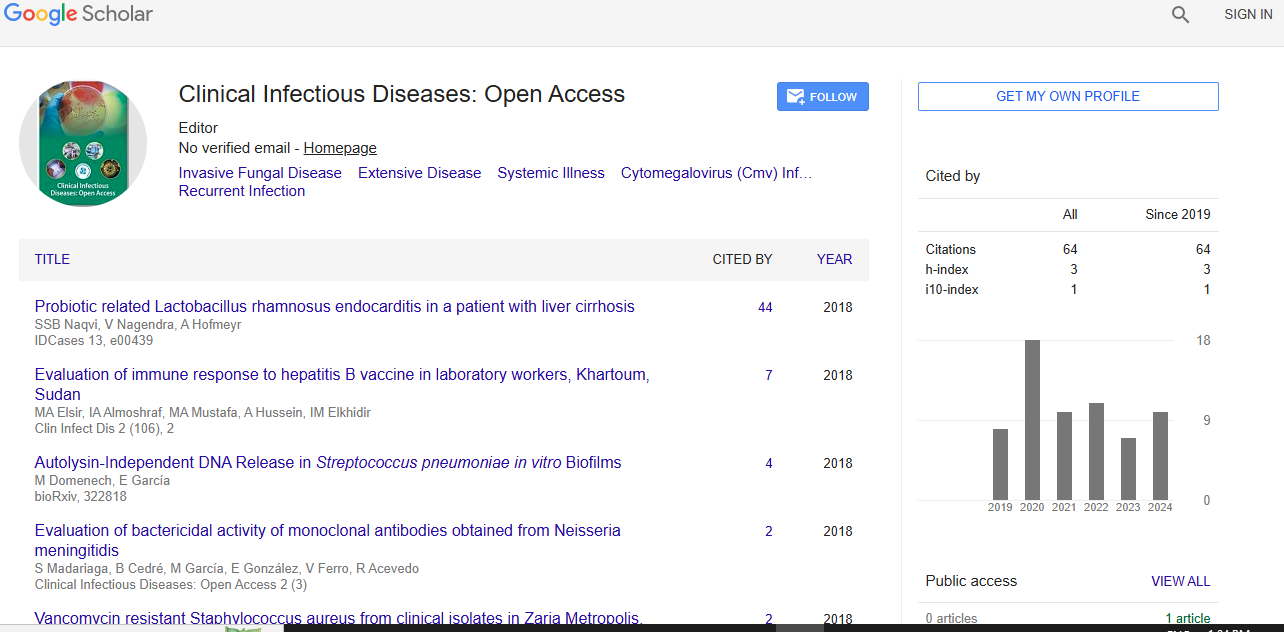
Clinical Infectious Diseases: Open Access received 1149 citations as per Google Scholar report
 Spanish
  Chinese
  Russian
  German
  French
  Japanese
  Portuguese
  Hindi
Hindi 