The study of limnology includes aspects of the biological, chemical, physical, and geological characteristics and functions of inland waters (running and standing waters, fresh and saline, natural and man-made). This includes the study of lakes, reservoirs, ponds, rivers, springs, streams, wetlands, and groundwater.
Limnology is closely related to aquatic ecology and hydrobiology, which study aquatic organisms and their interactions with the abiotic (non-living) environment. While limnology has substantial overlap with freshwater-focused disciplines (e.g., freshwater biology), it also includes the study of inland salt lakes.
Mini Review: Advances in Recycling & Waste Management
Mini Review: Advances in Recycling & Waste Management
Research Article: Advances in Recycling & Waste Management
Research Article: Advances in Recycling & Waste Management
Review Article: Advances in Recycling & Waste Management
Review Article: Advances in Recycling & Waste Management
Research Article: Advances in Recycling & Waste Management
Research Article: Advances in Recycling & Waste Management
Posters & Accepted Abstracts: Advances in Recycling & Waste Management
Posters & Accepted Abstracts: Advances in Recycling & Waste Management
Scientific Tracks Abstracts: Advances in Recycling & Waste Management
Scientific Tracks Abstracts: Advances in Recycling & Waste Management
Scientific Tracks Abstracts: Advances in Recycling & Waste Management
Scientific Tracks Abstracts: Advances in Recycling & Waste Management
Scientific Tracks Abstracts: Journal of Biometrics & Biostatistics
Scientific Tracks Abstracts: Journal of Biometrics & Biostatistics
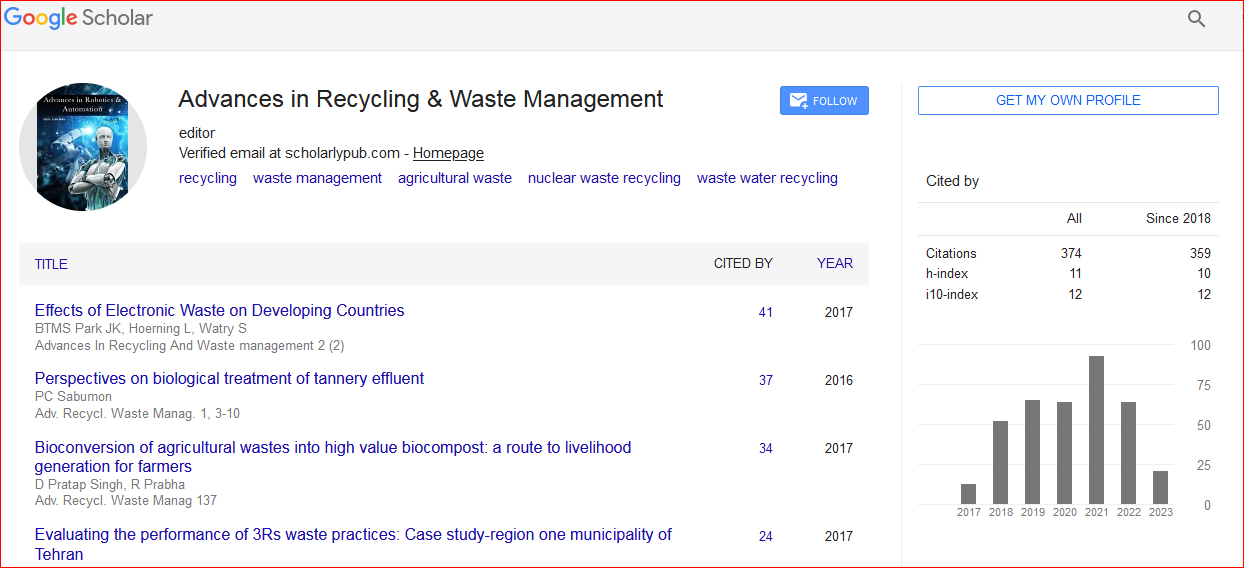
Advances in Recycling & Waste Management received 438 citations as per Google Scholar report

 Spanish
  Chinese
  Russian
  German
  French
  Japanese
  Portuguese
  Hindi
Hindi 