AI-powered digital forensics represents a transformative approach in the investigation of cybercrimes, leveraging Artificial Intelligence (AI) to enhance data analysis, efficiency, and accuracy in forensic investigations. As cyber threats have evolved in complexity and scale, traditional methods of digital forensics historically centered on data extraction from standalone devices have had to adapt to an environment characterized by smartphones, cloud storage, and sophisticated malware. This adaptation has brought AI into the forefront, facilitating the automation of tasks that were once labor-intensive and time-consuming, thus enabling forensic experts to focus on critical analysis and decision-making. The integration of AI in digital forensics has revolutionized various facets of the field, including automated log analysis, malware detection, multimedia content evaluation, and network traffic analysis. These innovations not only expedite investigations but also improve the accuracy of evidence collection and analysis by uncovering patterns that may go unnoticed in manual reviews. However, the deployment of AI also raises significant legal and ethical challenges, including concerns over user privacy, algorithmic bias, and the admissibility of AI-generated evidence in court settings. Such controversies have led to ongoing debates about the balance between technological advancement and the preservation of ethical standards in forensic practices. Looking toward the future, the landscape of digital forensics is expected to be shaped by continued advancements in AI and automation, with projections indicating substantial market growth in forensic technologies. Innovations such as blockchain for chain of custody and nanotechnology for evidence analysis are anticipated to further enhance the efficacy of forensic investigations. As the interplay between AI capabilities and human expertise evolves, forensic professionals must remain vigilant in addressing the associated challenges, ensuring that both technological and ethical considerations are integrated into their methodologies.
HTML PDFShare this article
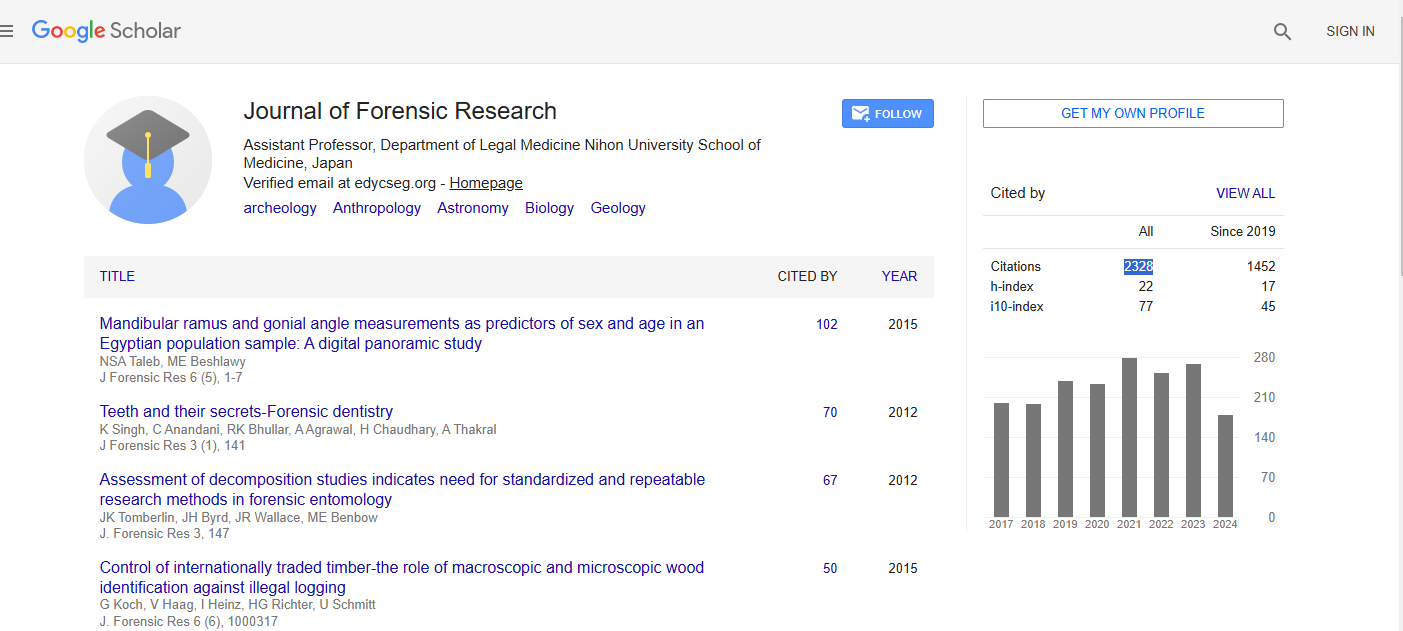
Journal of Forensic Research received 2328 citations as per Google Scholar report