Pimon Ruttanaumpawan
Mahidol University, Thailand
Posters & Accepted Abstracts: J Pulm Respir Med
Sleep is fundamental for life. Sleep, diet and exercise are the three pillars for being healthy. Poor sleep and sleep-related problems are more prevalent in patients with Chronic Obstructive Pulmonary Disease (COPD) when compared to other chronic diseases. Sleep and COPD have bidirectional relationship in various ways. Firstly, sleep normally has effects on breathing, including withdrawal of wakefulness ventilatory drive, unmasking apneic threshold, increased upper and lower airway resistance, decreased lung compliance, decreased muscle tone and contraction, and also blunting of chemosensitivity. These changes result in a modest hypoventilation and V/Q mismatch that are clinically insignificant in otherwise healthy subjects. However, sleep may have more adverse impact on gas exchanges in patients with COPD whose breathing is vulnerable, leading to significant hypoxemia, hypercapnia and sleep disruption as a consequence. Secondly, symptoms from COPD (e.g. dyspnea, chest tightness) which usually worsen at night, depressed mood or side effects from medications would preclude patients with COPD from a good sleep. Thirdly, sleep-related breathing disorders, like sleep apnea syndrome may coexist and would have more pronounced hypoxemia than patients with single condition. Lastly, exercise intolerance in patients with advanced COPD may cause physical inactivity or limited ambulation leading to less chance to receive bright light from outdoor activities in addition to potentially nodding off during the day. These would eventually worsen sleep quality during the night. Poor sleep and worsening gas exchanges during sleep in patients with COPD would therefore contribute to cardiovascular and neurocognitive adverse events that compel to poor quality of life and higher mortality. In conclusion, addressing sleep related problems, the neglected domain, would improve the outcomes in patients with COPD.
Email: heangpimon@hotmail.com
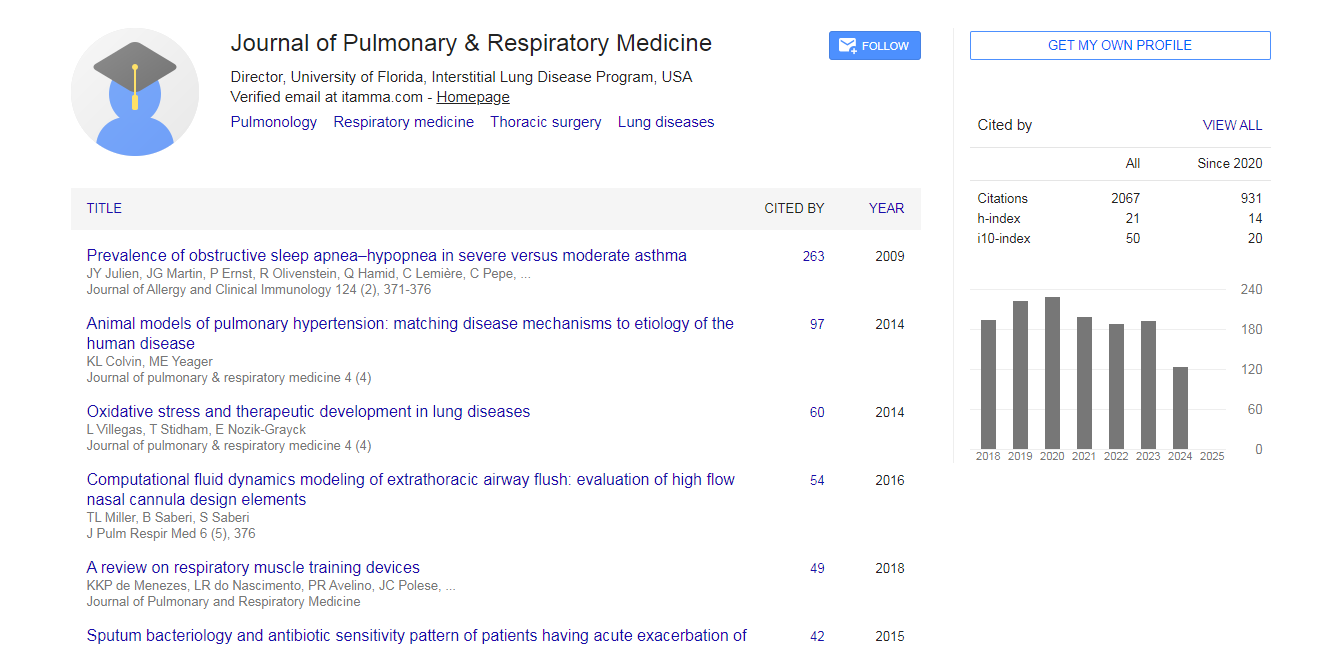
Pulmonary & Respiratory Medicine received 1690 citations as per Google Scholar report
 Spanish
  Chinese
  Russian
  German
  French
  Japanese
  Portuguese
  Hindi
Hindi 