Aldiana Astuti
Gadjah Mada University, Indonesia
Posters & Accepted Abstracts: J Pulm Respir Med
Background: There were 30-50% of COPD in India caused by bacterial infection in 2012. In 2011, there were 65 patients having positif sputum culture of Klebsiella pneumoniae in Surakarata. Acute exacerbations of COPD may worsen lung function. Therapeutic options for Klebsiella pneumoniae infection have been difficult because it has resistance to various antibiotics. Objective: This study was aimed to find Klebsiella pneumoniea in the sputum samples in the hospital laboratory of RSUD Dr. Moewardi, Surakarta, Indonesia. Method: This is an observational analytic research with cross-sectional design to determine the sensitivity of bacteria to antibiotics using diffusion method. In the process, Klebsiella pneumoniae in the sputum samples were tested for sensitivity to antibiotics. Results: Sample tests showed 21 of 30 samples were Klebsiella pneumoniae positive (70%). The results of sensitivity test showed 100% of Klebsiella pneumoniae were sensitive to cefotaxime, cyprofloxacine, tetracycline, gentamycine and 11% intermediate of chloramphenicol and resistant to amoxicillin. Conclusion: Due to the simple method that I used, it did not show sensitivity to screen Klebsiella pneumonia; hence, I recommend to use more sensitive methods to strengthen surveillance of Klebsiella pneumonia on COPDâÂ?Â?s sputum patients.
Email: aldiana.a@yahoo.com
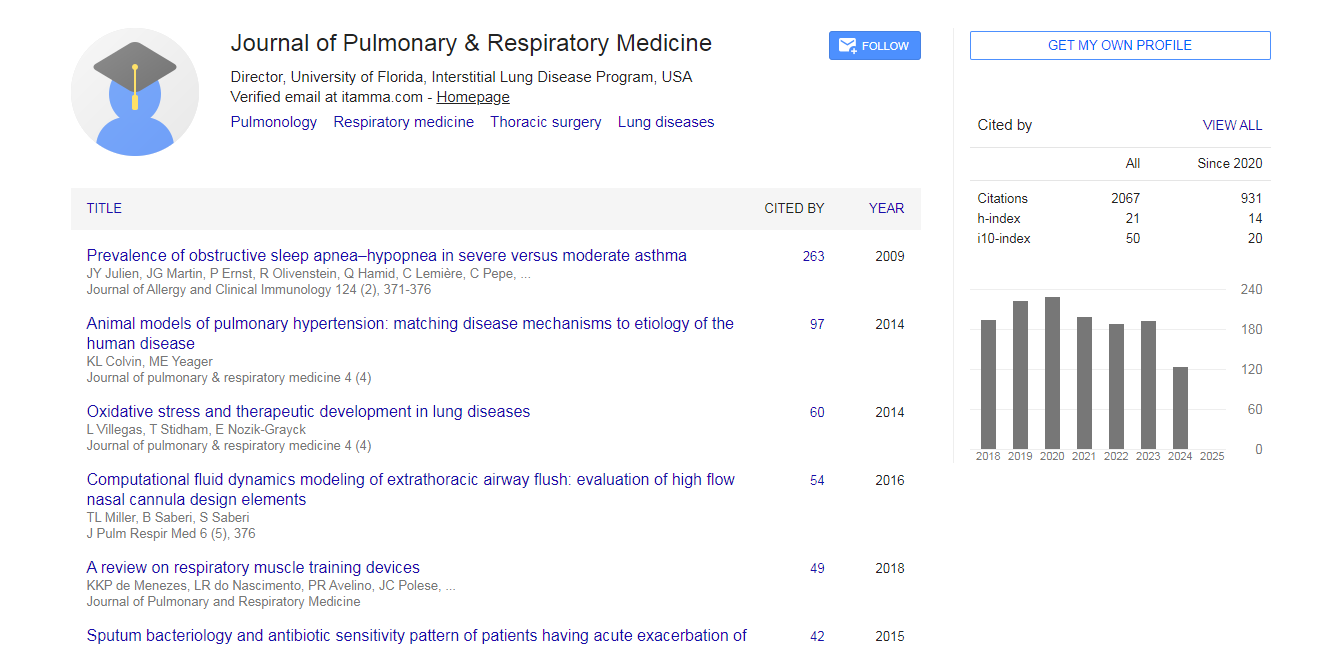
Pulmonary & Respiratory Medicine received 1690 citations as per Google Scholar report
 Spanish
  Chinese
  Russian
  German
  French
  Japanese
  Portuguese
  Hindi
Hindi 