Opinion - (2025) Volume 16, Issue 5
Received: 01-Oct-2025, Manuscript No. jvst-26-188133;
Editor assigned: 03-Oct-2025, Pre QC No. P-188133;
Reviewed: 17-Oct-2025, QC No. Q-188133;
Revised: 22-Oct-2025, Manuscript No. R-188133;
Published:
29-Oct-2025
, DOI: 10.37421/2157-7579.2025.16.325
Citation: Khalid, Salma. ”Veterinary Public Health: A One Health
Approach.” J Vet Sci Techno 16 (2025):325.
Copyright: © 2025 Khalid S. This is an open-access article distributed under the terms of the Creative Commons Attribution License, which permits unrestricted use, distribution
and reproduction in any medium, provided the original author and source are credited.
Veterinary public health plays a pivotal role in the multifaceted endeavor of controlling zoonotic diseases, employing integrated strategies that encompass a broad spectrum of interventions. These strategies extend from the management of animal reservoirs, including robust surveillance and vaccination programs, to crucial human behavioral modifications and essential environmental health measures. The imperative for effective prevention, early detection, and rapid response to zoonotic threats hinges significantly on fostering interdisciplinary collaboration among veterinarians, public health officials, and medical professionals, thereby safeguarding both animal and human populations.
The escalating impact of climate change on the emergence and dissemination of zoonotic diseases necessitates the adoption of veterinary public health strategies that are acutely sensitive to environmental shifts. Alterations in ecosystems and shifts in animal migration patterns have been identified as significant facilitators of increased human-animal contact, which in turn can amplify pathogen transmission dynamics. Consequently, there is a pressing call for the development and implementation of proactive surveillance systems and adaptive control measures within established veterinary public health frameworks to effectively mitigate these emerging ecological risks. The critical role of meticulous livestock management in the effective control of zoonotic diseases, particularly those caused by bacterial pathogens, cannot be overstated. Implementing best practices in biosecurity, maintaining optimal herd health, and promoting the responsible use of antibiotics within agricultural settings are paramount. These veterinary interventions, when applied diligently at the farm level, significantly diminish the risk of zoonotic pathogen transmission to humans, thereby strongly supporting the overarching 'farm-to-fork' approach to food safety and public health protection. The surveillance of zoonotic diseases within wildlife populations presents unique challenges, yet it is an area where veterinary public health expertise is indispensable. Effective strategies require the integration of diverse data streams, including ecological information, sophisticated molecular diagnostics, and detailed field epidemiology. Early detection of pathogens within wildlife reservoirs, a feat often facilitated by the specialized knowledge and capabilities of veterinarians, is fundamentally critical for preventing potentially devastating spillover events into human and domestic animal populations. Companion animals, while integral to human well-being, also represent a significant interface for the transmission of zoonotic diseases, demanding specific veterinary public health interventions for their control. Strategies such as targeted public awareness campaigns, the promotion of responsible pet ownership, and the consistent emphasis on regular veterinary check-ups and essential vaccinations for pets are vital. Effectively managing zoonotic risks associated with pets requires a concerted, multi-stakeholder effort involving pet owners, veterinary professionals, and public health authorities. The advancement and widespread implementation of effective vaccination strategies within the domain of veterinary public health are instrumental in controlling zoonotic diseases within animal populations. Innovations in vaccine technology, alongside the persistent challenges associated with vaccine delivery across diverse animal species and geographical regions, continue to shape the landscape. However, the public health benefits derived from achieving robust herd immunity through veterinary vaccination programs are substantial, underscoring their critical contribution to reducing the overall burden of zoonotic diseases. The pervasive issue of antimicrobial resistance (AMR) in zoonotic pathogens poses a significant and evolving challenge to veterinary public health. Understanding the multifaceted drivers of AMR within animal agriculture, recognizing the direct public health risks associated with resistant zoonotic bacteria, and implementing comprehensive strategies for antimicrobial stewardship are essential. Acknowledging and actively embracing a One Health approach is therefore crucial for effectively combating AMR and comprehensively protecting both human and animal health across interconnected systems. The effectiveness of public awareness and education campaigns in the prevention of zoonotic disease transmission is demonstrably enhanced through the strategic involvement of veterinary professionals. Targeted messaging and carefully designed engagement strategies can significantly improve community understanding of zoonotic risks and foster the widespread adoption of crucial preventive behaviors. The inherent value of veterinary expertise in the development, refinement, and effective delivery of vital public health information cannot be overstated. The application of advanced molecular diagnostics represents a transformative tool within veterinary public health for the rapid identification, characterization, and tracking of zoonotic pathogens. Significant advancements in genomic sequencing and real-time polymerase chain reaction (PCR) technologies have revolutionized the ability to achieve swift detection and detailed characterization of disease outbreaks. These sophisticated diagnostic tools are indispensable for informing the timely implementation of effective control measures and substantially strengthening overall zoonotic disease surveillance capabilities. Managing foodborne zoonotic diseases effectively requires comprehensive veterinary public health strategies that meticulously address the entire farm-to-consumer continuum. This involves a thorough examination of interventions implemented throughout animal production, processing, and retail stages, with a strong emphasis on the critical importance of Hazard Analysis and Critical Control Points (HACCP) systems and robust regulatory frameworks. Ensuring the safety of the global food supply and effectively protecting public health necessitates a sustained and collaborative effort among veterinary professionals, food safety agencies, and all relevant industry stakeholders.The multifaceted role of veterinary public health in controlling zoonotic diseases is illuminated through integrated strategies that span animal reservoir management, human behavioral interventions, and environmental health measures. Emphasis is placed on interdisciplinary collaboration for effective prevention, early detection, and response, ultimately safeguarding both animal and human health.
Climate change presents a growing threat, influencing the emergence and spread of zoonotic diseases, and thus necessitating veterinary public health strategies that account for environmental factors. Altered ecosystems and animal migration patterns increase human-animal contact, facilitating pathogen transmission, underscoring the need for proactive surveillance and adaptive control measures. Livestock management is identified as a cornerstone in controlling zoonotic diseases, particularly bacterial pathogens, through best practices in biosecurity, herd health, and responsible antibiotic use. Effective veterinary interventions at the farm level significantly reduce the risk of zoonotic transmission to humans, supporting the 'farm-to-fork' safety approach. Effective surveillance of zoonotic diseases in wildlife populations relies on integrated systems combining ecological data, molecular diagnostics, and field epidemiology. Early detection of pathogens in wildlife reservoirs, facilitated by veterinary expertise, is critical for preventing spillover events into human and domestic animal populations. The role of companion animals in zoonotic disease transmission requires targeted veterinary public health strategies, including public awareness campaigns, promotion of responsible pet ownership, and regular veterinary care. Managing zoonotic risks from pets necessitates a concerted effort involving pet owners, veterinarians, and public health authorities. The development and implementation of effective vaccination strategies in veterinary public health are crucial for controlling zoonotic diseases in animal populations. Advancements in vaccine technology and overcoming delivery challenges contribute to herd immunity, significantly reducing the burden of zoonotic diseases. Antimicrobial resistance (AMR) in zoonotic pathogens poses a significant challenge, driven by factors in animal agriculture. Addressing the public health risks of resistant zoonotic bacteria and promoting antimicrobial stewardship are essential, advocating for a One Health approach to combat AMR. Public awareness and education campaigns, significantly enhanced by veterinary professionals, are vital for zoonotic disease prevention. Targeted messaging improves community understanding of risks and promotes the adoption of preventive behaviors, highlighting the value of veterinary expertise in public health communication. Molecular diagnostics, including genomic sequencing and real-time PCR, are revolutionizing veterinary public health for rapid pathogen identification and tracking. These advancements enable swift detection and characterization of outbreaks, informing timely control measures and strengthening surveillance. Managing foodborne zoonotic diseases requires comprehensive veterinary public health strategies across the supply chain, from production to retail. Interventions like HACCP systems and regulatory frameworks, coupled with collaborative efforts among stakeholders, are essential for ensuring food safety and protecting public health.Veterinary public health is central to controlling zoonotic diseases through integrated strategies involving animal management, human behavior, and environmental health, necessitating interdisciplinary collaboration. Climate change influences disease emergence, requiring adaptive surveillance and control. Livestock management, biosecurity, and responsible antibiotic use are key for farm-level prevention. Wildlife surveillance, aided by molecular diagnostics and veterinary expertise, is crucial for preventing spillover. Companion animal health strategies include public awareness and regular veterinary care. Vaccination programs in animals significantly reduce zoonotic disease burden. Antimicrobial resistance in zoonotic pathogens demands stewardship and a One Health approach. Public education, leveraging veterinary knowledge, enhances prevention. Molecular diagnostics provide rapid identification and tracking of pathogens, strengthening surveillance. Foodborne zoonotic disease control requires comprehensive strategies across the supply chain, emphasizing collaboration and regulatory frameworks.
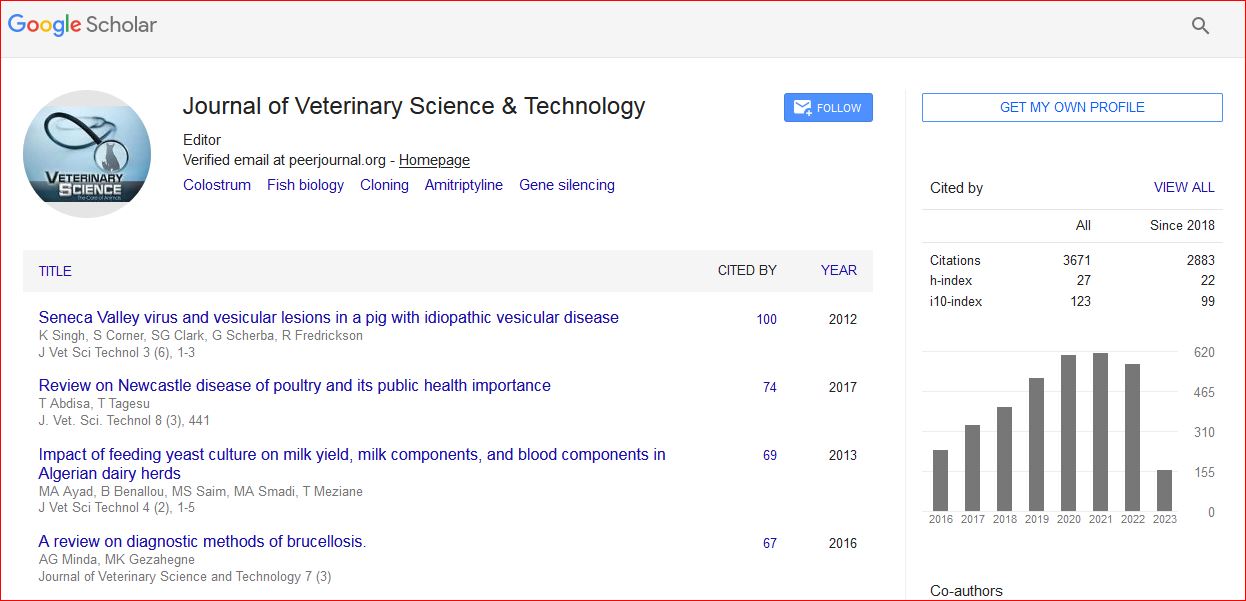
Veterinary Science & Technology received 4472 citations as per Google Scholar report