Perspective - (2025) Volume 16, Issue 4
Received: 02-Aug-2025, Manuscript No. jvst-26-188041;
Editor assigned: 04-Aug-2025, Pre QC No. P-188041;
Reviewed: 18-Aug-2025, QC No. Q-188041;
Revised: 25-Aug-2025, Manuscript No. R-188041;
Published:
01-Sep-2025
, DOI: 10.37421/2157-7579.2025.16.310
Citation: Horvat, Ivan. ”Veterinary Medicine: Livestock Productivity
and Food Security.” J Vet Sci Techno 16 (2025):310.
Copyright: © 2025 Horvat I. This is an open-access article distributed under the terms of the Creative Commons Attribution License, which permits unrestricted use, distribution
and reproduction in any medium, provided the original author and source are credited.
Veterinary medicine is fundamental to the advancement and sustainability of livestock agriculture, underpinning various critical aspects of animal husbandry and production. Its multifaceted contributions ensure the health and well-being of animals, which directly translates into economic benefits and improved food security for human populations. The proactive and reactive roles of veterinarians are indispensable in managing animal populations effectively. This field encompasses a broad spectrum of interventions, from preventive healthcare to sophisticated diagnostic and therapeutic strategies.
The overarching goal is to optimize animal performance while upholding ethical standards and ensuring public health. The integration of veterinary science into livestock management practices has revolutionized the industry, leading to more efficient and humane farming methods. The continuous evolution of veterinary knowledge and techniques further enhances its impact on global food systems. Understanding the scope and significance of veterinary medicine is crucial for appreciating its impact on agriculture and society. Its role extends beyond individual animal care to encompass broader public health and economic considerations. The commitment to animal health through veterinary services is a cornerstone of a robust and resilient agricultural sector. Veterinary professionals are at the forefront of safeguarding livestock health, which is intrinsically linked to the productivity and sustainability of the agricultural sector. Their expertise is vital in preventing and controlling diseases that could otherwise lead to significant economic losses and compromise food supplies. By implementing robust health management programs, veterinarians ensure that livestock populations remain healthy, thereby maximizing their productive potential. This proactive approach is essential for maintaining a stable and reliable source of animal-derived food products. The economic implications of animal diseases are substantial, affecting not only individual farmers but also entire supply chains and national economies. Therefore, the role of veterinary services in mitigating these risks cannot be overstated. The continuous monitoring and management of animal health are paramount to preventing outbreaks and ensuring the continuity of agricultural operations. Veterinary interventions are designed to minimize morbidity and mortality, thereby enhancing the overall efficiency of livestock production. The dedication of veterinary professionals to animal health is a critical factor in achieving food security and supporting rural economies. Their work contributes significantly to the well-being of both animals and the communities that depend on them. The comprehensive approach to animal health management by veterinarians is a key determinant of successful livestock farming. The imperative of effective disease surveillance and control strategies, spearheaded by veterinary professionals, is paramount in averting widespread outbreaks that possess the capacity to cripple livestock populations and severely diminish productivity. The timely identification of emerging health threats, coupled with swift and decisive responses, alongside precisely targeted interventions, collectively serves to curtail economic setbacks and guarantee the uninterrupted flow of essential supply chains. This encompasses the vigilant monitoring of zoonotic diseases, establishing a direct and critical nexus between the health of animals and the well-being of the public, alongside the integrity of the food we consume. The proactive measures undertaken by veterinarians in disease surveillance are instrumental in safeguarding both animal and human health. Their ability to detect and respond to outbreaks rapidly minimizes the spread of pathogens and reduces the economic impact on the agricultural sector. The constant vigilance required in monitoring animal populations for signs of disease is a testament to the critical role veterinarians play in maintaining public health and food safety. The economic consequences of unchecked disease outbreaks can be catastrophic, leading to widespread losses and disruption of agricultural activities. Therefore, the investment in veterinary surveillance and control programs is a crucial component of a resilient food system. The expertise of veterinarians in epidemiology and disease management is essential for developing and implementing effective strategies to protect livestock. Their efforts contribute to a more secure and stable food supply for the nation. The dedication to preventing disease outbreaks through diligent surveillance is a hallmark of professional veterinary practice. The comprehensive approach to animal health management by veterinarians is a key determinant of successful livestock farming. Veterinary expertise in the domain of nutrition and feeding management exerts a direct and profound influence on the growth trajectories, reproductive efficacy, and the general health status of livestock. The meticulous tailoring of dietary regimens to align with the specific requirements of different species, age groups, and distinct production phases serves to optimize the utilization of available resources and significantly enhance overall productivity. This comprehensive approach also extends to the astute management of metabolic disorders and the unwavering assurance of the efficient conversion of feed into valuable animal products. The role of veterinary nutritionists is crucial in formulating balanced diets that meet the specific needs of livestock, thereby improving growth rates and reproductive performance. By understanding the nutritional requirements of different animal species and life stages, veterinarians can develop feeding strategies that maximize efficiency and minimize waste. The prevention and management of metabolic diseases through appropriate nutrition are also key responsibilities, contributing to the overall health and well-being of the animals. The efficient conversion of feed into meat, milk, and eggs is a primary objective, and veterinary guidance on nutrition plays a vital role in achieving this. The economic benefits of optimized nutrition are significant, leading to improved profitability for farmers and a more sustainable food production system. The continuous research and development in animal nutrition, often guided by veterinary professionals, are essential for advancing livestock productivity. The comprehensive approach to animal health management by veterinarians is a key determinant of successful livestock farming. Within the sphere of veterinary medicine, the judicious application of pharmacology and therapeutics emerges as an indispensable tool for the effective management of animal ailments, the mitigation of suffering, and the acceleration of recovery processes. The critical selection of appropriate medications, the precise determination of dosages, and the adherence to established administration protocols, all meticulously guided by the discerning judgment of veterinary professionals, are absolutely vital for achieving efficacious treatment outcomes and, concurrently, for minimizing the perilous escalation of antimicrobial resistance, a phenomenon with far-reaching implications for both animal and human health. The careful use of medications by veterinarians is essential for treating diseases, reducing pain, and promoting recovery in animals. Veterinarians play a crucial role in selecting the most appropriate drugs, determining the correct dosages, and ensuring proper administration to achieve the best therapeutic results. Their expertise is also vital in combating the growing threat of antimicrobial resistance, a global health concern that requires careful stewardship of antibiotic resources. By promoting the responsible use of antimicrobials, veterinarians help to preserve their effectiveness for future use in both animals and humans. The economic impact of effective pharmacotherapy can be substantial, reducing losses due to illness and improving the overall productivity of livestock. The continuous advancement of veterinary pharmacology provides new and improved treatment options for a wide range of animal diseases. The comprehensive approach to animal health management by veterinarians is a key determinant of successful livestock farming. Reproductive management within livestock operations represents a critical domain where veterinary involvement directly underpins herd expansion initiatives and the ambitious pursuit of genetic improvement. The invaluable guidance provided by veterinarians concerning artificial insemination techniques, the precise synchronization of estrus cycles, and the accurate diagnosis of pregnancy collectively serve to optimize breeding cycles, thereby yielding higher calving or farrowing rates and fostering the development of offspring with enhanced quality, ultimately contributing to a significant boost in overall farm productivity. Veterinary expertise in reproductive management is essential for maximizing the efficiency of breeding programs in livestock. By guiding farmers on best practices for artificial insemination, estrus synchronization, and pregnancy diagnosis, veterinarians help to optimize conception rates and shorten calving intervals. This leads to increased numbers of offspring produced per breeding female, which is crucial for herd expansion and genetic improvement. The ability to select for desired traits through controlled breeding programs, with veterinary input, can also lead to animals with improved productivity, disease resistance, and overall resilience. The economic benefits of efficient reproductive management are substantial, directly impacting the profitability of livestock operations. The continuous advancements in reproductive technologies, often developed and applied by veterinarians, further enhance their ability to improve livestock production. The comprehensive approach to animal health management by veterinarians is a key determinant of successful livestock farming. Animal welfare, a matter of significant ethical and practical concern within contemporary livestock farming paradigms, is directly and comprehensively addressed by the discipline of veterinary medicine. The unwavering commitment to ensuring the humane handling of animals, providing them with adequate and suitable living conditions, and implementing effective pain management strategies not only aligns with established ethical standards but also demonstrably contributes to a marked reduction in animal stress, a significant enhancement of immune function, and, consequently, a notable increase in productivity alongside an improvement in the quality of derived products. Ensuring high standards of animal welfare is a core responsibility of veterinary professionals. By advocating for and implementing humane handling practices, appropriate housing, and effective pain relief, veterinarians contribute to reducing stress and improving the overall health of livestock. Animals that are less stressed and healthier tend to have stronger immune systems, leading to improved disease resistance and better growth rates. These improvements in animal well-being directly translate into higher productivity and better quality products such as meat, milk, and eggs. The ethical considerations surrounding animal welfare are increasingly important to consumers, and veterinary guidance helps farmers meet these expectations. The link between good welfare and good productivity is well-established, making veterinary input in this area economically beneficial. The comprehensive approach to animal health management by veterinarians is a key determinant of successful livestock farming. Veterinary diagnostics form the bedrock upon which precise disease identification is built, thereby enabling the meticulous formulation and execution of targeted and highly effective treatment plans. The sophisticated array of technologies and the profound expertise resident within the fields of pathology, microbiology, and clinical pathology collectively empower the early detection of subclinical conditions and the definitive confirmation of disease outbreaks, consequently serving to minimize losses and optimize the allocation of valuable resources dedicated to comprehensive disease management. Accurate and timely diagnosis is crucial for effective disease management in livestock. Veterinary diagnostic services, utilizing advanced technologies and expert knowledge in areas like pathology and microbiology, enable the early detection of diseases, even before clinical signs become apparent. This allows for prompt and targeted interventions, preventing widespread outbreaks and minimizing economic losses. The confirmation of disease outbreaks through reliable diagnostic methods is essential for implementing appropriate control measures and for informing public health authorities. Optimizing resource allocation for disease management, based on accurate diagnoses, ensures that interventions are cost-effective and impactful. The continuous development of new diagnostic tools and techniques by veterinary researchers enhances the ability to detect and manage animal diseases more effectively. The comprehensive approach to animal health management by veterinarians is a key determinant of successful livestock farming. Biosecurity measures, meticulously conceptualized and systematically implemented under the indispensable guidance of veterinary professionals, are of paramount importance in preventing the insidious introduction and subsequent pervasive spread of diseases both within individual farms and across broader geographical regions. These crucial measures encompass the rigorous adherence to strict sanitation protocols, the implementation of controlled animal movement policies, and the application of judicious quarantine procedures, all of which collectively contribute to fostering a healthier livestock population and ensuring sustained high levels of productivity. Preventing the introduction and spread of diseases is a primary objective of biosecurity, and veterinary professionals are key to its successful implementation. By developing and enforcing strict sanitation protocols, controlling the movement of animals, and implementing quarantine procedures for new arrivals, veterinarians help to create a barrier against disease pathogens. These measures are essential for protecting the health of the existing livestock population and for preventing costly outbreaks. A robust biosecurity program, guided by veterinary expertise, contributes to a healthier and more productive farm environment. This not only reduces economic losses but also enhances the overall sustainability of livestock operations. The continuous review and adaptation of biosecurity measures based on emerging disease threats, as advised by veterinarians, are vital for maintaining their effectiveness. The comprehensive approach to animal health management by veterinarians is a key determinant of successful livestock farming. The integral role of veterinary professionals extends significantly into the realm of public health, particularly concerning the vigilant management of zoonotic diseases, thereby indirectly bolstering livestock productivity by ensuring a robust and healthy workforce and sustaining consumer confidence in the safety and quality of animal-derived products. Through the effective control of diseases that possess the capacity for transmission from animals to humans, veterinary medicine unequivocally safeguards both animal and human populations, thereby cultivating a more stable and conducive environment for the flourishing of agriculture. Veterinarians play a critical role in protecting public health by managing diseases that can be transmitted from animals to humans (zoonotic diseases). By controlling these diseases in livestock populations, they prevent outbreaks in humans, safeguarding both animal and human health. This indirect contribution to public health is vital for maintaining a healthy workforce in the agricultural sector and for ensuring consumer confidence in the safety of meat, milk, and eggs. A stable and healthy human population is essential for the continued success of the livestock industry. The collaborative efforts between veterinary public health officials and other health agencies are crucial for a comprehensive approach to disease prevention and control. The dedication of veterinarians to both animal and human health is a testament to their broad impact on society. The comprehensive approach to animal health management by veterinarians is a key determinant of successful livestock farming. Genetic improvement and the strategic development of breeding programs in livestock are demonstrably enhanced by the crucial input and informed guidance of veterinary professionals. A profound understanding of genetic predispositions to various diseases, the optimization of crossbreeding strategies designed to accentuate desired traits, and the meticulous management of reproductive health are all critical areas where veterinary science makes an indispensable contribution, ultimately leading to the production of animals exhibiting superior productivity and enhanced resilience. Veterinary expertise is vital for effective genetic improvement and breeding programs in livestock. Understanding genetic predispositions to diseases allows veterinarians to guide breeding decisions that reduce the incidence of inherited health problems. They also play a role in optimizing crossbreeding strategies to enhance desirable traits such as growth rate, meat quality, or milk production. Furthermore, their management of reproductive health ensures that breeding animals are in optimal condition for successful reproduction. This leads to the development of livestock with superior productivity and greater resilience to environmental challenges and diseases. The long-term benefits of well-designed breeding programs, informed by veterinary science, are significant for the sustainability and profitability of the livestock industry. The comprehensive approach to animal health management by veterinarians is a key determinant of successful livestock farming.Veterinary medicine's pivotal role in enhancing livestock productivity is achieved through ensuring animal health, disease prevention, and effective treatment, leading to reduced mortality, improved growth rates, and better quality products like milk, meat, and eggs. Fundamental practices include vaccination programs, parasite control, and prompt diagnosis and treatment of ailments. Veterinary expertise is also crucial for implementing biosecurity measures, improving animal welfare, and optimizing breeding programs, all contributing to a more efficient and sustainable livestock industry [1].
Effective disease surveillance and control strategies, implemented by veterinary professionals, are essential for preventing widespread outbreaks that can devastate livestock populations and impact productivity. Early detection, rapid response, and targeted interventions minimize economic losses and ensure the continuity of supply chains. This includes the monitoring of zoonotic diseases, which directly links animal health to public health and food safety [2].
Veterinary expertise in nutrition and feeding management directly influences growth rates, reproductive efficiency, and overall health of livestock. Tailoring diets to specific species, ages, and production stages optimizes resource utilization and enhances productivity. This also involves addressing metabolic disorders and ensuring the efficient conversion of feed into desired products [3].
The application of veterinary pharmacology and therapeutics is crucial for managing animal diseases, reducing pain, and improving recovery rates. Appropriate drug selection, dosage, and administration protocols, guided by veterinary professionals, are vital for effective treatment and minimizing the development of antimicrobial resistance, which has implications for both animal and human health [4].
Reproductive management in livestock, a key area of veterinary involvement, directly impacts herd expansion and genetic improvement. Veterinary guidance on artificial insemination, estrus synchronization, and pregnancy diagnosis optimizes breeding cycles, leading to higher calving or farrowing rates and improved offspring quality, thus boosting overall farm productivity [5].
Animal welfare, a significant concern in modern livestock farming, is directly addressed by veterinary medicine. Ensuring humane handling, adequate living conditions, and pain management not only aligns with ethical standards but also contributes to reduced stress, improved immune function, and consequently, higher productivity and better product quality [6].
Veterinary diagnostics are foundational for precise disease identification, enabling targeted and effective treatment plans. Technologies and expertise in pathology, microbiology, and clinical pathology allow for early detection of subclinical conditions and confirmation of outbreaks, thereby minimizing losses and optimizing resource allocation for disease management [7].
Biosecurity measures, designed and implemented with veterinary guidance, are critical for preventing the introduction and spread of diseases within and between farms. These measures include strict sanitation protocols, animal movement controls, and quarantine procedures, all of which contribute to a healthier livestock population and sustained productivity [8].
The role of veterinary professionals in public health, specifically in managing zoonotic diseases, indirectly supports livestock productivity by ensuring a healthy workforce and maintaining consumer confidence in animal products. By controlling diseases transmissible from animals to humans, veterinary medicine safeguards both human and animal populations, creating a more stable environment for agriculture [9].
Genetic improvement and breeding programs in livestock are significantly enhanced by veterinary input. Understanding genetic predispositions to diseases, optimizing crossbreeding strategies for desired traits, and managing reproductive health are all areas where veterinary science contributes to producing animals with superior productivity and resilience [10].
Veterinary medicine is integral to livestock productivity and food security, focusing on animal health, disease prevention, and treatment. Key contributions include improved growth rates, reduced mortality, and enhanced product quality through vaccination, parasite control, and prompt medical intervention. Veterinary expertise is also vital for implementing biosecurity, promoting animal welfare, and optimizing breeding programs, all of which lead to more efficient and sustainable livestock industries. Effective disease surveillance and control, guided by veterinarians, prevent widespread outbreaks, minimize economic losses, and ensure supply chain continuity, including the monitoring of zoonotic diseases. Nutritional management, pharmacology, therapeutics, and reproductive strategies are further areas where veterinary guidance directly influences productivity. Diagnostics play a foundational role in precise disease identification and targeted treatment, while biosecurity measures prevent disease introduction and spread. The veterinary role in public health, particularly managing zoonotic diseases, indirectly supports livestock operations and consumer confidence. Finally, veterinary science significantly enhances genetic improvement and breeding programs, leading to more productive and resilient livestock.
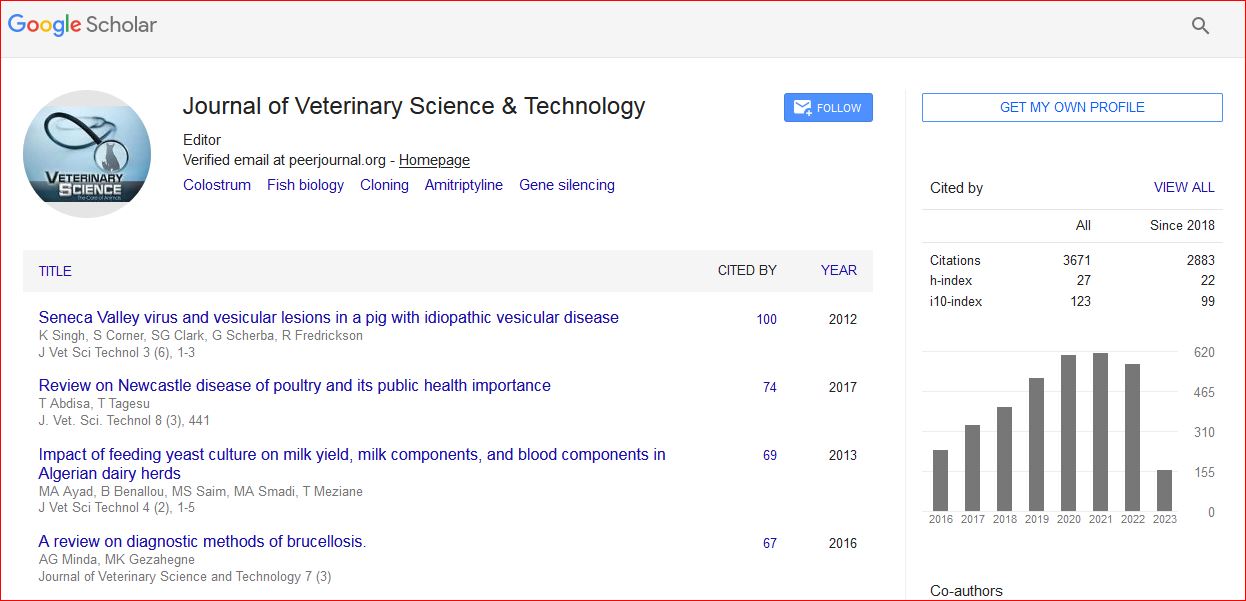
Veterinary Science & Technology received 4472 citations as per Google Scholar report