Opinion - (2025) Volume 16, Issue 6
Received: 01-Dec-2025, Manuscript No. jvst-26-188136;
Editor assigned: 03-Dec-2025, Pre QC No. P-188136;
Reviewed: 17-Dec-2025, QC No. Q-188136;
Revised: 22-Dec-2025, Manuscript No. R-188136;
Published:
29-Dec-2025
, DOI: 10.37421/2157-7579.2025.16.328
Citation: Dupont, Paul. ”Veterinary Education: Foundation for
Animal and Public Health.” J Vet Sci Techno 16 (2025):328.
Copyright: © 2025 Dupont P. This is an open-access article distributed under the terms of the Creative Commons Attribution License, which permits unrestricted use,
distribution and reproduction in any medium, provided the original author and source are credited.
Veterinary education forms the bedrock of effective animal health management, critically underpinning disease prevention, accurate diagnosis, timely treatment, and vital public health initiatives. It bestows upon veterinarians the essential scientific knowledge and practical proficiencies required to navigate a broad spectrum of challenges, from the intimate care of individual animals to the complex demands of large-scale population health and stringent biosecurity protocols. This comprehensive training encompasses crucial disciplines such as epidemiology and public health, along with the interdisciplinary methodologies that are indispensable for the effective control of zoonotic diseases and the assurance of food safety across the globe. The dynamic and continuously evolving nature of veterinary science mandates a commitment to ongoing education, ensuring that practitioners can adeptly adapt to the emergence of new diseases, the pervasive threat of antimicrobial resistance, and the rapid advancements in veterinary technology and methodologies[1].
Furthermore, the integration of One Health principles into veterinary curricula is not merely beneficial but essential for a holistic approach to animal health management. This pedagogical shift recognizes the profound interconnectedness between animal health, human health, and the environment, preparing future veterinarians to confront multifaceted issues such as the emergence of zoonotic diseases and the far-reaching impacts of climate change on animal populations. By fostering this integrated perspective, veterinary education cultivates professionals equipped to address complex global health challenges that transcend traditional disciplinary boundaries[2].
The establishment and implementation of robust biosecurity measures, which are fundamental to effective animal health management, are heavily reliant on the specialized expertise and rigorous training imparted through veterinary education. This educational component equips veterinarians with a deep understanding of disease transmission pathways, enabling them to design and execute effective control strategies. Moreover, it empowers them to serve as crucial educators for animal owners and other stakeholders, disseminating best practices and fostering a collective commitment to biosecurity[3].
The escalating challenge posed by antimicrobial resistance (AMR) represents a critical frontier in contemporary animal health management. Veterinary education plays an instrumental role in this global effort by equipping professionals with the requisite knowledge to champion the responsible use of antimicrobials and to actively pursue the development and adoption of viable alternatives. This proactive stance is vital in mitigating the spread of resistant pathogens and preserving the efficacy of existing treatments[4].
In the realm of animal health, the application of epidemiological principles, meticulously honed through dedicated veterinary education, is paramount. These principles enable a thorough understanding of disease patterns within animal populations, facilitate the prediction of potential outbreaks, and are instrumental in the design and implementation of effective control and eradication strategies. The mastery of epidemiology by veterinarians is thus a cornerstone of proactive animal disease management[5].
Veterinary education is also indispensable for the cultivation of advanced diagnostic skills. These skills are critical not only for the accurate identification and subsequent management of animal diseases but also for safeguarding animal welfare and preventing substantial economic losses within livestock industries. The development of precise diagnostic capabilities directly translates to improved patient outcomes and enhanced agricultural productivity[6].
Beyond individual animal care and agricultural concerns, the role of veterinarians in public health is profound, particularly concerning the control of zoonotic diseases and the assurance of food safety. Veterinary education provides the foundational knowledge in disease surveillance, rigorous risk assessment, and the intricacies of regulatory frameworks, enabling veterinarians to contribute significantly to global health security[7].
The dynamic landscape of veterinary medicine necessitates continuous professional development. This ongoing commitment is vital for veterinarians to keep abreast of rapid technological advancements and to effectively address emerging challenges in animal health management. Such sustained learning ensures that practitioners remain competent, up-to-date, and capable of delivering the highest standard of care and expertise[8].
Animal diseases carry significant economic implications, and the presence of well-trained veterinarians is crucial for mitigating these impacts. Through their expertise in implementing preventive measures and managing outbreaks, veterinarians play a pivotal role in protecting agricultural economies and ensuring the stability of food supplies worldwide. Their intervention is a direct safeguard against considerable financial losses[9].
Ultimately, veterinary education fundamentally contributes to the enhancement of animal welfare. It imparts the essential knowledge and practical skills required for the ethical treatment of animals, effective pain management, and the prevention of suffering across both domestic and wild animal populations. This commitment to welfare is a core tenet of the veterinary profession, deeply embedded within its educational framework[10].
Veterinary education serves as the fundamental basis for managing animal health comprehensively, encompassing a wide array of responsibilities from disease prevention and diagnosis to treatment and the execution of vital public health initiatives. This rigorous academic and practical training equips veterinarians with the scientific acumen and hands-on skills necessary to address a diverse range of issues, including the health of individual animals, the management of large animal populations, and the maintenance of robust biosecurity measures. Key components of this education include in-depth study of epidemiology, public health principles, and the cultivation of interdisciplinary approaches, all of which are vital for the effective control of zoonotic diseases and the safeguarding of food safety for human populations. Given the continuous and rapid evolution of veterinary science, ongoing education is an absolute necessity for practitioners to remain adept at managing emerging diseases, tackling the complexities of antimicrobial resistance, and integrating the latest technological advancements into their practice[1].
The incorporation of One Health principles into veterinary educational programs is an indispensable step towards managing animal health in a manner that simultaneously considers and addresses human and environmental health. This integrated framework acknowledges the intrinsic interconnectedness of these three domains, thereby preparing future generations of veterinarians to effectively confront and manage complex global health issues, such as the emergence of novel zoonotic diseases and the profound effects of climate change on animal populations worldwide[2].
Robust biosecurity measures represent a critical pillar in the effective management of animal health, and their development and successful implementation are significantly dependent on the specialized knowledge and training provided by veterinary education. This training enables veterinarians to gain a sophisticated understanding of disease transmission pathways, to devise and implement highly effective control strategies, and to adeptly educate animal owners and other relevant stakeholders on essential biosecurity practices[3].
The formidable challenge presented by antimicrobial resistance (AMR) is a central concern in modern animal health management. Veterinary education plays an exceptionally important part in empowering professionals with the knowledge base required to promote and enforce responsible antimicrobial usage guidelines and to actively contribute to the research and development of alternative therapeutic strategies. This educational focus is crucial for combating the spread of resistant organisms[4].
Within the field of animal health management, the application of epidemiological principles, which are thoroughly developed through comprehensive veterinary education, is of paramount importance. These principles are fundamental for accurately understanding disease dynamics within animal populations, for forecasting the potential occurrence of outbreaks, and for the successful implementation of targeted and effective control strategies designed to mitigate disease spread[5].
Veterinary education is absolutely essential for the development of sophisticated diagnostic capabilities. These skills are crucial for the precise identification and effective management of a wide range of animal diseases. By enhancing diagnostic accuracy, veterinarians contribute directly to improving animal welfare and preventing significant economic losses within the agricultural and livestock sectors[6].
The critical role veterinarians play in public health, particularly in the context of controlling zoonotic diseases and ensuring the safety of the food supply, is profoundly shaped by their educational background. This preparation involves a deep understanding of disease surveillance systems, the principles of risk assessment, and the complexities of relevant regulatory frameworks, enabling veterinarians to be key players in safeguarding public health[7].
Continuous professional development is a vital imperative within the veterinary profession. This ongoing commitment to learning is essential for practitioners to remain current with rapid technological advancements and to effectively address the ever-evolving challenges in animal health management, thereby ensuring their sustained competence and effectiveness in practice[8].
The economic consequences of animal diseases are substantial, underscoring the critical importance of having highly trained veterinarians. Their expertise is indispensable for the implementation of preventive strategies and the effective management of disease outbreaks, thereby safeguarding agricultural economies and contributing to global food security[9].
Veterinary education makes a significant and direct contribution to the overall welfare of animals. It provides the necessary knowledge base and practical skills for ensuring the ethical treatment of animals, managing pain effectively, and preventing unnecessary suffering in both domestic and wild animal populations, reflecting a core ethical commitment of the profession[10].
Veterinary education is fundamental for effective animal health management, encompassing disease prevention, diagnosis, treatment, and public health initiatives. It equips veterinarians with scientific knowledge and practical skills for individual animal care, population health, and biosecurity, including epidemiology and public health for zoonotic disease control and food safety. The field's evolution necessitates ongoing education to address emerging diseases, antimicrobial resistance, and technological advancements. Integrating One Health principles is crucial for a holistic approach, recognizing the interconnectedness of animal, human, and environmental health. Robust biosecurity measures and diagnostic skills are developed through this education, safeguarding animal welfare and economic interests. Veterinary professionals are vital in public health for controlling zoonotic diseases and ensuring food safety, and continuous professional development is essential for competence. Ultimately, veterinary education fosters ethical treatment, pain management, and prevention of suffering, contributing significantly to animal welfare and global health security.
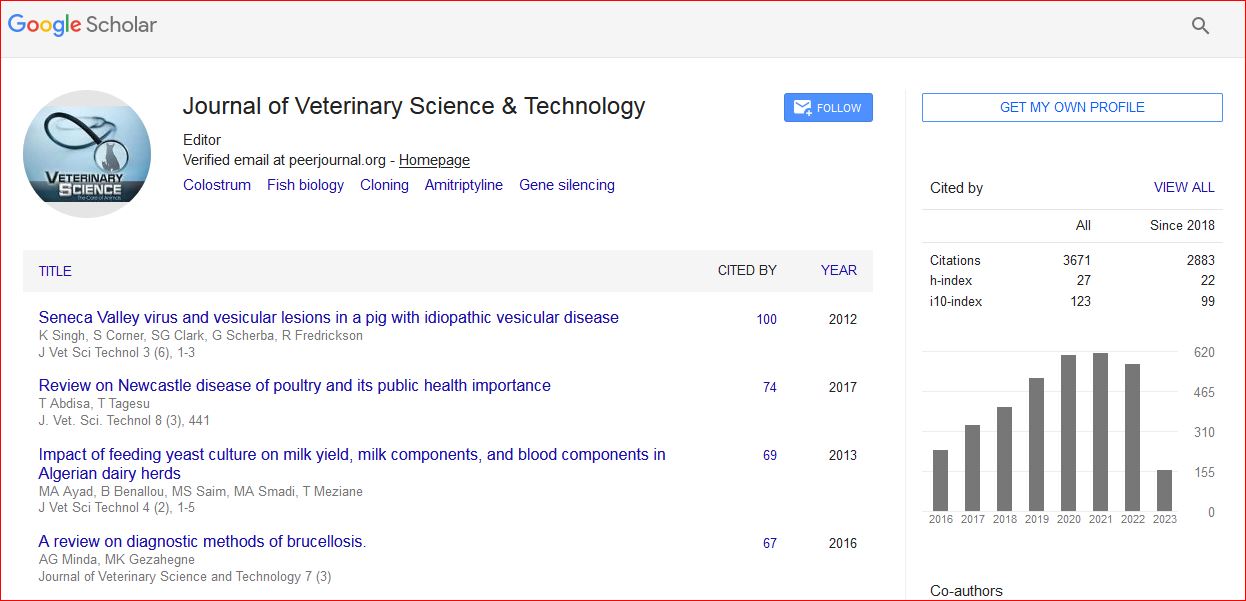
Veterinary Science & Technology received 4472 citations as per Google Scholar report