Opinion - (2025) Volume 16, Issue 4
Received: 02-Aug-2025, Manuscript No. jvst-26-188050;
Editor assigned: 04-Aug-2025, Pre QC No. P-188050;
Reviewed: 18-Aug-2025, QC No. Q-188050;
Revised: 25-Aug-2025, Manuscript No. R-188050;
Published:
01-Sep-2025
, DOI: 10.37421/2157-7579.2025.16.315
Citation: Haddad, Leila. ”Veterinary Care: Protecting Health,
Economy, Society.” J Vet Sci Techno 16 (2025):315.
Copyright: © 2025 Haddad L. This is an open-access article distributed under the terms of the Creative Commons Attribution License, which permits unrestricted use,
distribution and reproduction in any medium, provided the original author and source are credited.
Veterinary care serves as a fundamental pillar in the multifaceted strategy for preventing the dissemination of animal diseases, a critical endeavor with substantial ramifications for both public health and economic stability. This comprehensive approach encompasses a range of interventions, including the systematic implementation of vaccination programs aimed at conferring immunity to animal populations. Furthermore, the early detection and accurate diagnosis of potential illnesses are paramount in enabling timely and effective interventions. Prompt treatment strategies are essential to mitigate the severity of disease and prevent further transmission. Coupled with these measures are robust biosecurity protocols, meticulously designed and implemented across farms and animal facilities to create barriers against disease ingress.
The proactive engagement of veterinary professionals ensures that emerging outbreaks are identified and contained with utmost rapidity, thereby minimizing potential economic devastation and safeguarding human populations from the threat of zoonotic diseases. The Department of Veterinary Community Health Technology highlights the indispensable role veterinarians play in proactive disease surveillance, rigorous risk assessment, and comprehensive public education initiatives, all of which contribute to fostering a healthier animal population and, consequently, a more secure society. Effective vaccination strategies are an indispensable component of disease prevention within both livestock and companion animal populations. Veterinary experts are responsible for the meticulous design and execution of these critical programs, ensuring that vaccine efficacy is optimized and that herd immunity is established and maintained. This not only provides protection to individual animals but also constructs a vital barrier against the introduction and subsequent spread of infectious agents throughout a population, significantly reducing the reliance on costly therapeutic interventions and attenuating potential economic repercussions. Early detection and the swift diagnosis of animal diseases are of paramount importance in the overarching goal of preventing widespread outbreaks and their associated consequences. Veterinary diagnostic laboratories, bolstered by the expertise of skilled veterinarians, are central to the accurate identification of causative pathogens and the subsequent determination of the most appropriate course of action. This timely and decisive intervention serves to curtail the propagation of infection, decrease mortality rates, and avert substantial economic losses for both animal producers and owners. The implementation of stringent biosecurity measures forms the bedrock of strategies designed to prevent the introduction and subsequent transmission of diseases within animal populations. Veterinarians provide essential guidance and practical assistance in establishing and adhering to protocols governing hygiene, quarantine procedures, and the controlled movement of animals. These proactive practices are indispensable for maintaining the health and integrity of animal herds and flocks, thereby protecting vital agricultural economies and, critically, safeguarding public health from the persistent threat of zoonotic disease transmission. Zoonotic diseases, defined by their capacity to transmit from animals to humans, represent a significant and ongoing challenge to global public health. Veterinary care stands at the vanguard of efforts to control these transboundary diseases through diligent monitoring of animal health, the establishment of comprehensive surveillance programs, and the provision of expert advice on safe handling and interaction practices. This integrated approach, often referred to as 'One Health,' which judiciously combines human and animal health considerations, is absolutely vital for the effective prevention of pandemics and the overall safeguarding of communities worldwide. The escalating threat of antimicrobial resistance poses a profound risk to both animal and human health, demanding urgent and coordinated action. Veterinary professionals are entrusted with a critical role in promoting the responsible and judicious use of antimicrobials, advocating for the careful prescribing of these agents and actively championing the exploration and adoption of alternative therapeutic approaches to mitigate the development of resistant pathogens in animal populations. This essential stewardship of antimicrobials is imperative for preserving their therapeutic efficacy for current and future generations. Public health education, a key component of veterinary outreach, is instrumental in fostering responsible pet ownership and promoting safe interactions between humans and animals. This vital educational function of veterinary practice plays a crucial role in preventing the transmission of diseases, minimizing the risk of animal bites, and cultivating a harmonious coexistence between humans and the animal kingdom, ultimately contributing to enhanced community well-being and safety. Emergency preparedness and response constitute essential elements of the veterinary profession's contribution to disease prevention efforts. Veterinarians are extensively trained to identify emerging health threats, conduct thorough risk assessments, and effectively coordinate response strategies during disease outbreaks, whether they are localized incidents or widespread epidemics. Their specialized expertise is invaluable in minimizing the adverse impacts of animal diseases on vital agricultural sectors, fragile wildlife populations, and overarching public health. The economic ramifications stemming from animal disease outbreaks can be profoundly detrimental to livestock industries, underscoring the critical importance of veterinary disease prevention strategies. These strategies, encompassing vaccination, stringent biosecurity measures, and prompt early detection protocols, are therefore indispensable for securing the economic stability of the agricultural sector. This proactive and preventative approach is vital for averting substantial losses that can arise from mortality, reduced productivity, and the imposition of restrictive trade policies. The surveillance of wildlife health, an increasingly vital task undertaken by veterinarians, is gaining recognition as a crucial element in preventing the emergence and widespread dissemination of diseases that have the potential to impact both domestic animals and human populations. The diligent monitoring of wildlife populations for novel pathogens allows for the identification of potential threats before they can successfully transmit to susceptible domestic animal or human populations, thereby averting significant public health and economic crises. The profound economic consequences that can arise from animal disease outbreaks necessitate a robust and proactive approach to prevention. Veterinary services are at the forefront of implementing strategies that safeguard the economic viability of animal agriculture. By focusing on measures such as vaccination programs, the establishment of stringent biosecurity protocols, and the development of efficient early detection systems, veterinarians play a pivotal role in mitigating risks and ensuring the stability of this essential industry. This preventative mindset is crucial for protecting livelihoods and maintaining the supply of animal products. The escalating challenge of antimicrobial resistance poses a significant threat to the efficacy of treatments for both animal and human infections. Veterinary professionals are at the forefront of addressing this issue through the promotion of responsible antimicrobial stewardship. This involves advocating for judicious prescribing practices, encouraging the use of antimicrobials only when necessary, and actively seeking out and promoting alternative treatment and prevention strategies to reduce the selection pressure for resistant pathogens. Such efforts are vital for preserving the effectiveness of these critical medicines. The critical importance of early detection and rapid diagnosis in the management of animal disease outbreaks cannot be overstated. Veterinary diagnostic laboratories, equipped with advanced technologies and staffed by highly trained personnel, are instrumental in identifying the causative agents of disease. This allows for the swift implementation of appropriate control measures, thereby limiting the spread of infection, reducing morbidity and mortality rates, and preventing significant economic losses within the animal agriculture sector. The integration of veterinary expertise into public health initiatives is essential for a holistic approach to disease prevention. This includes educating the public on responsible animal ownership, promoting safe animal-human interactions, and raising awareness about the risks associated with zoonotic diseases. By fostering a greater understanding of animal health and its connection to human well-being, veterinarians contribute to a healthier and safer society for all. The economic stability of the agricultural sector is intrinsically linked to the health of animal populations. Animal disease outbreaks can lead to devastating financial losses through increased mortality, reduced productivity, and the imposition of trade restrictions. Veterinary disease prevention strategies, therefore, play a crucial role in protecting this vital industry. By investing in preventative measures, farmers and producers can safeguard their operations and contribute to overall economic resilience. Biosecurity measures are a cornerstone of preventing the spread of infectious diseases within animal populations. Veterinarians provide critical guidance on establishing and maintaining effective biosecurity protocols, which include measures such as hygiene, disinfection, quarantine of new animals, and the control of animal movement. These practices are essential for protecting the health of animals, ensuring food safety, and preventing the transmission of diseases to humans. The global threat of zoonotic diseases underscores the vital role of veterinary surveillance in their prevention. By monitoring animal populations for the emergence of novel pathogens, veterinarians can identify potential threats early on and implement control measures before they spread to human populations. This proactive approach, often integrated into a 'One Health' framework, is essential for safeguarding public health and preventing pandemics. The responsible use of antimicrobials in veterinary medicine is a critical component of combating antimicrobial resistance. Veterinarians play a key role in educating animal owners and producers about the importance of judicious antimicrobial use, promoting the judicious selection of antibiotics, and advocating for the use of alternatives whenever possible. This stewardship is essential for preserving the effectiveness of antimicrobials for both animal and human health. Emergency preparedness and response are integral to the role of veterinarians in protecting animal and public health. Veterinarians are trained to identify emerging disease threats, assess their potential impact, and develop and implement effective response plans. Their expertise is crucial for managing outbreaks, minimizing economic losses, and preventing the spread of diseases to new areas. Wildlife health surveillance is an increasingly important aspect of preventing the emergence and spread of infectious diseases. Veterinarians involved in wildlife health monitor animal populations for novel pathogens that could potentially spill over into domestic animals or humans. This proactive approach helps to identify and mitigate risks before they become major public health or economic threats. The critical role of early detection and diagnosis in managing animal disease outbreaks cannot be overemphasized. Veterinary diagnostic services provide the essential tools and expertise for identifying the causative agents of disease, enabling the timely implementation of control measures. This rapid response is crucial for limiting the spread of infection, reducing mortality, and minimizing economic losses for animal producers. Effective vaccination strategies are fundamental to the prevention and control of infectious diseases in animal populations. Veterinarians design and implement these programs, ensuring optimal vaccine efficacy and the establishment of herd immunity. This not only protects individual animals but also creates a crucial barrier against the introduction and spread of infectious agents within a population, thereby reducing the need for costly treatments and mitigating economic impacts. The prevention and control of animal diseases are intrinsically linked to the economic well-being of the agricultural sector. Veterinary services provide essential expertise in developing and implementing strategies that mitigate the risks associated with disease outbreaks. By focusing on proactive measures such as vaccination and biosecurity, veterinarians help to protect producers from significant financial losses and ensure the stability of food production. Public health education delivered by veterinarians is an indispensable tool for promoting responsible animal ownership and fostering safe interactions between humans and animals. This educational outreach helps to prevent the transmission of zoonotic diseases, reduces the risk of animal bites, and cultivates a more harmonious relationship between people and animals, ultimately contributing to the overall health and safety of communities. The economic consequences of animal disease outbreaks can be devastating, impacting not only individual producers but also entire agricultural industries and national economies. Veterinary disease prevention strategies, therefore, are not merely about animal welfare; they are critical for safeguarding economic stability. By investing in proactive measures, the agricultural sector can mitigate risks and ensure its continued viability.Veterinary care is a critical component in the global effort to prevent the spread of animal diseases, a crucial undertaking with profound implications for public health and economic stability. This involves a comprehensive strategy that includes proactive vaccination programs designed to immunize animal populations against prevalent diseases. A cornerstone of this approach is the early detection and accurate diagnosis of illnesses, allowing for timely interventions that can prevent widespread outbreaks. Prompt and effective treatment strategies are essential for mitigating the severity of diseases and minimizing their transmission.
Furthermore, the implementation of robust biosecurity measures on farms and in animal facilities is vital for creating barriers against the introduction and spread of pathogens. The proactive involvement of veterinarians ensures that potential outbreaks are identified and contained rapidly, thereby minimizing economic losses and protecting human populations from zoonotic diseases. The Department of Veterinary Community Health Technology emphasizes the integral role veterinarians play in surveillance, risk assessment, and public education, all aimed at fostering a healthier animal population and, by extension, a more secure society. Effective vaccination strategies represent a fundamental pillar in the prevention and control of diseases affecting both livestock and companion animals. Veterinary professionals are instrumental in the design and implementation of these crucial programs, ensuring optimal vaccine efficacy and the development of robust herd immunity. This not only safeguards individual animals but also establishes a vital defense against the introduction and dissemination of infectious agents within a population, significantly reducing the necessity for costly treatments and mitigating adverse economic impacts. The early identification and rapid diagnosis of animal diseases are of paramount importance in the broader objective of preventing extensive outbreaks. Veterinary diagnostic laboratories, supported by the expertise of skilled veterinarians, are pivotal in identifying pathogens and determining the most effective course of action. This timely and decisive intervention is crucial for limiting the spread of infection, reducing mortality rates, and preventing substantial economic losses for animal producers and owners alike. The diligent application of biosecurity measures is foundational to preventing the introduction and subsequent transmission of diseases within animal populations. Veterinarians provide essential guidance and support in the development and implementation of protocols concerning hygiene, quarantine procedures, and the controlled movement of animals. These practices are indispensable for maintaining the health and integrity of animal herds and flocks, thereby protecting vital agricultural economies and, crucially, safeguarding public health from the persistent threat of zoonotic diseases. Zoonotic diseases, those transmissible from animals to humans, constitute a significant and ongoing challenge to global public health. Veterinary care is at the forefront of controlling these diseases through vigilant monitoring of animal health, the establishment of comprehensive surveillance programs, and the provision of expert advice on safe handling and interaction practices. This integrated 'One Health' approach, which judiciously combines human and animal health considerations, is absolutely critical for the effective prevention of pandemics and the overall safeguarding of communities worldwide. The growing threat of antimicrobial resistance poses a profound risk to both animal and human health, necessitating urgent and coordinated action. Veterinary professionals hold a critical responsibility in promoting the responsible and judicious use of antimicrobials, advocating for careful prescribing practices and actively championing the exploration and adoption of alternative therapeutic approaches to diminish the development of resistant pathogens in animals. This essential stewardship of antimicrobials is imperative for preserving their therapeutic efficacy for current and future generations. Public health education, a key component of veterinary outreach, is instrumental in fostering responsible pet ownership and promoting safe interactions between humans and animals. This vital educational function of veterinary practice plays a crucial role in preventing the transmission of diseases, minimizing the risk of animal bites, and cultivating a harmonious coexistence between humans and the animal kingdom, ultimately contributing to enhanced community well-being and safety. Emergency preparedness and response constitute essential elements of the veterinary profession's contribution to disease prevention efforts. Veterinarians are extensively trained to identify emerging health threats, conduct thorough risk assessments, and effectively coordinate response strategies during disease outbreaks, whether they are localized incidents or widespread epidemics. Their specialized expertise is invaluable in minimizing the adverse impacts of animal diseases on vital agricultural sectors, fragile wildlife populations, and overarching public health. The economic consequences that can arise from animal disease outbreaks can be profoundly detrimental to livestock industries, underscoring the critical importance of veterinary disease prevention strategies. These strategies, encompassing vaccination, stringent biosecurity measures, and prompt early detection protocols, are therefore indispensable for securing the economic stability of the agricultural sector. This proactive and preventative approach is vital for averting substantial losses that can arise from mortality, reduced productivity, and the imposition of restrictive trade policies. The surveillance of wildlife health, an increasingly vital task undertaken by veterinarians, is gaining recognition as a crucial element in preventing the emergence and widespread dissemination of diseases that have the potential to impact both domestic animals and human populations. The diligent monitoring of wildlife populations for novel pathogens allows for the identification of potential threats before they can successfully transmit to susceptible domestic animal or human populations, thereby averting significant public health and economic crises. The profound economic consequences that can arise from animal disease outbreaks necessitate a robust and proactive approach to prevention. Veterinary services are at the forefront of implementing strategies that safeguard the economic viability of animal agriculture. By focusing on measures such as vaccination programs, the establishment of stringent biosecurity protocols, and the development of efficient early detection systems, veterinarians play a pivotal role in mitigating risks and ensuring the stability of this essential industry. This preventative mindset is crucial for protecting livelihoods and maintaining the supply of animal products. The escalating challenge of antimicrobial resistance poses a significant threat to the efficacy of treatments for both animal and human infections. Veterinary professionals are at the forefront of addressing this issue through the promotion of responsible antimicrobial stewardship. This involves advocating for judicious prescribing practices, encouraging the use of antimicrobials only when necessary, and actively seeking out and promoting alternative treatment and prevention strategies to reduce the selection pressure for resistant pathogens. Such efforts are vital for preserving the effectiveness of these critical medicines. The critical role of early detection and rapid diagnosis in the management of animal disease outbreaks cannot be overemphasized. Veterinary diagnostic services provide the essential tools and expertise for identifying the causative agents of disease, enabling the timely implementation of control measures. This rapid response is crucial for limiting the spread of infection, reducing mortality, and minimizing economic losses for animal producers. Effective vaccination strategies are fundamental to the prevention and control of infectious diseases in animal populations. Veterinarians design and implement these programs, ensuring optimal vaccine efficacy and the establishment of herd immunity. This not only protects individual animals but also creates a crucial barrier against the introduction and spread of infectious agents within a population, thereby reducing the need for costly treatments and mitigating economic impacts. The prevention and control of animal diseases are intrinsically linked to the economic well-being of the agricultural sector. Veterinary services provide essential expertise in developing and implementing strategies that mitigate the risks associated with disease outbreaks. By focusing on proactive measures such as vaccination and biosecurity, veterinarians help to protect producers from significant financial losses and ensure the stability of food production. Public health education delivered by veterinarians is an indispensable tool for promoting responsible animal ownership and fostering safe interactions between humans and animals. This educational outreach helps to prevent the transmission of zoonotic diseases, reduces the risk of animal bites, and cultivates a more harmonious relationship between people and animals, ultimately contributing to the overall health and safety of communities. The economic consequences of animal disease outbreaks can be devastating, impacting not only individual producers but also entire agricultural industries and national economies. Veterinary disease prevention strategies, therefore, are not merely about animal welfare; they are critical for safeguarding economic stability. By investing in proactive measures, the agricultural sector can mitigate risks and ensure its continued viability. Biosecurity measures are essential for preventing the introduction and spread of diseases within animal populations. Veterinarians advise on and help implement protocols for hygiene, quarantine, and animal movement control. These practices are crucial for maintaining healthy animal herds and flocks, safeguarding agricultural economies, and protecting public health from zoonotic threats. Zoonotic diseases pose a significant public health challenge, and veterinary care is at the forefront of controlling them. This involves monitoring animal health, implementing surveillance programs, and advising on safe handling practices. The 'One Health' approach, integrating human and animal health, is vital for preventing pandemics and safeguarding communities. Responsible antimicrobial use in veterinary medicine is crucial for combating antimicrobial resistance. Veterinarians promote judicious prescribing and advocate for alternatives to reduce the development of resistant pathogens in animals, ensuring the efficacy of antimicrobials for future use. Public health education by veterinarians is instrumental in promoting responsible pet ownership and safe animal-human interactions.This helps prevent disease transmission, reduces bite risks, and fosters a harmonious relationship between humans and animals, contributing to community well-being. Emergency preparedness and response are critical veterinary roles in disease prevention. Veterinarians identify emerging threats, assess risks, and coordinate responses during outbreaks, minimizing impacts on agriculture, wildlife, and public health. The economic consequences of animal disease outbreaks are severe, making veterinary disease prevention strategies vital for safeguarding agricultural economies. Proactive approaches prevent losses due to mortality, reduced productivity, and trade restrictions. Wildlife health surveillance by veterinarians is vital for preventing the emergence and spread of diseases that can affect domestic animals and humans. Monitoring wildlife populations helps identify potential threats before they spill over, averting public health and economic crises.Veterinary care plays a critical role in preventing the spread of animal diseases, which have significant public health and economic implications. This involves a multifaceted approach including vaccination programs, early detection and diagnosis, prompt treatment, and robust biosecurity measures. Proactive veterinary involvement ensures rapid containment of outbreaks, minimizing economic losses and protecting human populations from zoonotic diseases. Veterinarians are key in surveillance, risk assessment, and public education, fostering healthier animal populations and safer societies. Effective vaccination strategies protect individual animals and create herd immunity, reducing the need for costly treatments. Early detection and diagnosis are crucial for outbreak management, preventing widespread infection and economic losses. Biosecurity measures are fundamental to preventing disease transmission, safeguarding agricultural economies and public health. Zoonotic diseases pose a significant challenge, and veterinary care is at the forefront of their control through monitoring and surveillance. Responsible antimicrobial use by veterinarians is essential to combat antimicrobial resistance. Public health education by veterinarians promotes responsible pet ownership and safe animal-human interactions, preventing disease transmission and fostering community well-being. Emergency preparedness and response are critical veterinary functions to manage outbreaks and minimize their impact. The economic stability of agriculture relies heavily on veterinary disease prevention strategies that avert losses from mortality, reduced productivity, and trade restrictions. Wildlife health surveillance by veterinarians is increasingly recognized as vital for preventing disease emergence and spread to domestic animals and humans.
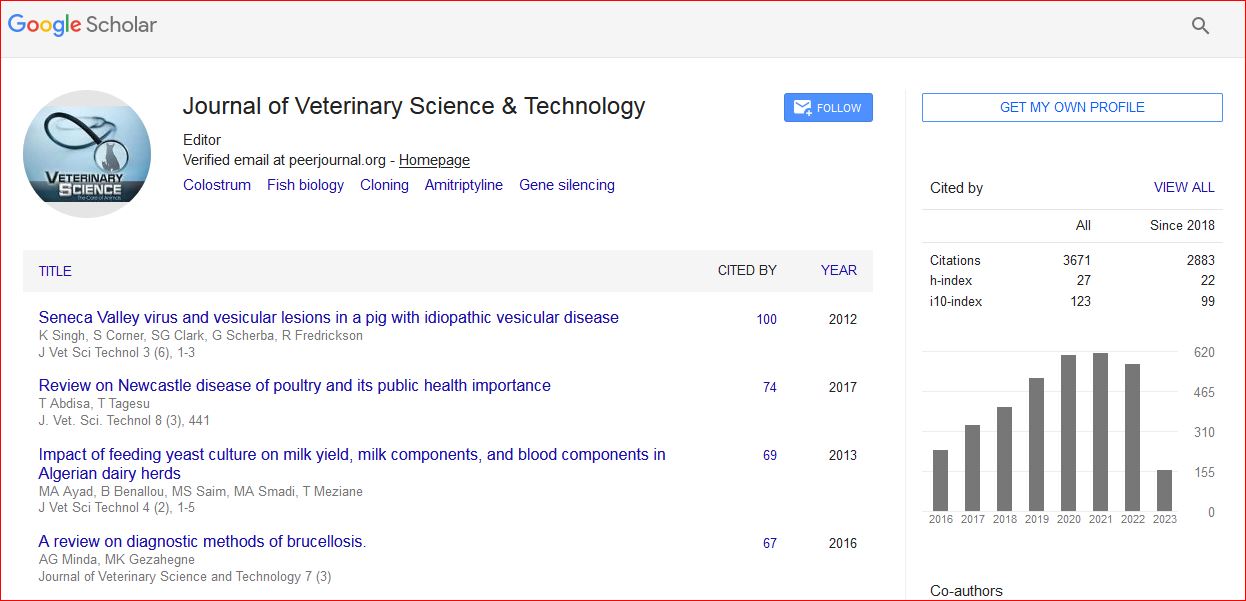
Veterinary Science & Technology received 4472 citations as per Google Scholar report