Short Communication - (2025) Volume 11, Issue 2
Received: 01-Apr-2025, Manuscript No. JOV-26-186413;
Editor assigned: 03-Apr-2025, Pre QC No. P-186413;
Reviewed: 17-Apr-2025, QC No. Q-186413;
Revised: 22-Apr-2025, Manuscript No. R-186413;
Published:
29-Apr-2025
, DOI: 10.37421/2471-9544.2025.11.300
Citation: Svensson, Johan. ”Vasculitis: Immune Mechanisms, Triggers, and Personalized Therapies.” J Vasc 11 (2025):300.
Copyright: © 2025 Svensson J. This is an open-access article distributed under the terms of the Creative Commons Attribution License, which permits unrestricted use, distribution and reproduction in any medium, provided the original author and source are credited.
The intricate dynamics of immune cell infiltration and adaptation within the walls of miniature arteries, a phenomenon termed 'immune drift,' are central to understanding vasculitis pathogenesis and identifying novel therapeutic targets. This research explores how resident immune cells in the arterial wall undergo phenotypic changes and how circulating immune cells are recruited and retained, ultimately contributing to chronic inflammation and vascular damage. Key insights highlight the heterogeneity of immune responses in different microvascular beds and the potential for personalized therapeutic strategies based on specific immune drift patterns [1].
Investigating the immunological landscape of small vessel vasculitis, this paper details the cellular and molecular mechanisms driving endothelial dysfunction and subsequent tissue damage. It emphasizes the role of specific cytokine profiles and complement activation in perpetuating inflammation and highlights the challenges in treating this condition due to its complex pathophysiology. The findings suggest that targeting specific immune checkpoints could offer a more effective approach to managing vasculitic diseases [2].
This study focuses on the role of autoantibodies and T-cell responses in the initiation and perpetuation of anti-neutrophil cytoplasmic antibody (ANCA)-associated vasculitis. It provides insights into the genetic predisposition and environmental triggers that contribute to the breakdown of immune tolerance. The research underscores the importance of understanding the precise antigenic targets and effector mechanisms to develop targeted immunotherapies [3].
Exploring the impact of microvascular remodeling in chronic inflammatory conditions, this article examines how persistent immune cell activation alters the structural integrity of small arteries. It details the inflammatory cascades leading to intimal hyperplasia and smooth muscle cell proliferation. The study suggests that interventions aimed at modulating the inflammatory microenvironment could prevent or reverse vascular damage in vasculitic syndromes [4].
This work investigates the role of specific immune cell subsets, such as regulatory T cells (Tregs) and myeloid-derived suppressor cells (MDSCs), in modulating the immune response within miniature arteries during vasculitis. It highlights their potential in maintaining immune homeostasis and suppressing aberrant inflammation. The findings propose that enhancing the function or number of these suppressive cells could be a therapeutic strategy for preventing or treating vasculitis [5].
The article examines the implications of genetic variations in immune response genes for the susceptibility and severity of miniature artery vasculitis. It identifies specific single nucleotide polymorphisms (SNPs) associated with an increased risk of developing vasculitic conditions. This research emphasizes the importance of a personalized genetic approach in diagnosing and managing vasculitis [6].
This review synthesizes current knowledge on the role of the complement system in the pathogenesis of various forms of vasculitis affecting small arteries. It details how complement activation contributes to inflammation, tissue damage, and autoantibody production. The article advocates for the development and use of complement inhibitors as a therapeutic strategy for specific vasculitic phenotypes [7].
Investigating the interplay between the endothelium and immune cells in miniature arteries, this study highlights how endothelial activation drives inflammatory cell recruitment and adhesion. It explores the molecular adhesion molecules and signaling pathways involved. The findings suggest that targeting endothelial activation could be a promising approach to dampen vascular inflammation [8].
This research delves into the therapeutic potential of targeting specific inflammatory cytokines, such as TNF-alpha and IL-6, in the treatment of vasculitis affecting miniature arteries. It analyzes the efficacy and safety profiles of biologics that target these cytokines. The study concludes that while these therapies can be effective, careful patient selection and monitoring are essential due to potential side effects [9].
This work focuses on the role of neutrophils and their extracellular traps (NETs) in the pathogenesis of vasculitis. It elucidates how NET formation contributes to vascular damage and inflammation. The study suggests that inhibiting NETosis could be a novel therapeutic avenue for vasculitic conditions [10].
The Lattice of Immune Drift in Miniature Arteries explores the complex process of immune cell infiltration and adaptation within arterial walls, a phenomenon critical for understanding vasculitis. It details how resident and circulating immune cells change and interact, leading to chronic inflammation and vascular damage, and suggests personalized therapeutic strategies based on immune drift patterns [1].
Cellular and Molecular Mechanisms in Small Vessel Vasculitis investigates the immunological basis of small vessel vasculitis, focusing on endothelial dysfunction and tissue damage driven by specific cytokine profiles and complement activation. The paper discusses treatment challenges and proposes targeting immune checkpoints for improved management [2].
The study on the Pathogenesis of ANCA-Associated Vasculitis examines the role of autoantibodies and T-cell responses in initiating and perpetuating ANCA-associated vasculitis. It highlights genetic and environmental factors contributing to immune tolerance breakdown and emphasizes the need for targeted immunotherapies based on precise antigenic targets and effector mechanisms [3].
Microvascular Remodeling in Chronic Inflammatory Diseases: A Focus on Vasculitis examines how sustained immune cell activation alters the structure of small arteries, leading to intimal hyperplasia and smooth muscle cell proliferation. It proposes that modulating the inflammatory microenvironment can prevent or reverse vascular damage in vasculitic syndromes [4].
Immunomodulatory Roles of Regulatory T Cells and MDSCs in Vascular Inflammation investigates the function of Tregs and MDSCs in modulating immune responses within miniature arteries during vasculitis. It suggests that augmenting these suppressive cells could be a viable therapeutic strategy for preventing or treating the condition [5].
Genetic Determinants of Susceptibility to Miniature Artery Vasculitis analyzes genetic variations influencing susceptibility and severity of vasculitis. It identifies specific SNPs linked to increased risk, underscoring the value of personalized genetic approaches in diagnosis and management [6].
The Complement System in Vasculitis: Mechanisms and Therapeutic Opportunities reviews the role of the complement system in small artery vasculitis, detailing its contribution to inflammation, tissue damage, and autoantibody production. The review supports the use of complement inhibitors for specific vasculitic phenotypes [7].
Endothelial Activation as a Driver of Immune Cell Recruitment in Miniature Arteries explores the crucial interplay between endothelium and immune cells, showing how endothelial activation promotes inflammatory cell recruitment and adhesion. It identifies key molecular adhesion molecules and signaling pathways, suggesting that targeting endothelial activation could reduce vascular inflammation [8].
Targeting Cytokines in Miniature Artery Vasculitis: A Therapeutic Overview discusses the efficacy and safety of targeting inflammatory cytokines like TNF-alpha and IL-6 in vasculitis treatment. It highlights the need for careful patient selection and monitoring due to potential side effects of biologic therapies [9].
Neutrophil Extracellular Traps in Vasculitis Pathogenesis focuses on the role of neutrophils and NETs in vasculitis, explaining how NET formation contributes to vascular damage and inflammation. The research proposes that inhibiting NETosis represents a novel therapeutic approach for vasculitic conditions [10].
This collection of research provides a comprehensive overview of vasculitis, focusing on small and miniature arteries. It delves into the intricate immunological processes involved, including immune cell infiltration and adaptation ('immune drift'), endothelial dysfunction, and microvascular remodeling. The studies highlight the roles of autoantibodies, T-cell responses, complement activation, and specific immune cell subsets like Tregs and MDSCs in disease pathogenesis. Genetic factors and environmental triggers contributing to susceptibility are also examined. Furthermore, the research explores therapeutic strategies such as targeting immune checkpoints, cytokines (TNF-alpha, IL-6), and neutrophils (NETosis), and emphasizes the potential of complement inhibitors and modulating the inflammatory microenvironment. The importance of personalized medicine, including genetic approaches and careful patient selection for therapies, is consistently underscored throughout these findings.
None
None
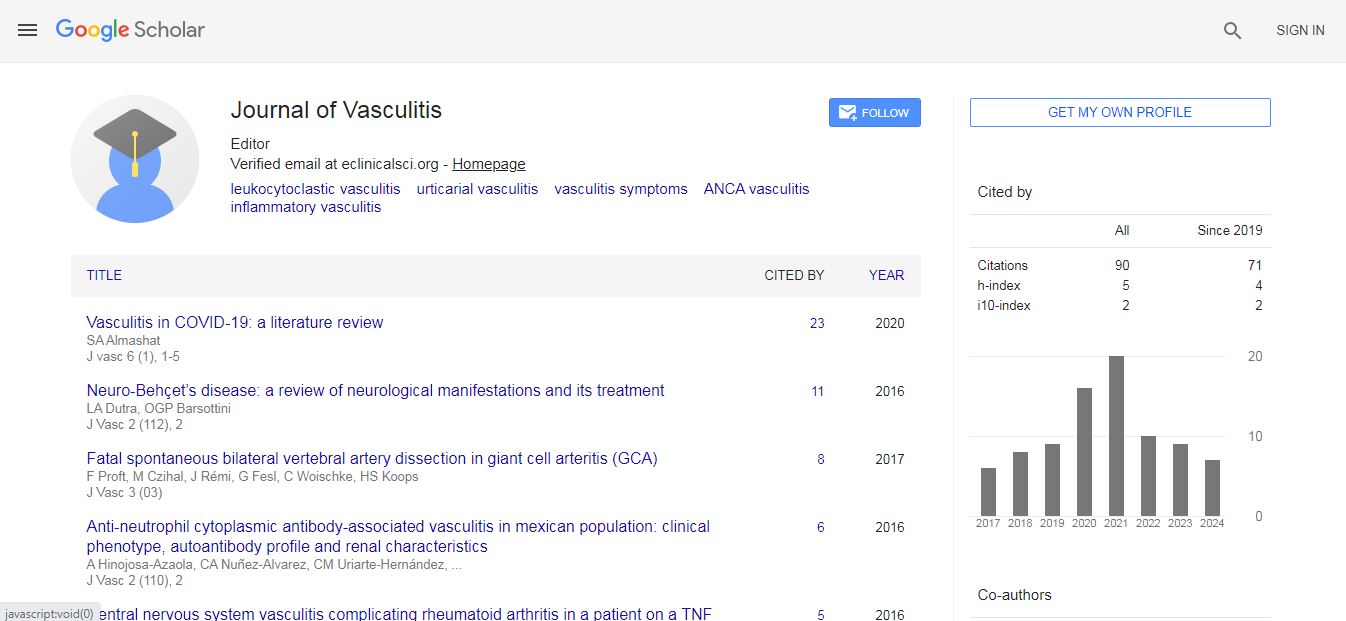
Journal of Vasculitis received 83 citations as per Google Scholar report