Commentary - (2025) Volume 13, Issue 5
Received: 01-Oct-2025, Manuscript No. jcdd-25-177664;;
Editor assigned: 03-Oct-2025, Pre QC No. P-177664;;
Reviewed: 17-Oct-2025, QC No. Q-177664;;
Revised: 22-Oct-2025, Manuscript No. R-177664;;
Published:
29-Oct-2025
, DOI: 10.37421/2329-9517.2025.13.692
Citation: Lucia Bianchi. Unhealthy Diets Drive Widespread
Disease Burden. J Cardiovasc Dis Diagn 13 (2025):692.
Copyright: © 2025 B. Lucia This is an open-access article distributed under the terms of the Creative Commons Attribution License, which permits unrestricted use, distribution
and reproduction in any medium, provided the original author and source are credited.
This article systematically reviews and meta-analyzes the observational evidence on the association between ultra-processed food consumption and various health outcomes, highlighting their significant contribution to the burden of non-communicable diseases. It underscores how these foods, characterized by industrial formulations, often lack nutritional value and promote overconsumption due to their palatability and convenience, leading to adverse effects on cardiovascular health, metabolic function, and overall mortality [1].
This systematic review and meta-analysis explores the longitudinal relationship between dietary patterns and depressive symptoms in adults. It concludes that a diet high in processed foods, refined grains, and sugary drinks is associated with an increased risk of developing depressive symptoms, underscoring the critical role of nutrition in mental well-being and the need for dietary interventions in mental health strategies [2].
This systematic review and meta-analysis highlights the strong association between unhealthy dietary patterns, characterized by high intake of energy-dense, nutrient-poor foods, and the prevalence of childhood obesity. It emphasizes the urgent need for public health interventions targeting dietary habits early in life to combat the rising global burden of pediatric obesity and its long-term health consequences [3].
This meta-analysis quantifies the dose-response relationship between unhealthy dietary patterns and the risk of cardiovascular disease, demonstrating a significant increase in risk with higher adherence to diets rich in red meat, processed foods, and sugary beverages. It provides compelling evidence that dietary choices are pivotal determinants of cardiovascular health, advocating for healthier eating habits to mitigate heart disease burden [4].
This systematic review provides a comprehensive overview of global dietary shifts, highlighting a pervasive trend towards increased consumption of processed foods, refined carbohydrates, and animal products, alongside a decline in fruit, vegetable, and whole grain intake. It links these unhealthy dietary patterns to the rising global prevalence of non-communicable diseases, stressing the urgency of promoting sustainable and healthy food systems [5].
This systematic review elucidates how the typical Western diet, characterized by high fat, sugar, and processed foods, profoundly alters the gut microbiome composition and function. These changes contribute to gut dysbiosis, inflammation, and increased intestinal permeability, which are crucial factors in the pathogenesis of metabolic syndrome and other chronic diseases [6].
This systematic review and meta-analysis investigates the relationship between dietary patterns and cognitive function in older adults, revealing that adherence to unhealthy diets, such as those rich in saturated fats and refined sugars, is consistently associated with an increased risk of cognitive decline and dementia. The findings underscore diet as a modifiable factor for maintaining brain health in aging populations [7].
This systematic review and meta-analysis establishes a clear link between unhealthy dietary patterns, characterized by high intake of refined carbohydrates, saturated fats, and processed meats, and increased levels of systemic inflammation. It highlights how chronic inflammation, driven by poor diet, acts as a common pathway contributing to the risk of various non-communicable diseases and increased all-cause mortality [8].
This systematic review examines the intricate relationship between socioeconomic disparities and the adoption of unhealthy dietary patterns, demonstrating that individuals in lower socioeconomic strata often face greater barriers to accessing healthy foods and are more susceptible to diets rich in processed and energy-dense options. These disparities contribute significantly to unequal health outcomes and highlight the need for equitable food policies [9].
This systematic review and meta-analysis synthesizes evidence on the association between unhealthy dietary patterns and cancer risk, concluding that diets high in red and processed meats, refined grains, and sugary beverages are significantly linked to an elevated risk of developing various cancers. The findings underscore the role of dietary modifications as a key strategy in cancer prevention [10].
This collection of research highlights the pervasive impact of unhealthy dietary patterns and ultra-processed food consumption on a spectrum of human health outcomes. Ultra-processed foods, defined by their industrial formulation, often lack vital nutrients while promoting overconsumption due to their palatability and convenience. These characteristics are linked to adverse effects on cardiovascular health, metabolic function, and overall mortality [1]. Global dietary trends show a pervasive shift towards increased consumption of processed foods, refined carbohydrates, and animal products, while the intake of fruits, vegetables, and whole grains declines [5].
These global dietary shifts are strongly associated with the rising worldwide prevalence of non-communicable diseases. This situation stresses the urgent need for promoting sustainable and healthy food systems to counter these widespread health implications [5].
Significant evidence quantifies the dose-response relationship between unhealthy dietary patterns and cardiovascular disease risk, where diets rich in red meat, processed foods, and sugary beverages notably increase risk. This finding provides compelling evidence that dietary choices are pivotal determinants of cardiovascular health, advocating for healthier eating habits to mitigate heart disease burden [4]. Furthermore, unhealthy dietary patterns, characterized by high intake of energy-dense, nutrient-poor foods, are strongly associated with the prevalence of childhood obesity. Public health interventions targeting early life dietary habits are urgently needed to combat this rising global burden and its long-term health consequences [3]. Beyond physical health, a diet high in processed foods, refined grains, and sugary drinks is longitudinally associated with an increased risk of developing depressive symptoms in adults, underscoring nutrition's critical role in mental well-being and the necessity for dietary interventions in mental health strategies [2].
The typical Western diet, high in fat, sugar, and processed foods, profoundly alters gut microbiome composition and function. These changes contribute to gut dysbiosis, inflammation, and increased intestinal permeability, crucial factors in the pathogenesis of metabolic syndrome and other chronic diseases [6]. Relatedly, unhealthy dietary patternsâ??marked by high refined carbohydrates, saturated fats, and processed meatsâ??are clearly linked to elevated systemic inflammation. This chronic inflammation, driven by poor diet, acts as a common pathway contributing to the risk of various non-communicable diseases and increased all-cause mortality [8]. Moreover, adherence to unhealthy diets, particularly those rich in saturated fats and refined sugars, is consistently associated with an increased risk of cognitive decline and dementia in older adults, highlighting diet as a modifiable factor for maintaining brain health in aging populations [7].
Diets high in red and processed meats, refined grains, and sugary beverages are significantly linked to an elevated risk of developing various cancers. The findings underscore the role of dietary modifications as a key strategy in cancer prevention [10]. Additionally, socioeconomic disparities intricately connect with the adoption of unhealthy dietary patterns. Individuals in lower socioeconomic strata often face greater barriers to accessing healthy foods, making them more susceptible to diets rich in processed and energy-dense options. These disparities profoundly contribute to unequal health outcomes and highlight the imperative for equitable food policies [9].
Research consistently demonstrates that unhealthy dietary patterns, characterized by high consumption of ultra-processed foods, refined grains, sugary drinks, and processed meats, are significant contributors to a wide array of adverse health outcomes. These foods, often industrially formulated for palatability and convenience, typically lack nutritional value and encourage overconsumption. Such diets are strongly linked to the burden of non-communicable diseases, impacting cardiovascular health, metabolic function, and overall mortality. Specific findings show a clear association between poor diets and increased risks of depressive symptoms in adults, childhood obesity, and cardiovascular disease. Beyond these, unhealthy eating habits profoundly alter the gut microbiome, leading to dysbiosis, inflammation, and increased intestinal permeability, which are foundational to metabolic syndrome and other chronic conditions. Systemic inflammation, fueled by diets rich in refined carbohydrates and saturated fats, is identified as a common pathway for numerous diseases and higher all-cause mortality. Cognitive decline and dementia in older adults are also consistently associated with unhealthy diets. Moreover, the evidence points to a significant link between unhealthy dietary patterns and an elevated risk of various cancers. It's crucial to acknowledge the role of socioeconomic disparities, as individuals in lower socioeconomic strata often face greater challenges in accessing healthy foods, exacerbating these health inequalities. Globally, there's a troubling trend towards increased processed food consumption and a decline in nutrient-rich options, underscoring the urgent need for interventions promoting healthier and more equitable food systems.
Indexed at, Google Scholar, Crossref
Indexed at, Google Scholar, Crossref
Indexed at, Google Scholar, Crossref
Indexed at, Google Scholar, Crossref
Indexed at, Google Scholar, Crossref
Indexed at, Google Scholar, Crossref
Indexed at, Google Scholar, Crossref
Indexed at, Google Scholar, Crossref
Indexed at, Google Scholar, Crossref
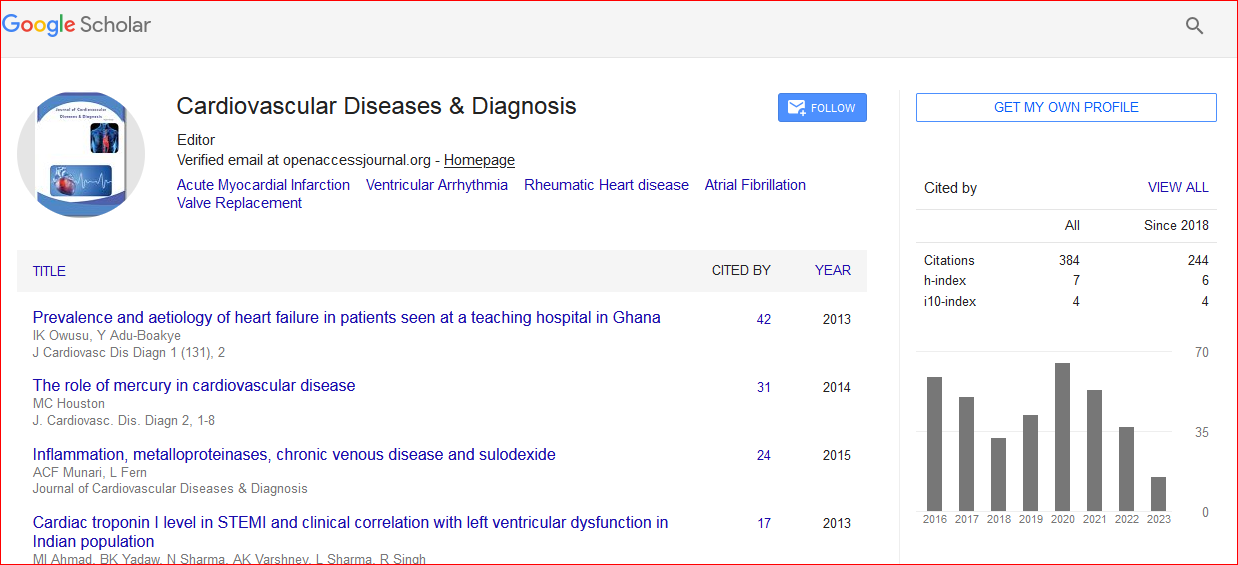
Cardiovascular Diseases & Diagnosis received 427 citations as per Google Scholar report