Commentary - (2025) Volume 14, Issue 4
Received: 01-Dec-2025, Manuscript No. jms-25-177889;
Editor assigned: 03-Dec-2025, Pre QC No. P-177889;
Reviewed: 17-Dec-2025, QC No. Q-177889;
Revised: 22-Dec-2025, Manuscript No. R-177889;
Published:
29-Dec-2025
, DOI: 10.37421/2167-0943.2024.13.424
Citation: Erez, Nadav. ”Type 2 Diabetes: Advances in Management and Etiology.” J Metabolic Synd 14 (2025):424.
Copyright: © 2025 Erez N. This is an open-access article distributed under the terms of the Creative Commons Attribution License, which permits unrestricted use, distribution and reproduction in any medium, provided the original author and source are credited.
Type 2 diabetes mellitus (T2DM) represents a chronic metabolic disorder with a rapidly increasing global prevalence, posing substantial burdens on public health systems worldwide. The complexity of its pathophysiology necessitates diverse and evolving strategies for effective management and prevention. Significant therapeutic advancements have been made, notably with agents like Semaglutide. This GLP-1 receptor agonist has demonstrated remarkable efficacy, not only in achieving robust glycemic control but also in promoting considerable weight loss, which is often a critical factor in T2DM progression. Furthermore, Semaglutide provides distinct cardiovascular benefits, establishing its role as a key therapeutic option for comprehensive patient care[1].
Another class of drugs revolutionizing T2DM treatment is Sodium-Glucose Co-Transporter 2 (SGLT2) inhibitors. These agents offer crucial cardio-renal protective effects that extend well beyond their primary function of improving glycemic control. Studies consistently show that SGLT2 inhibitors significantly reduce the risk of heart failure hospitalizations, slow the progression of chronic kidney disease, and decrease the incidence of major adverse cardiovascular events, thereby addressing some of the most debilitating complications associated with T2DM[2].
Beyond pharmacological interventions, lifestyle modifications remain a cornerstone of both T2DM prevention and its ongoing management. Comprehensive lifestyle programs, which encompass targeted dietary changes and recommendations for increased physical activity, have proven highly effective. These non-pharmacological approaches often lead to significant improvements in glycemic control and can reduce a patient's reliance on medication, highlighting the profound impact of behavioral changes on disease trajectory[3].
Early identification of individuals at risk for T2DM is paramount for implementing timely preventive strategies. In this domain, the research into emerging biomarkers is particularly promising. These biomarkers include a range of genetic markers, specific metabolites, and various inflammatory proteins. Such indicators hold the potential for significantly earlier detection and more accurate prediction of T2DM risk, allowing for proactive and personalized preventive measures before overt disease manifestation[4].
Complications of T2DM demand careful attention and dedicated management strategies. Diabetic neuropathy, for example, is a highly prevalent and debilitating complication. It presents with a wide array of clinical features, necessitating a multi-faceted approach to both its diagnosis and comprehensive management. Key elements of this approach include maintaining strict glycemic control to slow progression and providing symptomatic relief to improve patient quality of life[5].
Unraveling the genetic underpinnings of T2DM provides critical insights into disease susceptibility. It's clear that genetic factors contribute substantially to an individual's predisposition to developing type 2 diabetes. Ongoing and extensive research continues to identify numerous susceptibility genes, and importantly, explores how these genetic variations interact with various environmental influences to drive the complex process of disease development and progression[6].
The role of the gut microbiota in health and disease has gained considerable recognition, extending to its significant influence on the pathogenesis and progression of T2DM. The intricate interplay between the gut microbiome and host physiology impacts metabolism, systemic inflammation, and insulin sensitivity. This deep connection suggests exciting new avenues for therapeutic intervention, potentially through targeted microbial modulation strategies to improve metabolic health[7].
As our understanding of individual variability grows, precision medicine approaches are becoming increasingly central to T2DM care. These cutting-edge strategies involve leveraging comprehensive individual data, including genetic profiles, detailed lifestyle information, and environmental exposures. The goal is to develop more tailored and highly effective management plans, moving away from a generalized "one-size-fits-all" model towards genuinely personalized treatment paradigms[8].
Recent global health challenges have also underscored the dynamic relationship between infectious diseases and metabolic conditions. The COVID-19 pandemic, for instance, revealed a complex and bidirectional relationship with T2DM. This interaction not only exacerbated existing health disparities among diabetic patients but also complicated disease management and potentially increased the risk of severe outcomes for those affected by both conditions[9].
The continuous evolution of scientific knowledge means that novel therapeutic strategies for T2DM are always emerging. These innovative approaches often target mechanisms beyond conventional glycemic control, aiming for a broader impact on patient well-being. By focusing on new targets, these therapies offer the promise of improved patient outcomes and more effectively address comorbidities such as cardiovascular and renal complications, thereby enhancing the overall scope of T2DM treatment[10].
Significant strides have been made in the pharmacological management of type 2 diabetes (T2DM), moving beyond singular glycemic control to comprehensive metabolic and cardiovascular health. Here's the thing, therapies like Semaglutide, a GLP-1 receptor agonist, have fundamentally shifted treatment paradigms. This medication not only provides potent glycemic regulation but also facilitates substantial weight loss and offers protective cardiovascular benefits, making it a cornerstone in modern T2DM care [1]. Similarly, SGLT2 inhibitors have demonstrated pivotal cardio-renal protective effects. They consistently reduce the incidence of heart failure, impede the progression of chronic kidney disease, and lower the risk of major adverse cardiovascular events, thereby addressing critical comorbidities associated with T2DM progression [2]. These advancements underscore a shift towards therapies that offer systemic benefits, improving long-term outcomes for patients with T2DM.
Beyond pharmacological interventions, preventative strategies and early detection remain crucial. Lifestyle interventions, encompassing structured dietary changes and increased physical activity, are exceptionally effective. They often lead to improved glycemic control and can significantly reduce the need for pharmacological support, highlighting the power of patient-driven management [3]. Complementing these efforts, the identification of novel biomarkers is advancing the capability for earlier detection and more precise prediction of T2DM risk. Genetic markers, specific metabolites, and inflammatory proteins are being investigated to enable timely preventive strategies, allowing for interventions before the disease fully develops [4]. What this really means is, combining lifestyle changes with sophisticated early warning systems creates a robust preventative framework.
A deeper understanding of T2DM's pathophysiology reveals complex interacting factors. Genetic predispositions play a substantial role, with ongoing research continuing to uncover numerous susceptibility genes. These genes interact intricately with environmental influences, collectively driving the onset and progression of the disease [6]. Furthermore, the gut microbiota has emerged as a significant modulator of T2DM. Its influence on host metabolism, systemic inflammation, and insulin sensitivity provides intriguing insights into potential therapeutic targets through microbial modulation [7]. Alongside understanding the disease's roots, managing its complications is vital. Diabetic neuropathy, a prevalent and often debilitating complication, demands a multi-faceted approach to diagnosis and management, primarily focusing on strict glycemic control and symptomatic relief to preserve quality of life [5].
Looking forward, personalized medicine is transforming how T2DM is approached. Precision medicine strategies are advancing, utilizing individual genetic, lifestyle, and environmental data to craft more tailored and effective management plans [8]. This moves beyond the older, uniform treatment models, aiming for individualized care that respects each patient's unique biological and lifestyle profile. The impact of broader health crises also merits attention; for example, the COVID-19 pandemic brought to light a complex, two-way relationship with T2DM. It exacerbated existing health disparities, complicated ongoing disease management, and notably increased the risk of severe outcomes for diabetic patients [9]. These interactions emphasize the need for integrated healthcare strategies that consider metabolic conditions within a broader public health context.
The landscape of T2DM treatment is continuously evolving with the emergence of novel therapeutic strategies. These new approaches are often designed to target mechanisms beyond conventional glycemic control, offering pathways to improved patient outcomes and more effectively addressing prevalent comorbidities like cardiovascular and renal complications. By expanding the range of therapeutic targets, the field aims to provide more comprehensive and effective solutions for managing the complex interplay of symptoms and complications associated with type 2 diabetes [10]. This sustained innovation ensures that patients will continue to benefit from increasingly effective and personalized treatment options.
Managing type 2 diabetes involves a multifaceted approach, with significant advancements in therapeutic strategies and a deeper understanding of its complex etiology. Semaglutide, a GLP-1 receptor agonist, has shown remarkable efficacy, not just in glycemic control and weight loss, but also in providing crucial cardiovascular benefits. Complementing this, SGLT2 inhibitors deliver vital cardio-renal protective effects, notably reducing the risks of heart failure and chronic kidney disease progression. Beyond pharmacological interventions, lifestyle changes, including dietary adjustments and increased physical activity, prove highly effective for both preventing and managing the disease, often lessening reliance on medication. Looking at prevention, emerging biomarkers like genetic markers, metabolites, and inflammatory proteins offer promising avenues for earlier detection and more accurate risk prediction, enabling timely preventive actions. Understanding the disease also means acknowledging common complications such as diabetic neuropathy, which requires comprehensive diagnostic and management strategies, including strict glycemic control. The underlying mechanisms of type 2 diabetes are increasingly clear. Genetic factors play a substantial role, with research pinpointing numerous susceptibility genes. Additionally, the gut microbiota significantly influences pathogenesis and progression by affecting host metabolism and insulin sensitivity, hinting at potential microbial modulation therapies. In terms of patient care, precision medicine, utilizing individual genetic, lifestyle, and environmental data, is paving the way for more customized and effective treatment plans, moving away from a uniform approach. Recent global events, specifically the COVID-19 pandemic, highlighted a complex, two-way relationship with type 2 diabetes, worsening health disparities and complicating disease management. Despite challenges, the field is dynamic, with novel therapeutic strategies continually emerging, targeting areas beyond traditional glycemic control to improve patient outcomes and address associated comorbidities.
None
None
Indexed at, Google Scholar, Crossref
Indexed at, Google Scholar, Crossref
Indexed at, Google Scholar, Crossref
Indexed at, Google Scholar, Crossref
Indexed at, Google Scholar, Crossref
Indexed at, Google Scholar, Crossref
Indexed at, Google Scholar, Crossref
Indexed at, Google Scholar, Crossref
Indexed at, Google Scholar, Crossref
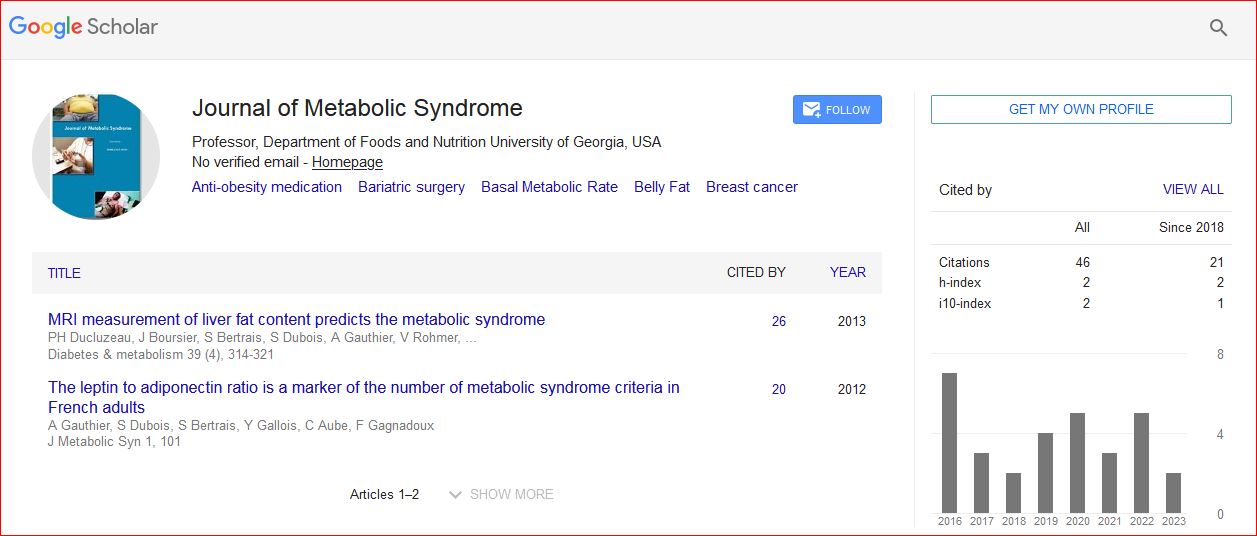
Journal of Metabolic Syndrome received 48 citations as per Google Scholar report