Short Communication - (2025) Volume 10, Issue 6
Received: 01-Dec-2025, Manuscript No. jomp-26-185140;
Editor assigned: 03-Dec-2025, Pre QC No. P-185140;
Reviewed: 17-Dec-2025, QC No. Q-185140;
Revised: 22-Dec-2025, Manuscript No. R-185140;
Published:
29-Dec-2025
, DOI: 10.37421/2576-3857.2025.10.342
Citation: Sato, Hana. ”Tumor Exosomes: Fueling Immune Evasion And Hindering Therapy.” J Oncol Med and Pract 10 (2025):342.
Copyright: © 2025 Sato H. This is an open-access article distributed under the terms of the Creative Commons Attribution License, which permits unrestricted use, distribution and reproduction in any medium, provided the original author and source are credited.
Tumor-derived exosomes are pivotal mediators of intercellular communication within the tumor microenvironment, profoundly influencing immune cell function and fostering immune evasion. These nanoscale vesicles are laden with a diverse repertoire of proteins, lipids, and nucleic acids that possess the capacity to reprogram various immune cell populations, including T cells, dendritic cells, and macrophages. This reprogramming often leads to a state of immunosuppression, which in turn promotes tumor progression. Understanding these intricate communication pathways mediated by exosomes offers significant promise for the development of novel therapeutic strategies for cancer treatment, including innovative exosome-based drug delivery systems and targeted interventions designed to block exosome-mediated immune suppression. [1] Cancer cells release exosomes that can directly contribute to T cell exhaustion by delivering immunosuppressive molecules such as PD-L1 and IL-10. This direct interaction between tumor-derived exosomes and T cells impairs their anti-tumor responses, thereby facilitating immune escape. Current research is actively exploring various methods to disrupt this exosomal signaling pathway, with the ultimate goal of restoring effective T cell function against the tumor. [2] Dendritic cells (DCs), critical initiators of adaptive anti-tumor immunity, are significantly impacted by tumor exosomes. These exosomes can induce a tolerogenic or immunosuppressive phenotype in DCs. The exosomal cargo delivered to DCs can inhibit their maturation and antigen-presenting capabilities, thereby hindering the initiation of a robust anti-tumor adaptive immune response. Consequently, targeting these specific exosome-DC interactions represents a promising strategy for enhancing cancer immunotherapy. [3] The polarization of macrophages by tumor-derived exosomes plays a critical role in shaping the tumor microenvironment. Exosomes are known to promote the differentiation of macrophages towards the M2 subtype, a phenotype that actively supports tumor growth, facilitates angiogenesis, and aids in metastasis, while simultaneously suppressing anti-tumor immunity. Gaining a comprehensive understanding of the molecular mechanisms underlying this exosome-driven macrophage reprogramming is considered key to the development of novel and effective therapeutic interventions. [4] Exosomes act as efficient vehicles for delivering immunosuppressive proteins, such as TGF-β and IL-10, to immune cells situated within the tumor microenvironment. These delivered factors directly diminish the activity of crucial immune effectors like cytotoxic T lymphocytes and natural killer cells, creating a permissive environment that favors tumor survival and progression. Consequently, therapeutic strategies that aim to neutralize these immunosuppressive exosomal contents are currently undergoing rigorous investigation. [5] MicroRNAs (miRNAs) that are packaged within tumor exosomes have emerged as potent regulators of immune responses. These exosomal miRNAs can target multiple genes within recipient immune cells, leading to significant alterations in gene expression and functional reprogramming. This reprogramming often results in enhanced immunosuppression and an increase in tumor aggressiveness. Therapeutic interventions that focus on modulating the exosomal miRNA content are therefore considered to hold considerable promise. [6] Tumor-derived exosomes have also been shown to influence the differentiation and functional capacity of regulatory T cells (Tregs). They can actively promote Treg expansion and augment their suppressive capabilities, further contributing to immune tolerance within the tumor microenvironment. This enhanced immune tolerance can significantly limit the efficacy of existing anti-tumor therapies. Strategies aimed at inhibiting exosome-mediated Treg induction are currently being explored as potential therapeutic approaches. [7] The intricate processes governing the biogenesis and release of tumor exosomes are tightly regulated and can be significantly influenced by the surrounding tumor microenvironment. A thorough understanding of these underlying mechanisms is absolutely crucial for the successful development of strategies designed to target exosome production or secretion. Such targeted approaches could effectively reduce their immunosuppressive effects and potentially sensitize tumors to immunotherapy. [8] Exosomes fundamentally serve as crucial vehicles for intercellular communication, carrying a diverse array of bioactive molecules that can significantly alter the immunological landscape of the tumor microenvironment. The cargo delivered by these exosomes profoundly influences the behavior and function of various immune cells, ultimately leading to immune suppression and facilitating tumor immune evasion. Targeting these exosomal pathways therefore presents a substantial and promising opportunity for advancing cancer therapy. [9] The immunosuppressive microenvironment that is actively orchestrated by tumor-derived exosomes can be strategically targeted for therapeutic benefit. Proposed strategies encompass a range of approaches, including effectively blocking exosome release from tumor cells, inhibiting their uptake by susceptible immune cells, or neutralizing the specific immunosuppressive cargo that they carry. These multifaceted approaches are designed with the overarching aim of restoring anti-tumor immunity and enhancing the overall effectiveness of current cancer treatments. [10]
Tumor-derived exosomes play a critical role in orchestrating the tumor microenvironment by modulating the function of immune cells and actively promoting immune evasion. These extracellular vesicles contain a complex cargo of proteins, lipids, and nucleic acids that can reprogram immune cells, such as T cells, dendritic cells, and macrophages, leading to immunosuppression and facilitating tumor progression. The study of these intricate communication pathways involving exosomes provides promising avenues for novel cancer therapeutics, including exosome-based drug delivery and strategies to counteract exosome-mediated immune suppression. [1] Exosomes secreted by cancer cells can directly impact T cell exhaustion by transporting immunosuppressive molecules like PD-L1 and IL-10. This interaction compromises anti-tumor T cell responses, contributing to immune escape. Researchers are actively investigating methods to interfere with this exosomal signaling to potentially restore T cell function against tumors. [2] Dendritic cells (DCs) are significantly affected by tumor exosomes, often being induced into tolerogenic or immunosuppressive phenotypes. The exosomal cargo can inhibit DC maturation and antigen presentation, thereby hindering the initiation of effective anti-tumor adaptive immunity. Targeting these exosome-DC interactions is recognized as a promising strategy to enhance cancer immunotherapy. [3] The influence of tumor-derived exosomes on macrophage polarization is a critical factor. Exosomes can promote the differentiation of macrophages into the M2 subtype, which supports tumor growth, angiogenesis, and metastasis, while concurrently suppressing anti-tumor immunity. Understanding the molecular mechanisms behind this exosome-driven reprogramming is vital for developing novel therapeutic interventions. [4] Exosomes contribute to immune escape by delivering immunosuppressive proteins, such as TGF-β and IL-10, to immune cells within the tumor microenvironment. These factors directly reduce the activity of cytotoxic T lymphocytes and natural killer cells, creating an environment conducive to tumor survival and progression. Therapeutic strategies focused on neutralizing these immunosuppressive exosomal contents are under active investigation. [5] MicroRNAs (miRNAs) enclosed within tumor exosomes are potent regulators of immune responses. These exosomal miRNAs can target multiple genes in recipient immune cells, leading to altered gene expression and functional reprogramming, often resulting in enhanced immunosuppression and increased tumor aggressiveness. Therapeutic interventions aimed at modulating exosomal miRNA content show significant promise. [6] Tumor-derived exosomes can influence the differentiation and function of regulatory T cells (Tregs). They can promote Treg expansion and enhance their suppressive capabilities, further contributing to immune tolerance in the tumor microenvironment and limiting the effectiveness of anti-tumor therapies. Strategies to inhibit exosome-mediated Treg induction are currently being explored. [7] The biogenesis and release of tumor exosomes are tightly regulated processes that can be influenced by the tumor microenvironment. Understanding these mechanisms is essential for developing strategies to target exosome production or secretion, thereby reducing their immunosuppressive effects and potentially sensitizing tumors to immunotherapy. [8] Exosomes function as vehicles for intercellular communication, carrying diverse bioactive molecules that can modulate the immune landscape of the tumor microenvironment. This exosomal cargo influences the behavior of various immune cells, leading to immune suppression and facilitating tumor immune evasion. Targeting these exosomal pathways presents a significant opportunity for cancer therapy. [9] The immune-suppressive microenvironment orchestrated by tumor-derived exosomes can be targeted for therapeutic gain. Strategies include blocking exosome release, inhibiting their uptake by immune cells, or neutralizing their immunosuppressive cargo. These approaches aim to restore anti-tumor immunity and improve the efficacy of existing cancer treatments. [10]
Tumor-derived exosomes are critical mediators in the tumor microenvironment, influencing immune cells and promoting immune evasion. They deliver immunosuppressive molecules to T cells, induce T cell exhaustion, and reprogram dendritic cells and macrophages towards immunosuppressive phenotypes. Exosomes also carry microRNAs and proteins like TGF-β and IL-10, which dampen anti-tumor immunity and promote tumor growth. Furthermore, they enhance the function of regulatory T cells, contributing to immune tolerance. Understanding exosome biogenesis and their mechanisms of action is key to developing therapeutic strategies that target exosome release, uptake, or cargo to restore anti-tumor immunity and improve cancer treatment outcomes.
None
None
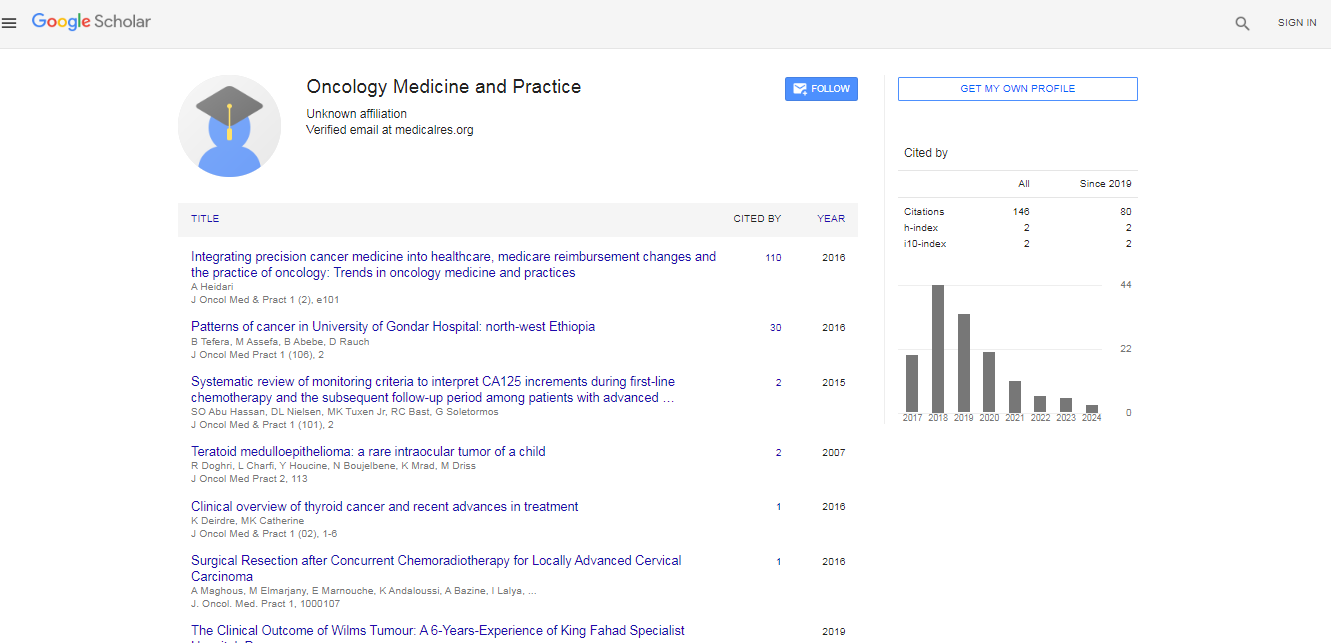
Journal of Oncology Medicine & Practice received 142 citations as per Google Scholar report