Opinion - (2025) Volume 10, Issue 1
Received: 01-Feb-2025, Manuscript No. arwm-25-165535;
Editor assigned: 03-Feb-2025, Pre QC No. P-165535;
Reviewed: 14-Feb-2025, QC No. Q-165535;
Revised: 19-Feb-2025, Manuscript No. R-165535;
Published:
26-Feb-2025
, DOI: 10.37421/2475-7675.2025.10.388
Citation: Oznur, Rajfur. “The Hidden Dangers of Heavy Metals in Industrial Waste.’’ Adv Recycling Waste Manag 10 (2025): 388.
Copyright: © 2025 Oznur R. This is an open-access article distributed under the terms of the Creative Commons Attribution License, which permits unrestricted use, distribution and reproduction in any medium, provided the original author and source are credited.
The proliferation of industrial activities over the past century has brought about tremendous progress in technology, manufacturing, and infrastructure. However, this advancement has not come without environmental costs. Among the most insidious consequences of industrial development is the contamination of ecosystems with heavy metals. Often hidden from immediate view and challenging to detect without sophisticated testing methods, heavy metals in industrial waste pose a serious threat to human health, biodiversity, and long-term ecological stability. The hidden dangers associated with these metals such as lead, mercury, cadmium, arsenic, chromium, and others warrant urgent attention due to their persistence, bio accumulative nature, and toxicity.
Industrial processes such as mining, smelting, electroplating, battery manufacturing, leather tanning, and the production of paints and pesticides are notorious for releasing heavy metals into the environment. These metals often enter waterways, soil, and the air through direct discharge, leaching from landfills, atmospheric deposition, or accidental spills. Once introduced into the environment, they do not degrade over time like many organic pollutants. Instead, they persist indefinitely, often binding with soil particles or dissolving in water, where they may be taken up by organisms or transported to new areas. This persistence makes heavy metal pollution particularly difficult to remediate [1].
One of the most alarming aspects of heavy metal contamination is its impact on human health. Exposure can occur through various pathways ingestion of contaminated water or food, inhalation of dust or fumes, or dermal contact. The health effects depend on the specific metal and the level and duration of exposure, but in general, they range from subtle neurological changes to severe organ damage, cancer, or even death. For example, lead exposure is especially harmful to young children, where it can cause irreversible cognitive and developmental deficits. Mercury, particularly in its organic form methyl mercury, targets the nervous system and is a potent neurotoxin. Cadmium accumulates in the kidneys and can cause renal dysfunction and bone demineralization. Arsenic, commonly found in industrial effluents, is a known carcinogen that affects the skin, lungs, and bladder. Even at low levels, chronic exposure to these metals can have profound health implications over time [2].
Beyond direct human health effects, heavy metals in industrial waste significantly impact ecological systems. Aquatic environments are particularly vulnerable, as water serves as a primary medium for the transport and accumulation of pollutants. Once in aquatic ecosystems, heavy metals can be absorbed by plankton, algae, and benthic organisms. These metals then bio accumulate up the food chain, becoming more concentrated at each trophic level in a process known as bio magnification. Predatory fish and birds that consume contaminated prey may exhibit reproductive failures, developmental abnormalities, and increased mortality rates. In this way, a seemingly minor source of pollution can cascade into widespread ecological disruption [3,4].
Terrestrial ecosystems are also at risk. When heavy metals are deposited in soil either directly or through irrigation with contaminated water they can alter the chemistry of the soil, making it less hospitable to plant life. Essential nutrients may become less available, or toxic elements may disrupt cellular processes within plants. This can lead to reduced agricultural productivity and a decline in biodiversity. Moreover, animals that forage in contaminated areas can ingest harmful levels of metals, leading to bioaccumulation in land-based food webs. Livestock, and by extension, humans who consume animal products, are therefore at risk of exposure through indirect pathways [5]. The danger of heavy metals lies not only in their toxicity but also in the latency of their effects. Symptoms of exposure may not appear for months or even years, and by the time they are detected, irreversible damage may have already occurred.
Compounding the problem is the fact that many industries operate in regions with inadequate environmental oversight or weak enforcement of pollution controls. In such areas, illegal dumping, improper waste storage, and the absence of treatment facilities are common. The result is a situation in which vulnerable communities, often with limited political power or economic resources, are disproportionately affected by the consequences of heavy metal pollution. This environmental injustice exacerbates existing health disparities and hinders sustainable development. Technological and regulatory solutions to mitigate heavy metal contamination do exist but are often underutilized due to economic constraints or lack of awareness. Wastewater treatment plants, for example, can be equipped with advanced filtration and precipitation systems to remove heavy metals before discharge.
Public policy plays a crucial role in addressing the hidden dangers of heavy metals. Stricter emissions standards, mandatory environmental impact assessments, and the enforcement of polluter-pays principles can incentivize cleaner production methods and responsible waste disposal. At the international level, treaties such as the Minamata Convention on Mercury seek to reduce global emissions and promote safer alternatives, but their success depends on the commitment of participating nations and the resources they allocate to implementation. Moreover, public awareness and community involvement are essential. When communities are informed about the risks and sources of pollution, they are better equipped to advocate for their rights, demand accountability, and contribute to local monitoring efforts.
Google Scholar Cross Ref Indexed at
Google Scholar Cross Ref Indexed at
Google Scholar Cross Ref Indexed at
Google Scholar Cross Ref Indexed at
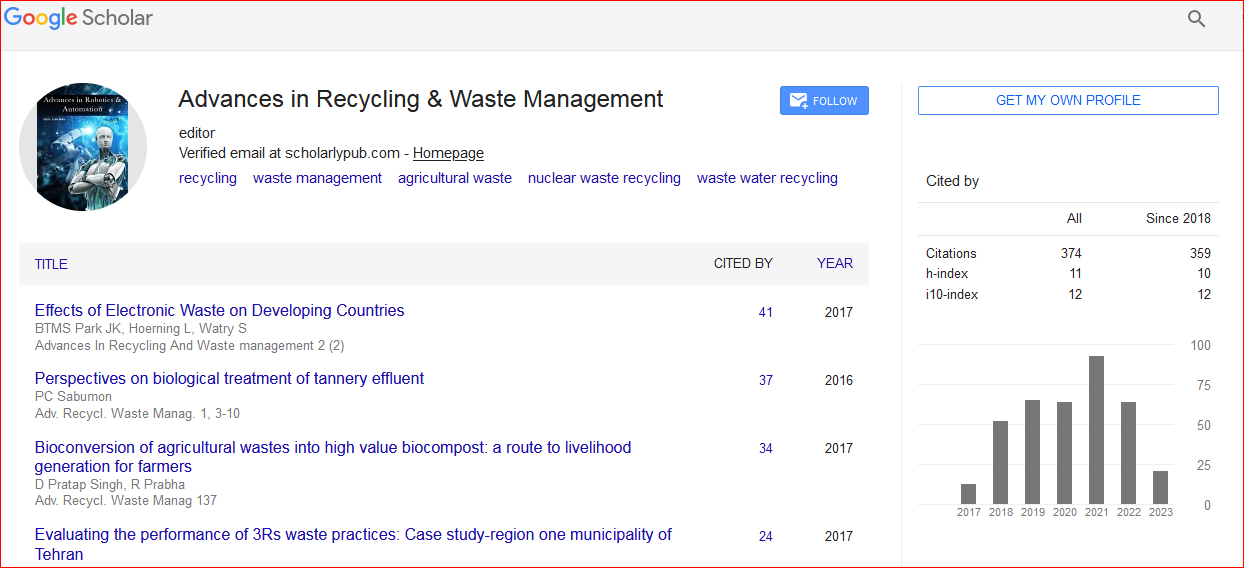
Advances in Recycling & Waste Management received 438 citations as per Google Scholar report