Opinion - (2025) Volume 16, Issue 4
Received: 02-Nov-2025, Manuscript No. hgec-25-174749;
Editor assigned: 05-Nov-2025, Pre QC No. P-174749;
Reviewed: 19-Nov-2025, QC No. Q-174749;
Revised: 24-Nov-2025, Manuscript No. R-174749;
Published:
29-Nov-2025
, DOI: 10.37421/2161-0436.2025.16.303
Citation: Nishida, Keiko. ”Thalassemia: Innovations in Treatment, Diagnosis, Outcomes.” Human Genet Embryol 16 (2025):303.
Copyright: © 2025 Nishida K. This is an open-access article distributed under the terms of the Creative Commons Attribution License, which permits unrestricted use, distribution and reproduction in any medium, provided the original author and source are credited.
Recent advances in beta-thalassemia treatment signify a transformative shift, incorporating not only traditional therapies like blood transfusions and chelation but also pioneering approaches such as gene therapy, stem cell transplantation, and innovative drug developments. These multifaceted strategies are ultimately geared towards enhancing patient outcomes and significantly improving their quality of life [1].
In the realm of diagnosis, Next-Generation Sequencing (NGS) has emerged as a revolutionary tool. It offers an exhaustive and highly efficient method to pinpoint various genetic mutations and modifiers, which in turn elevates the precision of screening, prenatal diagnosis, and the tailoring of personalized management plans [2].
Concurrently, gene therapy continues its remarkable progress, with ongoing research dissecting its mechanisms, evaluating clinical trial outcomes, and addressing persistent challenges. This field is energized by significant developments in gene editing technologies and vector improvements, all advancing towards a curative potential that promises a future free from lifelong transfusions [3].
Furthermore, Hematopoietic Stem Cell Transplantation (HSCT) stands as a pivotal curative option, consistently seeing updates in donor selection protocols, conditioning regimens, and supportive care. Discussions are actively exploring challenges and charting future directions, including haploidentical and gene-modified stem cell approaches, aimed at expanding patient eligibility and bolstering therapeutic success [10].
Managing the complex secondary complications associated with thalassemia is paramount. Bone disease, for example, presents with a complex etiology, influenced by chronic anemia, systemic iron overload, hormonal dysregulation, and underlying inflammation. Efforts are keenly focused on outlining current diagnostic methodologies and therapeutic strategies to effectively mitigate these skeletal complications and foster improved bone health [4].
Similarly, the management of iron overload in thalassemia major is a critical area, where the latest strategies emphasize novel chelators, highly individualized treatment plans, and sophisticated monitoring techniques designed to meticulously prevent organ damage. The importance of striking a balance between treatment efficacy and patient adherence in long-term chelation therapy cannot be overstated [5].
A holistic perspective on patient care extends to assessing the quality of life for children and adolescents living with beta-thalassemia major. Systematic reviews and meta-analyses consistently reveal significant physical, emotional, and social challenges faced by these young patients. This evidence strongly underlines the need for targeted interventions that can substantially improve psychological well-being and their overall patient experience, advocating for comprehensive, holistic care approaches that address all facets of their lives [6].
Innovative therapeutic developments continue to emerge, notably Luspatercept, a novel erythroid maturation agent, whose clinical utility in alleviating anemia associated with beta-thalassemia is becoming increasingly recognized. This agent demonstrates efficacy in reducing transfusion burden and presents a valuable addition to existing therapeutic arsenals [7].
Furthermore, other cutting-edge strategies are specifically designed to target disordered erythropoiesis inherent in beta-thalassemia. These involve novel drugs that modulate erythroblast maturation and effectively reduce ineffective erythropoiesis, ultimately aiming to decrease transfusion dependency and improve overall anemia [9].
On a broader scale, a comprehensive understanding of the global and regional prevalence of beta-thalassemia, derived from systematic reviews and meta-analyses, is indispensable. This crucial data illuminates the substantial disease burden, particularly in certain geographical regions, thereby reinforcing the imperative for robust screening initiatives and public health interventions to effectively manage and prevent its continued spread [8].
Thalassemia treatment is undergoing continuous evolution, moving beyond conventional blood transfusions and chelation therapies to embrace more advanced interventions [1]. A significant area of focus is gene therapy, which has shown considerable progress. Research explores its underlying mechanisms, clinical trial outcomes, and ongoing challenges. There are promising developments in gene editing technologies and vector improvements, all pushing towards a curative potential that could eliminate the need for lifelong transfusions [3]. Another vital curative strategy is Hematopoietic Stem Cell Transplantation (HSCT). Updates in this field highlight advancements in donor selection, conditioning regimens, and supportive care, while also addressing challenges and future prospects, including haploidentical and gene-modified stem cell approaches, to widen patient eligibility and enhance treatment efficacy [10]. These combined efforts underscore a dynamic shift towards more definitive and long-lasting solutions for thalassemia patients.
Accurate and early diagnosis is crucial in managing thalassemia, an area revolutionized by Next-Generation Sequencing (NGS). NGS provides a comprehensive and efficient method for identifying a wide array of mutations and genetic modifiers. This has profoundly impacted screening, prenatal diagnosis, and the development of personalized management strategies [2]. Complementing diagnostic advancements are new therapeutic agents, such as Luspatercept, a novel erythroid maturation agent. Its clinical utility in treating anemia associated with beta-thalassemia is noteworthy, as it effectively reduces transfusion burden and offers a valuable addition to current therapeutic options [7]. Moreover, innovative strategies are emerging that specifically target disordered erythropoiesis in beta-thalassemia. These involve new drugs designed to modulate erythroblast maturation and reduce ineffective erythropoiesis, with the overarching goal of decreasing transfusion dependency and improving overall anemia [9]. These advancements represent a concerted effort to not only diagnose the condition precisely but also to treat its core physiological dysfunctions.
Living with thalassemia often involves managing various complications, with bone disease being a significant concern. Its etiology is multifaceted, arising from chronic anemia, iron overload, hormonal dysregulation, and systemic inflammation. Comprehensive reviews outline current diagnostic approaches and therapeutic strategies specifically aimed at mitigating these bone complications and improving skeletal health [4]. Iron overload, another pervasive issue in thalassemia major, requires sophisticated management. Latest strategies focus on developing novel chelators, implementing individualized treatment plans, and utilizing advanced monitoring techniques to effectively prevent organ damage. The challenge lies in balancing the efficacy of these treatments with patient adherence for long-term chelation therapy [5]. Effective management of these complications is essential for enhancing the overall health and longevity of patients.
Beyond the clinical aspects, the quality of life for individuals, especially children and adolescents, with beta-thalassemia major is a critical consideration. Systematic reviews and meta-analyses consistently highlight the physical, emotional, and social challenges these young patients encounter. These findings underscore the importance of targeted interventions aimed at improving psychological well-being and enhancing the overall patient experience, strongly advocating for holistic care approaches [6]. Furthermore, understanding the global and regional prevalence of beta-thalassemia is crucial for public health planning. Systematic reviews and meta-analyses provide a comprehensive overview of its significant burden, particularly in specific geographical areas. This data is invaluable for shaping effective screening programs and public health interventions necessary to manage and prevent the disease's spread [8]. Collectively, these insights emphasize that comprehensive thalassemia care extends beyond medical intervention to encompass social support, psychological well-being, and global health strategies.
Significant progress marks beta-thalassemia treatment, integrating traditional therapies like blood transfusions and chelation with advanced approaches such as gene therapy, stem cell transplantation, and novel drug developments to enhance patient outcomes and quality of life. Next-Generation Sequencing (NGS) has revolutionized thalassemia diagnosis, offering a comprehensive way to identify mutations and genetic modifiers, thereby improving screening and personalized management. Gene therapy shows promising strides, with ongoing clinical trials and innovations in gene editing technology aiming for curative potential, reducing reliance on lifelong transfusions. Bone disease in thalassemia patients is a major concern, influenced by chronic anemia, iron overload, hormonal imbalances, and inflammation. Diagnostic and therapeutic strategies are crucial for skeletal health. Managing iron overload in thalassemia major involves novel chelators and individualized treatment plans, balancing efficacy with patient adherence to prevent organ damage. Quality of life for children and adolescents with beta-thalassemia major faces physical, emotional, and social challenges, necessitating holistic care and targeted interventions to improve well-being. Luspatercept, an erythroid maturation agent, is a new addition to therapies, proving effective in reducing transfusion burden and treating anemia in beta-thalassemia. Understanding the global and regional prevalence of beta-thalassemia is vital for public health, informing screening and prevention strategies. Innovative therapeutic strategies target disordered erythropoiesis, modulating erythroblast maturation and reducing ineffective erythropoiesis to decrease transfusion dependency. Hematopoietic Stem Cell Transplantation (HSCT) remains a curative option, with advancements in donor selection and conditioning, alongside exploring haploidentical and gene-modified stem cell approaches to expand eligibility and improve outcomes.
None
None
Indexed at, Google Scholar, Crossref
Indexed at, Google Scholar, Crossref
Indexed at, Google Scholar, Crossref
Indexed at, Google Scholar, Crossref
Indexed at, Google Scholar, Crossref
Indexed at, Google Scholar, Crossref
Indexed at, Google Scholar, Crossref
Indexed at, Google Scholar, Crossref
Indexed at, Google Scholar, Crossref
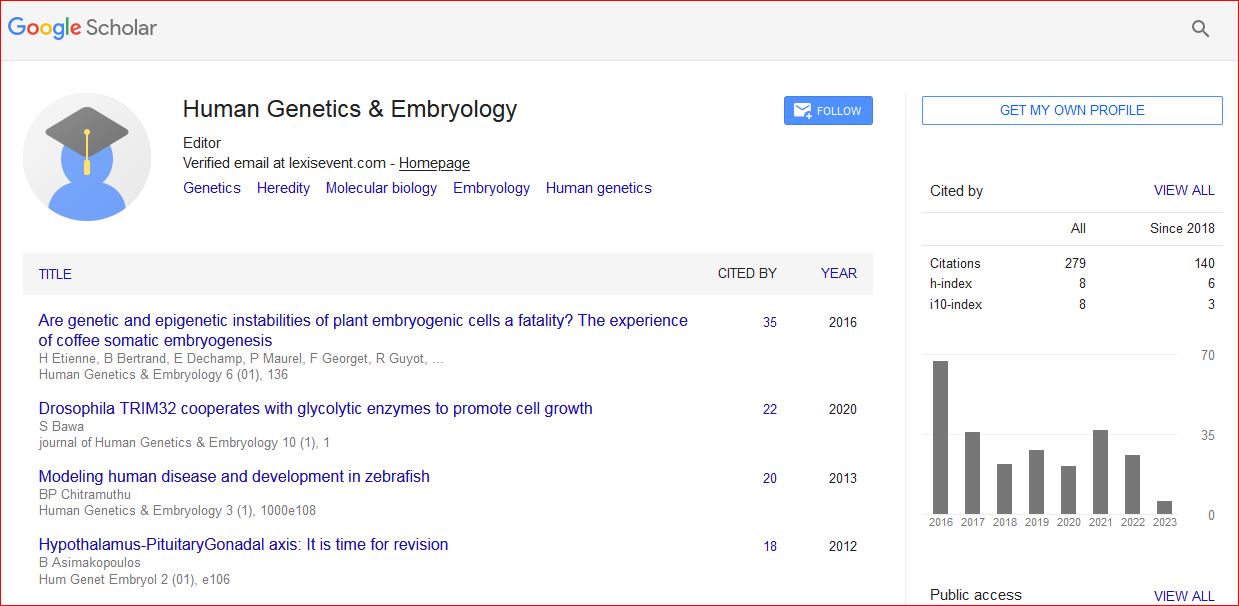
Human Genetics & Embryology received 309 citations as per Google Scholar report