Short Communication - (2025) Volume 16, Issue 4
Received: 01-Jul-2025, Manuscript No. jhmi-26-178861;
Editor assigned: 03-Jul-2025, Pre QC No. P-178861;
Reviewed: 17-Jul-2025, QC No. Q-178861;
Revised: 22-Jul-2025, Manuscript No. R-178861;
Published:
29-Jul-2025
, DOI: 10.37421/2157-7420.2025.16.606
Citation: Moreno, Luis F.. ”Telehealth: Benefits, Barriers and Equitable Access.” J Health Med Informat 16 (2025):606.
Copyright: © 2025 Moreno F. Luis This is an open-access article distributed under the terms of the Creative Commons Attribution License, which permits unrestricted use, distribution and reproduction in any medium, provided the original author and source are credited.
The landscape of healthcare delivery has been profoundly reshaped by the widespread adoption of telehealth technologies, ushering in an era of increased patient engagement and evolving clinical practices. This transformative shift has been driven by a confluence of factors, including technological advancements, patient demand for greater convenience, and the necessity for resilient healthcare systems, particularly highlighted during global health crises. Telehealth adoption significantly impacts patient satisfaction, with convenience and accessibility being key drivers. While many patients report high satisfaction due to reduced travel and wait times, some express concerns about the lack of in-person interaction and technological barriers. Clinical outcomes in telehealth are generally comparable to in-person care for many conditions, particularly in chronic disease management and routine follow-ups. However, the effectiveness can vary based on the condition, patient's digital literacy, and the provider's skill in virtual communication. Ensuring equitable access and addressing digital divides are crucial for maximizing telehealth's benefits and mitigating potential disparities [1].
Patient perspectives on telehealth are multifaceted, with convenience and reduced travel cited as major advantages. However, challenges such as the perceived impersonal nature of virtual visits and digital literacy gaps can influence satisfaction. For clinical outcomes, studies indicate that telehealth can be as effective as in-person care for managing chronic conditions and for certain specialist consultations, but may have limitations for conditions requiring physical examination or complex procedures [2].
The widespread adoption of telehealth has shown a trend towards increased patient satisfaction, largely due to improved access and reduced healthcare burdens. Clinically, evidence suggests comparable outcomes for various conditions, particularly in primary care and mental health. However, effective implementation requires addressing disparities in digital access and ensuring providers are trained in virtual care delivery to maintain quality and trust [3].
This study examines the correlation between telehealth utilization and patient satisfaction, finding that while convenience is a significant positive factor, the quality of the virtual interaction and perceived effectiveness of care also play crucial roles. In terms of clinical outcomes, telehealth has demonstrated efficacy in managing chronic diseases and facilitating remote monitoring, though the need for careful patient selection and robust technological infrastructure is highlighted [4].
The experience of telehealth adoption varies widely. Patients often appreciate the enhanced accessibility and reduced burden of travel, leading to higher satisfaction. Regarding clinical outcomes, telehealth has proven effective for various conditions, especially in mental health and routine follow-ups, but its limitations in physical examinations and certain procedural care necessitate a blended approach for comprehensive patient management [5].
Patient satisfaction with telehealth is influenced by factors such as ease of use, quality of communication, and perceived effectiveness of care. Clinically, telehealth has shown promise in improving access to care and managing chronic conditions, with outcomes often comparable to in-person visits for specific applications. However, addressing the digital divide and ensuring equitable access remain critical challenges [6].
The integration of telehealth has led to varied patient satisfaction levels. While many find it convenient, concerns regarding the quality of interaction and technological challenges persist. Clinical outcomes in telehealth are generally positive for follow-up care and management of stable chronic conditions, but its suitability for initial diagnoses or acute care requiring physical assessment needs careful consideration and may not always replicate in-person effectiveness [7].
Patient satisfaction with telehealth is a nuanced issue, often linked to the specific modality used and the nature of the healthcare encounter. For clinical outcomes, evidence suggests that telehealth can be an effective substitute for in-person visits in many cases, particularly for remote monitoring and specialist consultations, without compromising quality of care, though careful consideration of its limitations is essential [8].
The widespread adoption of telehealth has generally resulted in positive patient satisfaction, primarily driven by convenience and accessibility. From a clinical outcome perspective, telehealth is proving effective for managing chronic diseases and providing mental health support, with results often mirroring those of traditional care. However, ensuring equitable access and addressing potential technological barriers are vital for maximizing its benefits and preventing disparities [9].
Patient satisfaction with telehealth hinges on several factors, including the perceived quality of care and the ease of use of technology. Clinical outcomes are largely comparable to in-person care for many conditions, particularly in primary care and specialist follow-ups, though the need for robust protocols and clear communication strategies is paramount for optimal results [10].
Telehealth adoption is significantly reshaping patient satisfaction, with convenience and enhanced accessibility emerging as primary determinants. A substantial number of patients report elevated satisfaction levels, attributing this to the elimination of travel burdens and reduced waiting periods. Nevertheless, a segment of the patient population voices concerns regarding the absence of direct, in-person interaction and the hurdles presented by technological limitations. These factors collectively influence the overall patient experience with virtual care modalities. In terms of clinical outcomes, telehealth demonstrates generally comparable results to traditional in-person care across a wide spectrum of medical conditions. This is particularly evident in the management of chronic diseases and the execution of routine follow-up appointments. However, the efficacy of telehealth can be contingent upon several variables, including the specific nature of the patient's condition, their proficiency with digital technologies (digital literacy), and the provider's adeptness in virtual communication. Consequently, ensuring equitable access to telehealth services and actively addressing the digital divide are imperative steps towards maximizing the benefits of telehealth and effectively mitigating potential health disparities among different patient groups [1].
Patient perspectives on telehealth services are characterized by a complex interplay of positive and negative aspects. The convenience and the reduction in travel time are consistently highlighted as major advantages that contribute to patient satisfaction. Conversely, potential drawbacks such as the perception of virtual visits as being less personal or the challenges posed by varying levels of digital literacy can significantly impact how satisfied patients are with the care they receive. Regarding clinical outcomes, existing research suggests that telehealth can achieve efficacy levels comparable to in-person care, especially in the context of managing chronic conditions and facilitating specialist consultations. However, limitations may arise for conditions that necessitate a physical examination or involve complex diagnostic or therapeutic procedures, indicating a need for careful case selection and appropriate utilization [2].
The broad embrace of telehealth has been associated with a discernible trend towards heightened patient satisfaction. This positive shift is largely attributable to the improvements in healthcare access and the alleviation of burdens previously associated with traditional healthcare encounters. From a clinical standpoint, the evidence indicates that telehealth yields outcomes that are comparable to those achieved through in-person care for a variety of medical conditions, with primary care and mental health services being particularly noted. Nonetheless, the successful and equitable implementation of telehealth necessitates a proactive approach to addressing disparities in digital access and ensuring that healthcare providers receive adequate training in virtual care delivery to uphold the quality and maintain patient trust [3].
This research meticulously investigates the relationship between the utilization of telehealth services and patient satisfaction levels. The findings indicate that while the convenience offered by telehealth is a significant contributor to positive patient experiences, the actual quality of the virtual interaction and the patient's perception of the care's effectiveness also play pivotal roles. Concerning clinical outcomes, telehealth has proven its worth in effectively managing chronic diseases and enabling remote patient monitoring. However, the study also underscores the critical importance of carefully selecting appropriate patients for telehealth and the necessity of establishing a robust technological infrastructure to support these services reliably [4].
The patient experience with telehealth adoption exhibits considerable variation. Patients frequently express appreciation for the enhanced accessibility and the reduced burden associated with travel, factors that often translate into higher levels of satisfaction. In parallel, regarding clinical outcomes, telehealth has demonstrated its effectiveness for a range of conditions, notably in the domains of mental health and routine follow-up care. Nevertheless, the inherent limitations of telehealth in performing physical examinations and managing certain procedural aspects of care highlight the need for a carefully considered, blended approach to ensure comprehensive patient management and optimal health outcomes [5].
Patient satisfaction with telehealth is influenced by a confluence of interconnected factors, including the perceived ease of use of the technology, the quality of the communication between patient and provider, and the patient's belief in the effectiveness of the care delivered. From a clinical perspective, telehealth shows considerable promise in expanding access to healthcare services and in effectively managing patients with chronic conditions. In many specific applications, the outcomes achieved through telehealth visits are often found to be comparable to those of traditional in-person visits. However, addressing the pervasive digital divide and ensuring that access to these services is equitable for all populations remain critical and ongoing challenges that must be tackled for telehealth to reach its full potential [6].
The integration of telehealth into healthcare systems has resulted in a diverse array of patient satisfaction levels. While a significant number of patients find telehealth to be a convenient option, persistent concerns remain regarding the perceived quality of the virtual interaction and the various technological challenges that can arise. Clinically, telehealth services have demonstrated positive outcomes, particularly in the realm of follow-up care and the management of chronic conditions that are in a stable state. However, the suitability of telehealth for initial diagnoses or for acute care situations that necessitate a physical assessment requires careful consideration, as it may not always be able to replicate the effectiveness of in-person care in such scenarios [7].
Patient satisfaction with telehealth is a complex phenomenon, intricately linked to the specific methods of delivery employed and the nature of the healthcare encounter itself. In relation to clinical outcomes, the available evidence strongly suggests that telehealth can serve as a highly effective substitute for in-person visits in a multitude of situations. This is especially true for applications such as remote patient monitoring and specialist consultations, where telehealth can facilitate care without compromising its quality. Nonetheless, it is crucial to acknowledge and carefully consider the inherent limitations of telehealth to ensure its appropriate and effective application [8].
The widespread adoption of telehealth has, on the whole, led to a generally positive trend in patient satisfaction. This positive reception is primarily driven by the significant gains in convenience and accessibility that telehealth offers. From the perspective of clinical outcomes, telehealth is proving to be a valuable tool for managing chronic diseases and delivering essential mental health support. In many instances, the results achieved through telehealth services closely mirror those of traditional in-person care. Crucially, however, ensuring that access to these services is equitable across all populations and actively addressing the potential technological barriers that exist are vital steps for maximizing the overall benefits of telehealth and for proactively preventing the exacerbation of existing health disparities [9].
The level of patient satisfaction experienced with telehealth is contingent upon a variety of key factors. These include, but are not limited to, the patient's perception of the quality of care received and the ease with which they can utilize the necessary technology. Regarding clinical outcomes, the evidence consistently indicates that telehealth can achieve results that are largely comparable to those of in-person care for a broad range of conditions. This is particularly true for services provided within primary care settings and for specialist follow-up appointments. Nevertheless, the paramount importance of establishing robust protocols and implementing clear communication strategies cannot be overstated, as these elements are fundamental to achieving optimal clinical results in telehealth delivery [10].
Telehealth adoption has significantly impacted patient satisfaction, with convenience and accessibility being major drivers, though some patients express concerns about the lack of in-person interaction and technological barriers. Clinical outcomes are generally comparable to in-person care, especially for chronic disease management and routine follow-ups, but effectiveness can vary based on condition, digital literacy, and provider skills. Addressing digital divides and ensuring equitable access are crucial for maximizing telehealth benefits and mitigating disparities. While telehealth offers advantages like reduced travel and wait times, challenges such as the perceived impersonal nature of virtual visits and digital literacy gaps can affect satisfaction. Its efficacy is noted for chronic conditions and specialist consultations, but limitations exist for physical examinations. Continued research and implementation efforts focus on optimizing virtual care delivery, ensuring quality, and promoting equitable access for all patient populations.
None
None
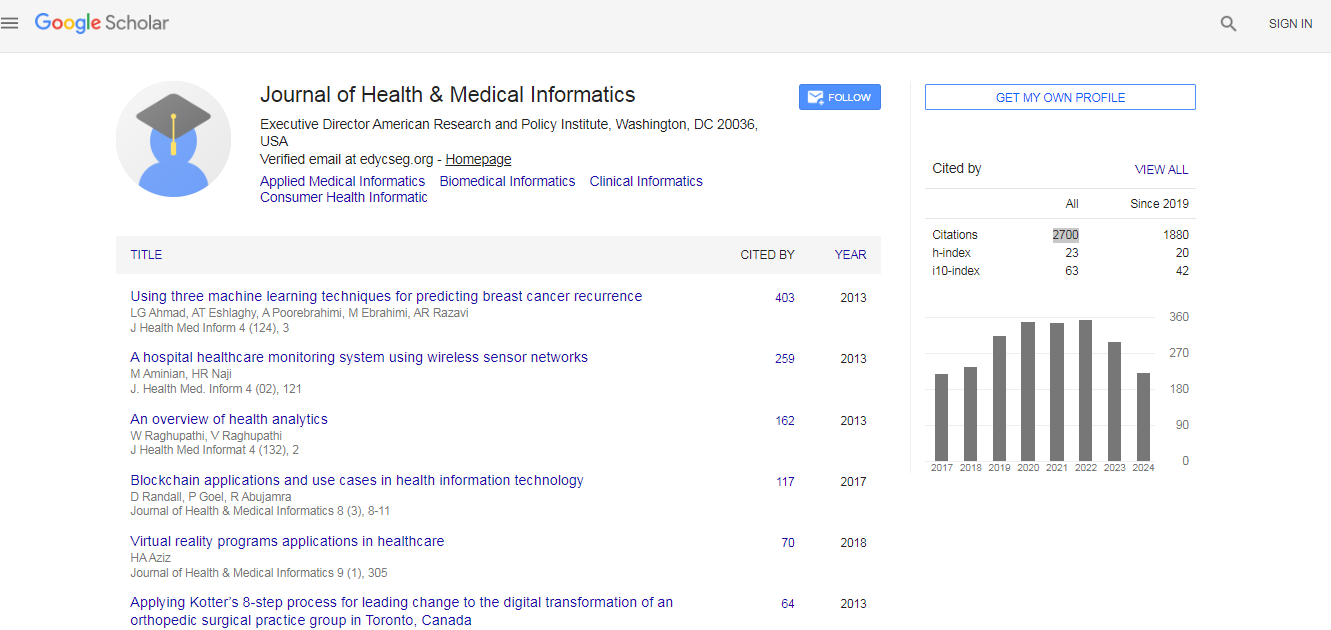
Journal of Health & Medical Informatics received 2700 citations as per Google Scholar report