Commentary - (2025) Volume 13, Issue 6
Received: 01-Dec-2025, Manuscript No. jcdd-25-177694;
Editor assigned: 03-Dec-2025, Pre QC No. P-177694;
Reviewed: 17-Dec-2025, QC No. Q-177694;
Revised: 22-Dec-2025, Manuscript No. R-177694;
Published:
29-Dec-2025
, DOI: 10.37421/2329-9517.2025.13.702
Citation: Hernan Diaz. ”Telecardiology: Enhancing Cardiac
Care and Access.” J Cardiovasc Dis Diagn 13 (2025):702.
Copyright: © 2025 D. Hernan This is an open-access article distributed under the terms of the Creative Commons Attribution License, which permits unrestricted use,
distribution and reproduction in any medium, provided the original author and source are credited.
Telecardiology quickly became a vital solution during the COVID-19 pandemic, proving instrumental in providing continuous cardiac care while significantly reducing the need for direct, in-person patient contact. Looking ahead, this innovative approach is clearly set to remain a critical part of the overall healthcare landscape, offering not only greater efficiency but also substantially broader access to specialized cardiac services. This ongoing shift towards remote care fundamentally means we must carefully consider how best to integrate telecardiology smoothly into everyday clinical practice and proactively address any challenges that inevitably arise [1].
Telecardiology gets a significant boost when managing complex conditions like heart failure, primarily because it allows for robust remote monitoring and convenient virtual consultations. This patient-centric approach genuinely improves overall patient outcomes, as it helps healthcare providers catch potential problems much earlier and enables quicker, more timely interventions. What this really means is that to make it work well and effectively, we need to tackle technical hurdles, ensure patients remain actively engaged with their care, and make sure it fits seamlessly into our existing, often intricate, healthcare systems [2].
When we specifically examine telecardiology for outpatient consultations, the available evidence consistently shows that it can really boost both patient access and operational efficiency within clinics. Patients, for the most part, generally express positive feedback and like this method of consultation. However, we still need to seriously consider important factors such as how comfortable individuals are with new technology and, crucially, making sure everyone has fair and equitable access to these services. What this often boils down to is that while clinical results are frequently on par with traditional in-person visits, there's still a need for more comprehensive research into its long-term effects and its specific impact on diverse patient groups [3].
Remote monitoring systems stand out as a fundamental, core part of modern telecardiology. These sophisticated systems allow us to gather continuous physiological data directly from patients, right in the comfort of their own homes. This kind of comprehensive overview highlights a wide and diverse range of uses, from merely tracking basic vital signs to much more sophisticated monitoring of complex implanted devices, ultimately leading to earlier detection of potential issues and more finely tailored care plans. The tricky bits, though, involve competently handling huge volumes of sensitive data, keeping it absolutely secure, and making sure it connects properly and reliably with existing electronic health records [4].
Telemedicine brings real, tangible benefits to the intricate management of cardiac arrhythmias. It provides the flexibility for remote symptom checks, continuous device monitoring, and convenient follow-up appointments, all of which together mean quicker treatment initiation, significantly fewer hospital visits, and substantially more overall convenience for patients. The future direction here will undoubtedly involve integrating even smarter wearable devices and advanced Artificial Intelligence (AI) to achieve better, more accurate diagnoses and deliver truly personalized treatment plans for individuals [5].
Understanding the crucial cost-effectiveness of telehealth, especially when applied to telecardiology for various heart conditions, is really important for its widespread adoption and sustainability. A recent, comprehensive review and meta-analysis often find that it can indeed be a very cost-effective choice. This is largely because it actively helps to cut down on expensive hospital readmissions and unnecessary emergency room visits, which are major financial burdens. That said, we still need to realistically think about the initial, upfront costs of setting these sophisticated systems up and, critically, how to make these telecardiology programs financially viable in the long run for much broader, national adoption [6].
Telemedicine holds enormous, transformative potential to significantly expand access to specialized heart care, particularly in often-neglected rural and underserved communities. By effectively overcoming traditional geographic barriers, it makes remote diagnostics, expert consultations, and essential follow-up appointments readily possible. This greatly lessens the physical and financial burden of travel for patients, thereby fostering a more equitable and accessible healthcare landscape. What we're seeing now are dedicated efforts to boost broadband access in these regions and to develop innovative tele-health models that genuinely respect the unique cultural contexts of these diverse rural populations [7].
Telecardiology presents a wealth of opportunities for fresh, innovative approaches in healthcare delivery. This includes concrete benefits like better patient access, lower overall costs for both patients and systems, and much more coordinated care. However, there are still very real and substantial challenges that need to be actively addressed. These challenges involve navigating complex regulatory frameworks, managing intricate reimbursement policies, effectively filling existing gaps in technology infrastructure, and addressing the noticeable differences in digital literacy levels among patients. The most effective way forward clearly involves strategic policy changes, ensuring strong, impenetrable data security, and providing good, comprehensive education for both patients and the healthcare providers [8].
Artificial Intelligence (AI) is rapidly and fundamentally changing the landscape of telecardiology, allowing for increasingly more precise diagnoses, better predictive analytics, and truly personalized treatment plans tailored to each individual patient. AI algorithms are uniquely capable of sorting through vast amounts of complex data collected from remote monitors to pick up on even subtle physiological changes, anticipate critical cardiac events before they occur, and fine-tune care pathways in real-time. The primary goal going forward is to develop even more reliable and easily understandable AI models, all while making absolutely sure we use them ethically and responsibly [9].
Patient engagement is undeniably a key factor in making telecardiology programs work well and successfully in the long term. It's crucial for ensuring that people consistently stick with their remote monitoring protocols and reliably attend their virtual appointments. To truly get patients more involved and committed, we need clear, straightforward communication, technology that is genuinely easy to use and intuitive, and educational materials that are specifically tailored to their individual needs and understanding. Understanding what patients prefer and what obstacles they typically face helps us to create telecardiology approaches that really put them first and cater to their unique circumstances [10].
Telecardiology has firmly established itself as a crucial component of modern healthcare, demonstrating its immense value particularly during the recent global health crisis. It was a critical solution during the COVID-19 pandemic, enabling continuous cardiac care while significantly minimizing the need for direct, in-person patient contact. This proved essential for patient safety and continuity of care [1]. Looking beyond the pandemic, it is poised to remain a vital part of healthcare delivery, promising enhanced efficiency and broader access to specialized services. Successfully integrating telecardiology into routine daily practice requires careful thought and strategic planning to address any emerging challenges [1]. Furthermore, for outpatient consultations, the evidence clearly shows that telecardiology can substantially boost both access to care and operational efficiency within clinics. Patients generally respond positively to this mode of consultation, yet ongoing considerations include varying levels of technological comfort among users and ensuring equitable access for all. Clinically, outcomes are often comparable to traditional in-person visits, but there is a clear call for more research into long-term effects and specific patient demographics to fully understand its comprehensive impact [3].
Remote monitoring systems form the technological backbone of modern telecardiology. These systems facilitate the continuous gathering of physiological data directly from patients in their home environments. This capability allows for a broad spectrum of uses, from tracking fundamental vital signs to sophisticated monitoring of implanted cardiac devices, ultimately leading to earlier detection of complications and the delivery of more precisely tailored care plans. However, integrating these systems effectively comes with its own set of complexities, including the management of vast amounts of data, ensuring robust data security, and achieving seamless connectivity with existing electronic health records [4]. In specific clinical contexts, such as heart failure management, telecardiology provides a significant boost. It empowers healthcare providers with remote monitoring and virtual consultation capabilities, genuinely improving patient outcomes by catching problems earlier and enabling quicker therapeutic interventions. For telecardiology to function optimally in this domain, it needs to overcome technical hurdles, maintain high levels of patient engagement, and fit smoothly into existing healthcare infrastructure [2]. Similarly, telemedicine offers substantial benefits in the management of cardiac arrhythmias. It facilitates remote symptom checks, monitoring of cardiac devices, and follow-up appointments, leading to faster treatment initiation, a reduction in hospital visits, and increased convenience for patients. The future of arrhythmia management in this context is set to involve the integration of even smarter wearable technologies and Artificial Intelligence (AI) to achieve superior diagnoses and highly personalized treatment strategies [5].
From an economic perspective, understanding the crucial cost-effectiveness of telehealth, particularly telecardiology for various heart conditions, is paramount for its sustainable adoption. Recent reviews and meta-analyses consistently suggest that telecardiology can be a cost-effective choice. This is primarily attributed to its effectiveness in reducing hospital readmissions and the frequency of emergency room visits, which are significant cost drivers in conventional care. Despite these benefits, it is important to account for the initial setup costs of implementing such programs and to devise strategies that ensure their long-term financial viability to enable wider adoption across healthcare systems [6].
Beyond individual patient care and economic advantages, telemedicine also holds immense potential for addressing systemic healthcare disparities. It can greatly expand access to specialized heart care in rural and underserved communities, where geographical barriers often restrict timely access to expert medical opinion. By enabling remote diagnostics, consultations, and follow-up appointments, telecardiology lessens the burden of travel for patients, thereby fostering a more equitable healthcare landscape. Current efforts are focused on improving broadband access in these regions and developing tele-health models that are culturally sensitive and responsive to the unique needs of diverse rural populations [7].
The transformative power of Artificial Intelligence (AI) is rapidly reshaping telecardiology, paving the way for more precise diagnoses, improved predictive capabilities, and truly personalized treatment plans. AI algorithms possess the capacity to analyze vast datasets from remote monitors, identify subtle physiological changes, anticipate critical cardiac events before they become critical, and fine-tune care pathways dynamically. The overarching goal for the future involves the development of AI models that are not only more reliable but also transparent and understandable, all while making absolutely sure we use them ethically and responsibly [9]. Ultimately, the success of telecardiology programs hinges significantly on effective patient engagement. Ensuring that patients actively participate in their remote monitoring regimens and attend virtual appointments is crucial. To foster greater patient involvement, it is essential to provide clear communication, deploy technology that is user-friendly and intuitive, and offer educational materials specifically tailored to individual patient needs. A deep understanding of patient preferences and the obstacles they typically encounter is vital for creating telecardiology approaches that are genuinely patient-centered and effective [10]. Telecardiology offers numerous opportunities for innovative approaches in healthcare, including improved patient access, reduced costs, and more coordinated care delivery. However, real challenges persist, such as navigating complex regulations, managing reimbursement mechanisms, addressing technological gaps, and bridging differences in digital literacy among the patient population. The path forward requires comprehensive policy changes, robust data security protocols, and continuous education for both patients and the healthcare providers to fully realize telecardiology's promise [8].
Telecardiology has emerged as a crucial solution for continuous cardiac care, particularly during the COVID-19 pandemic, minimizing in-person contact while expanding access and efficiency. It significantly enhances heart failure management through remote monitoring and virtual consultations, leading to improved patient outcomes by enabling earlier detection and quicker interventions. For outpatient consultations, telecardiology boosts accessibility and is generally well-received by patients, although technological comfort and equitable access require ongoing consideration. Remote monitoring systems are a core component, gathering continuous physiological data from patients at home, which facilitates earlier detection and tailored care. These systems, alongside telemedicine for cardiac arrhythmias, offer benefits like quicker treatment and fewer hospital visits. The future of telecardiology looks toward integrating advanced wearables and Artificial Intelligence (AI) for more precise diagnoses and personalized treatment plans, with AI algorithms capable of analyzing vast data to anticipate cardiac events. Moreover, telecardiology often proves to be a cost-effective choice, reducing hospital readmissions and emergency room visits, and holds significant potential for extending specialized heart care to rural and underserved communities by overcoming geographic barriers. Despite these opportunities, challenges persist, including regulatory complexities, reimbursement issues, technology gaps, and varying digital literacy. Effective patient engagement, clear communication, user-friendly technology, and tailored education are vital for successful program implementation, alongside policy changes, robust data security, and comprehensive education for both patients and providers.
Indexed at, Google Scholar, Crossref
Indexed at, Google Scholar, Crossref
Indexed at, Google Scholar, Crossref
Indexed at, Google Scholar, Crossref
Indexed at, Google Scholar, Crossref
Indexed at, Google Scholar, Crossref
Indexed at, Google Scholar, Crossref
Indexed at, Google Scholar, Crossref
Indexed at, Google Scholar, Crossref
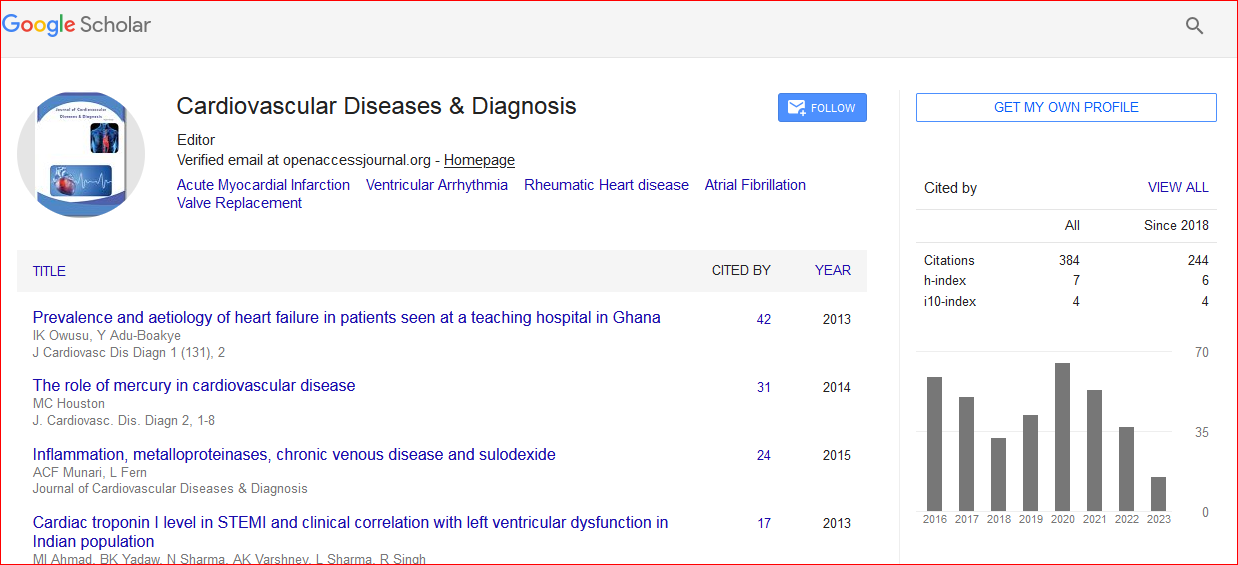
Cardiovascular Diseases & Diagnosis received 427 citations as per Google Scholar report