Commentary - (2025) Volume 10, Issue 2
Received: 01-Apr-2025, Manuscript No. jdcm-26-182185;
Editor assigned: 03-Apr-2025, Pre QC No. P-182185;
Reviewed: 17-Apr-2025, QC No. Q-182185;
Revised: 22-Apr-2025, Manuscript No. R-182185;
Published:
29-Apr-2025
, DOI: 10.37421/2475-3211.2025.10.304
Citation: Anderson, Michael T.. ”T2DM Cardiometabolic Risks and Emerging Therapies.” J Diabetic Complications Med 10 (2025):304.
Copyright: © 2025 Anderson T. Michael This is an open-access article distributed under the terms of the Creative Commons Attribution License, which permits unrestricted use, distribution and reproduction in any medium, provided the original author and source are credited.
Type 2 diabetes mellitus (T2DM) is profoundly intertwined with cardiometabolic complications, chief among them cardiovascular disease (CVD) and its precursor conditions. This intricate association arises from a complex interplay of hyperglycemia, insulin resistance, dyslipidemia, and inflammation, all of which contribute to endothelial dysfunction, the development of atherosclerosis, and impaired cardiac function. Emerging research continues to illuminate the roles of novel biomarkers and therapeutic targets, such as incretin-based therapies and SGLT2 inhibitors, in effectively mitigating these significant risks. A deep understanding of these complex pathophysiological pathways is absolutely crucial for the comprehensive and effective management of patients diagnosed with T2DM [1].
The revolutionary advent of SGLT2 inhibitors has dramatically transformed the landscape of T2DM management, particularly in its impact on cardiovascular outcomes. These groundbreaking agents not only excel at improving glycemic control but also demonstrably exhibit substantial cardiorenal protective effects, notably independent of their primary glucose-lowering action. Their multifaceted mechanism of action involves promoting diuresis and natriuresis, alongside improving cardiac energetics, ultimately leading to a significant reduction in heart failure hospitalizations and overall cardiovascular mortality. This remarkable efficacy necessitates a critical re-evaluation of current treatment algorithms for T2DM [2].
GLP-1 receptor agonists represent another vital and significant class of antidiabetic medications that offer profound cardiometabolic benefits. Beyond their well-established effects on glycemic control and weight reduction, these potent drugs have consistently demonstrated a robust capacity to reduce major adverse cardiovascular events (MACE) in patients with T2DM, especially those with established CVD or a high overall cardiovascular risk profile. Their pleiotropic effects are extensive, encompassing improvements in endothelial function, a reduction in systemic inflammation, and significant anti-atherosclerotic properties [3].
The intricate and often challenging relationship between T2DM and heart failure (HF) stands as a major clinical concern for healthcare providers worldwide. Persistent hyperglycemia, pervasive insulin resistance, and broader metabolic dysregulation all significantly contribute to the development of both diastolic and systolic cardiac dysfunction. Advanced glycation end products (AGEs), pervasive oxidative stress, and chronic inflammation are key pathogenic players that drive cardiac remodeling and the progression of fibrosis within the heart muscle. Consequently, the early detection and aggressive management of diabetes are paramount strategies for preventing or substantially delaying the onset of HF in this vulnerable patient population [4].
Diabetic dyslipidemia is a characteristic and pervasive hallmark of T2DM and serves as a significant contributor to the accelerated progression of atherosclerosis. This condition is typically characterized by markedly low levels of high-density lipoprotein cholesterol (HDL-C), considerably elevated triglyceride levels, and an increased prevalence of small, dense low-density lipoprotein (LDL) particles. This specific lipid profile confers a substantially elevated cardiovascular risk. Effective management strategies encompass essential lifestyle modifications, the judicious use of statins, and the application of fibrates, with ongoing research actively exploring novel lipid-modulating agents to further enhance therapeutic outcomes [5].
Hypertension is a condition that is exceptionally prevalent in individuals diagnosed with T2DM, acting as a potent and synergistic risk factor that significantly amplifies the risk of cardiovascular complications. The underlying pathophysiological mechanisms involved are diverse and include increased sodium retention by the kidneys, significant endothelial dysfunction, and overactivity of the sympathetic nervous system. Achieving targeted blood pressure levels through a combination of effective pharmacotherapy and essential lifestyle interventions is absolutely critical for substantially reducing the incidence of debilitating events such as stroke, myocardial infarction, and progressive renal disease [6].
The cardiometabolic risk associated with obesity, particularly in the context of existing T2DM, is undeniably substantial and poses a significant clinical challenge. Dysfunctional adipose tissue plays a critical role by releasing pro-inflammatory cytokines and adipokines, which actively promote insulin resistance and contribute to the overall pathology of cardiovascular disease. Consequently, effective weight management, achieved through a combination of dietary interventions, regular physical exercise, and appropriate pharmacotherapy (including agents like GLP-1 RAs and SGLT2is), emerges as a fundamental cornerstone of successful risk mitigation strategies and the overall improvement of cardiometabolic health in affected individuals [7].
Diabetic kidney disease (DKD) represents a major and serious microvascular complication that arises from T2DM and is recognized as a significant predictor of adverse cardiovascular events. The underlying pathophysiological mechanisms driving DKD are complex and include hyperglycemia-induced glomerular hyperfiltration, pathological mesangial expansion, and injury to podocytes, ultimately leading to the hallmark of proteinuria and progressive renal dysfunction. Therapies such as renin-angiotensin-aldosterone system (RAAS) blockade and the administration of SGLT2 inhibitors have demonstrated proven efficacy in effectively slowing the progression of DKD and simultaneously reducing overall cardiovascular risk [8].
The gut microbiome is increasingly recognized for its integral role in the development and progression of cardiometabolic complications associated with T2DM. Dysbiosis, or an imbalance in the microbial communities residing in the gut, can profoundly influence glucose metabolism, systemic inflammation, and lipid profiles through altered production of essential metabolites such as short-chain fatty acids (SCFAs) and other microbial byproducts. Future therapeutic strategies are anticipated to explore the modulation of the gut microbiota as a promising avenue for improving overall cardiometabolic outcomes in patients with T2DM [9].
Personalized medicine approaches are steadily becoming indispensable in the effective management of T2DM and its associated cardiometabolic complications. Factors such as genetic predisposition, diverse lifestyle influences, and individual responses to therapeutic interventions exhibit significant variability among different patients. The utilization of sophisticated biomarkers and advanced analytical tools enables the development of highly tailored treatment strategies, thereby optimizing glycemic control and cardiovascular risk reduction while simultaneously minimizing the occurrence of adverse effects and enhancing overall patient care [10].
Type 2 diabetes mellitus (T2DM) is intrinsically linked to cardiometabolic complications, primarily cardiovascular disease (CVD) and its precursors. This association stems from a complex interplay of hyperglycemia, insulin resistance, dyslipidemia, and inflammation, all contributing to endothelial dysfunction, atherosclerosis, and impaired cardiac function. Emerging research highlights the role of novel biomarkers and therapeutic targets, including incretin-based therapies and SGLT2 inhibitors, in mitigating these risks. Understanding these intricate pathways is crucial for comprehensive patient management [1].
The advent of SGLT2 inhibitors has revolutionized the management of T2DM, particularly concerning cardiovascular outcomes. These agents not only improve glycemic control but also demonstrate significant cardiorenal protective effects, independent of their glucose-lowering action. Their mechanism involves diuresis, natriuresis, and improved cardiac energetics, leading to reduced heart failure hospitalizations and cardiovascular mortality. This necessitates a re-evaluation of treatment algorithms in T2DM [2].
GLP-1 receptor agonists represent another significant class of antidiabetic medications offering profound cardiometabolic benefits. Beyond their glycemic control and weight-reducing effects, these drugs have demonstrated a robust reduction in major adverse cardiovascular events (MACE) in patients with T2DM and established CVD or high cardiovascular risk. Their pleiotropic effects include improved endothelial function, reduced inflammation, and anti-atherosclerotic properties [3].
The intricate relationship between T2DM and heart failure (HF) is a major clinical concern. Hyperglycemia, insulin resistance, and metabolic dysregulation contribute to diastolic and systolic dysfunction. Advanced glycation end products (AGEs), oxidative stress, and inflammation play key roles in cardiac remodeling and fibrosis. Early detection and aggressive management of diabetes are paramount to preventing or delaying the onset of HF in this population [4].
Diabetic dyslipidemia is a hallmark of T2DM and a significant contributor to accelerated atherosclerosis. Characterized by low high-density lipoprotein cholesterol (HDL-C), elevated triglycerides, and increased small, dense low-density lipoprotein (LDL) particles, this lipid profile confers a high cardiovascular risk. Management strategies include lifestyle modifications, statins, and fibrates, with ongoing research into novel lipid-modulating agents [5].
Hypertension is highly prevalent in individuals with T2DM, acting as a potent synergistic risk factor for cardiovascular complications. The mechanisms involve increased sodium retention, endothelial dysfunction, and sympathetic nervous system overactivity. Achieving target blood pressure levels through pharmacotherapy and lifestyle interventions is critical for reducing the incidence of stroke, myocardial infarction, and renal disease [6].
The cardiometabolic risk associated with obesity in the context of T2DM is substantial. Adipose tissue dysfunction releases pro-inflammatory cytokines and adipokines that promote insulin resistance and cardiovascular pathology. Weight management through diet, exercise, and pharmacotherapy (including agents like GLP-1 RAs and SGLT2is) is a cornerstone of mitigating these risks and improving overall cardiometabolic health [7].
Diabetic kidney disease (DKD) is a major microvascular complication of T2DM and a significant predictor of cardiovascular events. The underlying mechanisms involve hyperglycemia-induced glomerular hyperfiltration, mesangial expansion, and podocyte injury, leading to proteinuria and progressive renal dysfunction. Renin-angiotensin-aldosterone system (RAAS) blockade and SGLT2 inhibitors have proven efficacy in slowing DKD progression and reducing cardiovascular risk [8].
The gut microbiome plays an increasingly recognized role in the development and progression of cardiometabolic complications in T2DM. Dysbiosis can influence glucose metabolism, inflammation, and lipid profiles through altered production of short-chain fatty acids (SCFAs) and other metabolites. Future therapeutic strategies may involve modulating the gut microbiota to improve cardiometabolic outcomes [9].
Personalized medicine approaches are becoming essential in managing T2DM and its cardiometabolic complications. Genetic predisposition, lifestyle factors, and response to therapy vary significantly among individuals. Utilizing biomarkers and advanced analytics allows for tailored treatment strategies, optimizing glycemic control and cardiovascular risk reduction while minimizing adverse effects [10].
Type 2 diabetes mellitus (T2DM) is closely linked to cardiometabolic complications like cardiovascular disease, driven by hyperglycemia, insulin resistance, dyslipidemia, and inflammation. Emerging therapies such as SGLT2 inhibitors and GLP-1 receptor agonists have revolutionized management by offering significant cardiovascular and renal protection, often independently of glycemic control. Other key factors contributing to cardiometabolic risk in T2DM include hypertension, obesity, diabetic dyslipidemia, and diabetic kidney disease. The pathophysiology involves complex interactions leading to endothelial dysfunction, atherosclerosis, and impaired cardiac function. Future management strategies may involve personalized medicine approaches and modulation of the gut microbiome to improve patient outcomes and reduce cardiovascular events.
None
None
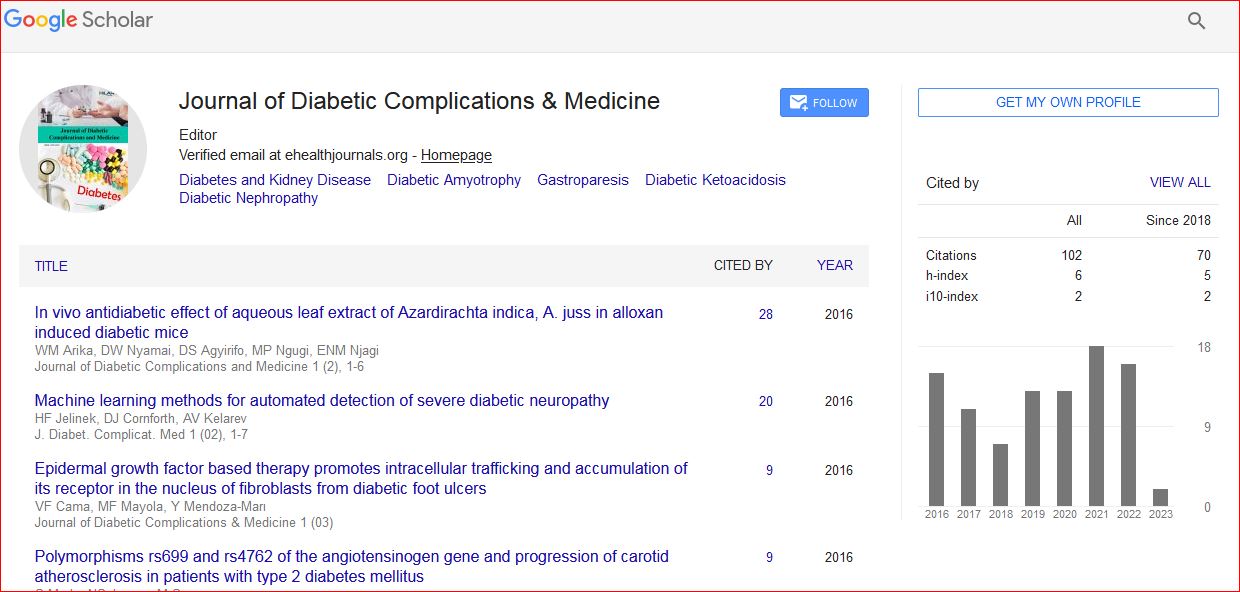
Journal of Diabetic Complications & Medicine received 102 citations as per Google Scholar report