Perspective - (2025) Volume 14, Issue 5
Received: 01-Sep-2025, Manuscript No. mcce-26-190188;
Editor assigned: 03-Sep-2025, Pre QC No. P-190188;
Reviewed: 17-Sep-2025, QC No. Q-190188;
Revised: 22-Sep-2025, Manuscript No. R-190188;
Published:
29-Sep-2025
, DOI: 10.37421/2470-6965.2025.14.422
Citation: Santos, Miguel. ”Sustaining Malaria-Free: Political Will, Surveillance, Engagement.” Malar Contr Elimination 14 (2025):422.
Copyright: © 2025 Santos M. This is an open-access article distributed under the terms of the Creative Commons Attribution License, which permits unrestricted use, distribution and reproduction in any medium, provided the original author and source are credited.
Achieving and maintaining malaria-free certification is a complex undertaking that requires a multifaceted and sustained approach, drawing valuable lessons from countries that have successfully eradicated the disease. This journey hinges on a delicate balance of political commitment, robust public health infrastructure, and active community involvement. The foundation of such success lies in strong national malaria control programs that are adequately funded and strategically implemented [1].
These programs are essential for developing and maintaining the necessary infrastructure, human resources, and technological capabilities required for effective malaria surveillance and response [2].
A critical component of these programs is the development and implementation of highly sensitive and responsive surveillance systems capable of detecting even isolated cases of malaria. This includes thorough case investigation, contact tracing, and the rapid diagnostic testing of individuals with symptoms, followed by prompt treatment to interrupt the transmission chain [3].
Furthermore, community participation is not merely an optional addition but an indispensable element for malaria elimination. Empowering communities with knowledge about malaria transmission, promoting the consistent use of preventive measures such as insecticide-treated bed nets, and encouraging the prompt reporting of any symptoms are vital for ensuring that control efforts are both effective and sustainable [4].
Integrated vector management (IVM) stands as a cornerstone strategy in successful malaria elimination efforts. This approach involves the synergistic application of multiple control methods, including the distribution of insecticide-treated nets, the implementation of indoor residual spraying, and larval source management, all of which are tailored to the specific epidemiological and entomological characteristics of the local context [5].
The accessibility and appropriate utilization of diagnostic tools and therapeutic interventions are equally critical. Rapid diagnostic tests (RDTs) play a pivotal role in enabling timely diagnosis at the point of care, while the availability of effective antimalarial drugs for both uncomplicated and severe malaria is essential for successful treatment outcomes [6].
Sustained political will and consistent financial investment are non-negotiable prerequisites for achieving malaria elimination. Nations that have successfully eradicated malaria have consistently demonstrated long-term dedication to funding control and elimination activities, often through a combination of domestic and international financial resources [7].
For countries sharing endemic regions, cross-border collaboration is paramount. Coordinated surveillance and control efforts are crucial for preventing the reintroduction of malaria across national boundaries, thereby reinforcing elimination gains and ensuring regional health security [8].
The strategic integration of innovative technologies offers significant potential to enhance malaria control and elimination initiatives. This includes the adoption of mobile health (mHealth) applications for improved data collection and reporting, the utilization of drone technology for enhanced vector surveillance, and the deployment of genomic surveillance for monitoring the evolution of parasite and vector populations [9].
Finally, post-certification vigilance is indispensable for the enduring maintenance of malaria-free status. This necessitates the continuous operation of strong surveillance systems designed to swiftly detect and respond to any imported or residual cases of malaria, thereby preventing the re-establishment of local transmission and safeguarding public health gains [10].
Achieving malaria-free certification is a testament to the power of sustained political will, the implementation of robust surveillance systems, and the critical engagement of communities. Successful countries demonstrate that a comprehensive approach, integrating various public health strategies, is fundamental to eradicating this disease [1].
The bedrock of any successful national malaria control program lies in its ability to foster and maintain strong operational capacity. This involves significant and ongoing investment in essential infrastructure, the development of a skilled human resource base, and the adoption of innovative technologies for both detecting malaria cases and responding to outbreaks [2].
Effective surveillance systems are paramount and must possess a high degree of sensitivity and responsiveness to detect even sporadic instances of malaria. This includes meticulous case investigation, diligent contact tracing, and the immediate use of rapid diagnostic tests, followed by prompt and appropriate treatment to effectively break the cycle of transmission [3].
Community participation is not an auxiliary component but rather a foundational pillar for achieving malaria elimination. Empowering local populations with comprehensive knowledge about malaria, promoting the consistent use of preventive measures such as insecticide-treated nets, and encouraging the immediate reporting of symptoms are crucial for ensuring the efficacy and long-term sustainability of control efforts [4].
Integrated vector management (IVM) represents a core strategy that underpins successful malaria elimination endeavors. This approach judiciously combines multiple intervention methods, including the distribution of insecticide-treated nets, the application of indoor residual spraying, and the management of larval sources, all meticulously adapted to the unique epidemiological and entomological conditions present in a given region [5].
Ensuring widespread access to and the correct application of diagnostic tools and therapeutic interventions is of utmost importance. Rapid diagnostic tests (RDTs) are vital for facilitating prompt diagnosis at the point of service, while the availability of effective antimalarial drugs for treating both uncomplicated and severe malaria is indispensable for achieving successful patient outcomes [6].
The unwavering commitment of political leadership and the provision of adequate financial resources are indispensable for the successful pursuit of malaria elimination. Countries that have achieved malaria-free status have consistently demonstrated a profound and enduring dedication to financing control and elimination activities, frequently through a combination of domestic funds and international support [7].
Cross-border collaboration is an essential element, particularly for nations that share regions where malaria transmission is endemic. Harmonized surveillance and control efforts across national borders are critical for preventing the reintroduction of malaria and for reinforcing elimination achievements [8].
The strategic adoption of cutting-edge technologies can significantly amplify the impact of malaria control and elimination initiatives. This encompasses leveraging mobile health (mHealth) platforms for enhanced data collection and reporting, employing drone technology for more effective vector surveillance, and utilizing genomic surveillance to monitor the evolution of parasite and vector resistance mechanisms [9].
Following certification, maintaining vigilance is crucial for the long-term preservation of malaria-free status. This involves the continuous operation of robust surveillance systems capable of rapidly detecting and responding to any imported or residual cases, thereby preventing the resurgence of malaria transmission and safeguarding public health achievements [10].
Achieving and sustaining malaria-free status depends on sustained political will, robust surveillance, and community engagement. Key strategies include strong national control programs with adequate investment, sensitive surveillance systems for early detection and response, and active community participation. Integrated vector management, employing a combination of methods tailored to local contexts, is crucial. Access to rapid diagnostics and effective treatments is vital. Sustained political commitment and funding are non-negotiable, as is cross-border collaboration to prevent reintroduction. Innovative technologies can enhance control efforts, and continuous vigilance after certification is essential to prevent resurgence.
None
None
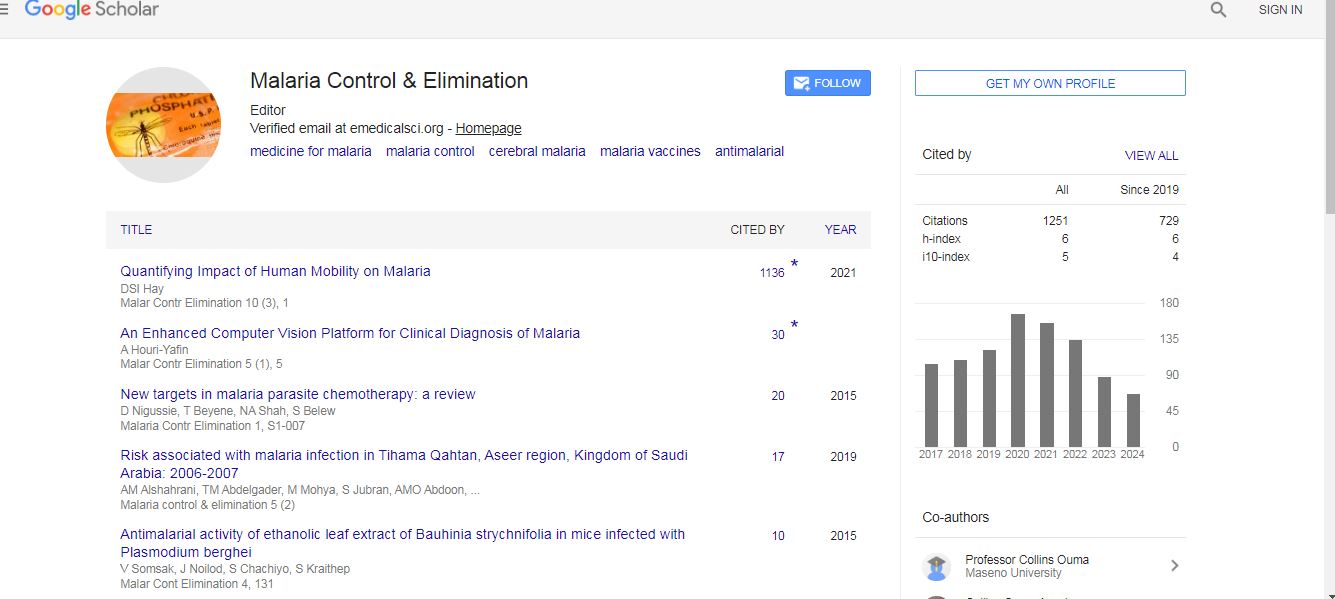
Malaria Control & Elimination received 1187 citations as per Google Scholar report