Short Communication - (2025) Volume 14, Issue 6
Received: 01-Dec-2025, Manuscript No. idse-26-183638;
Editor assigned: 03-Dec-2025, Pre QC No. P-183638;
Reviewed: 17-Dec-2025, QC No. Q-183638;
Revised: 22-Dec-2025, Manuscript No. R-183638;
Published:
29-Dec-2025
, DOI: 10.37421/2168-9768.2025.14.525
Citation: Domínguez, Rafael. ”Sustainable Agriculture: Water
Management for Environment.” Irrigat Drainage Sys Eng 14 (2025):525.
Copyright: © 2025 Dominguez R. This is an open-access article distributed under the terms of the Creative Commons Attribution License, which permits unrestricted use,
distribution and reproduction in any medium, provided the original author and source are credited.
Effective engineering management of irrigation and drainage water resources is fundamental for achieving sustainable agriculture and robust environmental protection, encompassing the optimization of water use efficiency, the mitigation of detrimental waterlogging and salinization, and crucial adaptation to dynamic hydrological conditions. This comprehensive approach necessitates the implementation of integrated water management strategies, the adoption of advanced monitoring technologies, and the meticulous design and upkeep of resilient infrastructure to guarantee equitable water distribution, minimize water losses, and substantially enhance agricultural productivity while diligently safeguarding delicate ecosystems [1].
The integration of cutting-edge remote sensing and Geographic Information Systems (GIS) provides exceptionally powerful tools for the precise assessment of water availability, the meticulous monitoring of crop water requirements, and the accurate mapping of irrigation and drainage network performance, thereby enabling highly precise irrigation scheduling and the early detection of water-related stresses. This sophisticated technological approach facilitates optimized designs for water management infrastructure, resulting in significant water savings and demonstrably improved crop yields, while also assisting in the identification of areas susceptible to waterlogging and salinity for targeted interventions [2].
Climate change presents profound challenges to the effective management of irrigation and drainage, primarily through alterations in precipitation patterns, increased evaporation rates, and a higher frequency of extreme weather events, demanding engineering management strategies focused on developing climate-resilient systems. These must include effective water harvesting techniques, efficient water storage solutions, and flexible irrigation scheduling protocols. Simultaneously, drainage systems require significant enhancements to effectively manage increased runoff and mitigate potential flooding, thereby ensuring the continued productivity and protection of agricultural lands [3].
The economic and social ramifications of efficient irrigation and drainage management are undeniably substantial, with optimized water use directly contributing to reduced operational costs and increased farmer profitability. Furthermore, well-managed irrigation and drainage systems play a pivotal role in bolstering food security, fostering rural development, and actively contributing to poverty reduction initiatives. Ensuring equitable access to water resources, facilitated by competent engineering management, is therefore paramount for maintaining social stability and promoting sustainable livelihoods, particularly within vulnerable agricultural communities worldwide [4].
Addressing critical issues of water scarcity and improving water quality within agricultural catchments necessitates a holistic and integrated approach to the engineering management of irrigation and drainage systems. This approach must thoroughly consider the intricate interconnectedness of both surface and groundwater resources, actively implement practices that substantially minimize the runoff of agricultural pollutants, and vigorously promote the reuse of water. Integrated watershed management, when synergistically coupled with advanced modeling techniques, offers a promising pathway towards developing more sustainable and resilient water resource systems capable of withstanding future environmental pressures [5].
Modern irrigation technologies, such as the highly efficient drip irrigation and advanced precision sprinkler systems, are instrumental in significantly enhancing overall water use efficiency within agricultural practices. The engineering management of these systems focuses on their precise design, efficient installation, optimal operation, and diligent maintenance to ensure the accurate delivery of water to crops while minimizing losses attributable to evaporation and deep percolation. The increasing adoption of smart irrigation controllers and sophisticated sensors further refines water application, enabling it to be based on real-time soil moisture data and current weather conditions, thereby maximizing resource utilization [6].
The design and effective management of drainage systems are absolutely critical for the prevention of debilitating waterlogging and soil salinization, conditions that severely degrade agricultural land and significantly reduce crop productivity. Engineering strategies encompass the implementation of subsurface drainage, surface drainage, and controlled drainage systems, with the selection of the most appropriate method contingent upon specific soil types, topographical features, prevailing climate conditions, and diverse crop requirements. Proper management ensures the timely removal of excess water, thereby improving soil aeration and maintaining an optimal root zone environment conducive to healthy plant growth [7].
Infrastructure management for irrigation and drainage systems demands continuous monitoring, proactive maintenance, and timely rehabilitation to guarantee their long-term functionality and operational efficiency. Engineering management encompasses strategic asset management planning, rigorous risk assessment methodologies, and the application of modern inspection techniques, including addressing issues related to aging infrastructure, sediment accumulation, and structural integrity. These efforts are vital to prevent system failures and optimize both water delivery and drainage processes, ensuring the reliability of agricultural water infrastructure [8].
Effective water governance and carefully crafted policies are indispensable components for the successful engineering management of irrigation and drainage water resources, establishing the necessary frameworks for sustainable practice. Robust policies are essential for ensuring equitable water allocation among users, effectively resolving potential water conflicts, and actively promoting water conservation and sustainable water use practices across the agricultural sector. Engineering managers must operate within established legal and institutional boundaries, actively engaging with all relevant stakeholders to collaboratively develop and implement management plans that are both technically sound and socially acceptable, fostering broad consensus and buy-in [9].
The application of advanced modeling and simulation techniques has become an indispensable tool in the comprehensive engineering management of irrigation and drainage systems, facilitating a deeper understanding and more effective control of complex hydrological processes. These sophisticated tools enable the thorough analysis of intricate hydrological processes, the rigorous evaluation of diverse management scenarios, and the accurate prediction of system performance under a wide array of anticipated conditions. Such models are invaluable for optimizing water distribution strategies, assessing the potential impacts of land-use changes, and meticulously designing effective strategies for flood control and equitable water resource allocation, contributing to more resilient and efficient water management [10].
Effective engineering management of irrigation and drainage water resources is paramount for sustainable agriculture and environmental protection. This involves optimizing water use efficiency, mitigating waterlogging and salinization, and adapting to changing hydrological conditions. Key aspects include integrated water management strategies, advanced monitoring technologies, and robust infrastructure design and maintenance. The goal is to ensure equitable water distribution, minimize water losses, and enhance agricultural productivity while safeguarding ecosystems [1].
The integration of remote sensing and geographic information systems (GIS) offers powerful tools for assessing water availability, monitoring crop water requirements, and mapping irrigation and drainage network performance. This technological approach enables precise irrigation scheduling, early detection of water-related stresses, and optimized design of water management infrastructure, leading to significant water savings and improved crop yields. It also aids in identifying areas prone to waterlogging and salinity for targeted interventions [2].
Climate change poses significant challenges to irrigation and drainage management through altered precipitation patterns, increased evaporation, and more frequent extreme weather events. Engineering management must focus on developing climate-resilient systems, including strategies for water harvesting, efficient storage, and flexible irrigation scheduling. Drainage systems need to be enhanced to cope with increased runoff and potential flooding, ensuring agricultural land remains productive and protected [3].
The economic and social implications of efficient irrigation and drainage management are substantial. By optimizing water use, farmers can reduce operational costs and increase profitability. Furthermore, well-managed systems contribute to food security, rural development, and poverty reduction. Equitable access to water resources, facilitated by sound engineering management, is crucial for social stability and sustainable livelihoods, particularly in vulnerable agricultural communities [4].
Addressing water scarcity and improving water quality in agricultural catchments requires a holistic approach to engineering management of irrigation and drainage. This involves considering the interconnectedness of surface and groundwater resources, implementing practices that minimize agricultural pollutant runoff, and promoting water reuse. Integrated watershed management, coupled with advanced modeling, can lead to more sustainable and resilient water resource systems [5].
Modern irrigation technologies, such as drip irrigation and precision sprinkler systems, play a crucial role in enhancing water use efficiency. Engineering management focuses on the design, installation, operation, and maintenance of these systems to ensure optimal water delivery to crops while minimizing losses through evaporation and deep percolation. The adoption of smart irrigation controllers and sensors further refines water application based on real-time soil moisture and weather data [6].
Drainage system design and management are critical for preventing waterlogging and soil salinization, which degrade agricultural land and reduce crop productivity. Engineering strategies include subsurface drainage, surface drainage, and controlled drainage systems. The choice of drainage method depends on soil type, topography, climate, and crop requirements. Effective management ensures timely removal of excess water, improves soil aeration, and helps maintain a favorable root zone environment [7].
The management of irrigation and drainage infrastructure requires continuous monitoring, maintenance, and rehabilitation to ensure its long-term functionality and efficiency. Engineering management encompasses asset management planning, risk assessment, and the application of modern inspection techniques. This includes addressing issues related to aging infrastructure, sediment accumulation, and structural integrity to prevent system failures and optimize water delivery and drainage [8].
Water governance and policy play a vital role in the successful engineering management of irrigation and drainage water resources. Effective policies are needed to ensure equitable water allocation, resolve water conflicts, and promote sustainable water use practices. Engineering managers must work within established legal and institutional frameworks, engaging with stakeholders to develop and implement management plans that are both technically sound and socially acceptable [9].
The application of advanced modeling and simulation techniques is instrumental in the engineering management of irrigation and drainage. These tools allow for the analysis of complex hydrological processes, the evaluation of different management scenarios, and the prediction of system performance under various conditions. Models can aid in optimizing water distribution, assessing the impacts of land-use changes, and designing effective strategies for flood control and water resource allocation [10].
Effective engineering management of irrigation and drainage is crucial for sustainable agriculture and environmental protection. This involves optimizing water use efficiency, mitigating issues like waterlogging and salinization, and adapting to climate change. Key strategies include integrated water management, advanced technologies like remote sensing and GIS, and robust infrastructure. Modern irrigation techniques such as drip irrigation enhance water use, while proper drainage system design prevents land degradation. Infrastructure maintenance is vital for long-term efficiency. Furthermore, sound water governance and policy are essential for equitable allocation and conflict resolution. Advanced modeling and simulation tools aid in optimizing system performance and managing water resources effectively, ultimately contributing to food security, rural development, and ecological well-being.
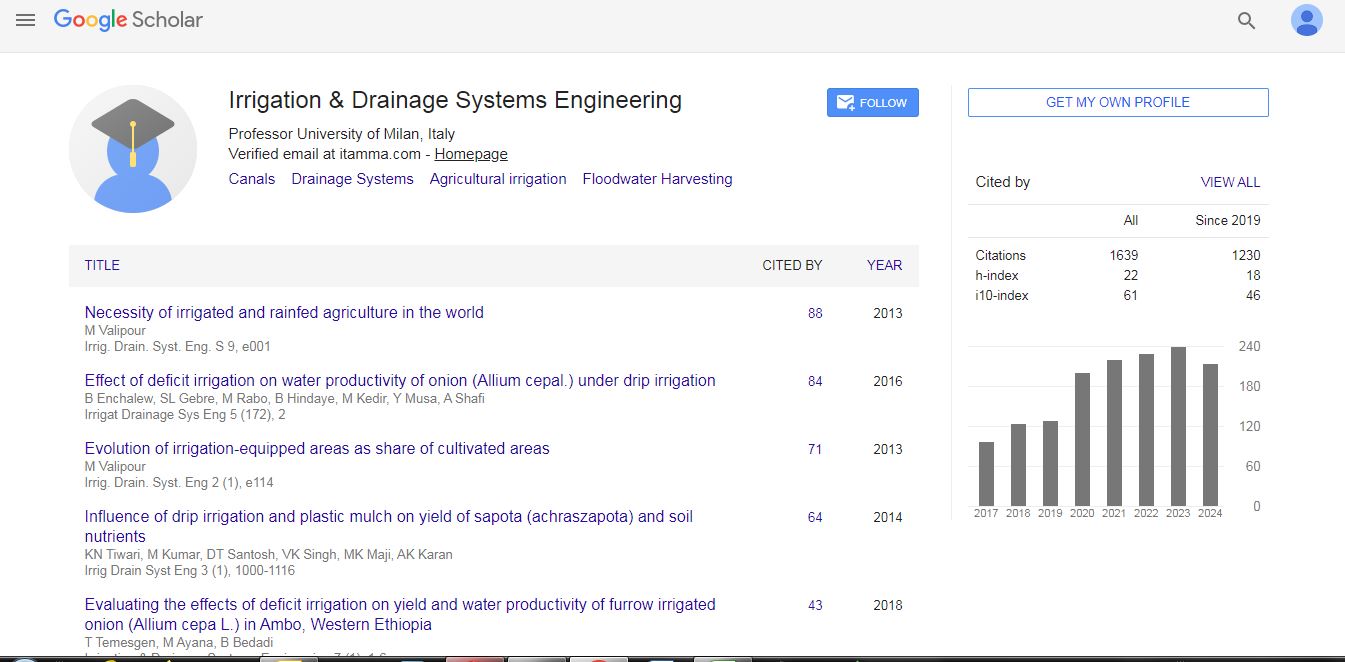
Irrigation & Drainage Systems Engineering received 835 citations as per Google Scholar report