Short Communication - (2025) Volume 14, Issue 2
Received: 01-Apr-2025, Manuscript No. jhoa-26-187779;
Editor assigned: 03-Apr-2025, Pre QC No. P-187779;
Reviewed: 17-Apr-2025, QC No. Q-187779;
Revised: 22-Apr-2025, Manuscript No. R-187779;
Published:
29-Apr-2025
, DOI: 10.37421/2167-1095.2025.14.513
Citation: Gonzalez, Maria. ”Stress Hypertension: Mechanisms, Impacts, and Interventions.” J Hypertens 14 (2025):513.
Copyright: © 2025 Gonzalez M. This is an open-access article distributed under the terms of the Creative Commons Attribution License, which permits unrestricted use, distribution and reproduction in any medium, provided the original author and source are credited.
Chronic stress exerts a profound influence on cardiovascular health, primarily through its impact on blood pressure regulation. The sympathetic nervous system and the renin-angiotensin-aldosterone system are key players in this response, leading to vasoconstriction and fluid retention, which collectively elevate blood pressure. This sustained increase, often referred to as stress-induced hypertension, significantly heightens the risk of adverse cardiovascular outcomes such as heart attack and stroke. Understanding the intricate mechanisms linking stress to hypertension is therefore crucial for effective prevention and management strategies. [1] Acute stress triggers transient increases in blood pressure due to the rapid release of hormones like catecholamines. However, when stress becomes prolonged or is experienced repeatedly, these acute responses can transition into a chronic state, leading to sustained hypertension. The physiological pathways involved, including the release of cortisol alongside catecholamines, are complex and interconnected. Identifying these pathways is a critical step towards developing targeted interventions that can mitigate the hypertensive effects of stress. [2] Psychological stressors have been consistently identified as significant contributors to both the onset and worsening of hypertension, particularly in individuals with a genetic susceptibility. The continuous activation of the body's stress response systems can impair endothelial function, which is essential for healthy blood vessel operation. Furthermore, it can promote arterial stiffness, a condition where blood vessels lose their elasticity, making them less able to accommodate blood flow and increasing the workload on the heart. [3] Beyond the direct physiological effects, lifestyle factors play a considerable role in moderating the impact of stress on blood pressure. The adoption of stress management techniques, such as mindfulness meditation and various relaxation exercises, has shown promise in counteracting the hypertensive effects of stress. These interventions are designed to dampen the overactivity of the sympathetic nervous system, which is often hyperactive in stressed individuals. [4] The autonomic nervous system, which controls involuntary bodily functions, is central to the relationship between stress and blood pressure. Chronic stress shifts the balance towards sympathetic dominance, a state characterized by increased alertness and readiness for 'fight or flight.' This sustained sympathetic activation leads to a rise in systemic vascular resistance and an elevated heart rate, both of which contribute to higher blood pressure. [5] The long-term consequences of chronic stress exposure extend beyond functional changes to include structural alterations in the cardiovascular system. Sustained sympathetic activation can lead to cardiac hypertrophy, an enlargement of the heart muscle, and vascular remodeling, where the structure of blood vessels changes. These structural adaptations can have lasting detrimental effects on heart function and overall cardiovascular health. [6] Genetic predisposition interacts with environmental factors, including stressors, to modulate an individual's vulnerability to stress-related hypertension. This concept of gene-environment interaction suggests that some individuals may be biologically more susceptible to developing high blood pressure when exposed to stressful conditions. Research in this area is vital for developing personalized approaches to hypertension management that consider an individual's unique genetic makeup. [7] Cortisol, a key stress hormone, plays a significant role in the development of hypertension when chronically elevated. Prolonged exposure to high levels of cortisol can affect mineralocorticoid receptors and influence vascular tone, thereby contributing to increased blood pressure. This highlights the systemic nature of stress, demonstrating how endocrine pathways are deeply involved in its cardiovascular consequences. [8] Workplace stress, a prevalent issue in modern society, has been robustly linked to a higher incidence of hypertension. This association underscores the importance of considering occupational environments in the context of cardiovascular health. Strategies focused on improving work-life balance and reducing workplace stressors are likely to have a positive impact on blood pressure control among employees. [9] A comprehensive understanding of the specific physiological mechanisms through which different types of stress affect blood pressure is fundamental for tailoring effective treatment strategies. The distinction between acute versus chronic stress, and psychological versus physical stress, is essential. Continued research into these nuanced relationships is vital for advancing personalized medicine in hypertension management. [10]
Chronic stress significantly elevates blood pressure by activating critical physiological systems, namely the sympathetic nervous system and the renin-angiotensin-aldosterone system. This activation results in vasoconstriction, the narrowing of blood vessels, and fluid retention, both of which contribute to an increased blood pressure. The persistent elevation of blood pressure due to stress, often termed 'stress-induced hypertension,' is a significant risk factor for various cardiovascular events, including heart attacks and strokes. Therefore, managing chronic stress is paramount for cardiovascular well-being. [1] While acute stress responses can lead to temporary increases in blood pressure, the cumulative effect of prolonged or repeated exposure to stress can result in the development of sustained hypertension. Understanding the intricate physiological pathways involved in these responses is essential. These pathways include the release of key hormones such as catecholamines, which prepare the body for immediate action, and cortisol, a primary stress hormone, which has broader metabolic and cardiovascular effects. [2] Psychological stress has been unequivocally identified as a major risk factor in the development and worsening of hypertension, especially in individuals who may have a genetic predisposition to the condition. Chronic activation of the stress response pathways can disrupt the normal functioning of the endothelium, the inner lining of blood vessels, which plays a vital role in regulating vascular tone and preventing blood clots. This disruption can also promote arterial stiffness, making the arteries less flexible and more prone to damage. [3] Lifestyle choices and behavioral interventions are recognized as vital components in mitigating the detrimental effects of stress on blood pressure. Techniques such as mindfulness meditation and relaxation exercises are effective in helping individuals manage stress. These interventions aim to reduce the activity of the sympathetic nervous system, which is often overstimulated during periods of stress, thereby helping to lower blood pressure. [4] There is a profound interplay between chronic stress and the autonomic nervous system in regulating blood pressure. Prolonged stress leads to a shift in autonomic balance, favoring the sympathetic nervous system over the parasympathetic nervous system. This imbalance results in increased systemic vascular resistance, as blood vessels constrict, and an elevated heart rate, both of which contribute to higher blood pressure. [5] The long-term consequences of chronic stress exposure can manifest not only as functional changes but also as structural alterations within the cardiovascular system. This can include cardiac hypertrophy, an abnormal thickening of the heart muscle, and vascular remodeling, where the structure of blood vessels changes in response to sustained stress. These structural changes can impair cardiac function and increase the risk of cardiovascular disease. [6] Genetic factors can interact with environmental stressors to influence an individual's susceptibility to developing stress-related hypertension. This highlights the complexity of hypertension etiology, suggesting that a combination of genetic vulnerability and environmental exposure contributes to disease risk. Research into gene-environment interactions is crucial for developing personalized strategies for hypertension prevention and management. [7] The chronic elevation of cortisol, a hormone released in response to stress, can directly contribute to the development of hypertension. Cortisol influences blood pressure through various mechanisms, including its effects on mineralocorticoid receptors and its impact on vascular tone. This endocrine pathway underscores the pervasive and systemic nature of stress's effects on cardiovascular health. [8] Workplace stress has emerged as a significant factor associated with an increased incidence of hypertension. The demands and pressures of the work environment can lead to chronic stress, thereby contributing to the development of high blood pressure. Interventions aimed at improving work-life balance and reducing occupational stressors are therefore important for promoting cardiovascular health in the workforce. [9] A thorough understanding of the specific physiological mechanisms by which different types of stress, whether acute or chronic, psychological or physical, influence blood pressure is essential for developing personalized and effective treatment strategies. Ongoing research continues to explore the complex and nuanced relationships between various forms of stress and their impact on cardiovascular regulation. [10]
Chronic stress significantly impacts blood pressure by activating the sympathetic nervous system and the renin-angiotensin-aldosterone system, leading to vasoconstriction and fluid retention, known as stress-induced hypertension. This increases the risk of cardiovascular events. While acute stress causes transient blood pressure increases, prolonged stress leads to sustained hypertension through pathways involving catecholamines and cortisol. Psychological stress exacerbates hypertension, disrupting endothelial function and arterial stiffness, especially in predisposed individuals. Lifestyle interventions like mindfulness can mitigate stress's effects by downregulating sympathetic activity. Chronic stress also causes structural cardiovascular changes like cardiac hypertrophy and vascular remodeling. Genetic predisposition interacts with stressors, influencing hypertension susceptibility. Cortisol's chronic elevation contributes to hypertension via endocrine pathways. Workplace stress is linked to hypertension, highlighting the need for work-life balance. Understanding diverse stress mechanisms is crucial for personalized hypertension management.
None
None
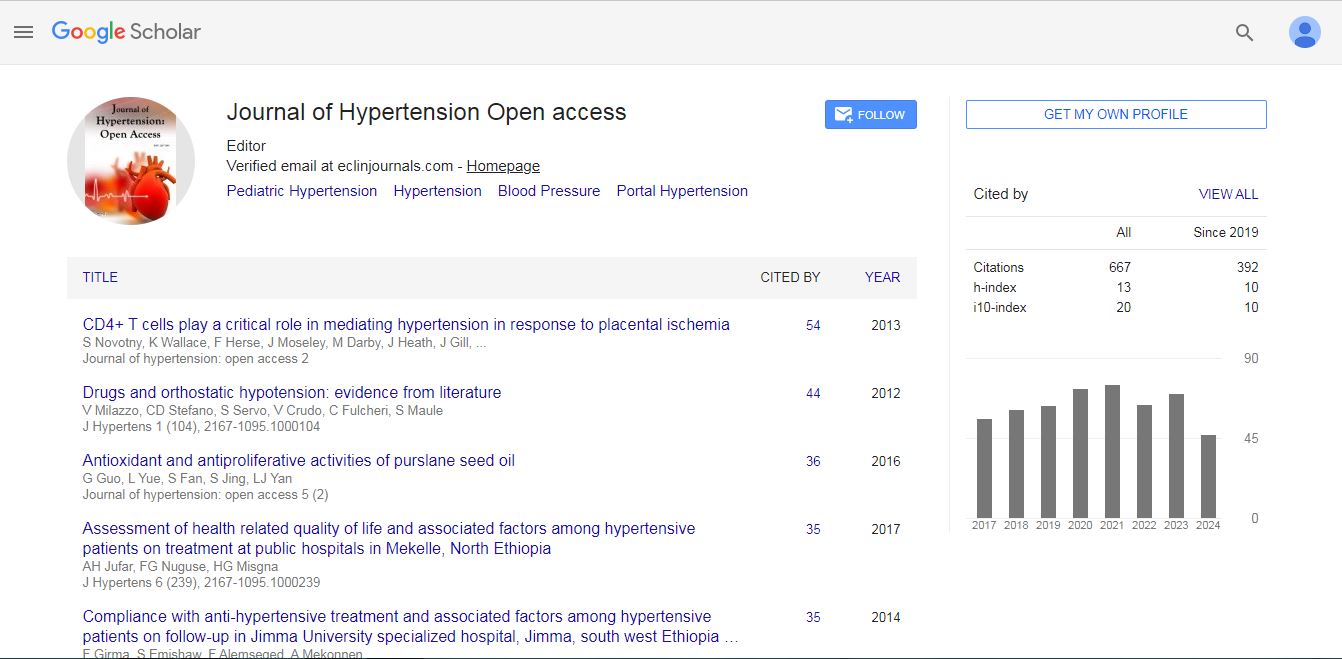
Journal of Hypertension: Open Access received 614 citations as per Google Scholar report