Opinion - (2025) Volume 13, Issue 5
Received: 01-Oct-2025, Manuscript No. jcdd-25-177666;
Editor assigned: 03-Oct-2025, Pre QC No. P-177666;
Reviewed: 17-Oct-2025, QC No. Q-177666;
Revised: 22-Oct-2025, Manuscript No. R-177666;
Published:
29-Oct-2025
, DOI: 10.37421/2329-9517.2025.13.693
Citation: Jorge Castillo. Stress and Alcohol: A Multifaceted
Relationship. J Cardiovasc Dis Diagn 13 (2025):693.
Copyright: © 2025 C. Jorge This is an open-access article distributed under the terms of the Creative Commons Attribution License, which permits unrestricted use, distribution
and reproduction in any medium, provided the original author and source are credited.
The intricate relationship between stress and alcohol consumption is a critical area of public health concern, influencing diverse populations across various contexts. A systematic review specifically highlights how college students frequently navigate academic, social, and financial stressors by increasing their alcohol intake. This trend underscores an urgent need for targeted interventions designed to mitigate these prevalent stressors and the psychological pathways linking them to heightened drinking behaviors [1].
Further broadening this scope, other research synthesizes findings on the nuanced interplay between stress and alcohol use among adolescents and young adults. This work carefully explores how different types of stress uniquely impact drinking patterns within these crucial developmental stages, emphasizing the need for age-appropriate understanding and support [2].
On a more fundamental level, the neurobiological and behavioral mechanisms that drive stress-induced alcohol craving and subsequent relapse have been extensively investigated. Understanding the specific brain circuits involved in stress response and their connections to reward pathways is paramount. Identifying these mechanisms provides crucial targets for developing more effective treatment strategies [3].
Recent global crises have further illuminated this connection. For instance, a review analyzing the period of the COVID-19 pandemic clearly demonstrates a strong correlation between elevated stress levels and a notable increase in alcohol consumption across the general population. This trend brings with it significant public health implications that warrant ongoing attention and policy development [4].
Certain professional groups also experience distinct patterns of stress-related alcohol issues. Military personnel, for example, often contend with unique stressors such as combat exposure and Post-Traumatic Stress Disorder (PTSD), which contribute significantly to Alcohol Use Disorders (AUDs). This population presents particular diagnostic and treatment challenges that demand specialized approaches [5].
Beyond individual experiences, researchers have employed network analysis to map the complex relationships between various facets of psychological distress and patterns of alcohol use. This method helps in identifying key "nodes" or points of intervention that could be highly effective for individuals struggling with stress-related drinking, offering a novel perspective on intervention design [6].
For young adults, the interplay of stress and alcohol use is further shaped by a range of vulnerability and protective factors. These include inherent personality traits, the strength of social support networks, and individual coping mechanisms. Understanding these factors provides valuable insights for developing proactive prevention strategies tailored to this demographic [7].
Importantly, the experience of stress-related alcohol consumption is not uniform across all demographics. A focused review explores significant gender differences in how biological, psychological, and social factors contribute to varied patterns of drinking in response to stress. Acknowledging these differences is vital for developing gender-sensitive intervention programs [8].
At the physiological core of this issue, the primary stress hormone, cortisol, plays a mediating role in stress-induced alcohol seeking. Research delves into how dysregulation of the hypothalamic-pituitary-adrenal (HPA) axis contributes substantially to an individual's vulnerability for Alcohol Use Disorders, highlighting a key biological pathway [9].
Finally, advanced neuroimaging studies have provided invaluable insights into the brain alterations associated with both stress and Alcohol Use Disorder. These systematic reviews synthesize findings that identify specific structural and functional brain changes. Such findings deepen our understanding of the neural underpinnings that perpetuate the insidious cycle of stress-induced drinking, paving the way for targeted neurobiological interventions [10].
The pervasive link between stress and alcohol consumption is a central theme across a substantial body of research, revealing complex dynamics within various demographic groups. For college students, the act of coping with significant academic pressures, social anxieties, and financial strains often manifests as increased alcohol use [1]. This phenomenon highlights a critical need for developing and implementing targeted interventions that directly address these common stressors, along with the underlying psychological mechanisms driving the connection between stress and elevated drinking behaviors. Extending this understanding to younger populations, reviews consistently synthesize findings on the intricate relationship between stress and alcohol use among adolescents and young adults. This research meticulously explores distinct types of stress and their specific impact on drinking patterns, underscoring the critical importance of recognizing and understanding the unique developmental stages and vulnerabilities inherent to these age groups [2].
Delving deeper into the physiological and neurological foundations, research meticulously outlines the neurobiological and behavioral mechanisms through which stress actively triggers alcohol craving and, subsequently, relapse. Experts discuss in detail the specific brain circuits implicated in the stress response and how these pathways interact with reward systems. Identifying these precise neurobiological underpinnings is crucial, as it provides clear, actionable targets for the development of more effective and specialized treatment protocols [3]. Complementing this, other reviews explicitly examine the pivotal role of cortisol, a primary stress hormone, in mediating stress-induced alcohol seeking. This work sheds light on how dysregulation within the Hypothalamic-Pituitary-Adrenal (HPA) axis significantly contributes to an individual's vulnerability to developing alcohol use disorders [9]. Further enhancing this understanding, systematic neuroimaging studies investigate the structural and functional brain alterations consistently associated with both chronic stress and Alcohol Use Disorder. These studies identify crucial brain changes that collectively perpetuate the self-reinforcing cycle of stress-induced drinking, offering a comprehensive view of the neurological impact [10].
Beyond individual biology, external circumstances profoundly influence this relationship. The unprecedented stress levels experienced globally during the COVID-19 pandemic, for instance, were directly correlated with a documented increase in alcohol consumption across populations. This phenomenon, explored through reviews, examines the various factors contributing to this concerning trend and its broad public health implications, emphasizing the need for preparedness during collective crises [4]. Moreover, specific professional populations, such as military personnel, present particularly complex scenarios regarding alcohol use disorders and stress. Narrative reviews highlight unique stressors like combat exposure and Post-Traumatic Stress Disorder (PTSD) that contribute significantly to AUDs within this group. The discussions extend to the considerable diagnostic and treatment challenges inherent to this population, necessitating specialized care and understanding [5].
The intricate interplay of psychological distress and alcohol use patterns can be further dissected through advanced methodologies like network analysis. This approach allows researchers to explore the relationships between various facets of psychological distress and identifies key nodes or central points that could serve as potent targets for intervention strategies in individuals struggling with stress-related drinking [6]. For young adults specifically, research synthesizes a range of vulnerability and protective factors that significantly influence the link between stress and alcohol use. These factors include intrinsic personality traits, the quality and availability of social support, and individual coping mechanisms. Such insights are invaluable for designing robust prevention programs [7]. Furthermore, a critical area of investigation revolves around gender differences in stress-related alcohol consumption. Reviews highlight how a combination of biological, psychological, and social factors distinctly contribute to varied patterns of drinking responses to stress between men and women, emphasizing the importance of gender-sensitive interventions [8].
Collectively, this body of research provides a holistic perspective on the complex interplay between stress and alcohol. It moves from broad demographic observations to specific neurobiological mechanisms, and from global health crises to individual vulnerabilities, offering a robust foundation for targeted interventions and prevention efforts across various populations.
The body of research explores the multifaceted relationship between stress and alcohol consumption across diverse populations and contexts. Studies highlight how college students cope with academic, social, and financial pressures through increased drinking, necessitating targeted interventions [1]. Similarly, adolescents and young adults exhibit vulnerability to alcohol use influenced by various stress types, emphasizing the importance of understanding developmental stages in this dynamic [2]. The neurobiological underpinnings of this phenomenon are deeply investigated, revealing brain circuits and reward pathways involved in stress-induced alcohol craving and relapse, which could serve as targets for treatment [3]. Recent global events, such as the COVID-19 pandemic, demonstrated a clear correlation between heightened stress levels and increased alcohol intake, carrying significant public health implications [4]. Specific populations like military personnel face unique challenges, with combat exposure and PTSD contributing to alcohol use disorders, underscoring the complexities in diagnosis and treatment for this group [5]. Furthermore, research employing network analysis has illuminated intricate connections between psychological distress facets and drinking patterns, pinpointing critical intervention nodes for those grappling with stress-related alcohol use [6]. Factors like personality traits, social support, and coping mechanisms act as both vulnerabilities and protective shields for young adults concerning stress and alcohol [7]. Gender differences also play a significant role, with biological, psychological, and social elements shaping distinct patterns of drinking responses to stress in men and women [8]. On a physiological level, the stress hormone cortisol and the Hypothalamic-Pituitary-Adrenal (HPA) axis dysregulation are crucial mediators in stress-induced alcohol seeking and vulnerability to alcohol use disorders [9]. Finally, neuroimaging studies provide insights into the structural and functional brain alterations that underpin the persistent cycle of stress-induced drinking, offering a deeper understanding of the neurological impact [10]. This collective work underscores the pervasive nature of stress as a driver of alcohol consumption, calling for comprehensive approaches that consider individual, social, biological, and environmental factors.
Indexed at, Google Scholar, Crossref
Indexed at, Google Scholar, Crossref
Indexed at, Google Scholar, Crossref
Indexed at, Google Scholar, Crossref
Indexed at, Google Scholar, Crossref
Indexed at, Google Scholar, Crossref
Indexed at, Google Scholar, Crossref
Indexed at, Google Scholar, Crossref
Indexed at, Google Scholar, Crossref
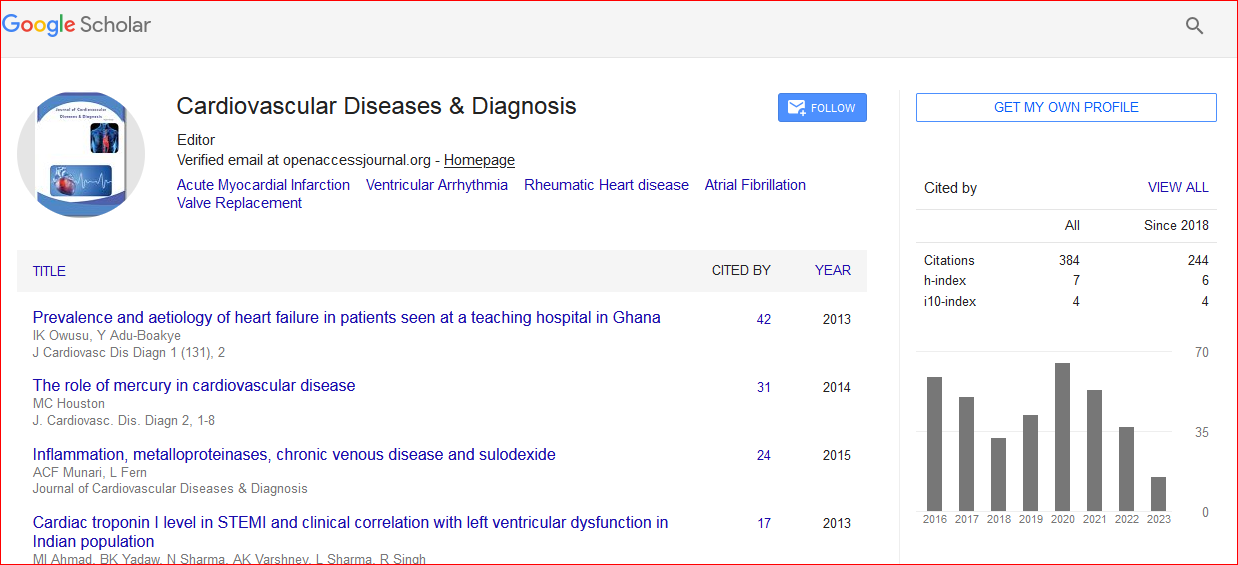
Cardiovascular Diseases & Diagnosis received 427 citations as per Google Scholar report