Perspective - (2025) Volume 14, Issue 5
Received: 01-Sep-2025, Manuscript No. mcce-26-190187;
Editor assigned: 03-Sep-2025, Pre QC No. P-190187;
Reviewed: 17-Sep-2025, QC No. Q-190187;
Revised: 29-Sep-2025, Manuscript No. R-190187;
Published:
29-Sep-2025
, DOI: 10.37421/2470-6965.2025.14.421
Citation: Kowalska, Natalia. ”Strategies for Malaria Elimination: Policy, Innovation, Surveillance.” Malar Contr Elimination 14 (2025):421.
Copyright: © 2025 Kowalska N. This is an open-access article distributed under the terms of the Creative Commons Attribution License, which permits unrestricted use, distribution and reproduction in any medium, provided the original author and source are credited.
The global effort to eradicate malaria hinges on the development and implementation of robust policy frameworks that can adapt to diverse epidemiological landscapes and resource availability. Novel policy approaches are crucial for accelerating progress towards elimination, moving beyond traditional control measures. These frameworks must encompass a wide range of strategies, from community engagement to the integration of advanced technologies, to ensure sustained impact and prevent resurgence. Community engagement forms a cornerstone of effective malaria elimination strategies, empowering local populations to participate actively in prevention and control efforts. This involvement is vital for fostering ownership and ensuring the long-term success of interventions. The integration of community health workers into the broader health system further amplifies the reach and effectiveness of malaria programs, particularly in remote and underserved areas. Innovative financing mechanisms are also critical for sustaining malaria elimination programs, which often require substantial and consistent investment. Exploring diverse funding streams, including public-private partnerships and performance-based financing, can help bridge funding gaps and ensure the continuity of essential interventions. This financial sustainability is paramount for achieving and maintaining elimination status. The deployment of digital health tools for surveillance and response offers unprecedented opportunities to enhance the precision and efficiency of malaria control. These technologies enable real-time data collection, analysis, and dissemination, allowing for rapid identification of outbreaks and targeted interventions. Adaptive strategies informed by data-driven insights are essential for navigating the complexities of malaria transmission. Sustained political will is an indispensable driver for malaria elimination. Without unwavering commitment from governments and policymakers, even the most innovative strategies may falter. This commitment must translate into concrete policies, adequate resource allocation, and long-term planning to overcome the persistent challenges associated with malaria control. The effectiveness of insecticide-treated net (ITN) distribution strategies is deeply influenced by the specific epidemiological settings in which they are deployed. Tailored approaches that consider local vector behavior and insecticide resistance patterns are vital for maximizing the impact of this critical intervention. Flexible policy frameworks are thus essential to adapt to these varying contexts. Integrated vector management, which combines multiple vector control methods, complements ITN deployment by addressing the multifaceted nature of malaria transmission. This holistic approach enhances the overall effectiveness of vector control efforts and contributes to a more comprehensive elimination strategy. Policy decisions must support such integrated approaches. Community health workers (CHWs) play an indispensable role in achieving malaria elimination goals. By equipping them with diagnostic and treatment capabilities, their ability to detect and manage malaria cases, especially in remote areas, is significantly enhanced. This strengthens the resilience of health systems and improves access to care. Diversified funding streams are essential for bridging funding gaps and ensuring the long-term viability of malaria control initiatives. Innovative financing models, such as performance-based financing and public-private partnerships, are critical for mobilizing the necessary resources, particularly in resource-limited settings. These models can enhance program efficiency and accountability. The application of genomic surveillance for tracking drug resistance in Plasmodium falciparum is a critical tool for informed policy decisions. By understanding resistance patterns, policymakers can optimize drug deployment and containment strategies, thereby preventing the resurgence of malaria and safeguarding the efficacy of antimalarial treatments.
Novel policy frameworks are being explored to accelerate the global pursuit of malaria elimination, emphasizing the importance of community engagement, innovative financing, and digital health integration for effective surveillance and response. The necessity of sustained political will and adaptive strategies is highlighted as crucial for overcoming the persistent challenges in malaria control efforts. This holistic approach aims to consolidate gains and move towards a malaria-free world. The effectiveness of insecticide-treated net (ITN) distribution strategies is contingent upon their tailoring to specific epidemiological settings. Policies must be flexible enough to accommodate variations in local vector behavior and resistance patterns. The integration of ITNs with broader vector management approaches is advocated to enhance their overall impact and achieve more comprehensive control. Community health workers (CHWs) are recognized as indispensable assets in the quest for malaria elimination. Empowering CHWs with diagnostic and treatment capabilities significantly improves case detection and management, particularly in hard-to-reach areas. This strengthening of health system resilience is a key policy consideration. Innovative financing models, including performance-based financing and public-private partnerships, are vital for ensuring the sustainability of malaria elimination programs. Diversified funding streams are essential to bridge financial gaps and guarantee the long-term viability of control initiatives, especially in settings with limited resources. Such models can foster greater accountability. Genomic surveillance offers a powerful approach for tracking drug resistance in Plasmodium falciparum, providing crucial data for policy decisions regarding drug deployment and containment strategies. This evidence-based approach is essential for preventing the resurgence of malaria and maintaining the effectiveness of antimalarial therapies. Mass drug administration (MDA) campaigns can be optimized for malaria elimination through careful consideration of context-specific implementation. Policies should focus on refining targeting strategies and drug choices to maximize effectiveness while mitigating the risk of antimalarial resistance development. Integrating malaria surveillance with other disease surveillance systems can enhance efficiency and improve data utilization. A unified approach facilitates early detection of outbreaks and guides more effective resource allocation, thereby strengthening overall public health response capabilities. Behavioral science plays a pivotal role in designing effective malaria elimination policies. Understanding community perceptions, risk factors, and adherence to interventions is crucial for developing culturally appropriate and impactful public health strategies that resonate with target populations. Novel vector control technologies, such as gene drive and attractive toxic sugar baits, hold significant promise for accelerating malaria elimination. However, their deployment necessitates careful consideration of policy implications and ethical dimensions to ensure responsible and effective implementation. Addressing the unique challenges of malaria elimination in urban settings requires context-specific policies. These policies must account for the distinct epidemiological and socioeconomic factors that influence malaria transmission dynamics within city environments, ensuring that interventions are relevant and effective.
This collection of research highlights key strategies for achieving malaria elimination. It emphasizes the importance of innovative policy frameworks, including community engagement, flexible distribution of insecticide-treated nets tailored to local conditions, and the critical role of community health workers. Financial sustainability through innovative funding models and the use of genomic surveillance to track drug resistance are also crucial. Optimizing mass drug administration and integrating disease surveillance systems are vital for efficient response. Furthermore, understanding behavioral science and exploring novel vector control technologies, alongside context-specific policies for urban settings, are essential components of a comprehensive malaria elimination strategy.
None
None
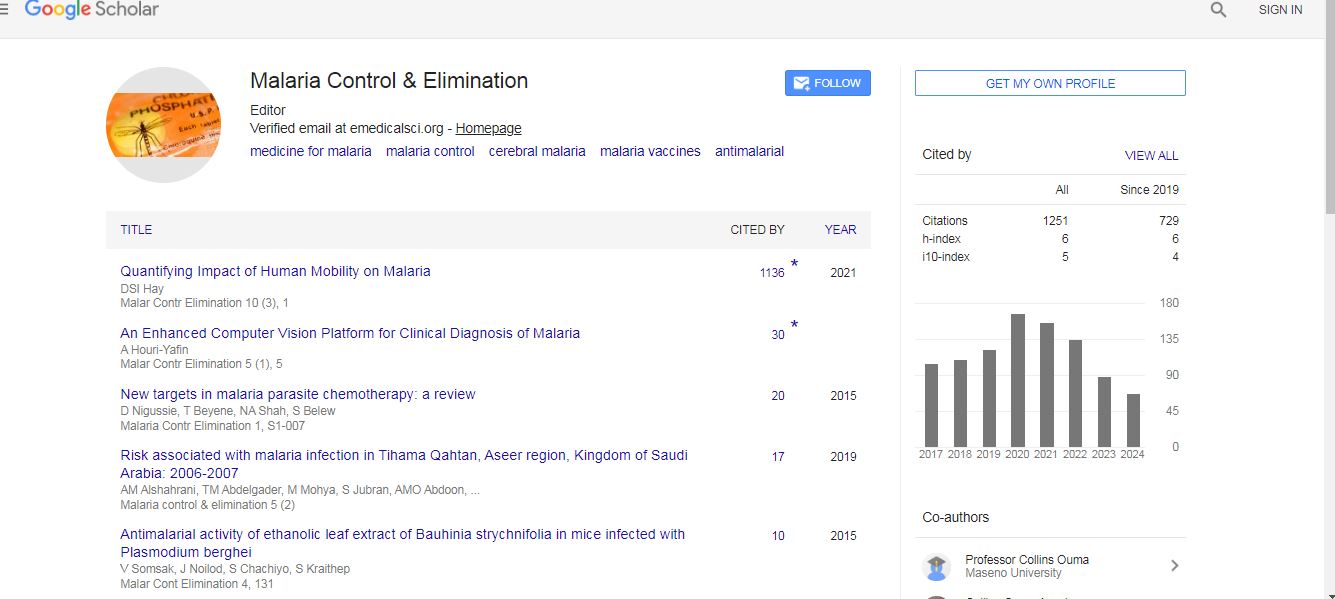
Malaria Control & Elimination received 1187 citations as per Google Scholar report