Commentary - (2025) Volume 14, Issue 4
Received: 03-Aug-2025, Manuscript No. jsp-26-182267;
Editor assigned: 05-Aug-2025, Pre QC No. P-182267;
Reviewed: 19-Aug-2025, QC No. Q-182267;
Revised: 21-Aug-2025, Manuscript No. R-182267;
Published:
30-Aug-2025
, DOI: 10.37421/2165-7939.2025.14.736
Citation: Mendoza, Felipe R.. ”Spinal Cord Compression Syndromes: Diagnosis, Management, and Treatment.” J Spine 14 (2025):736.
Copyright: © 2025 Mendoza R. Felipe This is an open-access article distributed under the terms of the Creative Commons Attribution License, which permits unrestricted use, distribution and reproduction in any medium, provided the original author and source are credited.
Spinal cord compression syndromes (SCCS) represent a critical neurosurgical emergency demanding prompt diagnosis and intervention to preserve neurological function. These syndromes arise from external forces encroaching upon the spinal cord, leading to ischemia, inflammation, and neuronal damage. Etiologies are diverse, including neoplastic processes, trauma, infections, vascular malformations, and degenerative changes. Management strategies focus on relieving compression, often through surgical decompression and stabilization, coupled with adjuvant therapies like radiation or chemotherapy for malignant causes. Advances in spinal imaging, surgical techniques, and multidisciplinary care have significantly improved outcomes, though functional recovery remains variable and dependent on the severity and duration of compression. [1] The management of metastatic spinal cord compression (MSCC) necessitates a coordinated, multidisciplinary approach to optimize patient outcomes and quality of life. Timely diagnosis through MRI is paramount, followed by urgent treatment decisions involving surgery, radiation therapy, and systemic treatments. Surgical decompression aims to restore spinal stability and alleviate cord compression, while radiation therapy targets tumor control. The choice of treatment depends on factors such as tumor histology, prognosis, and patient performance status. Ongoing research focuses on refining prognostic scoring systems and developing novel therapeutic agents to improve survival and functional independence. [2] Degenerative cervical myelopathy (DCM) is a common cause of spinal cord compression in older adults, resulting from progressive narrowing of the spinal canal due to disc degeneration, osteophytes, and ligamentous hypertrophy. Symptoms can range from subtle sensory disturbances to severe motor deficits and gait instability. Surgical decompression, typically through anterior or posterior approaches, is the mainstay of treatment to prevent further neurological deterioration. The timing of surgery and the choice of surgical technique are critical for optimizing outcomes, with earlier intervention generally leading to better recovery. [3] Spinal arteriovenous malformations (AVMs) can present with symptoms of spinal cord compression due to mass effect or, more commonly, venous congestion and ischemia. These lesions are often complex, requiring careful diagnostic evaluation with MRI and digital subtraction angiography. Treatment strategies are tailored to the AVM subtype and location, and may involve endovascular embolization, surgical resection, or stereotactic radiosurgery. The goal is to obliterate the AVM while preserving spinal cord function, a delicate balance that often necessitates a multidisciplinary neurovascular team. [4] Traumatic spinal cord injury (SCI) can lead to secondary spinal cord compression due to hematoma, disc herniation, or vertebral malalignment. Early recognition and management of these compressive elements are critical to minimize further neurological damage. Advanced imaging techniques play a crucial role in identifying the source of compression. Surgical decompression, often combined with spinal stabilization, is frequently indicated to improve outcomes. Rehabilitation plays a vital role in maximizing functional recovery post-injury. [5] Spinal epidural abscess (SEA) is a serious infection that can rapidly lead to devastating neurological deficits through spinal cord compression. Prompt diagnosis, typically involving MRI with contrast, is essential. Antibiotic therapy is the cornerstone of treatment, often combined with surgical drainage and decompression if neurological compromise is present or progressing. Early intervention is critical to prevent permanent disability. [6] Spinal intradural extramedullary tumors, such as meningiomas and nerve sheath tumors, can cause significant spinal cord compression. While often benign, their location within the spinal canal necessitates complete surgical resection to achieve decompression and prevent recurrence. Advances in microsurgical techniques and intraoperative neuromonitoring have improved the safety and efficacy of these procedures. Postoperative outcomes are generally favorable, with significant neurological improvement possible. [7] Spinal intradural intramedullary tumors, such as ependymomas and astrocytomas, are notoriously challenging to treat due to their intimate relationship with the spinal cord parenchyma. Surgical resection is the primary treatment modality, aiming for maximal safe removal. The degree of resection often correlates with postoperative neurological outcomes. Adjuvant therapies, including radiation and chemotherapy, may be employed depending on tumor histology and completeness of resection. [8] Spinal stenosis, particularly lumbar spinal stenosis, can lead to significant compression of the neural elements, causing neurogenic claudication and functional impairment. Decompressive laminectomy or laminoplasty, often combined with fusion, is the surgical approach to relieve this compression. Patient selection and the extent of decompression are crucial for achieving optimal outcomes and minimizing complications. [9] Spinal dural arteriovenous fistulas (SDAVFs) are a rare but significant cause of spinal cord myelopathy due to venous hypertension and impaired spinal cord perfusion. Diagnosis is typically confirmed with MRI and confirmed by spinal angiography. Treatment aims to occlude the fistula, most commonly achieved through endovascular embolization. Surgical ligation is an alternative in select cases. Early diagnosis and treatment are associated with a better prognosis for neurological recovery. [10]
Spinal cord compression syndromes (SCCS) are characterized by external forces impacting the spinal cord, resulting in ischemia and neuronal damage. The etiologies are varied, encompassing neoplastic conditions, trauma, infections, vascular anomalies, and degenerative processes. The primary management goal is to alleviate the compression, typically through surgical decompression and stabilization, often supplemented by radiation or chemotherapy for malignant causes. Contemporary advancements in spinal imaging, surgical methodologies, and multidisciplinary care have led to improved patient outcomes, although the extent of functional recovery can vary based on the compression's severity and duration. [1] Metastatic spinal cord compression (MSCC) demands a collaborative, multidisciplinary strategy to enhance patient quality of life and overall results. Prompt diagnosis via MRI is critical, followed by urgent therapeutic decisions, including surgery, radiation, and systemic treatments. Surgical decompression aims to restore spinal stability and relieve cord pressure, while radiation therapy addresses tumor control. Treatment selection is influenced by tumor characteristics, prognosis, and the patient's physical condition. Current research efforts are directed towards refining prognostic assessment tools and developing innovative therapeutic agents to improve longevity and functional independence. [2] Degenerative cervical myelopathy (DCM) is a prevalent condition causing spinal cord compression in elderly individuals, stemming from progressive narrowing of the spinal canal due to disc degeneration, osteophytes, and ligamentous thickening. Symptoms can manifest subtly as sensory disturbances or severely as motor deficits and gait instability. Surgical decompression, utilizing anterior or posterior approaches, remains the primary treatment to avert further neurological decline. The timing of surgical intervention and the selection of the appropriate technique are paramount for achieving optimal outcomes, with earlier procedures generally yielding better recovery rates. [3] Spinal arteriovenous malformations (AVMs) can manifest with signs of spinal cord compression due to mass effect or, more commonly, resultant venous congestion and ischemia. These complex lesions necessitate thorough diagnostic evaluation using MRI and digital subtraction angiography. Treatment plans are individualized based on the AVM's subtype and location, potentially involving endovascular embolization, surgical excision, or stereotactic radiosurgery. The objective is to eliminate the AVM while preserving spinal cord function, a delicate undertaking often requiring the expertise of a multidisciplinary neurovascular team. [4] Traumatic spinal cord injury (SCI) can precipitate secondary spinal cord compression from mechanisms such as hematoma formation, disc herniation, or vertebral displacement. Early identification and management of these compressive factors are essential to mitigate further neurological damage. Advanced imaging modalities play a pivotal role in pinpointing the source of compression. Surgical decompression, frequently combined with spinal stabilization, is often indicated to enhance patient outcomes. Post-injury rehabilitation is a critical component in maximizing functional recovery. [5] Spinal epidural abscess (SEA) represents a severe infection with the potential for rapid neurological deterioration due to spinal cord compression. Urgent diagnosis, typically facilitated by contrast-enhanced MRI, is imperative. Antibiotic therapy forms the cornerstone of management, often supplemented by surgical drainage and decompression in cases of neurological compromise or progression. Prompt intervention is crucial to prevent irreversible disability. [6] Spinal intradural extramedullary tumors, including meningiomas and nerve sheath tumors, can exert significant pressure on the spinal cord. Despite their often benign nature, their intra-spinal location mandates complete surgical resection to decompress the cord and prevent recurrence. Innovations in microsurgical techniques and intraoperative neuromonitoring have enhanced the safety and effectiveness of these procedures. Postoperative prognoses are generally favorable, with substantial potential for neurological improvement. [7] Spinal intradural intramedullary tumors, such as ependymomas and astrocytomas, present formidable treatment challenges due to their close proximity to the spinal cord parenchyma. Surgical resection is the primary therapeutic strategy, aiming for maximal safe removal. The extent of resection typically correlates with postoperative neurological outcomes. Adjuvant therapies, including radiation and chemotherapy, may be considered based on tumor histology and the completeness of the surgical removal. [8] Spinal stenosis, particularly in the lumbar region, can result in substantial compression of neural structures, leading to neurogenic claudication and functional limitations. Decompressive laminectomy or laminoplasty, often accompanied by spinal fusion, constitutes the surgical intervention to relieve this compression. Careful patient selection and the precise extent of decompression are critical for optimizing outcomes and minimizing potential complications. [9] Spinal dural arteriovenous fistulas (SDAVFs) are an uncommon yet significant cause of spinal cord myelopathy, stemming from venous hypertension and compromised spinal cord perfusion. Diagnosis is typically confirmed by MRI and further substantiated by spinal angiography. The therapeutic objective is to occlude the fistula, most commonly achieved through endovascular embolization. Surgical ligation serves as an alternative in specific scenarios. Early diagnosis and intervention are associated with a more favorable prognosis for neurological recovery. [10]
Spinal cord compression syndromes (SCCS) are critical neurosurgical emergencies requiring prompt diagnosis and intervention. Etiologies vary widely, including tumors, trauma, infections, vascular issues, and degenerative changes. Management focuses on relieving compression through surgery and adjuvant therapies. Metastatic spinal cord compression (MSCC) necessitates a multidisciplinary approach involving surgery, radiation, and systemic treatments. Degenerative cervical myelopathy (DCM) results from progressive spinal canal narrowing and is treated surgically. Spinal arteriovenous malformations (AVMs) are complex vascular lesions managed with embolization, surgery, or radiosurgery. Traumatic spinal cord injury (SCI) can cause secondary compression requiring urgent intervention. Spinal epidural abscess (SEA) is a severe infection managed with antibiotics and surgical decompression. Intradural tumors, both extramedullary and intramedullary, are treated surgically. Spinal stenosis, particularly lumbar, is managed with decompressive surgery. Spinal dural arteriovenous fistulas (SDAVFs) are treated by occluding the fistula, often via embolization.
None
None
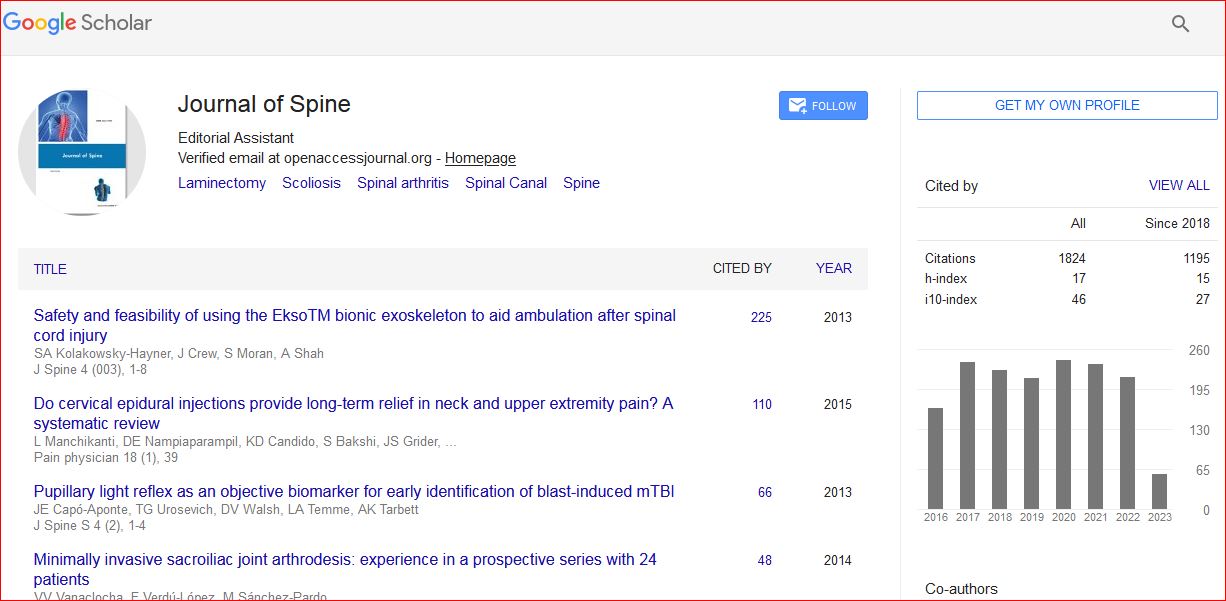
Journal of Spine received 2022 citations as per Google Scholar report