Opinion - (2025) Volume 16, Issue 4
Received: 01-Jul-2025, Manuscript No. jhmi-26-178854;
Editor assigned: 03-Jul-2025, Pre QC No. P-178854;
Reviewed: 17-Jul-2025, QC No. Q-178854;
Revised: 22-Jul-2025, Manuscript No. R-178854;
Published:
29-Jul-2025
, DOI: 10.37421/2157-7420.2025.16.602
Citation: Ricci, Marco B.. ”Smart HIS: Transforming Healthcare With Integrated Design.” J Health Med Informat 16 (2025):602.
Copyright: © 2025 Ricci B. Marco This is an open-access article distributed under the terms of the Creative Commons Attribution License, which permits unrestricted use, distribution and reproduction in any medium, provided the original author and source are credited.
The advent of Smart Hospital Information Systems (HIS) represents a significant leap forward in healthcare technology, promising to revolutionize patient care and operational efficiency. These advanced systems are designed to integrate a multitude of functionalities, aiming to create a more connected and intelligent healthcare ecosystem. This paper delves into the foundational aspects of designing and implementing such systems, emphasizing the critical architectural considerations required for their success. Key among these are the adherence to interoperability standards, the robust protection of sensitive patient data through stringent security measures, and the paramount importance of user-centric design principles to ensure widespread adoption and effective utilization by healthcare professionals. The integration of these elements is vital for transforming traditional hospital information management into a dynamic and responsive smart environment, ultimately benefiting both patients and providers. This foundational work lays the groundwork for understanding the complex interplay of technology and human factors in modern healthcare IT. [1] The evolution of HIS has been driven by the increasing demand for data-driven decision-making and improved patient outcomes. Specifically, the application of advanced data analytics and artificial intelligence (AI) has emerged as a transformative force within these smart systems. By leveraging sophisticated analytical techniques, vast repositories of patient data can be mined to uncover actionable insights. This enables the development of predictive models for disease outbreaks, the tailoring of personalized treatment plans to individual patient needs, and the early identification of patient deterioration, thereby facilitating timely interventions. The authors discuss the practical implementation of AI-powered tools, such as clinical decision support systems and automated diagnostic aids, highlighting their profound impact on enhancing diagnostic accuracy and overall efficiency within the complex hospital setting. [2] Central to the effectiveness of any Smart HIS is its ability to seamlessly exchange information across disparate systems and devices. This highlights the critical role of interoperability, and the associated challenges and solutions. Various established interoperability standards, including HL7 FHIR and DICOM, are examined for their application in facilitating this crucial data exchange. The paper showcases real-world case studies that illustrate the successful integration of diverse hospital modules and external healthcare providers. These examples underscore the indispensable need for standardized data models and communication protocols to achieve a unified and comprehensive view of patient health records, a cornerstone of modern digital health. [3] Furthermore, the integration of the Internet of Things (IoT) devices and sensors is a key component in the development of Smart HIS, enabling enhanced patient monitoring and operational streamlining. Research in this area explores how IoT technology can significantly improve patient monitoring capabilities, efficiently track valuable hospital assets, and ultimately boost the overall efficiency of hospital operations. The authors meticulously detail the technical prerequisites for deploying these IoT solutions, encompassing essential aspects like robust network connectivity, stringent data security protocols, and the seamless integration of sensor-generated data into the central HIS infrastructure. This facilitates real-time data acquisition and analysis. [4] In an era of increasing digital interconnectedness, the cybersecurity and data privacy within Smart HIS are of utmost concern. This research meticulously addresses the inherent threats posed by interconnected systems and emphasizes the critical necessity of implementing formidable security measures to safeguard sensitive patient information. The authors provide a comprehensive overview of essential security techniques, including advanced encryption methods, stringent access control mechanisms, and adherence to critical regulatory frameworks such as GDPR and HIPAA. This diligent approach ensures the development of secure and trustworthy Smart HIS environments, fostering patient confidence. [5] The direct impact of Smart HIS on patient engagement and their overall experience is another vital area of exploration. This study investigates how patient portals, mobile health applications, and personalized communication tools, all integrated within the HIS framework, can empower individuals to take a more active role in their healthcare journey. The authors highlight tangible improvements in areas such as appointment scheduling, streamlined access to personal medical records, and enhanced communication channels with healthcare providers. These advancements collectively contribute to a significant increase in patient satisfaction and a more collaborative approach to health management. [6] To navigate the complexities of adopting advanced healthcare technology, a well-defined framework for the effective implementation of Smart HIS is essential. This framework considers a holistic approach, encompassing technical, organizational, and human factors to ensure successful deployment. It offers a structured methodology for system selection, customization, deployment, and ongoing optimization. The authors strongly advocate for the proactive involvement of all stakeholders, emphasizing the importance of clear and consistent communication, alongside a strategically phased implementation plan. This approach is designed to minimize operational disruption and maximize the realization of intended benefits. [7] Beyond clinical applications, big data analytics plays a crucial role in optimizing hospital operations through the strategic deployment of Smart HIS. This research delves into how the comprehensive analysis of operational dataâ??including patient flow, resource utilization, and staff scheduling patternsâ??can lead to substantial improvements in overall efficiency and significant cost reductions. The authors specifically highlight the utility of predictive analytics in effectively managing critical aspects such as bed occupancy rates, minimizing patient wait times, and optimizing the complex hospital supply chain management processes for greater efficacy. [8] The human element is invariably central to the success of any technological implementation, and Smart HIS is no exception. This paper thoroughly examines the critical human factors and change management aspects intrinsic to the successful adoption of Smart HIS. It addresses the common challenges related to user acceptance, potential resistance to change, and the imperative for developing comprehensive and effective training programs. The authors propose practical strategies aimed at fostering a positive organizational culture and ensuring that healthcare professionals are adequately equipped with the necessary skills to utilize new systems efficiently, thereby unlocking their full potential. [9] Finally, a critical consideration for any significant technological investment is its financial viability. This study undertakes a thorough evaluation of the return on investment (ROI) and the broader economic impact associated with Smart HIS. It meticulously analyzes various cost components, including initial capital outlays, ongoing maintenance expenses, and the necessary investment in training, juxtaposed against the substantial benefits derived from enhanced operational efficiency, reduction in medical errors, and overall improvement in patient outcomes. The authors present a robust methodology for assessing the financial feasibility of Smart HIS projects, effectively demonstrating their capacity to generate significant long-term cost savings for healthcare institutions. [10]
The design and implementation of Smart Hospital Information Systems (HIS) necessitate a comprehensive understanding of their multifaceted architectural requirements. This includes a strong focus on interoperability standards, ensuring seamless data exchange between diverse healthcare systems and devices. Moreover, robust data security measures are paramount to protect sensitive patient information from unauthorized access and breaches. User-centric design principles are equally crucial for promoting adoption and ensuring that healthcare professionals can efficiently utilize the system to improve patient care delivery. The integration of emerging technologies such as Artificial Intelligence (AI), the Internet of Things (IoT), and big data analytics further enhances the capabilities of Smart HIS, leading to improved clinical decision-making and streamlined workflows. Addressing challenges related to change management, staff training, and the development of a reliable IT infrastructure are vital for successful implementation. [1] A significant aspect of Smart HIS development lies in leveraging advanced data analytics and AI to transform clinical practices and patient outcomes. These technologies enable the extraction of valuable insights from extensive patient datasets, facilitating predictive modeling for disease outbreaks and the creation of personalized treatment plans. AI-powered tools, including clinical decision support systems and automated diagnostic aids, play a crucial role in enhancing diagnostic accuracy and improving the efficiency of healthcare operations within hospital settings. The continuous advancement in these areas promises further improvements in the quality and effectiveness of patient care. [2] Interoperability is a cornerstone of effective Smart HIS, addressing the inherent challenges of data fragmentation and system incompatibility. The study examines the application of widely adopted interoperability standards, such as HL7 FHIR and DICOM, in enabling smooth data flow across different healthcare platforms and medical devices. Successful integration of various hospital modules and external healthcare providers is demonstrated through compelling case studies. These examples highlight the indispensable role of standardized data models and communication protocols in achieving a unified and comprehensive patient health record, which is essential for coordinated care. [3] The incorporation of the Internet of Things (IoT) is revolutionizing patient monitoring and operational management within Smart HIS. Research in this domain explores how IoT devices and sensors can enhance real-time patient surveillance, facilitate efficient asset tracking within the hospital, and significantly improve the overall efficiency of hospital operations. The authors outline the essential technical requirements for deploying IoT solutions, including robust network infrastructure, stringent data security protocols, and seamless integration of sensor data into the central HIS for comprehensive analysis and action. [4] Cybersecurity and data privacy are critical concerns in the context of interconnected Smart HIS environments. This research underscores the threats associated with these complex systems and emphasizes the imperative of implementing strong security measures to safeguard sensitive patient information. The discussion includes the application of encryption techniques, access control mechanisms, and compliance with relevant regulations such as GDPR and HIPAA, providing essential guidelines for building secure and trustworthy Smart HIS that maintain patient confidentiality and trust. [5] Smart HIS significantly impacts patient engagement and their overall healthcare experience by integrating patient-centric tools. The study examines how patient portals, mobile health applications, and personalized communication features within the HIS empower patients to actively participate in their health management. Improvements in appointment scheduling, accessibility of medical records, and direct communication with healthcare providers contribute to enhanced patient satisfaction and a more collaborative approach to healthcare, fostering a stronger patient-provider relationship. [6] A structured framework is vital for the successful implementation of Smart HIS, addressing technical, organizational, and human factors. This framework provides a systematic approach to system selection, customization, deployment, and ongoing optimization. The authors stress the importance of involving all relevant stakeholders, maintaining clear communication channels, and adopting a phased implementation strategy. This methodical approach is designed to minimize disruption to ongoing hospital operations and maximize the benefits derived from the new system. [7] Big data analytics within Smart HIS offers powerful capabilities for optimizing hospital operations. By analyzing operational data related to patient flow, resource utilization, and staff scheduling, significant improvements in efficiency and cost reduction can be achieved. The research highlights the use of predictive analytics to effectively manage critical resources like bed occupancy, reduce patient wait times in various departments, and optimize the hospital's supply chain management for enhanced performance and resource allocation. [8] The human factors and change management aspects are critical for the successful adoption of Smart HIS. This paper addresses the challenges associated with user acceptance, resistance to change, and the necessity for comprehensive training programs for healthcare professionals. Strategies are proposed to cultivate a positive organizational culture that supports technological adoption. Ensuring that staff are adequately trained and comfortable using the new systems is key to maximizing their potential benefits and ensuring seamless integration into daily workflows. [9] Evaluating the return on investment (ROI) and economic impact of Smart HIS is crucial for justifying the adoption of such advanced systems. The analysis covers various cost factors, including initial investment, ongoing maintenance, and training expenses, alongside the financial benefits derived from increased efficiency, reduced errors, and improved patient outcomes. A clear methodology is presented for assessing the financial viability of these projects, demonstrating their potential to yield substantial long-term cost savings for healthcare organizations. [10]
Smart Hospital Information Systems (HIS) are transforming healthcare through integrated architectural design, prioritizing interoperability, data security, and user-centric principles. Emerging technologies like AI, IoT, and big data analytics are crucial for enhancing clinical decision-making, patient care, and operational efficiency. Key challenges include change management and staff training, necessitating structured implementation frameworks. Interoperability standards (HL7 FHIR, DICOM) are vital for seamless data exchange, while cybersecurity and data privacy are paramount for protecting sensitive information. Smart HIS also significantly improves patient engagement and experience through tools like patient portals and mobile applications. The application of big data analytics optimizes hospital operations by improving efficiency and reducing costs. Ultimately, assessing the return on investment is essential to demonstrate the financial viability and long-term cost savings of these advanced systems.
None
None
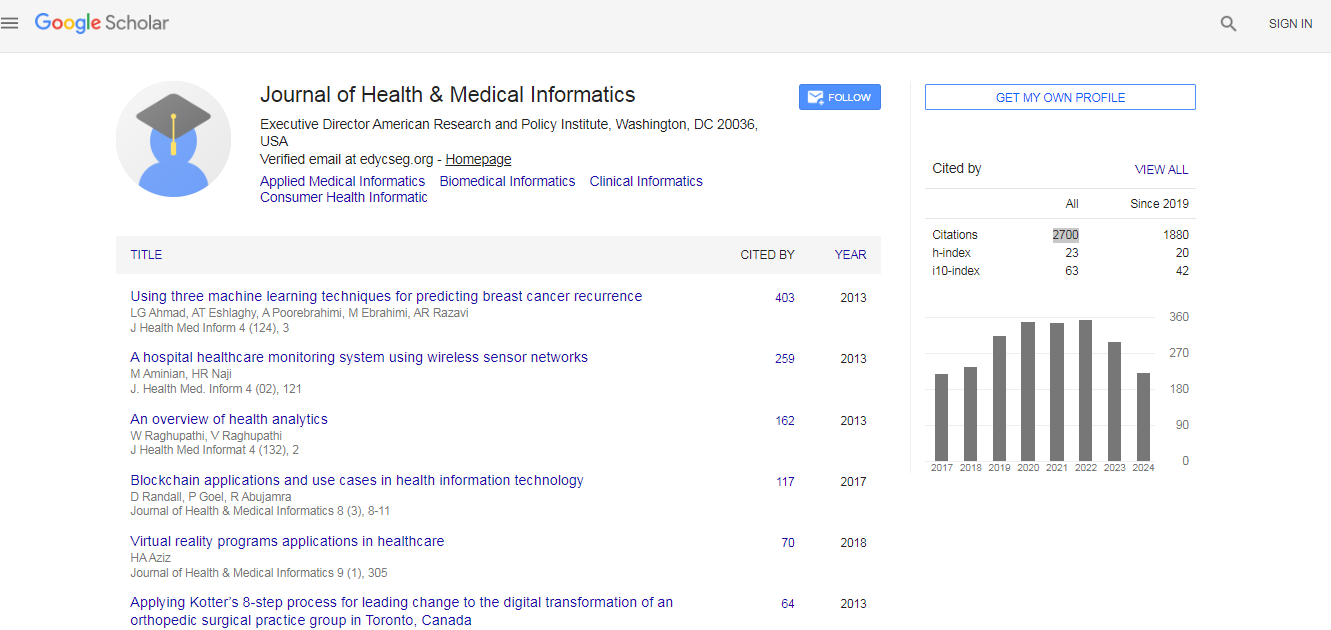
Journal of Health & Medical Informatics received 2700 citations as per Google Scholar report