Brief Report - (2025) Volume 9, Issue 5
Received: 03-Oct-2025, Manuscript No. jcao-26-187158;
Editor assigned: 06-Oct-2025, Pre QC No. P-187158;
Reviewed: 30-Oct-2025, QC No. Q-187158;
Revised: 24-Oct-2025, Manuscript No. R-187158;
Published:
30-Oct-2025
, DOI: 10.37421/2684-6004.2025.9.314
Citation: Thompson, Ruth. ”Simulation Revolutionizes Anesthesia Training For Patient Safety.” J Clin Anesthesiol 09 (2025):314.
Copyright: © 2025 Thompson R. This is an open-access article distributed under the terms of the Creative Commons Attribution License, which permits unrestricted use, distribution and reproduction in any medium, provided the original author and source are credited.
Simulation has emerged as a transformative tool in modern anesthesia training, offering a secure and highly effective environment for skill development. This approach allows for the creation of realistic scenarios without any risk to actual patients, fostering an unparalleled learning experience for aspiring anesthesiologists. The ability to repeat complex procedures and critical events in a controlled setting is paramount for building confidence and proficiency. Simulation environments are meticulously designed to mirror the challenges faced in real operating rooms, including equipment malfunctions and unexpected patient responses. This immersive approach not only hones technical skills but also significantly sharpens cognitive functions essential for effective patient care. The progressive integration of advanced technologies like high-fidelity mannequins and virtual reality platforms is further enhancing the fidelity and immersiveness of these training programs, preparing residents for the diverse and demanding nature of anesthesia practice [1].
The practical implementation of simulation-based learning in anesthesia residency programs necessitates a well-structured curriculum. This involves carefully crafting training modules that address a wide spectrum of anesthetic challenges, from routine cases to rare emergencies. The design of simulation scenarios requires a deep understanding of clinical practice and potential pitfalls, ensuring that the learning objectives are met effectively. Furthermore, the methods employed for debriefing and assessment are critical components of the simulation process. Objective evaluation tools are vital for tracking resident progress and identifying areas that require further attention. Evidence consistently supports the efficacy of simulation in elevating resident performance and boosting their confidence in managing complex anesthetic situations, a crucial aspect of their professional development [2].
Crisis Resource Management (CRM) training, when delivered through simulation, has demonstrated a profound impact on the performance of anesthesia providers during simulated emergencies. CRM principles are fundamental to ensuring patient safety in high-stakes environments, and simulation provides an ideal platform for their application. By engaging in simulated critical events, providers learn to manage their resources effectively, prioritize tasks, and communicate clearly under pressure. The outcomes of such training reveal significant enhancements in team dynamics, including improved leadership qualities and more coordinated task management. This underscores the immense value of simulation-based CRM interventions in bolstering team efficacy and ultimately safeguarding patient well-being during the most critical of circumstances [3].
Patient simulators play an indispensable role in the acquisition of advanced airway management techniques within anesthesiology. The ability to practice intricate procedures, such as intubation and cricothyrotomy, repeatedly in a safe, simulated environment is key to mastering them. This controlled practice allows trainees to develop the necessary psychomotor skills and decision-making capabilities required for successful airway management. The curriculum can be structured to progress from basic to increasingly complex airway scenarios, progressively preparing trainees for the challenging clinical situations they are likely to encounter. This systematic approach ensures a solid foundation and advanced proficiency in this critical area of anesthetic care [4].
Virtual Reality (VR) is emerging as a potent force in anesthesia simulation, offering unparalleled opportunities for enhancing spatial awareness and procedural skill development. VR technology creates highly immersive and interactive learning experiences that are particularly beneficial for complex surgical procedures demanding precise instrument manipulation. This immersive quality allows trainees to develop a deeper understanding of anatomical relationships and to practice intricate maneuvers in a risk-free setting. The findings suggest that VR simulation is a highly promising tool for refining the competencies of surgical trainees, paving the way for improved surgical outcomes and enhanced patient safety in the operating room [5].
The integration of Augmented Reality (AR) into anesthesia simulation represents another significant advancement in procedural training. AR systems enhance the learning process by overlaying digital information, such as anatomical guides or procedural steps, directly onto the physical environment or simulator. This provides trainees with real-time visual cues and immediate feedback, which are invaluable for mastering intricate anesthetic tasks. By offering dynamic and context-aware support, AR technology has the potential to substantially accelerate the learning curve for complex procedures, making training more efficient and effective. This innovative approach promises to revolutionize how procedural skills are taught and learned in anesthesiology [6].
Team-based simulation serves as a critical modality for training anesthesiologists and surgeons to effectively manage perioperative emergencies. Such training inherently emphasizes the importance of interprofessional collaboration and seamless communication, which are vital for navigating high-stakes events. Studies evaluating this approach consistently show that simulation-based team training leads to tangible improvements in coordination among team members and, consequently, better patient outcomes in simulated scenarios. This collaborative model is essential for fostering a cohesive and high-performing perioperative team, dedicated to optimal patient care [7].
Establishing and sustaining robust simulation programs within anesthesiology departments presents a unique set of challenges and opportunities. Key considerations include managing the financial investments required for simulation equipment and facilities, ensuring comprehensive faculty training in simulation pedagogy, and developing effective and adaptable curricula. Successful implementation hinges on strategic planning and ongoing evaluation to meet the evolving educational needs of trainees. The authors offer practical guidance for creating simulation centers that are not only well-equipped but also agile enough to respond to the dynamic landscape of medical education and patient care requirements [8].
Simulation provides an exceptional platform for the development of crucial non-technical skills in anesthesia, including communication, leadership, and teamwork. These skills are as vital to patient safety as technical proficiency. Structured debriefing sessions following simulated events are particularly instrumental in reinforcing these competencies, allowing trainees to reflect on their performance and learn from their experiences. The authors underscore that simulation offers a unique, experiential approach to cultivating these essential non-technical skills, which are indispensable for ensuring the highest standards of patient care and safety within the complex environment of anesthesia [9].
Simulation-based training plays a pivotal role in enhancing the preparedness of anesthesia providers for rare but critical events. These infrequent emergencies, while seldom encountered, demand immediate and accurate responses. The safe, controlled environment of simulation permits repeated practice of these high-stakes scenarios, significantly improving recall and response accuracy when such events occur in practice. This approach effectively bridges the gap between theoretical knowledge and the practical application required for managing critical situations, ensuring that providers are better equipped to handle the unexpected and safeguard patient lives [10].
Simulation has emerged as a transformative tool in modern anesthesia training, offering a secure and highly effective environment for skill development. This approach allows for the creation of realistic scenarios without any risk to actual patients, fostering an unparalleled learning experience for aspiring anesthesiologists. The ability to repeat complex procedures and critical events in a controlled setting is paramount for building confidence and proficiency. Simulation environments are meticulously designed to mirror the challenges faced in real operating rooms, including equipment malfunctions and unexpected patient responses. This immersive approach not only hones technical skills but also significantly sharpens cognitive functions essential for effective patient care. The progressive integration of advanced technologies like high-fidelity mannequins and virtual reality platforms is further enhancing the fidelity and immersiveness of these training programs, preparing residents for the diverse and demanding nature of anesthesia practice [1].
The practical implementation of simulation-based learning in anesthesia residency programs necessitates a well-structured curriculum. This involves carefully crafting training modules that address a wide spectrum of anesthetic challenges, from routine cases to rare emergencies. The design of simulation scenarios requires a deep understanding of clinical practice and potential pitfalls, ensuring that the learning objectives are met effectively. Furthermore, the methods employed for debriefing and assessment are critical components of the simulation process. Objective evaluation tools are vital for tracking resident progress and identifying areas that require further attention. Evidence consistently supports the efficacy of simulation in elevating resident performance and boosting their confidence in managing complex anesthetic situations, a crucial aspect of their professional development [2].
Crisis Resource Management (CRM) training, when delivered through simulation, has demonstrated a profound impact on the performance of anesthesia providers during simulated emergencies. CRM principles are fundamental to ensuring patient safety in high-stakes environments, and simulation provides an ideal platform for their application. By engaging in simulated critical events, providers learn to manage their resources effectively, prioritize tasks, and communicate clearly under pressure. The outcomes of such training reveal significant enhancements in team dynamics, including improved leadership qualities and more coordinated task management. This underscores the immense value of simulation-based CRM interventions in bolstering team efficacy and ultimately safeguarding patient well-being during the most critical of circumstances [3].
Patient simulators play an indispensable role in the acquisition of advanced airway management techniques within anesthesiology. The ability to practice intricate procedures, such as intubation and cricothyrotomy, repeatedly in a safe, simulated environment is key to mastering them. This controlled practice allows trainees to develop the necessary psychomotor skills and decision-making capabilities required for successful airway management. The curriculum can be structured to progress from basic to increasingly complex airway scenarios, progressively preparing trainees for the challenging clinical situations they are likely to encounter. This systematic approach ensures a solid foundation and advanced proficiency in this critical area of anesthetic care [4].
Virtual Reality (VR) is emerging as a potent force in anesthesia simulation, offering unparalleled opportunities for enhancing spatial awareness and procedural skill development. VR technology creates highly immersive and interactive learning experiences that are particularly beneficial for complex surgical procedures demanding precise instrument manipulation. This immersive quality allows trainees to develop a deeper understanding of anatomical relationships and to practice intricate maneuvers in a risk-free setting. The findings suggest that VR simulation is a highly promising tool for refining the competencies of surgical trainees, paving the way for improved surgical outcomes and enhanced patient safety in the operating room [5].
The integration of Augmented Reality (AR) into anesthesia simulation represents another significant advancement in procedural training. AR systems enhance the learning process by overlaying digital information, such as anatomical guides or procedural steps, directly onto the physical environment or simulator. This provides trainees with real-time visual cues and immediate feedback, which are invaluable for mastering intricate anesthetic tasks. By offering dynamic and context-aware support, AR technology has the potential to substantially accelerate the learning curve for complex procedures, making training more efficient and effective. This innovative approach promises to revolutionize how procedural skills are taught and learned in anesthesiology [6].
Team-based simulation serves as a critical modality for training anesthesiologists and surgeons to effectively manage perioperative emergencies. Such training inherently emphasizes the importance of interprofessional collaboration and seamless communication, which are vital for navigating high-stakes events. Studies evaluating this approach consistently show that simulation-based team training leads to tangible improvements in coordination among team members and, consequently, better patient outcomes in simulated scenarios. This collaborative model is essential for fostering a cohesive and high-performing perioperative team, dedicated to optimal patient care [7].
Establishing and sustaining robust simulation programs within anesthesiology departments presents a unique set of challenges and opportunities. Key considerations include managing the financial investments required for simulation equipment and facilities, ensuring comprehensive faculty training in simulation pedagogy, and developing effective and adaptable curricula. Successful implementation hinges on strategic planning and ongoing evaluation to meet the evolving educational needs of trainees. The authors offer practical guidance for creating simulation centers that are not only well-equipped but also agile enough to respond to the dynamic landscape of medical education and patient care requirements [8].
Simulation provides an exceptional platform for the development of crucial non-technical skills in anesthesia, including communication, leadership, and teamwork. These skills are as vital to patient safety as technical proficiency. Structured debriefing sessions following simulated events are particularly instrumental in reinforcing these competencies, allowing trainees to reflect on their performance and learn from their experiences. The authors underscore that simulation offers a unique, experiential approach to cultivating these essential non-technical skills, which are indispensable for ensuring the highest standards of patient care and safety within the complex environment of anesthesia [9].
Simulation-based training plays a pivotal role in enhancing the preparedness of anesthesia providers for rare but critical events. These infrequent emergencies, while seldom encountered, demand immediate and accurate responses. The safe, controlled environment of simulation permits repeated practice of these high-stakes scenarios, significantly improving recall and response accuracy when such events occur in practice. This approach effectively bridges the gap between theoretical knowledge and the practical application required for managing critical situations, ensuring that providers are better equipped to handle the unexpected and safeguard patient lives [10].
Simulation is revolutionizing anesthesia training by providing safe, repeatable, and realistic learning environments. It enhances critical thinking, decision-making, and technical skills, leading to improved patient safety. Simulation-based curricula for residents focus on scenario design, debriefing, and assessment, proving effective in improving performance and confidence. Crisis Resource Management (CRM) training via simulation significantly boosts team communication, leadership, and task management during emergencies. Patient simulators are vital for mastering advanced airway management, allowing repeated practice of procedures like intubation. Virtual Reality (VR) and Augmented Reality (AR) offer immersive experiences, enhancing spatial awareness, procedural skills, and real-time guidance. Team-based simulation improves interprofessional collaboration for perioperative emergencies. Establishing and sustaining simulation programs requires careful planning regarding finances, faculty training, and curriculum development. Simulation is crucial for developing non-technical skills like communication and teamwork, reinforced by structured debriefing. Finally, simulation prepares providers for rare but critical events by enabling repeated practice of infrequent emergencies, thus improving response accuracy.
None
None
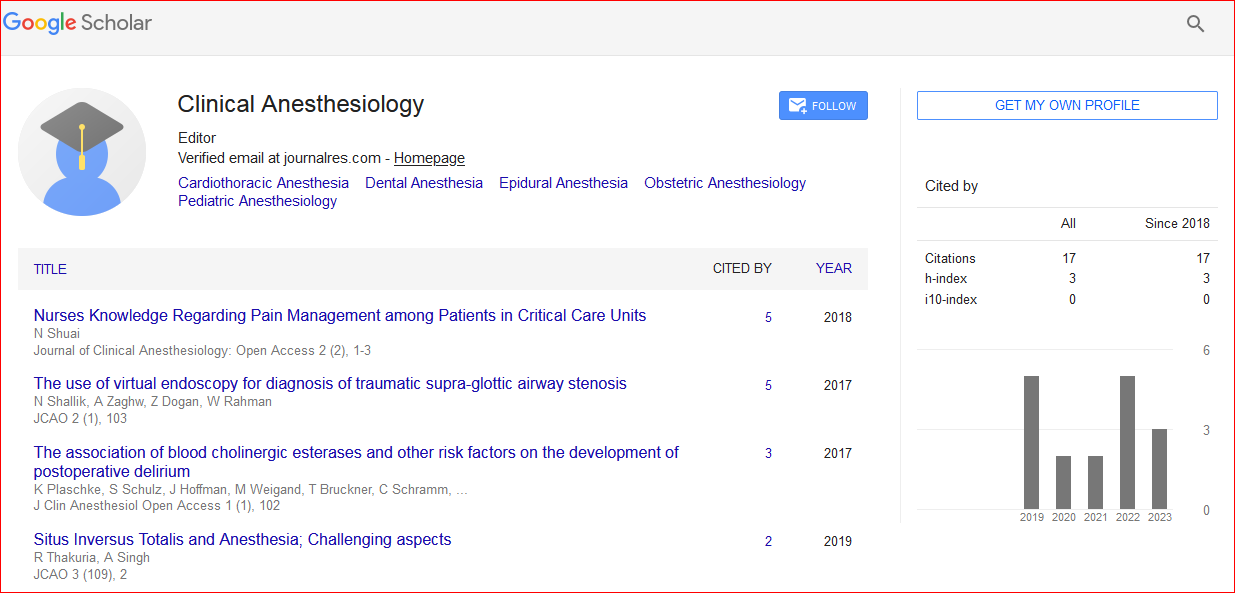
Journal of Clinical Anesthesiology: Open Access received 31 citations as per Google Scholar report