Short Communication - (2025) Volume 14, Issue 4
Received: 01-Jul-2025, Manuscript No. jtm-26-186023;
Editor assigned: 03-Jul-2025, Pre QC No. P-186023;
Reviewed: 17-Jul-2025, QC No. Q-186023;
Revised: 22-Jul-2025, Manuscript No. R-186023;
Published:
29-Jul-2025
, DOI: 10.37421/2167-1222.2025.14.696
Citation: Karlsson, Lina. ”Sepsis Management in Trauma: Early Detection, Therapies.” J Trauma Treat 14 (2025):696.
Copyright: © 2025 Karlsson L. This is an open-access article distributed under the terms of the Creative Commons Attribution License, which permits unrestricted use, distribution and reproduction in any medium, provided the original author and source are credited.
Sepsis represents a formidable challenge in the management of trauma patients, escalating both morbidity and mortality rates significantly. Proactive and effective infection control strategies are therefore indispensable for mitigating this critical risk, forming the cornerstone of patient care in trauma settings [1].
The complex and dynamic interplay between traumatic injury, subsequent infection, and the host's immune system presents a considerable clinical hurdle. A deeper comprehension of immune dysregulation following trauma is paramount for the development of precisely targeted interventions aimed at preventing the onset of sepsis [2].
Early and decisive source control is recognized as a fundamental pillar in the successful management of sepsis, particularly within the context of trauma. This principle mandates prompt surgical intervention to eliminate or drain any identified foci of infection, such as necrotic tissue or abscesses [3].
Antimicrobial stewardship plays an increasingly vital role in the prevention of antibiotic resistance and the optimization of treatment protocols for infections that complicate trauma. The judicious selection and administration of empirical antibiotics are essential components of this strategy [4].
The intricate relationship between the gut microbiome and the development of sepsis following trauma is an active and evolving area of scientific inquiry. Disruptions to the gut barrier and imbalances in microbial communities can facilitate bacterial translocation, thereby contributing to systemic inflammation [5].
The early detection of sepsis in individuals who have sustained traumatic injuries hinges on diligent patient monitoring and the systematic application of validated clinical scoring systems, such as the Sequential Organ Failure Assessment (SOFA) score [6].
The immunological response to trauma is characterized by a biphasic pattern, typically involving an initial pro-inflammatory phase followed by a subsequent period of immunosuppression. Understanding these distinct phases is crucial for tailoring therapeutic interventions [7].
Infection prevention bundles, which encompass fundamental practices like hand hygiene, rigorous environmental cleaning, and measures to prevent device-associated infections, are indispensable in the provision of high-quality trauma care [8].
The management of traumatic brain injury (TBI) and its potential association with sepsis necessitates specific and careful clinical considerations. Neurological deficits can obscure the early manifestations of infection, and TBI itself can initiate inflammatory cascades that increase sepsis susceptibility [9].
Emerging precision medicine approaches are increasingly being investigated for the management of sepsis in trauma patients. This strategy involves tailoring therapeutic interventions based on individual patient characteristics, aiming for enhanced efficacy and personalized care [10].
Sepsis continues to pose a significant threat to trauma patients, markedly increasing the likelihood of severe complications and mortality. Therefore, implementing robust infection control measures is of utmost importance to reduce this inherent risk. Key strategies involve early identification through established scoring systems, swift administration of broad-spectrum antibiotics, and effective source control of any infection present [1].
The complex interplay between trauma, infection, and the host's immune system is multifaceted. Understanding the immune dysregulation that occurs post-trauma is crucial for designing specific interventions to prevent sepsis. Research indicates that neutrophil extracellular traps (NETs) and altered cytokine profiles contribute to both inflammation and immunosuppression, creating a vulnerability to secondary infections [2].
Prompt and aggressive source control is a fundamental element in the management of sepsis in trauma patients. This entails timely surgical interventions to remove or drain infected areas, such as debriding necrotic tissue, draining abscesses, or excising contaminated foreign bodies. Delays in source control are consistently linked to poorer patient outcomes and higher mortality rates [3].
Antimicrobial stewardship is critically important for preventing the emergence of antibiotic resistance and for ensuring optimal treatment of trauma-associated infections. Essential components include the careful selection of empirical antibiotics, de-escalation based on culture results, and well-defined treatment durations. The rise of multidrug-resistant organisms (MDROs) demands a proactive approach to stewardship in trauma centers [4].
The role of the gut microbiome in trauma and sepsis is a subject of intense research. Trauma can disrupt the gut barrier and lead to dysbiosis, which may promote bacterial translocation and contribute to systemic inflammation and infection. Strategies focused on maintaining gut integrity and modulating the microbiome could offer novel pathways for sepsis prevention [5].
Early sepsis detection in trauma patients requires vigilant monitoring and the use of validated clinical scoring systems, such as the Sequential Organ Failure Assessment (SOFA) score. Biomarkers like procalcitonin and C-reactive protein can assist in diagnosis and risk stratification, although their interpretation in the context of trauma demands careful consideration [6].
The immune response to trauma is characterized by an initial pro-inflammatory phase followed by a period of immunosuppression. Understanding these distinct phases is vital for tailoring interventions. Strategies to modulate the immune response, such as immunonutrition or targeted immunotherapies, are being explored to prevent secondary infections [7].
Infection prevention bundles, which include comprehensive measures such as hand hygiene, environmental cleaning, and prevention of device-associated infections, are foundational in trauma care. Their consistent implementation significantly lowers the incidence of healthcare-associated infections, a major precursor to sepsis [8].
The management of traumatic brain injury (TBI) and its association with sepsis requires specific considerations. Neurological impairment can mask the early signs of infection, and TBI itself can trigger inflammatory responses that increase susceptibility to sepsis [9].
Precision medicine approaches are increasingly being investigated for sepsis management in trauma. This involves customizing treatment based on individual patient characteristics, including genetic predispositions, microbiome profiles, and specific immunological responses, with the goal of achieving more effective and personalized interventions [10].
Sepsis is a major complication in trauma patients, increasing morbidity and mortality. Effective management relies on early recognition using scoring systems, prompt antibiotic administration, and source control of infection. Advances in understanding inflammatory cascades and the microbiome are guiding novel therapies and preventative measures. Immune dysregulation post-trauma, involving neutrophil extracellular traps and altered cytokines, creates vulnerability. Surgical source control is critical, with delays leading to poorer outcomes. Antimicrobial stewardship is essential to combat resistance and optimize treatment. The gut microbiome's role in bacterial translocation and inflammation is an active research area. Early detection involves monitoring and scoring systems like SOFA, aided by biomarkers. Trauma-induced immune responses involve phases of inflammation and immunosuppression. Infection prevention bundles, including hygiene and cleaning, are fundamental. Traumatic brain injury management requires specific sepsis considerations. Precision medicine offers personalized treatment approaches based on individual patient factors.
None
None
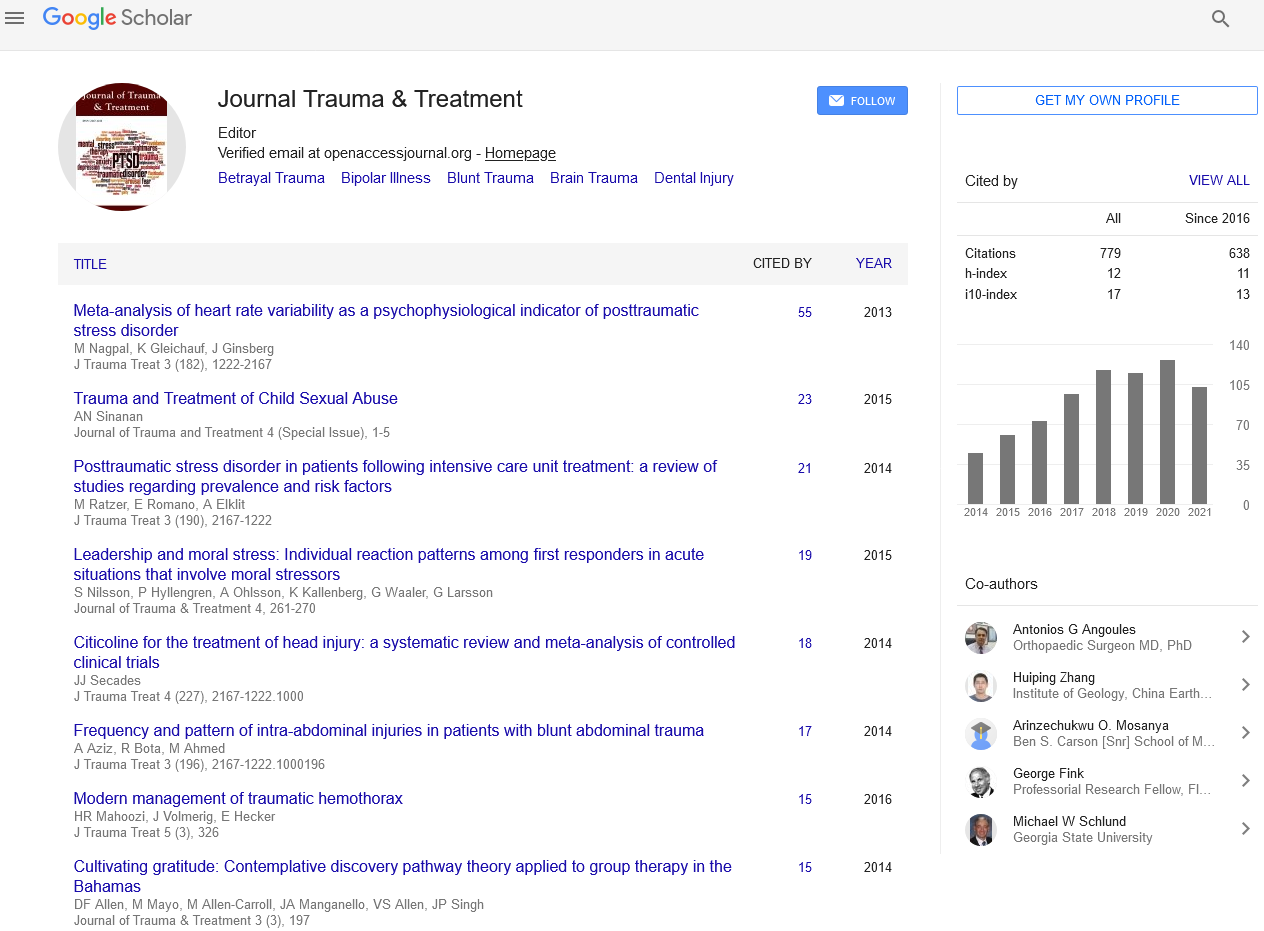
Journal of Trauma & Treatment received 1048 citations as per Google Scholar report