Opinion - (2025) Volume 14, Issue 5
Received: 01-Oct-2025, Manuscript No. jhoa-26-187842;
Editor assigned: 03-Oct-2025, Pre QC No. P-187842;
Reviewed: 17-Oct-2025, QC No. Q-187842;
Revised: 22-Oct-2025, Manuscript No. R-187842;
Published:
29-Oct-2025
, DOI: 10.37421/2167-1095.2025.14.542
Citation: Mansour, Khaled. ”Salt Reduction: Key to Cardiovascular and Renal Health.” J Hypertens 14 (2025):542.
Copyright: © 2025 Mansour K. This is an open-access article distributed under the terms of the Creative Commons Attribution License, which permits unrestricted use, distribution and reproduction in any medium, provided the original author and source are credited.
Reducing dietary salt intake stands as a foundational strategy for the effective management of hypertension. This dietary modification directly influences blood pressure by impacting fluid balance and vascular tone. Lowering sodium consumption leads to a reduction in blood volume and arterial stiffness, consequently lowering blood pressure. The degree of this effect is often dose-dependent, with more significant reductions in salt intake generally resulting in more pronounced drops in blood pressure. Public health campaigns and individual patient education are vital for widespread adoption of low-salt diets. Adherence to these recommendations is crucial for long-term cardiovascular health and mitigating the burden of hypertension-related complications [1].
The substantial impact of salt reduction on blood pressure is well-supported by extensive clinical trials and meta-analyses. Even modest reductions in daily sodium intake can yield clinically significant decreases in both systolic and diastolic blood pressure, particularly among individuals diagnosed with hypertension. This observed effect is mediated by several physiological mechanisms, including a reduction in sympathetic nervous system activity and an improvement in endothelial function. Sustained salt reduction is also associated with a diminished risk of cardiovascular events such as stroke and heart attack, underscoring its importance beyond mere blood pressure modulation [2].
Implementing dietary salt reduction within clinical practice necessitates a comprehensive, multi-faceted approach. This involves educating patients about the prevalence of hidden sodium sources in processed foods, encouraging the use of herbs and spices for flavoring, and promoting home-based cooking. Healthcare providers play a pivotal role in reinforcing these dietary messages and tailoring advice to the unique needs and cultural dietary patterns of individual patients. The benefits of salt reduction also extend to enhancing the efficacy of antihypertensive medications, potentially enabling lower dosages or a reduced number of prescribed medications [3].
Beyond its direct impact on blood pressure, reducing dietary salt offers broader cardiovascular advantages. Research indicates that a lower sodium intake can improve arterial stiffness, decrease left ventricular hypertrophy, and positively influence other key markers of cardiovascular risk. This suggests that salt reduction should be viewed not solely as a method for managing hypertension but as a comprehensive strategy aimed at promoting overall cardiovascular well-being. The long-term implications of consistently adhering to low-salt diets are considerable in the prevention of a wide spectrum of cardiovascular diseases [4].
It is important to acknowledge that individual variability exists in the blood pressure response to dietary salt. While the majority of individuals with hypertension experience benefits from salt reduction, a subset are considered salt-sensitive, demonstrating a more pronounced decrease in blood pressure with lower sodium intake. Conversely, others exhibit less responsiveness. Factors such as genetic predisposition, age, and the presence of underlying comorbidities can significantly influence this individual response. Therefore, personalized dietary recommendations, which take into account individual salt sensitivity, can optimize the management of hypertension [5].
The global prevalence of hypertension represents a significant public health challenge, and dietary salt reduction emerges as a powerful, non-pharmacological intervention. Public health initiatives designed to decrease population-wide salt intake can profoundly impact hypertension prevalence and associated cardiovascular diseases. These initiatives encompass the reformulation of processed foods and extensive public education campaigns focused on limiting added salt. Such strategies are notably cost-effective and sustainable for achieving long-term improvements in population health [6].
The intricate relationship between dietary salt intake and kidney function is of considerable significance. Elevated sodium intake can exacerbate kidney damage in individuals already affected by chronic kidney disease and hypertension. Conversely, a reduction in salt intake can play a crucial role in slowing the progression of kidney disease and improving renal outcomes. This is particularly critical given the kidneys' essential role in regulating blood pressure and maintaining fluid balance. Consequently, salt reduction is an indispensable component of comprehensive management plans for patients managing both hypertension and kidney-related issues [7].
The role of dietary salt in maintaining vascular health extends to its impact on endothelial function. Excessive sodium consumption can impair the function of the endothelium, the delicate inner lining of blood vessels, leading to diminished nitric oxide availability and increased vasoconstriction. This impairment contributes to elevated blood pressure and an increased risk of developing atherosclerosis. By moderating salt intake, endothelial function can be effectively improved, thereby promoting vasodilation and contributing to better blood pressure control and enhanced overall vascular health [8].
The established association between high dietary salt intake and an elevated risk of stroke is widely documented in scientific literature. Salt reduction strategies have been demonstrably effective in significantly lowering the incidence of stroke. This protective effect is largely attributed to the blood pressure-lowering capabilities of reduced salt consumption, given that elevated blood pressure is a primary risk factor for stroke. Consequently, public health efforts aimed at reducing salt intake are critical interventions for stroke prevention at a population level [9].
Successfully implementing dietary salt reduction across diverse populations necessitates culturally sensitive and tailored approaches. A deep understanding of local food habits, the availability of low-sodium food alternatives, and the social influences that shape food choices is paramount. Educational interventions must be specifically designed to address these contextual factors. The success of salt reduction initiatives ultimately hinges on the adoption of practical, sustainable dietary changes that align with individual lifestyles and cultural norms, thereby contributing to improved hypertension control and enhanced overall health [10].
Dietary salt reduction is a cornerstone strategy for effective hypertension management, directly impacting blood pressure by influencing fluid balance and vascular tone. Lowering sodium consumption leads to decreased blood volume and arterial stiffness, thereby reducing blood pressure. The magnitude of this effect is often dose-dependent, with greater reductions yielding more significant blood pressure drops. Public health initiatives and individual patient education are crucial for promoting the widespread adoption of low-salt diets, which are vital for long-term cardiovascular health and reducing hypertension-related complications [1].
The well-established impact of salt reduction on blood pressure is supported by numerous clinical trials and meta-analyses. Even modest reductions in daily sodium intake can lead to clinically significant decreases in systolic and diastolic blood pressure, particularly in individuals with hypertension. This effect is mediated by physiological mechanisms such as reduced sympathetic nervous system activity and improved endothelial function. Sustained salt reduction is also associated with a lower risk of cardiovascular events like stroke and heart attack, highlighting its importance beyond blood pressure numbers [2].
Implementing dietary salt reduction in clinical practice requires a multi-faceted approach, involving patient education on hidden sodium sources in processed foods, encouragement of using herbs and spices for flavoring, and promotion of home cooking. Healthcare providers are pivotal in reinforcing these messages and tailoring advice to individual needs and cultural dietary patterns. The benefits of salt reduction also extend to improving the efficacy of antihypertensive medications, potentially allowing for lower doses or fewer medications [3].
Beyond blood pressure, reducing dietary salt offers broader cardiovascular benefits, including improved arterial stiffness, reduced left ventricular hypertrophy, and positive influence on other markers of cardiovascular risk. This suggests salt reduction is a comprehensive strategy for promoting overall cardiovascular health, with significant long-term implications for preventing a range of cardiovascular diseases [4].
Individual variability exists in the blood pressure response to dietary salt. While most individuals with hypertension benefit from salt reduction, some are salt-sensitive, exhibiting a more pronounced drop in blood pressure with lower sodium intake, while others are less responsive. Factors such as genetics, age, and underlying comorbidities can influence this response. Personalized dietary recommendations considering individual salt sensitivity can optimize hypertension management [5].
The global burden of hypertension is immense, and dietary salt reduction offers a powerful, non-pharmacological intervention. Public health campaigns aimed at reducing population-wide salt intake can have a substantial impact on hypertension prevalence and related cardiovascular diseases, through processed food reformulation and public education on limiting added salt. Such strategies are cost-effective and sustainable for long-term population health improvement [6].
The interplay between dietary salt and kidney function is significant. High sodium intake can exacerbate kidney damage in individuals with chronic kidney disease and hypertension. Conversely, reducing salt intake can help slow the progression of kidney disease and improve renal outcomes, which is crucial as the kidneys regulate blood pressure and fluid balance. Therefore, salt reduction is a vital component of comprehensive management for patients with both hypertension and kidney issues [7].
Dietary salt's role in vascular health extends to endothelial function. Excessive sodium intake can impair the endothelium, leading to reduced nitric oxide availability and increased vasoconstriction, contributing to higher blood pressure and atherosclerosis risk. Reducing salt intake can improve endothelial function, promoting vasodilation and contributing to better blood pressure control and overall vascular health [8].
The association between high dietary salt intake and increased stroke risk is well-documented, with salt reduction strategies shown to significantly lower stroke incidence. This effect is attributed to blood pressure lowering, as elevated blood pressure is a primary stroke risk factor. Public health efforts to reduce salt consumption are therefore critical for population-level stroke prevention [9].
Effectively reducing dietary salt in diverse populations requires culturally sensitive approaches, understanding local food habits, availability of low-sodium alternatives, and social influences. Educational interventions must be tailored to specific contexts. Success hinges on practical, sustainable dietary changes that align with individual lifestyles and cultural norms, ultimately contributing to better hypertension control and overall health [10].
Reducing dietary salt intake is a fundamental strategy for managing hypertension, impacting blood pressure by influencing fluid balance and vascular tone. Even modest reductions in sodium intake can lead to significant decreases in blood pressure, particularly in hypertensive individuals, and are associated with a lower risk of cardiovascular events like stroke and heart attack. Implementing salt reduction requires a multi-faceted approach, including patient education and tailored advice from healthcare providers. Beyond blood pressure, lower sodium intake improves arterial stiffness and other cardiovascular risk markers, promoting overall cardiovascular health. Individual responses to salt reduction vary, necessitating personalized dietary recommendations. Public health campaigns promoting salt reduction are cost-effective interventions for controlling hypertension and preventing cardiovascular diseases globally. Salt intake significantly affects kidney function and disease progression, making reduction crucial for renal health. It also plays a role in vascular health by influencing endothelial function and reducing the risk of atherosclerosis. High salt intake is linked to an increased risk of stroke, which can be mitigated by salt reduction strategies. Successful implementation requires culturally sensitive approaches that align with individual lifestyles and cultural norms.
None
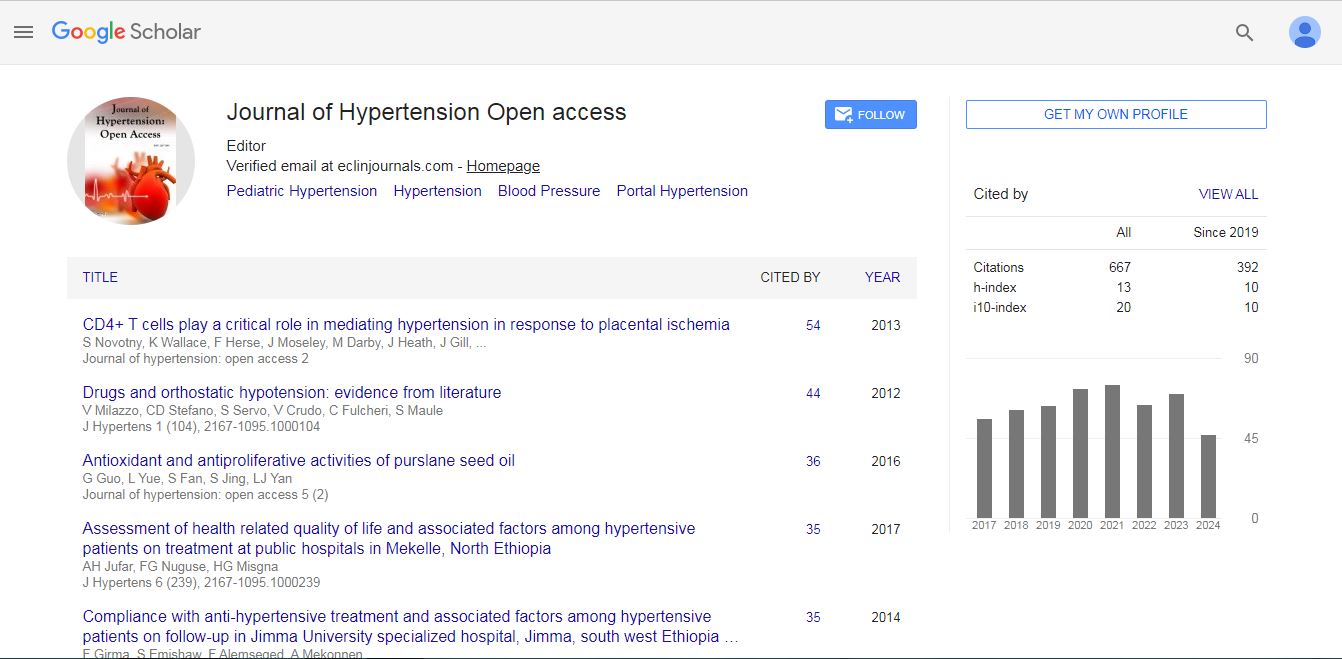
Journal of Hypertension: Open Access received 614 citations as per Google Scholar report