Research Article - (2025) Volume 16, Issue 2
Received: 24-Oct-2024, Manuscript No. JVST-24-150866;
Editor assigned: 28-Oct-2024, Pre QC No. JVST-24-150866 (PQ);
Reviewed: 11-Nov-2024, QC No. JVST-24-150866;
Revised: 14-Apr-2025, Manuscript No. JVST-24-150866 (R);
Published:
21-Apr-2025
, DOI: 10.37421/2157-7579.2025.15.294
Citation: Sai Sravya, Ramisetty Naga, N Arul Jothi, S Tina Roshini, and N Gurunathan, et al. "Innovative Diagnostic Approaches: Ultra Sonographic Evaluation of the Pelvis in Healthy Adult Crossebred Jersey Cows." J Vet Sci Techno 16 (2025): 294.
Copyright: © 2025 Sravya RNS, et al. This is an open-access article distributed under the terms of the creative commons attribution license which permits unrestricted use, distribution and reproduction in any medium, provided the original author and source are credited.
A comprehensive ultrasonographic examination of the normal pelvic girdle in 24 mature crossbred Jersey cows, aged 3 to 8 years, calved once and above were taken for this present study. The ultrasonographic evaluation focused on various pelvic girdle components, including the coxofemoral joint and its anterior and posterior capsules, both externally and internally. Key findings include the observation of pelvic tuberosities (sacral, coxal, and ischial) as convex arches with surface irregularities. The bony external surfaces of the iliac wing, body, and ischium appeared as thin, hyperechoic concave arches, while the internal surfaces of the ischium’s tabula and the medial aspect of the acetabulum were seen as thin, hyperechoic convex arches. Pelvic articulations, including the hip joint, were visualized as anechoic bands bordered by hyperechoic arches. The mean distance from sacral tubers to the skin is 0.721 ± 0.011 cm. The mean thickness of the dorsal aspect of the dorsal sacroiliac ligament-thoracolumbar fascia fusion is 3.4167 ± 0.061 cm, while the mean thickness of the dorsal sacroiliac ligament is 2.300 ± 0.0326 cm. Additionally, the mean distance from the skin surface to the joint measures 65.732 ± 2.585 cm. The mean thickness of the articular cartilage is reported as 2.35 ± 0.042 cm, and the mean distance between the sacral tubers and the first sacral spinous process is 1.947 ± 0.084 cm. These results provide a detailed ultrasonographic description of the pelvic girdle in mature cows and serve as a valuable guide for pelvic examinations.
Cow • Pelvis • Transcutaneous • Transrectal • Ultrasonography
Pelvic injuries are commonly noticed in cattle. Luxation and hip fractures are the common root causes of lameness in ruminants [1]. Some of the injuries with respect to fractures of the bones may result in an alteration of the regularity and size of the pelvis, which would lower the animal's ability to reproduce as a result, animal culling rates have been increased [2]. The pelvis structured in cows is intricately arranged and this makes the diagnosis of injuries a great challenge in large animal practice [3].
The hip affections in dairy cows includes coxofemoral joint luxation, dysplasia, dislocation (hip, sacroiliac), pelvic injuries, femoral head fractures, femoral neck fractures, acetabulum, greater trochanter, joint effusions, osteoarthritic changes, muscle tears, ligament tears, and pathology of other relevant structures related to the pelvis [4]. The most common causes of hip affections in large animals are related to sudden falls due to hypo calcemic conditions, trauma caused by mounting, abrupt falls on to hard surfaces, slippery floors, automobile accidents and dystocia [5]. Prompt and precise diagnosis of pelvic injuries in cattle are of great importance from an economic perspective [6].
Physical examination is not very significant on its own, especially in well-muscled mature animals where crepitation and contour change are not clearly evident [7]. The use of X-rays to examine the pelvis in mature animals is technically challenging. Radiation from the machine used in this technique might be dangerous for the operator due to high output [8]. Radiographical examination is mostly restricted for verifying certain pelvic injuries in calves of cattle [9].
The present study aims to record the normal ultrasonographic description of pelvis of adult cow to establish an advance diagnostic technique.
The study protocol followed the faculty guidelines of all animal handling procedures were according to the regulation of Institutional Animal Ethics Committee (IAEC). This study was conducted on 24 cross bred jersey adult female cattle clinically healthy with no prior history of hindlimb lameness. The average age of the cows was 6.5 years, ranging from 3 to 8 years, and their average body weight was 300 kg, with a range of 250 to 450 kg. The cows were calmly examined and their back posture was assessed while standing and walking. All the cows in the study were assessed the Position of the greater trochanter to tuber coxae and the tuber ischii, free from any abnormalities or lameness, as indicated by a score of 1 on the scoring system developed by Sprecher et al.
Position of the greater trochanter to tuber coxae and the tuber ISCHII
A triangle was formed between the position of the greater trochanter, the tuber coxae, and the tuber ischii of the animals. Only after verifying that each animal had this triangular formation, 24 animals were selected for the study aimed at standardizing the normal pelvic girdle of cows [10].
Ultrasonographic examination
The hair covering each hemipelvis, which is defined cranially by the sacral tuber and tuber coxae, laterally by the greater trochanter, medially by the sacrum, and caudally by the ischial tuber area was clipped and cleaned with ethyl alcohol, and transmission gel was applied to the skin before the examination. All animals were subjected to ultrasonographic examination using the Easote MyLabX5 VET ultrasound scanning machine with a 4-15 MHz linear probe and the Honda ultrasound machine with a 5-10 MHz probe. Parameters were standardized and recorded using two methods: transcutaneous and transrectal ultrasound.
Transcutaneous ultrasound examination
A transcutaneous ultrasonographic examination was then performed with a 4-14 MHz linear transducer was used alternating between transverse and longitudinal orientation to better visualize the osseous structures of the pelvis (Figure 1).
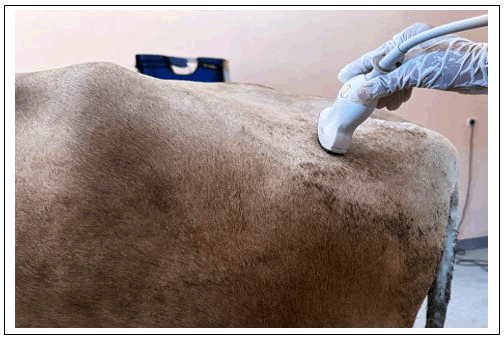
Figure 1. Probe position: Transverse orientation.
During transcutaneous ultrasonography the following structures were examined and evaluated (1) Sacral Tubers (ST), assessing their shape, depth from the skin surface, inter sacral tuber distance, and the distance from the medial aspect of each tuber to the most dorsal point of the first sacral spinous process; (2) Dorsal Sacroiliac Ligament-Thoracolumbar Fascia Combination (D-DSIL-TLF), evaluating its shape, cross-sectional area, and thickness; (3) Lateral portion of the Dorsal Sacroiliac Ligament (L-DSIL), including its shape, thickness, and attachment to the lateral sacral crest; and (4) Iliac Wing (IW); (5) Femur Head and neck (FH), (Fn), assessing their shape, depth from the skin surface; (6) Acetabulum, assessing their shape, depth from the skin surface, distance from femur head; (7) Anterior joint capsule; (8) Posterior joint capsule; (9) Gluteal muscle, assessing the patterns, appearance; (10) Greater trochanter, assessing shape, appearance and echogenicity. The measurements and observations were repeated on the contralateral hemipelvis to assess symmetry and echogenicity. This comprehensive evaluation aimed to standardize and enhance the understanding of normal pelvic anatomy in cows.
Transrectal ultrasonographic examination
A 7.5-10 MHz linear rectal transducer was used transrectally to evaluate the osseous integrity of the pelvic canal. Orientation of the probe alternated between transverse and longitudinal direction to perform a thorough transrectal examination.
During transrectal examination, the following structures were examined and evaluated;
• Pelvic Symphysis (PS)
• Tabula of the Ischium (TI)
Statistical analyses
For each measured item, the mean, Standard Error (SE) and range of values were calculated.
Sacral Tubers (ST)
Both sacral tubers were observed in the transverse scan as smooth, convex hyperechoic arches extending laterally (Figure 2). In the longitudinal scan, each sacral tuber appeared as an irregular, slightly convex hyperechoic arch oriented craniocaudally, with cranial and caudal processes. The sacral tubers are connected laterally to the wing of the ilium. The depth of both sacral tubers from the skin in all twenty-four cows is shown in Table 1, with a mean distance from the sacral tubers to the skin of 0.721 ± 0.011. The dorsal spinous process of the first sacral vertebra appeared as a small, rounded hyperechoic area with acoustic shadowing, located midway between the sacral tubers. The mean distance between the sacral tubers and the first sacral spinous process is provided in the Table 1.
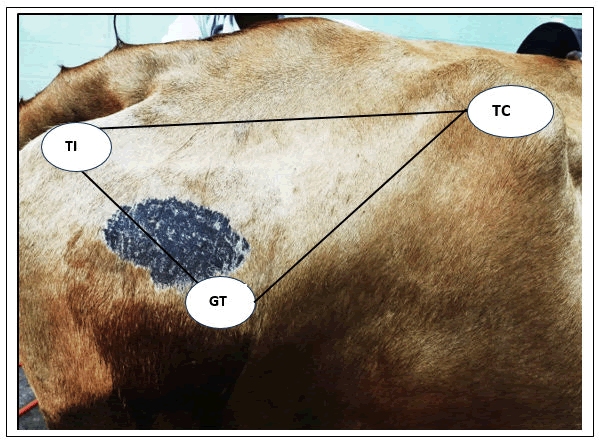
Figure 2. In normal an assessment was made for a triangle shape between the position of the greater trochanter to tuber coxae and the tuber ISCHII of the animals.
Dorsal Sacroiliac Ligament-Thoracolumbar Fascia Combination (D-DSIL-TLF)
In the transverse scan, the dorsal aspect of the dorsal sacroiliac ligament-thoracolumbar fascia combination appeared as a curvilinear structure that varied from hypoechoic to echogenic and extended laterally. The lateral branch, representing the dorsal aspect of the dorsal sacroiliac ligament, and the medial branch, representing the thoracolumbar fascia, formed a slightly more echogenic V-shaped structure. This structure extended laterally to merge with the medial aspect of the dorsal sacroiliac ligament and continued medially to connect with the opposite side at the proximal aspect of the dorsal spinous process of the sacral vertebra (Figure 3). The mean thickness of the dorsal aspect of the dorsal sacroiliac ligamentthoracolumbar fascia combination at their fusion point, as well as the mean thickness of the dorsal sacroiliac ligament, are detailed in Table 1.
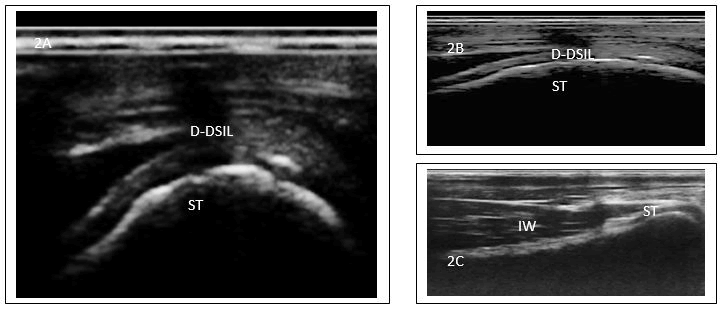
Figure 3. A) A 3.5-year-old cow showing Sacral Tuber (ST), the dorsal portion of the Dorsal Sacroiliac Ligament (D-DSIL); B) Compound longitudinal sonogram (10 MHz linear tendon probe, 5 cm depth) at the dorsal area of sacral tuber of a 4-year-old cow showing Sacral Tuber (ST), the dorsal portion of the dorsal sacroiliac ligamentthoracolumbar fascia combination (D-DSIL-TLF), cranial margin of sacral tuber; C) Compound longitudinal scan 7.5 MHz linear tendon probe showing sacral tuber along with ilia wing.
|
Measured item |
Cattle mean ± SE |
|
|
Right |
Left |
|
|
The distance between sacral tuber and skin surface (cm) |
0.721 ± .011 |
0.655 ± .014 |
|
The distance between sacral tuber and first sacral spinous process (cm) |
1.947 ± .084 |
1.988 ± .081 |
|
The distance between both sacral tubers (cm) |
3.3967 ± .03442 |
|
|
The thickness of sacroiliac ligament-thoracolumbar fascia (mm) |
3.4167 ± .061 |
3.667 ± .039 |
|
The distance from hip joint to skin (mm) |
65.732 ± 2.585 |
65.628 ± 2.582 |
|
The thickness of articular cartilage (mm) |
2.35 ± .042 |
2.33 ± .040 |
|
The thickness of joint capsule (mm) |
4.236 ± .034 |
4.24 ± .0447 |
|
The sacroiliac ligament thickness (mm) |
2.300 ± .0326 |
2.2435 ± .042 |
Table 1. Different measurements of the pelvis, recorded in this study (mean ± SE).
Wing and body of ilium
In the transverse scan using a linear probe (7.5 MHz) positioned obliquely lateromedially, the iliac wing appeared as a regular, hyperechoic, slightly concave arch extending from the sacral tuber medially to the tuber coxae laterally. The iliac wing featured a smooth hyperechoic margin that connected laterally to a concave hyperechoic arch representing the iliac body.
Tuber coxae
The tuber coxae appeared as an irregular hyperechoic linear structure with marked irregularity at its middle portion resembling splintered fractures (Figure 4).
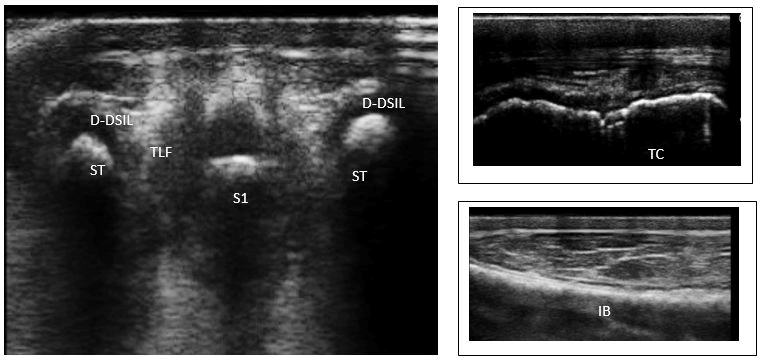
Figure 4. A) showing Sacral Tuber (ST), the Thoracolumbar Fascia (TLF), the Dorsal portion of the Dorsal Sacroiliac Ligament (D-DSIL). First sacral spinous process (S1), B) Tuber coxae, c) Lilial Body (IB).
Femur head and neck
During longitudinal scan, femur head appeared as convex hyperechoic arche extends laterally as slight concave arch to flat hyperechoic band representing the femoral neck. (Figure 5).
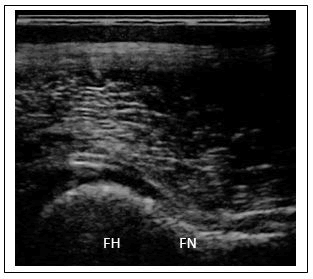
Figure 5. Femur Head (FH), Femur Neck (FN).
Coxofemoral joint and joint capsule
The joint space was evident as a small funnel-like interruption of the joint forming, hyperechoic bone surfaces of the acetabulum and femoral head. The hip joint was localized at the caudoventral end of the iliac body where its surface diverged to be convex. It appeared as an anechoic narrow band bounded dorsally and ventrally by two hyperechoic arches representing the acetabulum and the femoral head (Figure 6A and B). Imaging the caudal portion of the hip joint was obscured by the greater trochanter which appeared as a hyperechoic arch. The mean distance from the skin surface to the joint is 65.732 ± 2.585.
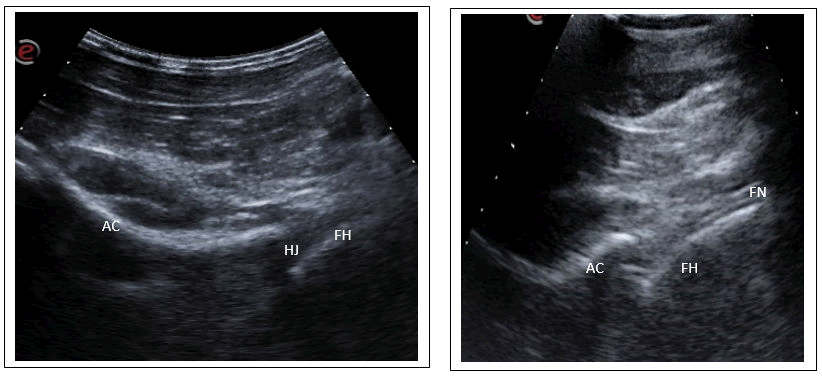
Figure 6. A) Compound longitudinal sonogram (6.6 MHz micro convex probe, 10 cm depth) in a 5-year-old cow showing the Iliac Body (IB), Hip Joint (HJ), Tuber Coxae (TC), Acetabulum (AC), Femoral Head (FH), B) Oblique sonogram (6.6 MHz micro convex probe, 15 cm depth) in an 8-year-old cow showing the Hip Joint (HJ), the Acetabulum (AC), Femoral Head (FH), Femoral Neck (FN), Hip Joint (HJ).
Joint capsule
The joint cartilage was identified on the femoral head as a homogenous, hypoechoic 2 mm thick, and on the femoral neck as a band 7 mm thick. The joint capsule appeared as a hyperechoic line lying proximal to the cartilage. he hyaline Articular Cartilage (AC) covering the femoral head and neck has a hypoechoic appearance. The mean thickness of the articular cartilage 2.35 ± .042.
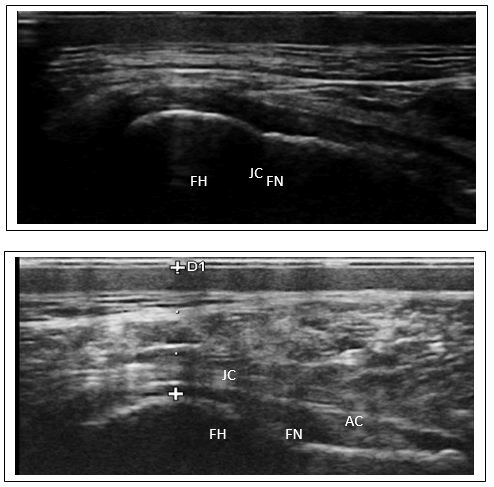
Figure 7. Compound longitudinal oblique scan with linear probe (7.5 MHz 4 cm depth) in 4.5-year-old cow showing Femur Head (FH), femur neck, Articular Cartilage (AC), Joint Capsule (JC).
Gluteal muscle
On an ultrasound scan, these layers appeared as distinct, alternating echogenic (bright) and hypoechogenic (dark) areas. In a longitudinal plane, perimysial borders are seen as linear bands within the muscle belly, and in the transverse plan these are seen as dots and band (Figures 7 and 8).
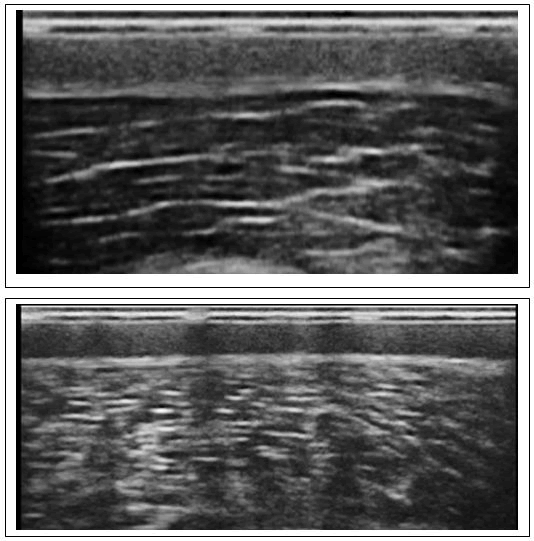
Figure 8. A) In a compound longitudinal sonogram with linear probe (7.5 MHz 10 cm depth), in a 3,5-year-old cow showing gluteus muscle and, perimysial borders are seen as linear bands within the muscle belly, B) In a compound longitudinal sonogram with linear probe (7.5 MHz 10 cm depth), in a 3,5-year-old cow showing gluteus muscle and, In the transverse, plan the perimysium borders are seen as dots and band.
Greater trochanter
In the transverse plane greater trochanter appears as a hyperechoic (bright) arch or irregular prominence due to its dense bony structure, which reflects ultrasound waves more effectively than the surrounding soft tissues (Figure 9). The greater trochanter was partially covered by the joint capsule of the hip joint.
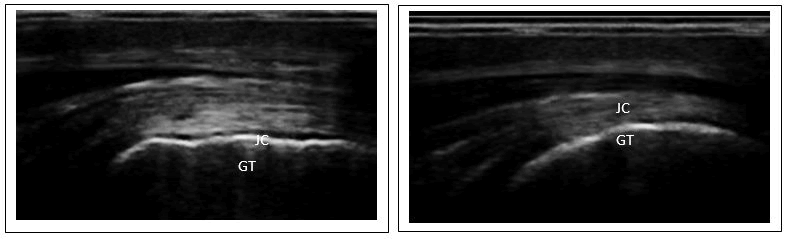
Figure 9. A, B) In a compound longitudinal sonogram with linear probe (7.5 MHz 10 cm depth), in a 3.5-year-old cow showing Greater Trochanter (GT) and partially covered Joint Capsule (JC).
Transrectal ultrasound parameters: During transrectal ultrasonography the following structures were examined and evaluated.
• Tabula of ischium assessing their shape and appearance.
• Pelvic symphysis, assessing their shape and appearance.
Tabula of Ischium (TI): The ischiatic Table 2 appeared during longitudinal ultrasonographic scanning as a smooth hyperechoic convex arch extended from the ischial tuber caudally till the ischiatic rim of the obturator foramen cranially (Figure 10A). While in transverse scanning both Tabula of the ischium appeared as hyperechoic lines separated by slightly hypoechoic area represented the pelvic symphysis. The latter was visible at the caudal portion of the pelvic floor and completely disappeared at its cranial half.
Pelvic Symphysis (PS)
During transrectal ultrasonography with rectal probe 7.5 MHz, 5 cm depth the pelvic symphysis appeared as hypoechoic area with hyperechoic lines on both sides represented as tabula of ischium (Figure 10 B).
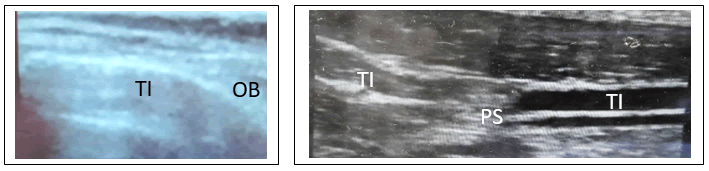
Figure 10. (A) Compound longitudinal sonogram obtained with a 10 MHz linear rectal probe at a depth of 5 cm in a 7-year-old cow, displaying the Tabula of the Ischium (TI) and the Obturator Foramen (OF), (B) Transverse sonogram using a 10 MHz linear rectal probe at a depth of 5 cm, illustrating the Pelvic Symphysis (PS) and the Tabula of the Ischium (TI).
| Structure | Ultrasonographic description |
| Scaral tubers | Smooth convex hyperechoic arch |
| D-DSIL-TLF | Curvilinear hypoechoic to echogenic structure |
| Sacroiliac Ligament | Convex hypoechoic arch |
| Iliac wing and Iliac body | Regular hyperechoic slightly concave arch |
| Tuber coxae | Irregular hyperechoic linear structure |
| Femur head and neck | Convex hyperechoic Arche and flat hyperechoic band |
| Hip joint | Anechoic narrow band |
| Joint cartilage | Homogenous, hypoechoic thick line |
| Joint capsule | Hyperechoic line |
| Gluteal muscle | Linear bands in longitudinal scan, dots and band in transverse scan |
| Greater trochanter | Hyperechoic (bright) arch |
| Tabula of ischium | Smooth hype echoic convex arch in longitudinal scan and hyperechoic lines in transverse scan |
| Acetabulum | Hyperechoic arch |
| Pelvic symphysis | Hypoechoic area with hyperechoic lines on both sides |
Table 2. Detailed ultrasonographic description of the following structures.
Ultrasound equipment is cost-effective, widely accessible, and provides immediate results [11]. According to Preston and Shaw, routine ultrasound examinations have no harmful biological effects, making them safe to perform in various settings without additional safety measures. This technique is safe for patients, operators, and nearby personnel. It is non-invasive and well-tolerated in nonanesthetized animals, allowing for repeated examinations to monitor the progression of conditions [12].
Timely and accurate identification of pelvic injuries in large animals is vital for economic reasons [13]. Traditionally, the diagnosis of pelvic conditions relied on physical examinations or X-rays. The effectiveness of physical exams, especially palpation, depends heavily on the examiner's ability to recognize pain, abnormalities, and crepitation. This approach can be limited in mature, well-muscled animals, where contour changes and crepitation may not be easily detected [14]. Furthermore, using X-rays for pelvic.
Our findings on the ultrasonographic imaging of the wing, body of ilium, ischium, and hip joint are consistent with previously published studies in cattle and horses [15]. However, we did not find any prior ultrasonographic literature specifically addressing the imaging of the sacral tuber, tuber coxae, ischial tuber, pelvic tendon, and ligaments before this study. We aim to contextualize our results by comparing them with existing data on horses.
Significant differences are evident in the sacral tuber and tuber coxae of cows compared to horses. The sacral tuber in cows is larger and slightly irregular, with pronounced cranial and caudal processes, consistent with anatomical literature on cattle [16]. Additionally, the tuber coxae in cows shows a distinct irregularity in its mid-region. These findings require careful interpretation to avoid misidentification as splintered fractures or pathological changes. We propose that the anatomical differences in the tuber coxae between cows and horses may provide stronger attachment points for the abdominal muscles (external and internal abdominal oblique), allowing them to better support the significant stress from the substantial abdominal contents (rumen and intestine) typical of ruminants.
This study found that the proximal part of the first sacral spinous process is located midway between the two sacral tubers, at the same level or slightly higher than the skin surface. This positioning enhances imaging and evaluation compared to horses [17]. We believe that assessing and comparing the distance between the first sacral spinous process and each sacral tuber is essential for identifying left-to-right asymmetry and providing insights into the status of the sacroiliac joint.
Our results regarding the ultrasonographic appearance of the dorsal aspect of the dorsal sacroiliac ligament-thoracolumbar fascia combination and the lateral portion of the dorsal sacroiliac ligament align with previously published data in equines [18]. The thoracolumbar fascia was found to fuse with the medial aspect of the dorsal portion of the dorsal sacroiliac ligament in all examined animals, similar to findings in donkeys Sharshar et al. and most horses [19].
The pelvic symphysis of the cow exhibited an ultrasonographic appearance consistent with that described in equines [20]. Despite the maturity of the examined animals, the pelvic symphysis was easily identifiable sonographically in the posterior half of the pelvic floor, while it was completely absent in the anterior half. This finding necessitates careful evaluation to avoid misdiagnosing it as a pelvic floor gap fracture. Clinically, performing transrectal examinations of the iliac body, pubis, and sacrum is crucial, as fractures in these areas can lead to pelvic collapse and increase the risk of dystocia.
The anatomical configuration of the hip joint in ruminants makes it susceptible to injury under stress. Luxation and fracture of the hip joint are common causes of lameness in ruminants. In this study, we localized the hip joint using techniques similar to those described for equines. Our results regarding the ultrasonographic appearance of the hip joint in cows were consistent with previously published data in cattle.
Regarding the pelvic measurements evaluated in this study, no significant differences were found between the pelvic halves. We believe that a careful and combined evaluation of various pelvic measurements is essential for assessing the different causes of leftto- right pelvic asymmetry.
Ultrasonography provides a rapid, efficient and safe method for pelvic anatomical description and evaluation of cow under field conditions. The obtained results may be used as a reference guide for future pelvic evaluation studies of any pathological lesion in cow pelvis.
We would like to acknowledge Dean of our institution (RIVER) for supported this work. We would like to thank the staff of department of veterinary surgery and radiology for their contribution throughout the study.
All authors contributed in design of the study, analysis and interpretation of the data.
The authors declare that there is no conflict of interest.
[Crossref] [Google Scholar] [PubMed]
[Crossref] [Google Scholar] [PubMed]
[Crossref] [Google Scholar] [PubMed]
[Crossref] [Google Scholar] [PubMed]
[Crossref] [Google Scholar] [PubMed]
[Crossref] [Google Scholar] [PubMed]
[Google Scholar] [PubMed]
[Crossref] [Google Scholar] [PubMed]
Veterinary Science & Technology received 4472 citations as per Google Scholar report