Short Communication - (2025) Volume 9, Issue 4
Received: 01-Aug-2025
Editor assigned: 04-Aug-2025
Reviewed: 18-Aug-2025
Revised: 22-Aug-2025
Published:
29-Aug-2025
, DOI: 10.37421/2684-4915.2025.9.391
Citation: Weber, Hugo. ”Rescue Therapies When Standard Treatment Fails.” Clin Med Case Rep 09 (2025):391.
Copyright: © 2025 Weber H. This is an open-access article distributed under the terms of the Creative Commons Attribution License, which permits unrestricted use, distribution and reproduction in any medium, provided the original author and source are credited.
When conventional treatments fall short for severe conditions like refractory status epilepticus, anesthetic agents become a crucial rescue therapy. This review highlights the various anesthetic options and their efficacy, providing insights into managing prolonged seizures that don't respond to initial pharmacotherapy. Understanding the evidence for these interventions is key to improving outcomes in critical care settings.[1].
Managing autoimmune encephalitis often involves navigating a complex landscape, and sometimes initial immune-modulating therapies aren't enough. This observational study sheds light on the effectiveness of various rescue therapies in cases where standard treatments fail, offering valuable data for clinicians facing challenging patient scenarios and guiding subsequent treatment decisions to achieve better neurological outcomes.[2].
When acute respiratory distress syndrome becomes severe and resistant to conventional support, rescue therapies are paramount. This review explores advanced strategies like extracorporeal membrane oxygenation (ECMO), prone positioning, and inhaled vasodilators. What this really means is pushing the boundaries of critical care, providing alternative pathways to support gas exchange and improve survival for patients with life-threatening lung failure.[3].
For individuals with multiple sclerosis experiencing breakthrough disease activity despite ongoing treatment, early rescue therapy can make a significant difference. This prospective cohort study evaluates the impact of initiating intensive short-term immune suppression at the first sign of relapse. It underscores the potential for rapid intervention to modify disease progression and improve long-term outcomes, shifting focus towards proactive management.[4].
When severe COVID-19 leads to acute respiratory failure that doesn't respond to maximal conventional support, extracorporeal membrane oxygenation (ECMO) emerges as a critical rescue therapy. This systematic review and meta-analysis synthesizes the evidence on ECMO's role in these challenging cases. It offers a clear picture of its benefits and risks, helping to guide decisions for patients with life-threatening pulmonary complications from COVID-19.[5].
Immune checkpoint inhibitors have revolutionized cancer treatment, but they can trigger severe adverse events like myocarditis. When this inflammation of the heart muscle becomes refractory, rescue therapies are crucial. This case report and literature review explore the use of intensified immunosuppression for such severe cases, providing insights into managing a rare but life-threatening complication of modern immunotherapy.[6].
For patients suffering from refractory postural orthostatic tachycardia syndrome (POTS), where standard treatments provide insufficient relief, intravenous immunoglobulin (IVIG) can serve as a potent rescue therapy. This study investigates the efficacy of IVIG in alleviating debilitating symptoms that significantly impair quality of life, offering a potential lifeline for individuals struggling with severe, chronic POTS.[7].
Treating recurrent glioblastoma, an aggressive brain tumor, remains incredibly challenging after initial therapies fail. This systematic review and meta-analysis explore the various rescue therapy options for these patients, evaluating their efficacy and safety. Understanding which interventions show promise helps clinicians navigate difficult treatment decisions and potentially extend survival or improve quality of life.[8].
In critical immune-mediated neurological diseases, when first-line treatments don't yield sufficient results, a combination of intravenous immunoglobulins (IVIG) and corticosteroids can act as a crucial rescue therapy. This review delves into the synergistic effects of these powerful immunomodulators, examining their role in quickly suppressing severe inflammation and preventing irreversible neurological damage in life-threatening scenarios.[9].
Acute graft-versus-host disease (aGVHD) can be a devastating complication of hematopoietic stem cell transplantation, and when it's refractory to initial treatment, rescue therapies are urgently needed. This systematic review and meta-analysis consolidates the evidence on various interventions, offering insights into which strategies effectively mitigate severe aGVHD and improve patient survival rates in these challenging clinical situations.[10].
The landscape of critical care and chronic disease management frequently encounters scenarios where initial, conventional treatments fall short. This necessitates the deployment of 'rescue therapies,' specialized interventions applied when standard pharmacotherapy or supportive measures prove insufficient. These therapies are crucial for conditions that are refractory, recurrent, or severe, aiming to prevent irreversible damage, improve survival, or significantly enhance quality of life.
In the realm of neurological disorders, effective rescue strategies are paramount. For instance, refractory status epilepticus, a severe and prolonged seizure state, often requires anesthetic agents as a critical rescue therapy. These interventions are meticulously reviewed to provide insights into managing seizures that resist initial pharmacological approaches, ultimately improving outcomes in critical care settings [1]. Similarly, autoimmune encephalitis presents a complex challenge; when standard immune-modulating therapies are insufficient, observational studies illuminate the effectiveness of various rescue options, offering vital data for guiding treatment decisions and achieving better neurological outcomes [2]. Another neurological condition, Multiple Sclerosis, sees the significant impact of early rescue therapy during breakthrough disease activity despite ongoing treatment. A prospective cohort study underscores the potential of intensive short-term immune suppression at the first sign of relapse to modify disease progression and improve long-term outcomes, emphasizing proactive management [4]. For patients struggling with refractory postural orthostatic tachycardia syndrome (POTS), Intravenous Immunoglobulin (IVIG) shows promise as a potent rescue therapy. Research investigates its efficacy in alleviating debilitating symptoms that severely impair quality of life, acting as a potential lifeline [7]. Moreover, critical immune-mediated neurological diseases often require a combined approach of IVIG and corticosteroids as rescue therapy, reviewed for their synergistic effects in rapidly suppressing severe inflammation and preventing irreversible neurological damage in life-threatening situations [9].
Severe respiratory conditions represent another major area where rescue therapies are indispensable. Acute Respiratory Distress Syndrome (ARDS), when resistant to conventional support, necessitates advanced strategies. This includes techniques like Extracorporeal Membrane Oxygenation (ECMO), prone positioning, and inhaled vasodilators, which represent the cutting edge of critical care by providing alternative pathways for gas exchange and improving survival in life-threatening lung failure [3]. The severe acute respiratory failure associated with COVID-19 also highlights ECMO as a critical rescue therapy. A systematic review and meta-analysis synthesized evidence on ECMO's role in these challenging cases, providing a clear understanding of its benefits and risks to guide decisions for patients with life-threatening pulmonary complications [5].
The complexities of cancer treatment and its complications also frequently call for rescue interventions. Recurrent glioblastoma, an aggressive brain tumor, remains incredibly challenging after initial therapies fail. Systematic reviews and meta-analyses explore various rescue therapy options, evaluating their efficacy and safety to help clinicians navigate difficult treatment decisions, potentially extending survival or improving quality of life [8]. The advent of immune checkpoint inhibitors in cancer treatment, while revolutionary, can unfortunately trigger severe adverse events like myocarditis. When this inflammation of the heart muscle becomes refractory, rescue therapies become crucial. Case reports and literature reviews provide insights into managing this rare but life-threatening complication through intensified immunosuppression [6]. Furthermore, Acute Graft-Versus-Host Disease (aGVHD), a devastating complication of hematopoietic stem cell transplantation, urgently requires rescue therapies when refractory to initial treatment. Systematic reviews and meta-analyses consolidate evidence on interventions that effectively mitigate severe aGVHD and improve patient survival rates in these challenging clinical situations [10].
These studies collectively emphasize a crucial aspect of modern medicine: the continuous pursuit of effective interventions when standard approaches are exhausted. They highlight diverse methodologies, from systematic reviews and meta-analyses to observational and prospective cohort studies, underscoring the commitment to build an evidence base for these often last-resort treatments. The ongoing research into rescue therapies provides vital guidance for clinicians managing patients with severe, life-threatening, or refractory conditions, aiming to optimize patient care and outcomes.
This collection of medical literature highlights the critical role of rescue therapies across a spectrum of severe and often refractory conditions where conventional treatments have proven insufficient. The data reveals a consistent theme: when initial pharmacotherapy or standard support fails, clinicians turn to advanced interventions to improve patient outcomes and survival. For neurological emergencies, anesthetic agents are crucial for refractory status epilepticus, addressing prolonged seizures that defy initial treatments. Autoimmune encephalitis also benefits from rescue strategies when standard immune-modulating therapies are inadequate, guiding decisions for better neurological outcomes. In the realm of respiratory crises, severe Acute Respiratory Distress Syndrome necessitates advanced strategies like Extracorporeal Membrane Oxygenation (ECMO), prone positioning, and inhaled vasodilators, pushing critical care boundaries. Similarly, ECMO is a vital rescue for severe COVID-19 related acute respiratory failure, offering a clear picture of its benefits and risks. Oncological and immunological challenges also demand these targeted interventions. Recurrent glioblastoma, an aggressive brain tumor, sees various rescue options evaluated for efficacy and safety. Immune Checkpoint Inhibitor-related myocarditis, a severe adverse event from modern cancer therapy, requires intensified immunosuppression. Further, conditions like Multiple Sclerosis benefit from early rescue therapy to modify disease progression. Refractory Postural Orthostatic Tachycardia Syndrome finds potential relief in Intravenous Immunoglobulin (IVIG), which alleviates debilitating symptoms. Critical immune-mediated neurological diseases often combine IVIG and corticosteroids for rapid inflammation suppression. Finally, refractory acute Graft-Versus-Host Disease post-hematopoietic stem cell transplantation urgently needs rescue therapies, with systematic reviews consolidating evidence for effective mitigation and improved survival. What this really shows is a constant drive in critical care to find alternative pathways and advanced interventions when standard approaches hit their limits, striving to extend life and enhance patient quality of life.
None
None
Indexed at, Google Scholar, Crossref
Indexed at, Google Scholar, Crossref
Indexed at, Google Scholar, Crossref
Indexed at, Google Scholar, Crossref
Indexed at, Google Scholar, Crossref
Indexed at, Google Scholar, Crossref
Indexed at, Google Scholar, Crossref
Indexed at, Google Scholar, Crossref
Indexed at, Google Scholar, Crossref
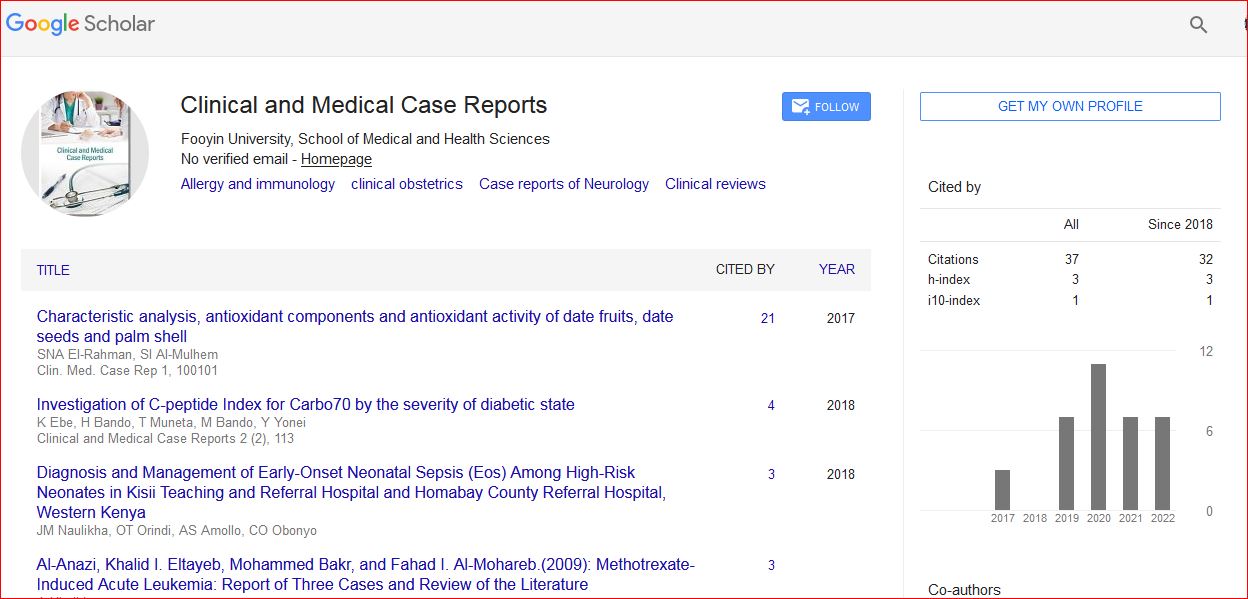
Clinical and Medical Case Reports received 53 citations as per Google Scholar report