Short Communication - (2025) Volume 9, Issue 4
Received: 01-Aug-2025, Manuscript No. cmcr-25-178314;
Editor assigned: 04-Aug-2025, Pre QC No. P-178314;
Reviewed: 18-Aug-2025, QC No. Q-178314;
Revised: 22-Aug-2025, Manuscript No. R-178314;
Published:
29-Aug-2025
, DOI: 10.37421/2684-4915.2025.9.390
Citation: Qureshi, Maryam. ”Rescue Therapies for Refractory Medical Conditions.” Clin Med Case Rep 09 (2025):390.
Copyright: © 2025 Qureshi M. This is an open-access article distributed under the terms of the Creative Commons Attribution License, which permits unrestricted use, distribution and reproduction in any medium, provided the original author and source are credited.
When conventional treatments prove insufficient to stabilize patients experiencing septic shock, a range of rescue therapies emerges as a beacon of promise. A systematic review identified interventions such as vasopressin analogs, corticosteroids, and Extracorporeal Membrane Oxygenation (ECMO) as potentially life-saving options. The efficacy of these treatments is often contingent upon their timely application and alignment with specific patient profiles, underscoring the necessity for meticulous selection in refractory cases[1].
For individuals grappling with severe asthma that remains unresponsive to standard medical regimens, bronchial thermoplasty presents itself as a potential rescue therapy. Insights gleaned from the BT-SCAN study indicate that this innovative procedure can significantly reduce the frequency of asthma exacerbations and foster improvements in lung function, thereby offering a viable alternative when other treatments have failed to provide adequate relief. This represents a highly targeted approach aimed at airway remodeling[2].
In instances where multiple sclerosis relapses manifest with severe intensity and fail to respond to typical steroid treatments, high-dose intravenous immunoglobulin (IVIg) stands out as an effective rescue therapy. A comprehensive review elucidates IVIg's remarkable capacity to shorten the duration of relapses and enhance the recovery process. This makes it a crucial alternative for managing acute neurological deterioration in affected patients, providing a much-needed intervention in challenging scenarios[3].
For patients diagnosed with Acute Myeloid Leukemia (AML) that has either recurred or demonstrated resistance to initial therapeutic interventions, the combination of venetoclax with hypomethylating agents offers a highly promising salvage therapy. This particular approach is increasingly recognized as a potent rescue strategy, demonstrating significant improvements in both response rates and overall survival outcomes. Such a development instills hope for those with limited conventional treatment avenues, effectively targeting underlying disease mechanisms[4].
Critically ill patients with severe COVID-19 often develop Acute Respiratory Distress Syndrome (ARDS), a condition that frequently resists conventional mechanical ventilation. In such severe cases, Extracorporeal Membrane Oxygenation (ECMO) functions as a vital rescue therapy. A review determined that ECMO considerably enhances survival rates in these patients by providing crucial temporary lung support, thereby affirming its role as a last-resort intervention when all other options are exhausted[5].
For individuals afflicted with inflammatory bowel disease (IBD) who have not responded adequately to prior biological therapies, ustekinumab has emerged as a particularly promising rescue option. A systematic review substantiates its efficacy in both inducing and maintaining remission in these challenging, refractory cases. This therapy provides renewed hope for achieving effective disease control when standard treatments have proven unsuccessful, highlighting its significant clinical value[6].
In persistent cases of refractory status epilepticus, where debilitating seizures continue unabated despite the administration of multiple anticonvulsant medications, the ketogenic diet can serve as a remarkably effective rescue therapy. This review emphasizes its significant role, especially within the pediatric patient population, demonstrating its potential for promoting seizure cessation and fostering improved neurological outcomes when conventional interventions are insufficient. The core mechanism involves shifting metabolic pathways to achieve therapeutic effects[7].
The management of severe refractory lupus nephritis presents considerable challenges. Nevertheless, specific rescue therapies prove indispensable when standard immunosuppressants unfortunately fail to deliver desired results. A detailed single-center experience highlighted the substantial utility of treatments such as rituximab and cyclophosphamide re-induction. These therapies have been instrumental in achieving remission or markedly improving renal function in patients who remained unresponsive to initial treatment regimens, crucially preventing further organ damage and preserving vital function[8].
For patients experiencing out-of-hospital cardiac arrest that fails to respond to conventional cardiopulmonary resuscitation (CPR), Extracorporeal Cardiopulmonary Resuscitation (E-CPR) is employed as an advanced rescue therapy. A recent meta-analysis compellingly demonstrates that E-CPR substantially improves both survival rates and neurological outcomes. This positions it as a vital, last-ditch effort for individuals teetering on the brink, offering a critical intervention in dire circumstances[9].
In critically ill COVID-19 patients, particularly those exhibiting severe inflammation that does not respond to initial interventions, corticosteroids can be strategically utilized as a rescue therapy. A comprehensive review concluded that corticosteroids play a significant role in reducing mortality, concurrently improving oxygenation and the overall clinical status of these patients. This underscores their critical importance in effectively managing severe inflammatory responses observed during the pandemic, providing a valuable therapeutic tool[10].
Rescue therapies are crucial medical interventions employed when conventional treatments fail to achieve desired outcomes in severe, refractory conditions. In septic shock, where patient stabilization is paramount, therapies like vasopressin analogs, corticosteroids, and Extracorporeal Membrane Oxygenation (ECMO) have shown promise as life-saving options. The effectiveness of these interventions often hinges on timely application and precise patient profiling, emphasizing the need for careful selection in challenging cases[1]. Similarly, for severe COVID-19 patients developing Acute Respiratory Distress Syndrome (ARDS) unresponsive to mechanical ventilation, ECMO proves to be a critical rescue therapy. It significantly improves survival by offering temporary lung support, acting as a last-resort intervention[5]. Beyond this, corticosteroids themselves are employed as a rescue therapy in critically ill COVID-19 patients with severe inflammation, effectively reducing mortality and improving oxygenation and overall clinical status, highlighting their vital role in managing severe inflammatory responses[10].
Neurological emergencies and chronic conditions also benefit from targeted rescue strategies. When multiple sclerosis relapses are severe and resistant to typical steroid treatments, high-dose intravenous immunoglobulin (IVIg) emerges as an effective rescue therapy. A review confirms IVIgâ??s ability to shorten relapse duration and enhance recovery, offering a crucial alternative for managing acute neurological deterioration in these patients[3]. Furthermore, in cases of refractory status epilepticus, where seizures persist despite multiple anticonvulsant medications, the ketogenic diet can be an effective rescue therapy. Its role is particularly notable in pediatric patients, showing potential for seizure cessation and improved neurological outcomes when conventional treatments are insufficient by shifting metabolic pathways[7].
Oncological and autoimmune diseases often require advanced rescue interventions. Patients with relapsed or refractory Acute Myeloid Leukemia (AML) find hope in combining venetoclax with hypomethylating agents, a promising salvage therapy. This approach significantly improves response rates and survival, offering vital options when conventional treatments are exhausted and effectively targeting disease mechanisms[4]. Managing severe refractory lupus nephritis is particularly challenging, but specific rescue therapies become crucial when standard immunosuppressants fail. A single-center experience documented the utility of treatments such as rituximab and cyclophosphamide re-induction in achieving remission or improving renal function, preventing further organ damage in patients unresponsive to initial regimens[8].
For chronic conditions like severe asthma that do not respond to standard medications, bronchial thermoplasty stands as a potential rescue therapy. Data from the BT-SCAN study indicate that this procedure can reduce asthma exacerbations and improve lung function, providing a viable alternative by targeting airway remodeling[2]. Similarly, for individuals suffering from inflammatory bowel disease (IBD) unresponsive to previous biological therapies, ustekinumab emerges as a promising rescue option. A systematic review confirms its effectiveness in inducing and maintaining remission in refractory cases, offering renewed hope for disease control when standard treatments fail[6].
Finally, in critical cardiac emergencies, advanced life support is paramount. For patients experiencing out-of-hospital cardiac arrest that doesn't respond to conventional cardiopulmonary resuscitation (CPR), Extracorporeal Cardiopulmonary Resuscitation (E-CPR) serves as an advanced rescue therapy. This meta-analysis shows E-CPR significantly improves survival and neurological outcomes, offering a vital last-ditch effort for those on the brink[9].
When standard treatments fall short, rescue therapies offer crucial alternatives for patients facing severe, refractory medical conditions. For instance, vasopressin analogs, corticosteroids, and Extracorporeal Membrane Oxygenation (ECMO) provide potential life-saving options in septic shock, with effectiveness depending on timely application and patient profiles. Bronchial thermoplasty emerges as a viable approach for severe asthma unresponsive to conventional medications, reducing exacerbations and improving lung function. High-dose intravenous immunoglobulin (IVIg) effectively manages acute neurological deterioration in multiple sclerosis relapses, shortening their duration and improving recovery. In relapsed or refractory Acute Myeloid Leukemia (AML), combining venetoclax with hypomethylating agents significantly improves response rates and survival. ECMO also acts as a critical intervention for severe Acute Respiratory Distress Syndrome (ARDS) in COVID-19, significantly improving survival by offering temporary lung support. For inflammatory bowel disease (IBD) resistant to biologics, ustekinumab shows promise in inducing and maintaining remission. The ketogenic diet provides an effective rescue therapy for refractory status epilepticus, particularly in pediatric patients, promoting seizure cessation and better neurological outcomes. Severe refractory lupus nephritis benefits from treatments like rituximab and cyclophosphamide re-induction, which help achieve remission or improve renal function. Extracorporeal Cardiopulmonary Resuscitation (E-CPR) is a vital last-ditch effort for out-of-hospital cardiac arrest unresponsive to conventional CPR, markedly improving survival and neurological outcomes. Lastly, corticosteroids prove crucial in critically ill COVID-19 patients with severe inflammation, reducing mortality and enhancing oxygenation. These diverse rescue strategies underline a unified goal: to offer renewed hope and improved outcomes when primary interventions are insufficient.
None
None
Indexed at, Google Scholar, Crossref
Indexed at, Google Scholar, Crossref
Indexed at, Google Scholar, Crossref
Indexed at, Google Scholar, Crossref
Indexed at, Google Scholar, Crossref
Indexed at, Google Scholar, Crossref
Indexed at, Google Scholar, Crossref
Indexed at, Google Scholar, Crossref
Indexed at, Google Scholar, Crossref
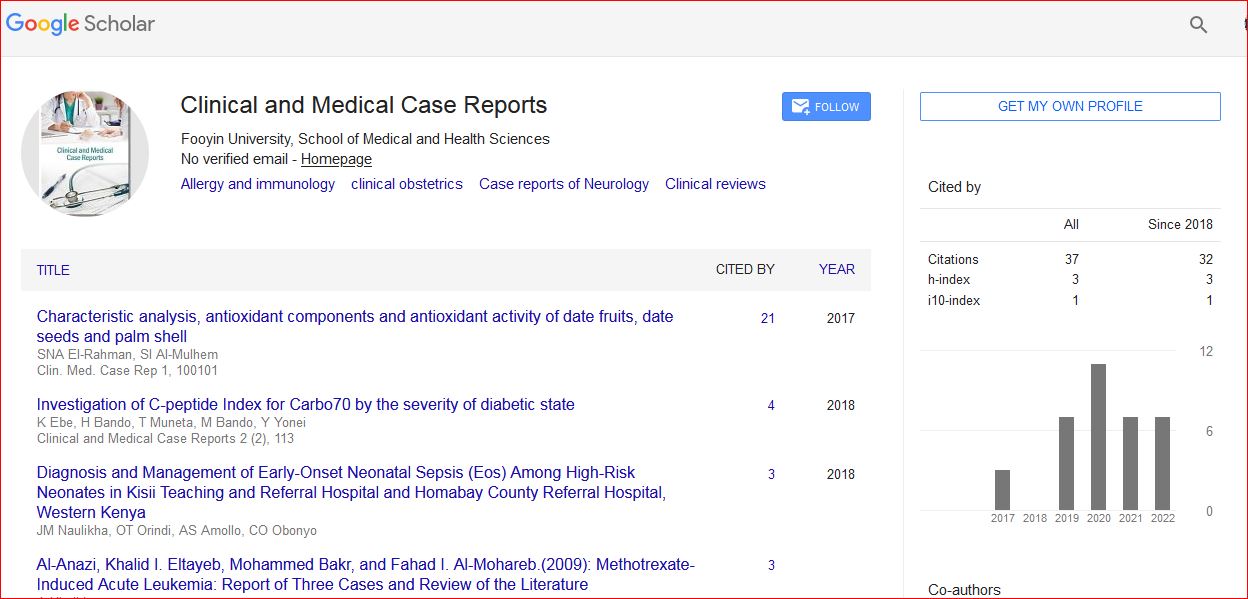
Clinical and Medical Case Reports received 53 citations as per Google Scholar report