Short Communication - (2025) Volume 16, Issue 5
Received: 01-Sep-2025, Manuscript No. jhmi-26-178883;
Editor assigned: 03-Sep-2025, Pre QC No. P-178883;
Reviewed: 17-Sep-2025, QC No. Q-178883;
Revised: 22-Sep-2025, Manuscript No. R-178883;
Published:
29-Sep-2025
, DOI: 10.37421/2157-7420.2025.16.616
Citation: Collins, Peter J.. ”Remote Monitoring: Transforming Postoperative Care.” J Health Med Informat 16 (2025):616.
Copyright: © 2025 Collins J. Peter This is an open-access article distributed under the terms of the Creative Commons Attribution License, which permits unrestricted use, distribution and reproduction in any medium, provided the original author and source are credited.
Remote monitoring technologies represent a significant advancement in enhancing postoperative care, enabling continuous patient surveillance outside of traditional clinical settings, thereby facilitating early detection of complications, reducing hospital readmissions, and improving overall patient satisfaction [1].
This transformative approach leverages technologies such as wearable sensors, mobile health applications, and telehealth platforms, which are fundamental to this paradigm shift, allowing for real-time data collection on vital signs, activity levels, and patient-reported outcomes [1].
The integration of artificial intelligence and machine learning further refines data analysis capabilities within this framework, leading to the development of personalized care pathways and predictive alerts for clinicians [1].
Wearable sensor technology plays a pivotal role in postoperative remote monitoring by continuously capturing essential physiological data, including heart rate, blood oxygen saturation, and activity levels. This real-time data stream provides an objective measure of patient recovery, enabling healthcare providers to identify subtle changes that might indicate impending complications, such as infection or cardiovascular events [2].
The integration of these devices into a patient's daily life post-discharge allows for a more comprehensive understanding of their recovery trajectory and facilitates timely interventions, thereby improving patient outcomes [2].
Mobile health applications are instrumental in facilitating remote postoperative care by serving as a central hub for patient-reported outcomes, medication adherence, and educational resources. These applications empower patients to actively participate in their recovery by providing tools for symptom tracking and direct communication with their care teams [3].
This bidirectional communication is crucial for addressing patient concerns promptly and tailoring interventions based on individual recovery progress, ultimately enhancing engagement and adherence to treatment plans [3].
Telehealth platforms extend the reach of postoperative care by enabling virtual consultations and remote monitoring of patients, particularly benefiting those in rural or underserved areas. This technology effectively bridges geographical barriers, ensuring that patients receive timely medical advice and follow-up care without the necessity of frequent in-person visits [4].
The convenience and accessibility offered by telehealth can significantly improve patient adherence to follow-up appointments and reduce the logistical burden associated with travel for care [4].
The integration of artificial intelligence (AI) and machine learning (ML) in remote postoperative monitoring offers powerful predictive capabilities. By analyzing vast datasets derived from patient monitoring devices and electronic health records, AI/ML algorithms can identify patterns indicative of potential complications much earlier than traditional methods [5].
This predictive power enables proactive interventions, potentially preventing adverse events and significantly improving patient outcomes [5].
Furthermore, these systems possess the capacity to personalize treatment plans based on individual patient characteristics and their unique recovery trajectories [5].
Patient engagement stands out as a critical factor in the overall success of remote postoperative monitoring programs. Empowering patients with the requisite knowledge and practical tools to actively participate in their recovery, such as the effective use of mHealth apps and understanding data from their wearable sensors, fosters greater adherence and promotes improved self-management [6].
Establishing effective communication channels between patients and healthcare providers is paramount for promptly addressing concerns and providing necessary support, thereby enhancing the patient experience and the overall efficacy of remote care delivery [6].
The implementation of remote monitoring technologies in postoperative care is accompanied by various challenges, including significant data security and privacy concerns, disparities in patient digital literacy, and the critical need for robust integration with existing healthcare systems [7].
Effectively addressing these multifaceted challenges necessitates careful strategic planning, appropriate comprehensive training for both patients and healthcare professionals, and the development of secure, user-friendly platforms [7].
Additionally, careful consideration of ethical implications surrounding data ownership and informed consent is of paramount importance for the successful and widespread adoption of these technologies [7].
The economic implications associated with the adoption of remote monitoring in postoperative care are substantial. While an initial investment in technology infrastructure and staff training is undeniably required, the long-term benefits frequently encompass a notable reduction in hospital readmissions, shorter patient lengths of stay, and a decrease in overall healthcare resource utilization [8].
These projected cost savings, when combined with the demonstrated improvements in patient outcomes and satisfaction, position remote monitoring as a compelling and increasingly cost-effective strategic approach within modern healthcare systems [8].
The future trajectory of remote postoperative monitoring is expected to be characterized by the development and integration of increasingly sophisticated sensor technologies and advanced data analytics, including the implementation of personalized predictive models. Seamless integration with existing electronic health records will become more commonplace, thereby facilitating enhanced clinical decision-making processes [9].
The anticipated expansion of remote monitoring capabilities to encompass a broader spectrum of surgical procedures and diverse patient populations is foreseen, driven by the well-documented advantages in terms of improved patient outcomes, enhanced cost-effectiveness, and greater accessibility of care [9].
This comprehensive review underscores the indispensable role of a multidisciplinary approach in the successful implementation and ongoing optimization of remote monitoring technologies within the context of postoperative care. Effective collaboration among clinicians, IT specialists, engineers, and patients themselves is absolutely essential for the development and deployment of truly effective and sustainable solutions [10].
Continuous evaluation and adaptive refinement of these technologies, informed by real-world feedback and evolving clinical needs, are vital for achieving long-term success and maximizing the ultimate benefit to patients [10].
Remote monitoring technologies offer substantial promise in improving postoperative care by enabling continuous patient surveillance outside traditional clinical settings. This approach allows for the early detection of complications, a reduction in hospital readmissions, and an overall improvement in patient satisfaction. Key technologies central to this paradigm shift include wearable sensors, mobile health applications, and telehealth platforms, which facilitate real-time data collection on vital signs, activity levels, and patient-reported outcomes. The incorporation of artificial intelligence and machine learning further enhances data analysis, paving the way for personalized care pathways and predictive alerts for healthcare providers [1].
Wearable sensor technology is crucial for postoperative remote monitoring, providing continuous data on physiological parameters such as heart rate, blood oxygen saturation, and activity. This real-time data stream offers an objective assessment of patient recovery, enabling healthcare professionals to identify subtle changes that may signal impending complications like infection or cardiovascular events. Integrating these devices into a patient's daily routine post-discharge allows for a deeper understanding of their recovery progress and supports timely interventions [2].
Mobile health applications play an instrumental role in remote postoperative care, acting as a central platform for collecting patient-reported outcomes, tracking medication adherence, and delivering educational resources. These applications empower patients to actively engage in their recovery by offering tools for symptom tracking and direct communication with their healthcare teams. This two-way communication is vital for promptly addressing patient concerns and tailoring interventions based on individual recovery trajectories, thereby boosting engagement and adherence to treatment plans [3].
Telehealth platforms expand the reach of postoperative care through virtual consultations and remote patient monitoring, proving especially beneficial for individuals in rural or underserved regions. This technology overcomes geographical barriers, ensuring patients receive timely medical advice and follow-up care without the need for frequent in-person visits. The convenience and accessibility offered by telehealth can significantly enhance patient adherence to follow-up appointments and reduce the burden associated with travel [4].
The integration of artificial intelligence (AI) and machine learning (ML) into remote postoperative monitoring provides potent predictive capabilities. By analyzing extensive datasets from patient monitoring devices and electronic health records, AI/ML algorithms can detect patterns indicative of potential complications earlier than conventional methods. This predictive power facilitates proactive interventions, potentially preventing adverse events and improving patient outcomes. These systems also enable personalized treatment plans based on individual patient characteristics and their recovery progress [5].
Patient engagement is a fundamental component for the success of remote postoperative monitoring programs. Equipping patients with the knowledge and tools to actively participate in their recovery, such as utilizing mHealth applications and understanding data from wearable sensors, promotes adherence and enhances self-management. Effective communication channels between patients and healthcare providers are essential for addressing concerns and offering support, ultimately improving the patient experience and the overall effectiveness of remote care [6].
The implementation of remote monitoring technologies in postoperative care faces several challenges, including data security and privacy issues, variations in patient digital literacy, and the necessity for seamless integration with existing healthcare systems. Addressing these challenges requires meticulous planning, comprehensive training for both patients and healthcare professionals, and the development of secure, user-friendly platforms. Ethical considerations concerning data ownership and consent are also critical for successful adoption [7].
The economic benefits of remote monitoring in postoperative care are considerable. While initial investments in technology and training are necessary, long-term advantages include reduced hospital readmissions, shorter lengths of stay, and decreased utilization of healthcare resources. These cost savings, coupled with improved patient outcomes and satisfaction, make remote monitoring an attractive and increasingly cost-effective strategy for healthcare systems [8].
The future of remote postoperative monitoring is likely to involve increasingly sophisticated sensor technologies and advanced data analytics, including personalized predictive models. Integration with electronic health records will become more seamless, supporting better clinical decision-making. The extension of remote monitoring to manage a wider array of surgical procedures and patient populations is anticipated, driven by its demonstrated benefits in patient outcomes, cost-effectiveness, and accessibility of care [9].
This review emphasizes the crucial role of a multidisciplinary approach in implementing and optimizing remote monitoring technologies for postoperative care. Effective collaboration between clinicians, IT specialists, engineers, and patients is essential for developing and deploying successful solutions. Continuous evaluation and adaptation of these technologies, based on real-world feedback and evolving clinical needs, are vital for long-term success and maximizing patient benefit [10].
Remote monitoring technologies are transforming postoperative care by enabling continuous patient surveillance outside clinical settings. This approach leverages wearable sensors, mobile health apps, and telehealth platforms to collect real-time data, facilitating early detection of complications and reducing hospital readmissions. Artificial intelligence and machine learning further enhance predictive capabilities and personalize care. Patient engagement through these tools is crucial for adherence and self-management. While challenges like data security and digital literacy exist, the economic benefits and improved patient outcomes make remote monitoring a vital strategy for modern healthcare. Future advancements will likely see more sophisticated technologies and broader applications.
None
None
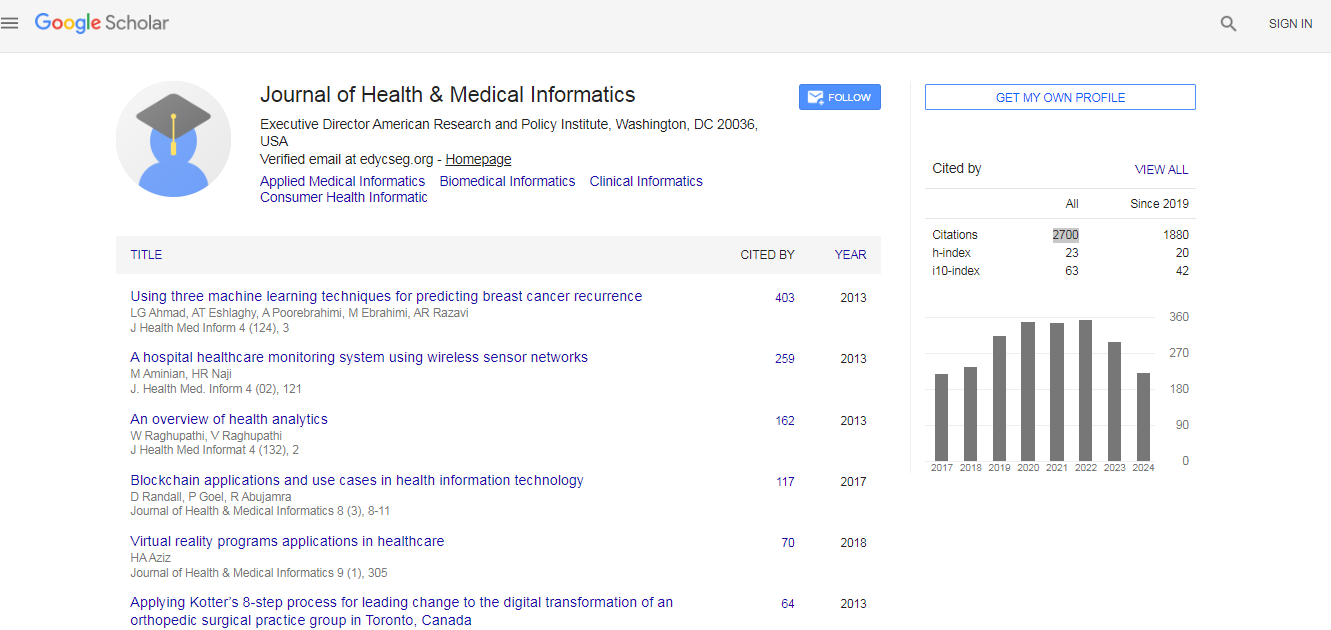
Journal of Health & Medical Informatics received 2700 citations as per Google Scholar report