Commentary - (2025) Volume 7, Issue 5
Received: 13-Sep-2024, Manuscript No. JSPD-24-147913;
Editor assigned: 16-Sep-2024, Pre QC No. JSPD-24-147913 (PQ);
Reviewed: 01-Oct-2024, QC No. JSPD-24-147913;
Revised: 14-Oct-2025, Manuscript No. JSPD-24-147913 (R);
Published:
21-Oct-2025
, DOI: 10.37421/2684-4575.2025.7.171
Citation: Vasiliy, Favareto. "Regulatory and Ethical Considerations in Telepathology." J Surg Path Diag 7 (2025):171.
Copyright: © 2025 Vasiliy F. This is an open-access article distributed under the terms of the creative commons attribution license which permits unrestricted
use, distribution and reproduction in any medium, provided the original author and source are credited.
Telepathology, the practice of transmitting pathology data (e.g., tissue samples, diagnostic images) remotely for the purpose of consultation, diagnosis, and education, has emerged as a transformative tool in the field of pathology. It leverages digital imaging and communication technologies to enable pathologists to review and interpret pathology slides from virtually anywhere. While telepathology offers significant benefits, such as increased accessibility to specialist expertise and improved diagnostic turnaround times, it also raises important regulatory and ethical considerations that must be addressed to ensure its effective and responsible implementation.
Regulatory bodies and professional organizations play a critical role in setting standards for telepathology. These standards typically cover aspects such as image quality, data security, and system reliability. For instance, in the United States, the College of American Pathologists (CAP) and the American Society for Clinical Pathology (ASCP) provide guidelines for the practice of telepathology, including requirements for image resolution and verification procedures. Accreditation from organizations such as the joint commission may also be required for institutions implementing telepathology systems. This ensures that the technology and processes meet established standards of care and performance.
Telepathology often involves cross-state or international consultation, which introduces complexities related to licensing and jurisdiction. Pathologists must be licensed in the state or country where the patient resides, and telepathology practices must comply with local regulations regarding the provision of medical services. This can be particularly challenging in regions with differing standards and licensing requirements.
Ensuring the quality of care in telepathology involves addressing potential challenges related to image quality, diagnostic accuracy, and the availability of comprehensive clinical information. Remote pathologists should have access to all relevant patient history and data to make accurate diagnoses. Institutions must implement quality assurance programs to monitor and evaluate the performance of telepathology systems and the accuracy of remote diagnoses.
Telepathology has the potential to enhance access to pathology services, especially in underserved or remote areas. However, disparities in technology access and digital literacy can create inequities. It is crucial to ensure that telepathology services are accessible to all patients, regardless of their socioeconomic status or geographic location, to avoid exacerbating existing healthcare disparities. Telepathology introduces new dynamics in professional accountability. Pathologists must ensure that their remote consultations and diagnoses adhere to the same standards of care as in-person assessments. Clear protocols for communication and collaboration between remote and local pathologists are essential to maintain accountability and ensure comprehensive patient care.
As telepathology continues to evolve and integrate into clinical practice, addressing regulatory and ethical considerations is crucial for its successful implementation. By adhering to established standards, ensuring data security, obtaining informed consent, and maintaining high-quality care, healthcare providers can harness the benefits of telepathology while safeguarding patient interests and upholding professional integrity. As technology advances, ongoing dialogue and adaptation will be necessary to address emerging challenges and ensure that telepathology remains a valuable and ethical component of modern healthcare. The integration of AI and machine learning into telepathology has the potential to revolutionize diagnostic accuracy and efficiency. AI algorithms can assist in image analysis, pattern recognition, and even initial diagnosis, but this integration raises new regulatory and ethical issues. Ensuring that AI systems are validated for clinical use, are transparent in their decision-making processes, and include mechanisms for human oversight is essential to maintain the reliability and accountability of telepathology services.
Telepathology facilitates global collaboration, enabling pathologists from different regions to work together on complex cases. However, this international collaboration necessitates the development of standardized protocols and practices to harmonize varying regulations and practices across different countries. Establishing global standards for telepathology can help streamline practices, improve the consistency of care, and facilitate cross-border consultations. The flexibility and reach of telepathology can be particularly valuable during public health crises, such as outbreaks of emerging pathogens. Telepathology enables rapid and widespread consultation, which is crucial for timely diagnosis and response. However, this also requires robust systems for managing high volumes of data and ensuring continuity of care during such emergencies. Preparing for these scenarios involves building resilient infrastructure and scalable systems that can adapt to increased demand while maintaining quality and security.
With the growing use of telepathology, questions around data ownership and use become increasingly important. Determining who owns the digital pathology data and how it can be used whether for research, education, or commercial purposes-requires clear policies and agreements. Ethical considerations include ensuring that patient data is used responsibly and that individuals have control over their information and consent to its use.
The adoption of telepathology necessitates comprehensive training and ongoing professional development for pathologists and support staff. Understanding the nuances of remote diagnostics, including handling technical issues and interpreting digital images, is crucial. Continued education and support can help professionals stay current with evolving technologies and maintain high standards of practice. Finally, addressing patient and public perceptions of telepathology is vital for its acceptance and effectiveness. Educating patients about the benefits and limitations of telepathology, as well as addressing concerns about privacy and the quality of care, can foster trust and improve engagement with telepathology services. Transparency about the processes and safeguards in place can help build confidence in this innovative approach to pathology.
Telepathology represents a significant advancement in the field of pathology, offering numerous benefits in terms of accessibility, efficiency, and collaboration. However, navigating the associated regulatory and ethical considerations is essential to ensure its successful and responsible implementation. By addressing challenges related to technology integration, standardization, data use, and professional training, the field can continue to evolve and provide high-quality care to patients worldwide. As the technology progresses, ongoing vigilance and adaptation will be key to balancing innovation with ethical and regulatory integrity, ultimately enhancing the value and impact of telepathology in modern healthcare.
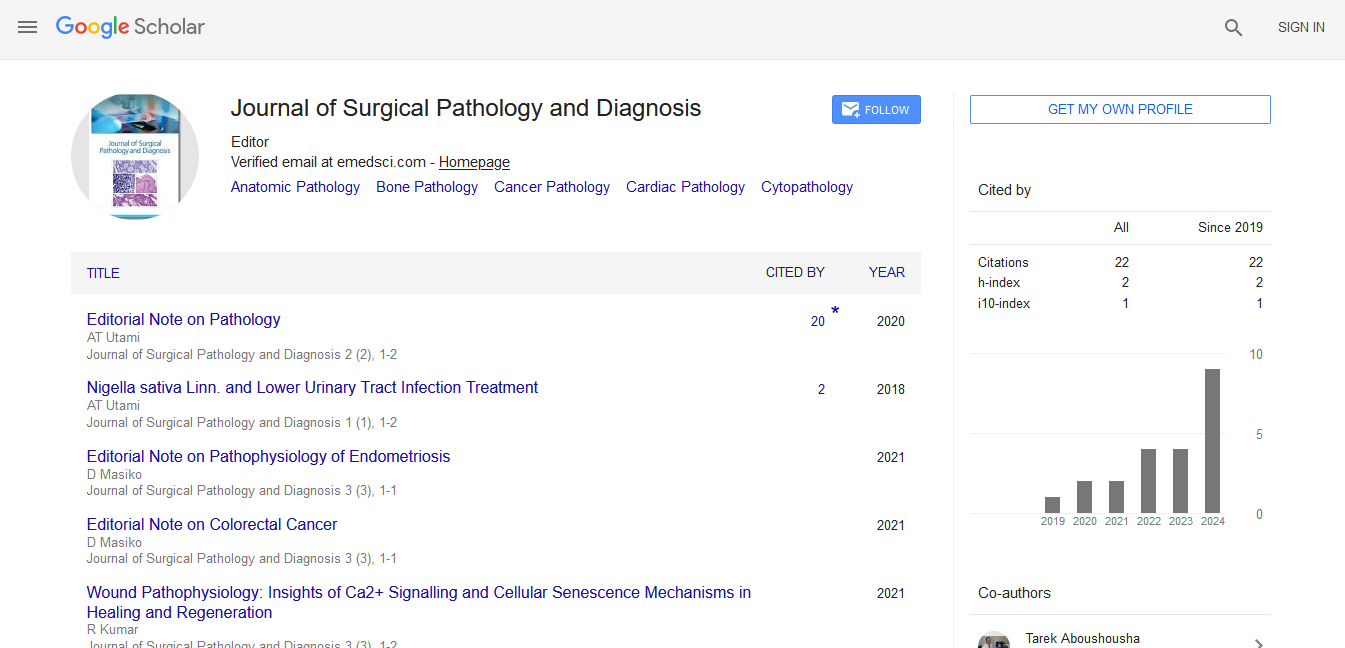
Journal of Surgical Pathology and Diagnosis received 15 citations as per Google Scholar report