Opinion - (2025) Volume 13, Issue 5
Received: 01-Sep-2025, Manuscript No. economics-26-186071;
Editor assigned: 03-Sep-2025, Pre QC No. P-186071;
Reviewed: 17-Sep-2025, QC No. Q-186071;
Revised: 22-Sep-2025, Manuscript No. R-186071;
Published:
29-Sep-2025
, DOI: 10.37421/2375-4389.2025.13.546
Citation: Svensson, Anna. ”Regional Trade Agreements: Benefits,
Challenges, and Future.” J Glob Econ 13 (2025):546.
Copyright: © 2025 Svensson A. This is an open-access article distributed under the terms of the Creative Commons Attribution License, which permits unrestricted use,
distribution and reproduction in any medium, provided the original author and source are credited.
The global economic landscape is increasingly shaped by the proliferation of regional trade agreements (RTAs). These agreements, designed to foster closer economic ties among member states, have become a cornerstone of international trade policy, influencing trade volumes, investment flows, and overall economic growth trajectories [1].
The intricate dynamics of economic integration through RTAs are multifaceted, offering significant opportunities for member nations to enhance their participation in global commerce. One critical aspect of RTAs is their influence on supply chain management and resilience. While they can streamline cross-border logistics and create efficiencies, the concentration of supply chains within regional blocs can also introduce vulnerabilities to external shocks, necessitating strategies for diversification and flexibility [2].
Furthermore, the success of these integration initiatives is heavily reliant on the strength of institutional frameworks. Effective governance, robust dispute resolution mechanisms, and coordinated policies among member states are paramount for ensuring that the benefits of economic integration are equitably shared and sustained [3].
The impact of RTAs on labor markets is another significant area of investigation. While economic integration can spur overall economic gains, these benefits may not be distributed evenly, leading to wage inequality and employment shifts that require targeted policy interventions to promote inclusive growth [4].
Foreign direct investment (FDI) is demonstrably influenced by the establishment of RTAs. These agreements tend to create a more predictable and attractive environment for investors by reducing uncertainty and improving market access, with specific provisions like investment protection clauses further stimulating FDI flows [5].
Beyond the reduction of tariffs, the effectiveness of RTAs is also determined by their ability to address non-tariff barriers (NTBs). Persistent NTBs can significantly impede intra-regional trade, underscoring the need for RTAs to include mechanisms for their reduction and elimination to unlock the full potential of economic integration [6].
The economic consequences for small and medium-sized enterprises (SMEs) are also a crucial consideration. RTAs can offer SMEs access to larger markets and economies of scale, but they also intensify competition, making supportive policies essential for enabling SMEs to capitalize on integration opportunities [7].
Environmental considerations are increasingly being integrated into the design of RTAs. These agreements can incorporate environmental provisions to promote green trade and sustainable development, although careful attention must be paid to prevent the emergence of 'pollution havens' through harmonized and enforced environmental standards [8].
The harmonization of intellectual property rights (IPRs) within RTAs is vital for fostering innovation and technology transfer. However, this process presents challenges for developing countries, highlighting the need for flexible and differentiated approaches to balance innovation incentives with development needs [9].
Finally, RTAs contribute to macroeconomic stability by promoting trade diversification, enhancing policy coordination, and fostering shared economic growth. Nevertheless, potential contagion effects during economic downturns necessitate robust policy frameworks to manage these risks effectively [10].
Regional trade agreements (RTAs) are pivotal instruments in shaping global trade dynamics and fostering economic growth. Their impact extends to deepening cooperation, augmenting trade volumes, and attracting foreign direct investment through the reduction of trade barriers and harmonization of regulations, though challenges like trade diversion necessitate careful design and implementation [1].
The resilience of supply chains is significantly influenced by economic integration facilitated by RTAs. While these agreements can optimize cross-border logistics, they also create dependencies that are susceptible to external disruptions, emphasizing the importance of diversified sourcing and flexible production networks within these trade blocs [2].
Institutional quality plays a crucial role in the efficacy of RTAs. The success of economic integration hinges on strong governance structures, effective dispute resolution mechanisms, and coordinated policies among member states, which are essential for building trust and ensuring equitable distribution of benefits [3].
Labor markets experience notable adjustments under RTAs. While overall economic gains may be realized, the distribution of these benefits can be uneven, leading to wage inequality and shifts in employment that require targeted policies to support affected workers and ensure inclusive growth [4].
The nexus between RTAs and foreign direct investment (FDI) is characterized by a positive correlation. RTAs contribute to a more predictable and attractive investment climate by reducing uncertainty and expanding market access, with provisions such as investment protection clauses further encouraging FDI [5].
Addressing non-tariff barriers (NTBs) is critical for maximizing the benefits of RTAs. Even with tariff reductions, persistent NTBs can impede intra-regional trade, underscoring the necessity for RTAs to incorporate robust mechanisms for their mitigation to fully realize the potential of economic integration [6].
Small and medium-sized enterprises (SMEs) face both opportunities and challenges within RTAs. While integration offers access to larger markets and economies of scale, it also increases competition, making supportive policies crucial for SMEs to leverage these integration prospects effectively [7].
The environmental dimensions of RTAs are increasingly important, with provisions aimed at promoting green trade and sustainable development. However, the potential for 'pollution havens' necessitates vigilant monitoring and enforcement of environmental standards to ensure sustainable economic integration [8].
Intellectual property rights (IPRs) harmonization within RTAs is key to driving innovation and technology transfer. This process requires a balanced approach that considers the needs of developing countries, advocating for flexible frameworks that accommodate diverse development levels [9].
Macroeconomic stability can be enhanced through RTAs by promoting trade diversification and policy coordination. However, potential contagion effects necessitate strong policy frameworks to manage risks and ensure sustained shared economic growth within integrated regions [10].
Regional trade agreements (RTAs) are instrumental in shaping global commerce, fostering economic growth, increasing trade volumes, and attracting foreign direct investment by reducing trade barriers and harmonizing regulations. However, RTAs also present challenges such as trade diversion and the need for robust institutional frameworks, dispute resolution, and policy coordination among member states. They influence supply chain resilience, labor markets by potentially causing wage inequality and employment shifts, and foreign direct investment flows. Addressing non-tariff barriers is crucial for realizing the full potential of integration. SMEs benefit from larger markets but face increased competition, requiring supportive policies. Environmental sustainability is a growing concern within RTAs, requiring harmonized standards. Intellectual property rights harmonization is important for innovation but needs flexible approaches for developing countries. RTAs can also contribute to macroeconomic stability, though risk management is essential. Careful design and implementation are vital for maximizing the benefits of economic integration while mitigating potential downsides.
None
None
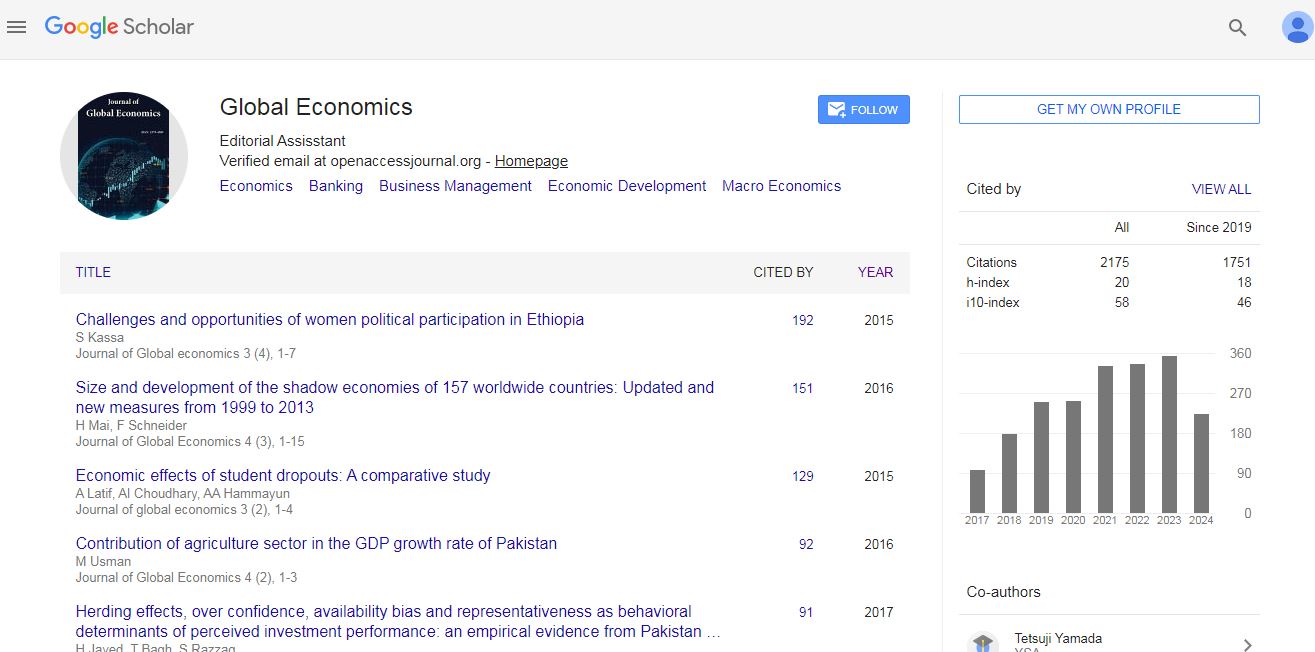
Journal of Global Economics received 2175 citations as per Google Scholar report