Perspective - (2025) Volume 10, Issue 2
Received: 02-Mar-2025, Manuscript No. PE-26-179250;
Editor assigned: 04-Mar-2025, Pre QC No. P-179250;
Reviewed: 18-Mar-2025, QC No. Q-179250;
Revised: 24-Mar-2025, Manuscript No. R-179250;
Published:
31-Mar-2025
, DOI: 10.37421/2472-1042.2025.10.275
Citation: Bernier, Lucas. ”Real-World Evidence: Driving Pharmacoeconomic Decisions.” Pharmacoeconomics 10 (2025):275.
Copyright: © 2025 Bernier L. This is an open-access article distributed under the terms of the Creative Commons Attribution License, which permits unrestricted use, distribution and reproduction in any medium, provided the original author and source are credited.
Real-world evidence (RWE) is increasingly recognized as a critical component in pharmacoeconomic decision-making, offering valuable insights into the effectiveness and cost-effectiveness of treatments within routine clinical practice. This evidence complements traditional randomized controlled trials (RCTs) by encompassing a more diverse patient population and capturing longer-term outcomes. The strategic application of RWE can significantly enhance health technology assessments, inform reimbursement policies, and guide the development of clinical guidelines, ultimately fostering more efficient and patient-centered healthcare systems. The integration of real-world data (RWD) into pharmacoeconomic evaluations necessitates rigorous methodological frameworks. Key challenges in this process include ensuring data quality, effectively mitigating potential biases, and employing robust analytical techniques to derive valid conclusions regarding treatment value. Addressing these methodological hurdles is paramount for the reliable utilization of RWE in shaping health policy and clinical practice. Real-world evidence plays a substantial role in improving the understanding of treatment pathways and resource utilization within specific disease areas. Through the analysis of RWD, pharmacoeconomic models can more accurately reflect the intricacies of patient journeys and the economic implications of various therapeutic strategies, leading to more precise cost-effectiveness estimates. Regulatory bodies worldwide are showing a growing acceptance of RWE for both drug approval and post-market surveillance. This increasing acceptance amplifies the utility of RWE in pharmacoeconomics, as it can provide evidence for the value proposition of new therapies in real-world settings, thereby influencing payer decisions and facilitating market access. The application of RWE in pharmacoeconomics is instrumental in appraising innovative therapies, particularly by demonstrating their value across diverse patient populations that may not be adequately represented in clinical trials. This aspect is especially pertinent for rare diseases or specific patient subgroups with unique genetic profiles. The inherent heterogeneity of RWD sources, which can include electronic health records, insurance claims data, and patient registries, presents considerable challenges for standardization and interoperability. Harmonizing these diverse data streams is an essential prerequisite for generating reliable and consistent RWE suitable for pharmacoeconomic analyses. Bias remains a critical concern when utilizing RWE. Methodologies such as propensity score matching and other advanced statistical techniques are frequently employed to control for confounding factors and minimize bias, thereby strengthening the validity of causal inferences drawn from RWE in economic evaluations. The dynamic nature of healthcare systems and evolving treatment landscapes demands continuous pharmacoeconomic evaluations. RWE offers a robust mechanism for ongoing monitoring of treatment value, enabling adaptive decision-making and timely adjustments to resource allocation strategies over time. Patient-reported outcomes (PROs), as captured within RWD, are of vital importance for comprehending the holistic impact of treatments on patient well-being and quality of life. These outcomes provide a crucial dimension for comprehensive pharmacoeconomic evaluations. The ongoing development of sophisticated analytical frameworks, incorporating advancements in machine learning and artificial intelligence, is significantly enhancing the capacity to extract meaningful insights from large-scale RWD for informing pharmacoeconomic decision-making.
Real-world evidence (RWE) is becoming indispensable in pharmacoeconomic decision-making by offering insights into treatment effectiveness and cost-effectiveness in routine clinical practice. It complements traditional randomized controlled trials (RCTs) by capturing a broader patient population and longer-term outcomes. The judicious application of RWE can refine health technology assessments, guide reimbursement decisions, and inform clinical guidelines, ultimately leading to more efficient and patient-centered healthcare [1].
The integration of real-world data (RWD) into pharmacoeconomic evaluations requires rigorous methodological approaches. Challenges include data quality, bias mitigation, and the need for robust analytical techniques to draw valid conclusions about treatment value. Addressing these challenges is crucial for the reliable application of RWE in informing policy and clinical practice [2].
Real-world evidence can significantly enhance the understanding of treatment pathways and resource utilization in specific disease areas. By analyzing RWD, pharmacoeconomic models can better reflect the complexities of patient journeys and the economic impact of different therapeutic strategies, leading to more precise cost-effectiveness estimates [3].
Regulatory bodies are increasingly accepting RWE for drug approval and post-market surveillance. This acceptance bolsters its utility in pharmacoeconomics, as RWE can provide evidence for the value proposition of new therapies in real-world settings, influencing payer decisions and market access [4].
The application of RWE in pharmacoeconomics aids in the appraisal of innovative therapies by demonstrating their value in diverse patient populations not typically represented in clinical trials. This is particularly relevant for rare diseases or subgroups with specific genetic profiles [5].
The heterogeneity of RWD sources, such as electronic health records, insurance claims, and patient registries, poses challenges for standardization and interoperability. Harmonizing these diverse data streams is essential for generating reliable and consistent RWE for pharmacoeconomic analyses [6].
Bias is a critical concern when using RWE. Propensity score matching and other statistical techniques are employed to control for confounding factors and reduce bias, thereby strengthening the causal inference drawn from RWE in economic evaluations [7].
The dynamic nature of healthcare systems and treatment landscapes necessitates ongoing pharmacoeconomic evaluations. RWE provides a mechanism for continuous monitoring of treatment value, allowing for adaptive decision-making and resource allocation adjustments over time [8].
Patient-reported outcomes (PROs) captured in RWD are vital for understanding the holistic impact of treatments on patient well-being and quality of life, providing a crucial dimension for pharmacoeconomic evaluations [9].
The development of sophisticated analytical frameworks, including machine learning and artificial intelligence, is enhancing the ability to extract meaningful insights from large-scale RWD for pharmacoeconomic decision-making [10].
Real-world evidence (RWE) is crucial for pharmacoeconomic decision-making, complementing traditional trials by providing insights into treatment effectiveness and cost-effectiveness in routine practice. Its judicious application enhances health technology assessments, reimbursement decisions, and clinical guidelines. Integrating real-world data (RWD) into pharmacoeconomic evaluations requires addressing challenges such as data quality, bias mitigation, and robust analytical techniques. RWE helps understand treatment pathways and resource utilization, leading to more precise cost-effectiveness estimates. Regulatory bodies are increasingly accepting RWE, supporting its role in demonstrating the value of new therapies to payers. RWE is particularly valuable for appraising innovative therapies in diverse or rare patient populations. However, the heterogeneity of RWD sources necessitates standardization for reliable analyses. Statistical methods like propensity score matching are used to mitigate bias. RWE enables continuous monitoring of treatment value for adaptive decision-making and policy adjustments. Patient-reported outcomes from RWD are essential for evaluating treatment impact on well-being. Advanced analytical frameworks, including AI and machine learning, are improving RWD analysis for pharmacoeconomic insights.
None
None
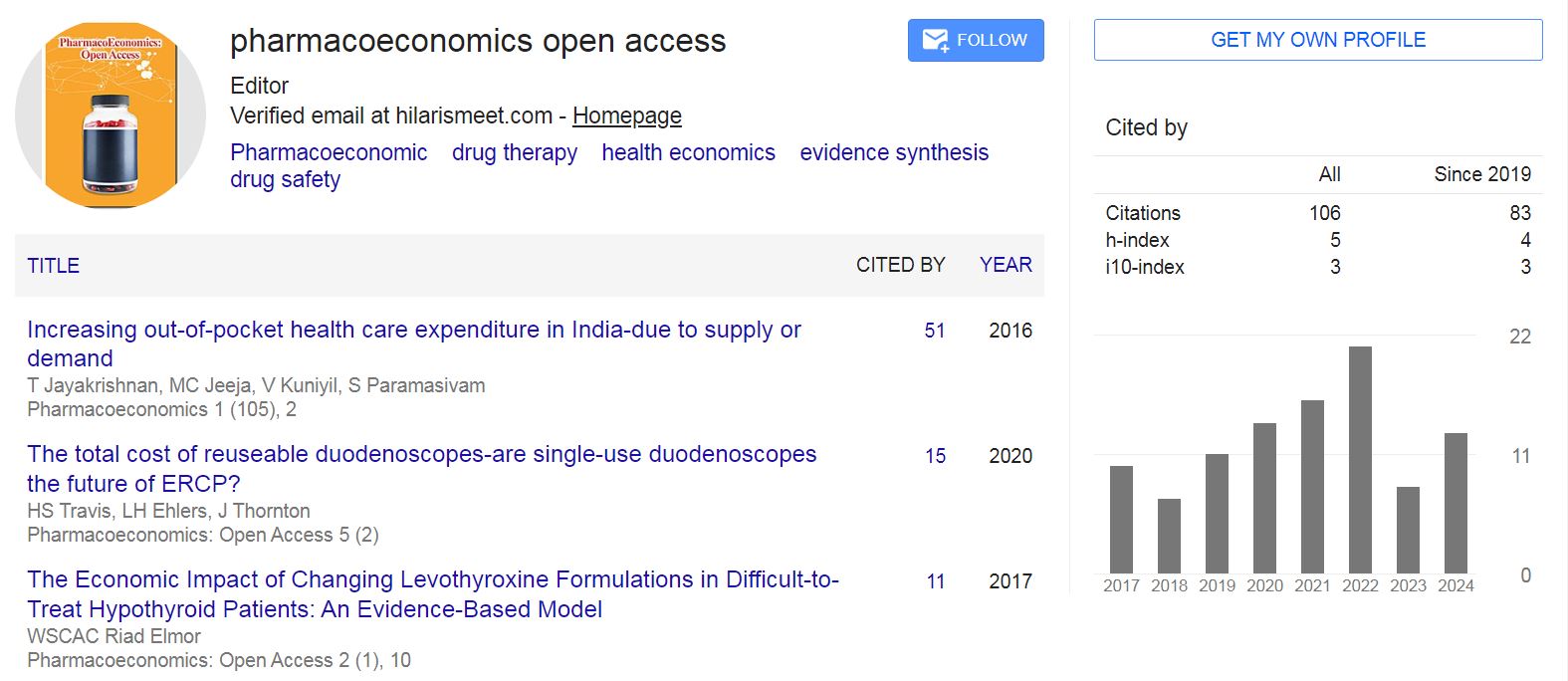
Pharmacoeconomics: Open Access received 106 citations as per Google Scholar report