Perspective Article - (2026) Volume 10, Issue 1
Received: 01-Feb-2026, Manuscript No. cmcr-25-186123;
Editor assigned: 03-Feb-2026, Pre QC No. P-186123;
Reviewed: 17-Feb-2026, QC No. Q-186123;
Revised: 23-Feb-2026, Manuscript No. R-186123;
Published:
02-Mar-2026
, DOI: 10.37421/2684-4915.2025.9.420
Citation: Mehta, Arjun. "Rare Gastrointestinal and Abdominal Pathologies: Case Studies."Clin Med Case Rep 10 (2026):420.
Copyright: © 2026 Mehta A. This is an open-access article distributed under the terms of the Creative Commons Attribution License, which permits unrestricted use, distribution
and reproduction in any medium, provided the original author and source are credited.
This compilation of case reports examines a spectrum of uncommon gastrointestinal and related abdominal pathologies that have presented unique diagnostic and therapeutic challenges. The first report details a rare instance of large bowel obstruction caused by a ruptured appendiceal mucocele that mimicked a pseudotumor, underscoring the critical role of detailed preoperative imaging and thorough surgical exploration for accurate diagnosis and management of such atypical presentations [1].
The subsequent case involves a giant duodenal diverticulum that led to obstructive jaundice, highlighting the rarity of this condition and the necessity for a high index of suspicion in patients exhibiting obstructive symptoms with suggestive imaging findings. Surgical resection, despite its inherent challenges, proved to be an effective treatment modality [2].
Another case study focuses on a large retroperitoneal liposarcoma initially misdiagnosed due to vague abdominal symptoms. This report emphasizes the indispensable role of advanced imaging techniques and the requirement for a multidisciplinary approach in managing these large and complex tumors [3].
Furthermore, a challenging case of spontaneous rupture of the common hepatic duct due to a benign biliary stricture is presented. This scenario highlights the critical importance of prompt surgical intervention and the essential use of intraoperative cholangiography to accurately delineate the extent of injury and guide definitive treatment strategies [4].
A patient presenting with recurrent small bowel obstruction secondary to external compression from a large mesenteric cyst is discussed. This case elucidates the diagnostic value of CT scans and the efficacy of surgical excision in resolving such obstructions and preventing their recurrence [5].
The authors also report a case of a jejunal duplication cyst that presented as an acute abdomen. This instance emphasizes the importance of considering rare congenital anomalies in the differential diagnosis of acute abdominal pain and showcases the advantages of laparoscopic management for these cysts [6].
Another rare presentation involves sigmoid volvulus secondary to chronic constipation. This case underscores the necessity for a comprehensive clinical evaluation and prompt surgical decompression for effective management, particularly in elderly patients susceptible to such complications [7].
A massive adrenal hemorrhage complicating anticoagulation therapy is detailed, stressing the need for vigilant monitoring of patients on anticoagulants and the prompt recognition of this potentially life-threatening complication [8].
This collection also includes a case study of a primary jejunal adenocarcinoma presenting with intermittent bowel obstruction. The report highlights the diagnostic difficulties associated with early-stage small bowel cancers and the importance of maintaining a high index of suspicion for persistent, unexplained abdominal symptoms [9].
Finally, a rare case of an appendiceal abscess extending into the psoas muscle, manifesting as a painful hip mass, is described. This case emphasizes the need for comprehensive imaging to identify unusual extensions of common intra-abdominal pathologies and the requirement for a tailored surgical approach [10].
The first case details a large bowel obstruction attributed to a ruptured appendiceal mucocele that formed a pseudotumor. The report stresses the importance of detailed preoperative imaging and thorough surgical exploration for the accurate diagnosis and treatment of this uncommon presentation, illustrating the complexities that can arise from seemingly straightforward appendiceal pathology [1].
Following this, a giant duodenal diverticulum causing obstructive jaundice is reported. This case highlights the rarity of such diverticula and the critical need for a high index of suspicion when encountering patients with obstructive symptoms and imaging suggestive of duodenal lesions, with surgical resection proving effective despite challenges [2].
Another case focuses on a large retroperitoneal liposarcoma that initially presented with vague abdominal symptoms and was misdiagnosed. The emphasis here is on the indispensable role of advanced imaging techniques and the necessity of a multidisciplinary approach for the effective management of these large and intricate tumors [3].
In a different surgical context, a challenging case involving spontaneous rupture of the common hepatic duct due to a benign biliary stricture is documented. This report underscores the paramount importance of prompt surgical intervention and the utility of intraoperative cholangiography in precisely defining the extent of injury to guide definitive management [4].
A patient experiencing recurrent small bowel obstruction caused by external compression from a large mesenteric cyst is presented. This case effectively illustrates the diagnostic capabilities of CT scans and the successful outcomes achievable through surgical excision in resolving such obstructions and preventing their recurrence [5].
The report on a jejunal duplication cyst presenting as an acute abdomen emphasizes the significance of considering rare congenital anomalies in the differential diagnosis of acute abdominal pain. It also showcases the benefits and feasibility of laparoscopic management for these specific types of cysts [6].
An unusual case of sigmoid volvulus secondary to chronic constipation is described. This report highlights the necessity of conducting a thorough clinical evaluation and implementing prompt surgical decompression, especially in elderly patients who are more vulnerable to these complications [7].
A case of massive adrenal hemorrhage occurring as a complication of anticoagulation therapy is presented. This report brings to light the critical need for careful monitoring of patients undergoing anticoagulant treatment and the importance of rapid recognition of adrenal hemorrhage as a potentially fatal complication [8].
The study of a primary jejunal adenocarcinoma that manifested as intermittent bowel obstruction underscores the diagnostic challenges associated with early-stage small bowel cancers. It also highlights the importance of maintaining a high index of suspicion when patients present with persistent, unexplained abdominal symptoms [9].
Lastly, a rare case of an appendiceal abscess extending into the psoas muscle, which presented as a painful hip mass, is detailed. This case emphasizes the crucial role of comprehensive imaging in identifying unusual extensions of common intra-abdominal pathologies and the requirement for a precisely tailored surgical approach [10].
This collection of case reports addresses a variety of rare gastrointestinal and abdominal conditions. It includes scenarios such as large bowel obstruction from a ruptured appendiceal mucocele, obstructive jaundice due to a giant duodenal diverticulum, and retroperitoneal liposarcoma. The reports also cover spontaneous rupture of the common hepatic duct, recurrent small bowel obstruction caused by mesenteric cysts, jejunal duplication cysts, sigmoid volvulus secondary to constipation, massive adrenal hemorrhage, primary jejunal adenocarcinoma, and appendiceal abscess extending into the psoas muscle. A recurring theme across these cases is the critical importance of advanced imaging techniques, high clinical suspicion, timely diagnosis, and tailored surgical interventions for effective patient management. The diversity of presentations underscores the challenges in diagnosing and treating uncommon abdominal pathologies, often requiring a multidisciplinary approach to achieve optimal outcomes.
None
None
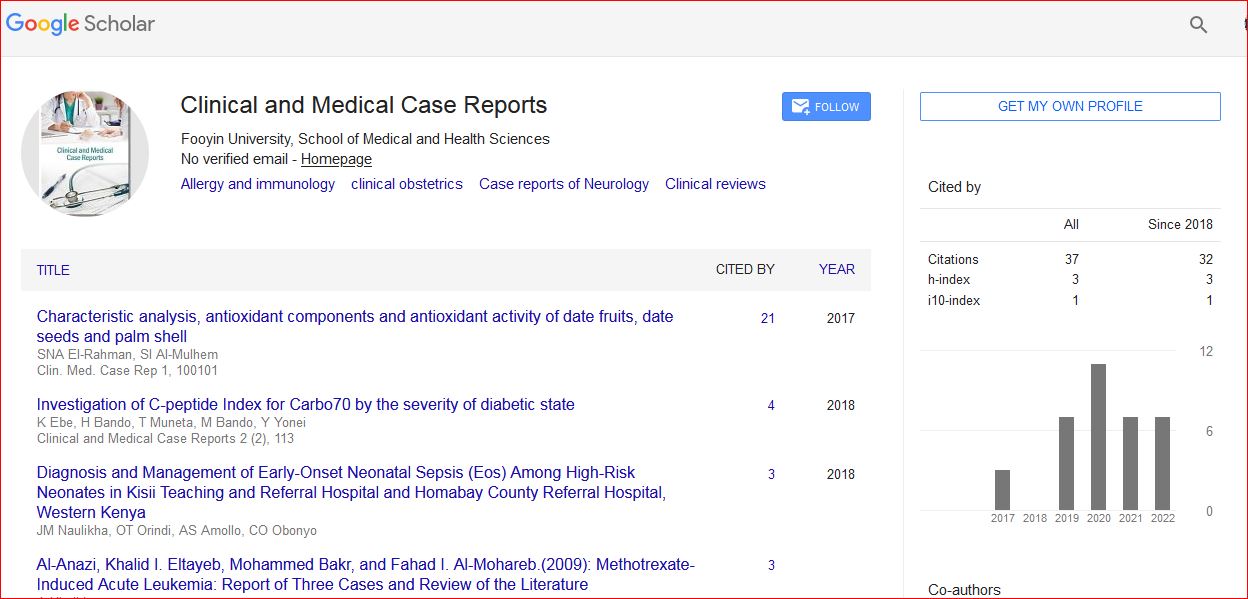
Clinical and Medical Case Reports received 53 citations as per Google Scholar report