Perspective - (2025) Volume 9, Issue 3
Received: 01-Jun-2025
Editor assigned: 03-Jun-2025
Reviewed: 17-Jun-2025
Revised: 23-Jun-2025
Published:
30-Jun-2025
, DOI: 10.37421/2684-4915.2025.9. 378
Citation: Lambert, Catherine. ”Rare Diseases: Tackling Hurdles, Empowering Patients..” Clin Med Case Rep 09 (2025):378.
Copyright: © 2025 Lambert C. This is an open-access article distributed under the terms of the Creative Commons Attribution License, which permits unrestricted use, distribution and reproduction in any medium, provided the original author and source are credited.
This systematic review provides a comprehensive overview of the global epidemiology of rare diseases, highlighting the variability in prevalence and incidence data across different regions and disease groups. It emphasizes the significant public health burden of rare diseases and the challenges in obtaining accurate epidemiological figures, crucial for policy making and resource allocation [1].
This review meticulously examines the "diagnostic odyssey" faced by individuals with rare diseases, quantifying the significant delays in diagnosis and identifying key contributing factors such as lack of physician awareness, misdiagnosis, and limited access to specialized testing. It underscores the urgent need for improved diagnostic pathways to reduce patient suffering and enable earlier interventions [2].
This systematic review evaluates the landscape of patient-reported outcome (PRO) instruments used in rare diseases, assessing their psychometric properties. It reveals a critical need for more rigorously validated and disease-specific PROs to accurately capture the impact of rare conditions on patients' quality of life and treatment efficacy, thereby improving patient-centered care [3].
This article delves into the complex landscape of therapeutic development for rare diseases, outlining significant challenges such as small patient populations, diagnostic delays, and economic viability. It also highlights emerging opportunities, including advanced genomic technologies and international collaborations, which are accelerating the discovery and approval of orphan drugs [4].
This review explores the transformative impact of genomic technologies, such as whole exome and whole genome sequencing, on the diagnosis of rare diseases. It discusses how these approaches have significantly improved diagnostic yields, reduced the diagnostic odyssey, and provided new insights into disease mechanisms, despite remaining challenges in data interpretation and accessibility [5].
This article underscores the indispensable role of patient advocacy groups in advancing rare disease research and drug development. These groups often drive research initiatives, fund studies, facilitate patient recruitment for clinical trials, and advocate for policy changes, effectively filling critical gaps in areas where traditional funding mechanisms may fall short [6].
This paper explores the burgeoning applications of Artificial Intelligence (AI) in the rare disease field, from accelerating diagnosis and identifying novel therapeutic targets to personalizing treatment strategies. It highlights AI's potential to overcome many current challenges by analyzing vast datasets, while also acknowledging the need for careful validation and ethical considerations [7].
This article discusses the evolving landscape of newborn screening for rare diseases, particularly with the integration of advanced genomic technologies. It examines the opportunities to expand screening panels, enable earlier diagnosis and intervention, and improve long-term outcomes for affected infants, while also addressing ethical and practical considerations for implementation [8].
This systematic review investigates the critical issue of equitable access to care for rare disease patients, revealing significant disparities based on geographic location, socioeconomic status, and other factors. It highlights barriers to diagnosis, treatment, and specialized services, urging policy makers to implement strategies that ensure all individuals with rare diseases receive timely and appropriate care [9].
This systematic review synthesizes qualitative research to provide deep insights into the lived experiences of patients with rare diseases and their caregivers. It illuminates the profound psychosocial, emotional, and financial burdens, as well as the resilience and coping strategies, emphasizing the need for holistic support systems and patient-centered approaches to care [10].
The field of rare diseases is marked by multifaceted challenges spanning epidemiology, diagnosis, treatment, and patient support. Global epidemiological data on rare diseases often lack consistency, making effective policy-making and resource allocation difficult [1]. Patients frequently face a prolonged diagnostic journey, characterized by delays and misdiagnoses due to insufficient physician awareness and limited access to specialized tests [2]. Addressing this necessitates improved diagnostic pathways to mitigate patient suffering and facilitate earlier interventions [2].
Therapeutic development for rare diseases is inherently complex, battling small patient populations and economic constraints [4]. Nevertheless, significant opportunities are emerging through advanced genomic technologies and international collaborations, accelerating the discovery of orphan drugs [4]. Genomic sequencing and expanding newborn screening programs are transforming diagnostic yields and offering deeper insights into disease mechanisms [5, 8]. The integration of advanced genomic technologies in newborn screening promises earlier diagnosis and intervention, improving long-term outcomes for affected infants, though it also brings ethical and practical considerations for implementation [8]. These transformative technologies have markedly improved diagnostic yields, effectively shortening the diagnostic odyssey for many patients and offering unprecedented insights into disease mechanisms [5].
Furthermore, understanding the patient and caregiver experience is vital, as they endure substantial psychosocial, emotional, and financial burdens, highlighting the need for holistic, patient-centered care [10]. Patient-reported outcome (PRO) instruments are crucial for measuring quality of life and treatment efficacy, yet a critical need exists for more rigorously validated and disease-specific PROs to accurately capture the impact of rare conditions [3]. Developing and utilizing such instruments ensures that the impact of rare conditions is truly understood, leading to better informed and personalized patient care [3].
Patient advocacy groups play a critical role, often spearheading research, funding, and policy changes where traditional mechanisms fall short, demonstrating their powerful impact on rare disease research and drug development [6]. However, equitable access to diagnosis, treatment, and specialized services remains a persistent issue, with significant disparities often determined by geographic location and socioeconomic status [9]. These barriers hinder timely diagnosis and access to effective treatment, demanding robust policy interventions that guarantee all individuals with rare diseases receive appropriate and timely care, regardless of their circumstances [9].
Looking toward the future, Artificial Intelligence (AI) is rapidly emerging as a transformative technology within the rare disease domain [7]. AI applications span from significantly accelerating diagnostic processes to identifying novel therapeutic targets and enabling the personalization of treatment strategies [7]. The immense potential of AI lies in its capacity to analyze vast, complex datasets, which can help overcome many existing challenges in research and clinical practice. However, the successful and ethical deployment of AI necessitates careful validation of its algorithms and a thorough consideration of the ethical implications involved [7]. This proactive approach will ensure that AI serves as a powerful, responsible tool in addressing the unique complexities of rare diseases.
The field of rare diseases is marked by multifaceted challenges spanning epidemiology, diagnosis, treatment, and patient support. Global epidemiological data on rare diseases often lack consistency, making effective policy-making and resource allocation difficult. Patients frequently face a prolonged diagnostic journey, characterized by delays and misdiagnoses due to insufficient physician awareness and limited access to specialized tests. Addressing this necessitates improved diagnostic pathways to mitigate patient suffering and facilitate earlier interventions. Therapeutic development for rare diseases is inherently complex, battling small patient populations and economic constraints. Nevertheless, significant opportunities are emerging through advanced genomic technologies and international collaborations, accelerating the discovery of orphan drugs. Genomic sequencing and expanding newborn screening programs are transforming diagnostic yields and offering deeper insights into disease mechanisms. Furthermore, understanding the patient and caregiver experience is vital, as they endure substantial psychosocial, emotional, and financial burdens, highlighting the need for holistic, patient-centered care. Patient advocacy groups play a critical role, often spearheading research, funding, and policy changes. However, equitable access to diagnosis, treatment, and specialized services remains a persistent issue, demanding policy interventions to address disparities. Artificial Intelligence presents a promising future, with its potential to accelerate diagnosis, identify novel therapeutic targets, and personalize treatment strategies by analyzing vast datasets, though ethical considerations are key for its implementation.
None
None
Indexed at, Google Scholar, Crossref
Indexed at, Google Scholar, Crossref
Indexed at, Google Scholar, Crossref
Indexed at, Google Scholar, Crossref
Indexed at, Google Scholar, Crossref
Indexed at, Google Scholar, Crossref
Indexed at, Google Scholar, Crossref
Indexed at, Google Scholar, Crossref
Indexed at, Google Scholar, Crossref
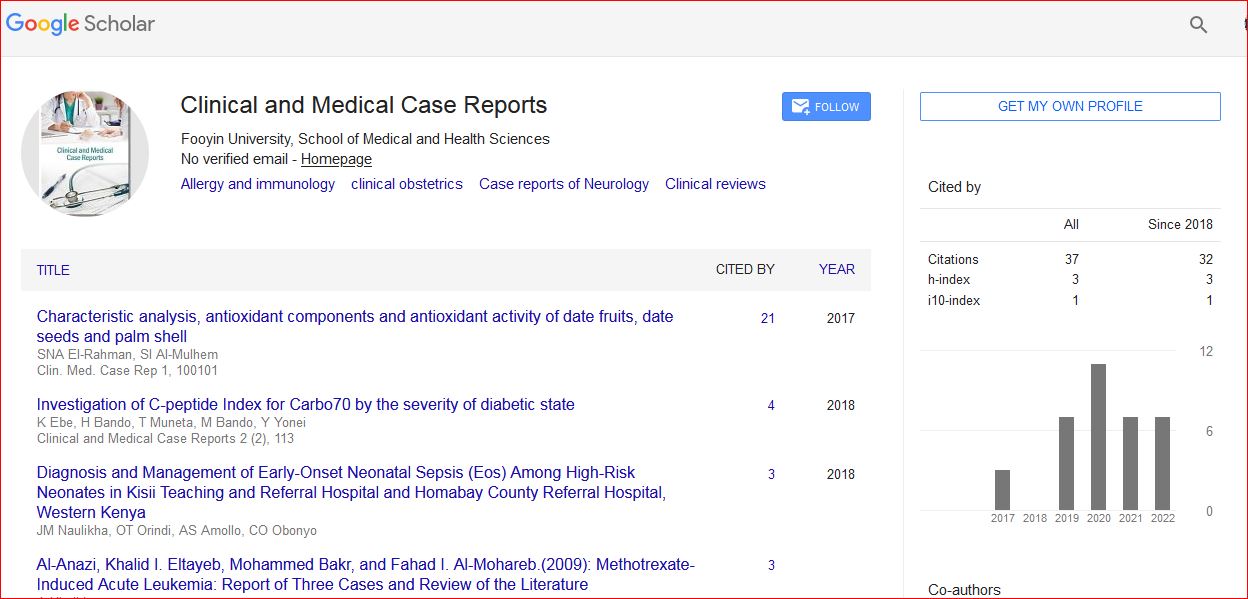
Clinical and Medical Case Reports received 53 citations as per Google Scholar report