Opinion - (2025) Volume 9, Issue 3
Received: 01-Jun-2025, Manuscript No. cmcr-25-178071;
Editor assigned: 03-Jun-2025, Pre QC No. P-178071;
Reviewed: 17-Jun-2025, QC No. Q-178071;
Revised: 23-Jun-2025, Manuscript No. R-178071;
Published:
30-Jun-2025
, DOI: 10.37421/2684-4915.2025.9.377
Citation: Karimi, Mehdi. ”Rare Diseases: Advancements in Diagnosis, Treatment, and Care.” Clin Med Case Rep 09 (2025):377.
Copyright: © 2025 Karimi M. This is an open-access article distributed under the terms of the Creative Commons Attribution License, which permits unrestricted use, distribution and reproduction in any medium, provided the original author and source are credited.
Next-Generation Sequencing (NGS) has emerged as a revolutionary tool in diagnosing rare diseases, moving significantly beyond older methods. This technology, with its diverse platforms and applications, improves diagnostic yield and enables earlier interventions, fundamentally transforming patient care and shortening diagnostic odysseys[1].
Examining the landscape of orphan drug research reveals persistent challenges, such as small patient populations for clinical trials and high development costs. Despite these hurdles, new opportunities are arising from technological advancements and policy incentives designed to accelerate drug discovery and approval for rare conditions[2].
The patient journey in rare diseases is often complex and lengthy, starting with delayed diagnosis and extending through managing the condition and treatment options. A holistic approach is crucial, addressing medical needs alongside psychosocial and quality-of-life aspects, recognizing the unique challenges faced by these individuals[3].
Artificial Intelligence (AI) and Machine Learning (ML) are increasingly impacting the rare disease field. Their applications range from accelerating diagnostic processes by identifying subtle clinical data patterns to facilitating drug repurposing, opening new avenues for therapeutic development and personalized medicine[4].
Gene therapy holds considerable promise for rare diseases, with approved therapies demonstrating successes despite ongoing challenges in vector development and delivery. The evolving regulatory landscape further underscores its potential as a transformative treatment for many previously untreatable conditions[5].
Expanding newborn screening programs for rare diseases presents opportunities in the genomic era to improve early diagnosis and intervention. However, challenges include implementing new screening technologies and managing complex genetic findings, crucial for preventing severe outcomes and enhancing long-term health for infants[6].
A comparative study of national and international policies for rare diseases reveals varying approaches to diagnosis, treatment access, and research funding. Harmonized global strategies are essential to effectively address the unique challenges faced by rare disease communities worldwide[7].
Ethical considerations are paramount in rare disease research, covering issues like informed consent in vulnerable populations, data sharing, and equitable access to experimental therapies. Tailored ethical frameworks are necessary to balance research progress with individual patient rights within this unique context[8].
The diagnostic odyssey for rare disease patients is a significant burden, characterized by considerable delays. A systematic review and meta-analysis highlights common contributing factors and advocates for improved awareness, diagnostic tools, and care coordination to shorten this critical period for patients and healthcare systems[9].
Rare diseases impose a substantial economic burden, encompassing direct healthcare and medication costs, alongside indirect costs like productivity loss and caregiver burden. Quantifying this financial impact underscores the need for more efficient resource allocation and supportive policies for individuals, families, and healthcare systems[10].
The diagnosis of rare diseases has undergone a significant revolution. Next-Generation Sequencing (NGS) has been pivotal in this transformation, offering a sophisticated approach that moves far beyond traditional diagnostic methods. This advanced technology significantly improves the diagnostic yield and opens pathways for earlier intervention, effectively reshaping patient care and considerably shortening the often-protracted diagnostic odysseys experienced by individuals with rare conditions [C001].
Alongside the advent of new diagnostic tools, the expansion of newborn screening programs for rare diseases presents both considerable challenges and important opportunities. Implementing novel screening technologies and adeptly managing complex genetic findings are key hurdles to overcome. However, the genomic era offers immense potential to enhance early diagnosis and prompt intervention, which is critical for preventing severe health outcomes and improving the long-term health trajectory for affected infants [C006]. The burden of diagnostic delays is quantitatively assessed by research highlighting the significant impact of the 'diagnostic odyssey' on patients and healthcare systems. Identifying common contributing factors helps advocate for improved awareness, better diagnostic tools, and more coordinated care to crucially shorten this challenging period [C009].
Progress in therapeutic development for rare diseases is gaining momentum, despite persistent challenges in orphan drug research, such as the difficulty in recruiting small patient populations for clinical trials and the high development costs involved. Yet, new opportunities are emerging, spurred by technological advancements and strategic policy incentives designed to accelerate drug discovery and approval processes [C002]. A notable example is gene therapy, which shows immense promise. While facing challenges in vector development and delivery, its approved successes and an evolving regulatory landscape underscore its potential as a transformative treatment modality for many conditions once considered untreatable [C005]. Further contributing to this advancement, Artificial Intelligence (AI) and Machine Learning (ML) are making a profound impact in the rare disease field. They accelerate diagnostic processes by identifying subtle patterns in vast clinical data and facilitate drug repurposing efforts, thereby opening promising new avenues for therapeutic development and personalized medicine [C004].
Central to these efforts is a deep understanding of the patient journey, which for rare diseases, is often fraught with delays, from initial diagnosis through managing the condition and navigating various treatment options. The emphasis must be on a holistic approach to care. This means addressing not only direct medical needs but also vital psychosocial aspects and enhancing quality of life, acknowledging the truly unique and profound challenges faced by individuals living with rare conditions [C003].
Broader societal and ethical dimensions are equally critical. Comparative studies reveal varied national and international policies regarding rare diseases, highlighting the need for harmonized global strategies to effectively address challenges in diagnosis, treatment access, and research funding worldwide [C007]. Ethical considerations in rare disease research are complex, involving informed consent for vulnerable populations, data sharing protocols, equitable access to experimental therapies, and balancing research progress with individual patient rights. Tailored ethical frameworks are therefore essential to respect the unique context of rare diseases [C008]. This complexity is compounded by the substantial economic burden associated with rare diseases. This burden includes direct healthcare and medication costs, as well as significant indirect costs like productivity loss and caregiver strain. Quantifying this immense financial impact is crucial for advocating for more efficient resource allocation and supportive, patient-centric policies across healthcare systems [C010].
Research into rare diseases covers a broad spectrum, from groundbreaking diagnostic tools to the complex realities of patient care and broader societal impacts. Next-Generation Sequencing (NGS) is fundamentally changing diagnosis, offering improved yield and earlier intervention, which helps in reducing diagnostic odysseys. However, the patient journey remains challenging, often characterized by delayed diagnoses and a need for holistic care that extends beyond medical treatment to include psychosocial and quality-of-life aspects. Developing treatments, particularly orphan drugs, faces hurdles like small patient populations and high costs, yet technological advancements and policy incentives are fostering new opportunities. Gene therapy shows significant promise as a transformative treatment, even with ongoing challenges in delivery and regulation. Similarly, Artificial Intelligence (AI) and Machine Learning (ML) are accelerating diagnostics and drug repurposing, opening new avenues for personalized medicine. Early detection through expanded newborn screening programs offers hope for preventing severe outcomes, though implementation and managing complex genetic findings require careful consideration. On a global scale, policies for rare diseases vary, underscoring the necessity for harmonized international strategies. Ethical considerations are paramount in research, demanding tailored frameworks for informed consent, data sharing, and equitable access to experimental therapies. The substantial economic burden of rare diseases, encompassing both direct and indirect costs, further emphasizes the need for efficient resource allocation and supportive policies to mitigate the financial impact on individuals, families, and healthcare systems.
None
None
Indexed at, Google Scholar, Crossref
Indexed at, Google Scholar, Crossref
Indexed at, Google Scholar, Crossref
Indexed at, Google Scholar, Crossref
Indexed at, Google Scholar, Crossref
Indexed at, Google Scholar, Crossref
Indexed at, Google Scholar, Crossref
Indexed at, Google Scholar, Crossref
Indexed at, Google Scholar, Crossref
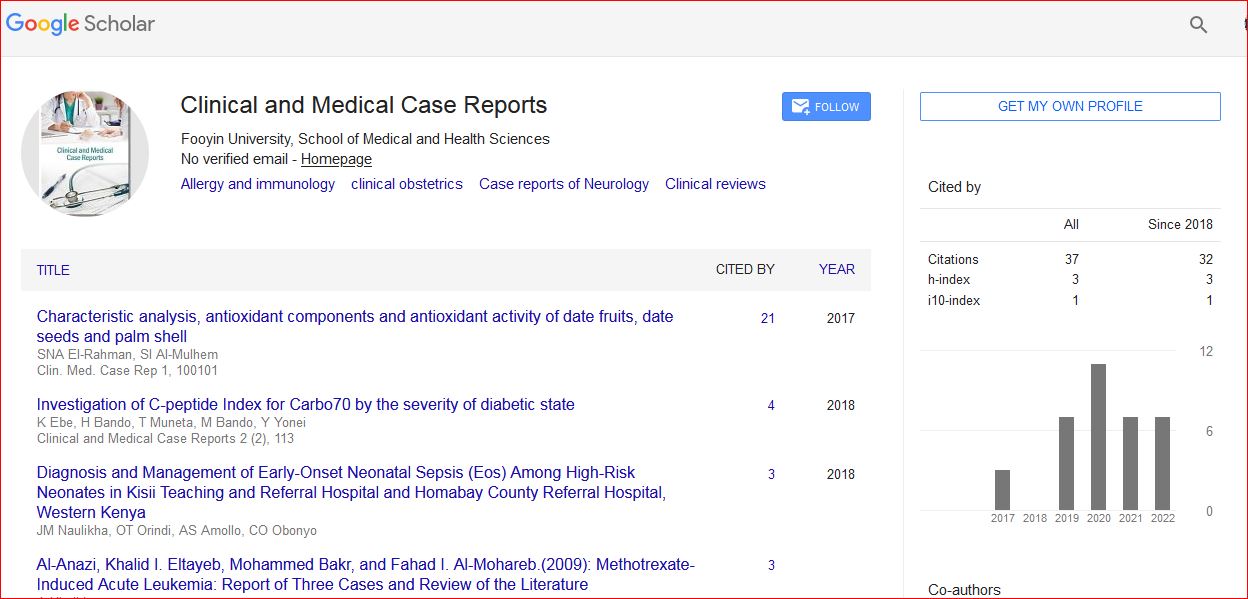
Clinical and Medical Case Reports received 53 citations as per Google Scholar report