Perspective - (2025) Volume 10, Issue 5
Received: 01-Sep-2025, Manuscript No. PE-26-179307;
Editor assigned: 03-Sep-2025, Pre QC No. P-179307;
Reviewed: 17-Sep-2025, QC No. Q-179307;
Revised: 22-Sep-2025, Manuscript No. R-179307;
Published:
29-Sep-2025
, DOI: 10.37421/2472-1042.2025.10.306
Citation: Murray, Helen. ”Rare Disease Therapies: Bridging Economic and Access Gaps.” Pharmacoeconomics 10 (2025):306.
Copyright: © 2025 Murray H. This is an open-access article distributed under the terms of the Creative Commons Attribution License, which permits unrestricted use, distribution and reproduction in any medium, provided the original author and source are credited.
The economic evaluation of rare disease therapies presents a significant hurdle, particularly in resource-limited settings where traditional cost-effectiveness thresholds often prove prohibitive. These therapies are characterized by high per-patient costs and very small patient populations, making it challenging to fit them within existing economic frameworks. This necessitates the exploration of innovative funding mechanisms and pricing models to ensure access for those most in need. The imperative to reconsider these evaluations is underscored by the broader societal benefits these treatments can provide, extending beyond direct healthcare savings and impacting overall well-being and equity within healthcare systems. [1] Existing health technology assessment (HTA) frameworks frequently struggle to accommodate the unique attributes of rare disease drugs, which often lack extensive real-world data at the time of assessment. This inadequacy calls for adaptable and context-specific HTA methodologies that can better capture the nuances of these treatments. Incorporating broader societal values, such as equity and the impact on patient-reported outcomes, is crucial for a more comprehensive evaluation process that moves beyond purely economic considerations. The challenges of budget impact in resource-constrained environments further highlight the need for flexible HTA approaches and the strategic use of real-world evidence. [2] Patient access schemes represent a vital area of exploration for ensuring that expensive rare disease treatments can reach patients in low- and middle-income countries. Various models, including annuity payments, conditional reimbursement based on treatment outcomes, and risk-sharing agreements between manufacturers and healthcare payers, offer potential solutions. The successful implementation of these schemes hinges on a foundation of transparency and robust data sharing between all stakeholders. Building trust through these practices is paramount for achieving sustainable access to life-changing therapies for rare disease patients. [3] The ethical considerations surrounding the allocation of scarce resources for rare disease therapies demand careful and principled deliberation. A balanced approach is required, one that rigorously considers the individual patient's needs while simultaneously upholding the broader societal imperative of ensuring equitable access for all who could benefit. Developing a comprehensive framework for ethical decision-making, one that actively incorporates input from diverse stakeholders and thoughtfully addresses long-term sustainability, is essential for navigating these complex dilemmas. [4] The application of multi-criteria decision analysis (MCDA) offers a promising avenue for evaluating the true value of rare disease therapies, especially within resource-constrained health systems. MCDA provides a structured method for incorporating a wider array of values beyond traditional clinical and economic factors, encompassing crucial social, ethical, and equity considerations. This holistic approach has the potential to foster more inclusive and comprehensive decision-making processes, leading to better resource allocation for these critical treatments. [5] Innovative financing mechanisms are urgently needed to address the funding gap for orphan drugs in developing countries. Such mechanisms could include global pooled procurement initiatives, leveraging innovative financing from philanthropic organizations, and the development of novel insurance schemes tailored to the specific challenges of rare diseases. International collaboration is paramount in this endeavor, as it can facilitate the pooling of resources and expertise necessary to overcome the significant financial barriers to access. [6] A systematic review of the cost-effectiveness of orphan drugs across various income settings reveals common challenges that impede their accessibility. These include high levels of uncertainty in value assessment and a limited availability of appropriate comparator treatments for rare diseases. The review advocates for the adoption of more pragmatic trial designs and adaptive reimbursement strategies that are sensitive to budget constraints and the varying levels of evidence that may be available for these therapies. [7] Building robust healthcare system capacity is fundamental for the effective implementation of rare disease therapies in resource-limited settings. This involves not only the provision of specialized diagnostic services and the training of healthcare professionals but also the establishment of resilient supply chain management systems. These foundational elements are critical for ensuring the safe, effective delivery, and ongoing monitoring of complex rare disease treatments. [8] The concept of 'value' for rare disease therapies requires a redefinition that extends beyond conventional cost-effectiveness metrics. It is essential to incorporate measures reflecting societal impact, the promotion of health equity, and the alleviation of burden on caregivers. Adopting a broader definition of value is crucial for justifying the significant investments required for these treatments, particularly in contexts where financial resources are inherently scarce. [9] Implementing personalized medicine approaches for rare diseases in low-resource settings presents both considerable challenges and significant opportunities. While advancements in genomics and diagnostics hold immense promise, they necessitate substantial investment in essential infrastructure and specialized expertise. Strategies such as phased implementation and fostering international collaboration are vital for making these cutting-edge therapies more accessible to underserved populations. [10]
The economic challenges associated with implementing rare disease therapies in resource-limited settings are substantial, largely due to the high per-patient costs and limited patient populations that often fall outside traditional cost-effectiveness thresholds. This necessitates a shift towards innovative funding mechanisms, value-based pricing models, and collaborative efforts to ensure equitable access. Considering the broader societal benefits, beyond mere healthcare cost savings, is paramount for justifying these investments and promoting health equity. [1] Existing health technology assessment (HTA) frameworks often fall short in adequately addressing the unique characteristics of rare disease drugs. This gap highlights the need for adaptable, context-specific HTA methodologies that can incorporate broader societal values, including equity and patient-reported outcomes. The authors also emphasize the importance of collecting real-world evidence and implementing phased reimbursement strategies to manage budget impacts effectively in resource-constrained environments. [2] The feasibility of patient access schemes for expensive rare disease treatments in low- and middle-income countries is a critical area of research. Various models, such as annuity payments, outcome-based conditional reimbursement, and risk-sharing agreements, are being explored. The success of these schemes relies heavily on transparency and data sharing between manufacturers and healthcare payers to build trust and ensure sustainable patient access. [3] Ethical considerations are central to the allocation of scarce resources for rare disease therapies, demanding a principled approach that balances individual patient needs with the societal goal of equitable access. A proposed framework for ethical decision-making incorporates stakeholder input and considers the long-term sustainability of treatment provision. This approach aims to guide difficult choices in resource allocation. [4] Multi-criteria decision analysis (MCDA) offers a valuable tool for assessing the value of rare disease therapies in resource-constrained health systems. MCDA allows for the integration of a wider spectrum of values, including social, ethical, and equity considerations, alongside clinical and economic factors. This comprehensive approach can lead to more holistic and inclusive decision-making processes for these complex treatments. [5] Innovative financing models are essential for enhancing the accessibility of orphan drugs in developing countries. This includes exploring avenues such as global pooled procurement, innovative financing from philanthropic organizations, and the development of novel insurance schemes. International collaboration is identified as a key factor in addressing the funding gap and facilitating broader access. [6] A systematic review examining the cost-effectiveness of orphan drugs across different income settings has identified recurring challenges, such as high uncertainty in value assessment and a lack of comparable treatments. The review advocates for more pragmatic trial designs and adaptive reimbursement strategies that acknowledge budget limitations and varying evidence bases. [7] Building healthcare system capacity is crucial for the effective delivery of rare disease therapies in resource-limited environments. This requires investment in specialized diagnostic services, training for healthcare professionals, and robust supply chain management systems. These infrastructural and human resource components are vital for ensuring the successful implementation and ongoing monitoring of these advanced treatments. [8] The concept of 'value' for rare disease therapies must extend beyond traditional cost-effectiveness metrics to encompass societal impact, equity, and the reduction of caregiver burden. A broader definition of value is essential for justifying investments, especially in settings where resources are scarce. This redefinition encourages a more comprehensive understanding of the benefits these therapies provide. [9] Personalized medicine for rare diseases in low-resource settings faces challenges related to infrastructure and expertise required for genomic and diagnostic advancements. However, these challenges are balanced by opportunities for improved patient outcomes. Phased implementation and international collaboration are proposed as strategies to enhance accessibility and leverage these advancements effectively. [10]
Rare disease therapies face significant economic and accessibility challenges in resource-limited settings. Traditional cost-effectiveness evaluations often exclude these treatments due to high costs and small patient numbers. Innovative funding, value-based pricing, and patient access schemes are crucial, along with adaptable health technology assessments that incorporate societal values and real-world evidence. Ethical considerations for resource allocation and broader definitions of value are also vital. Building healthcare system capacity, including diagnostics and trained professionals, is essential for effective implementation. International collaboration and phased approaches are key strategies to overcome these hurdles and ensure equitable access to life-saving treatments for rare disease patients worldwide.
None
None
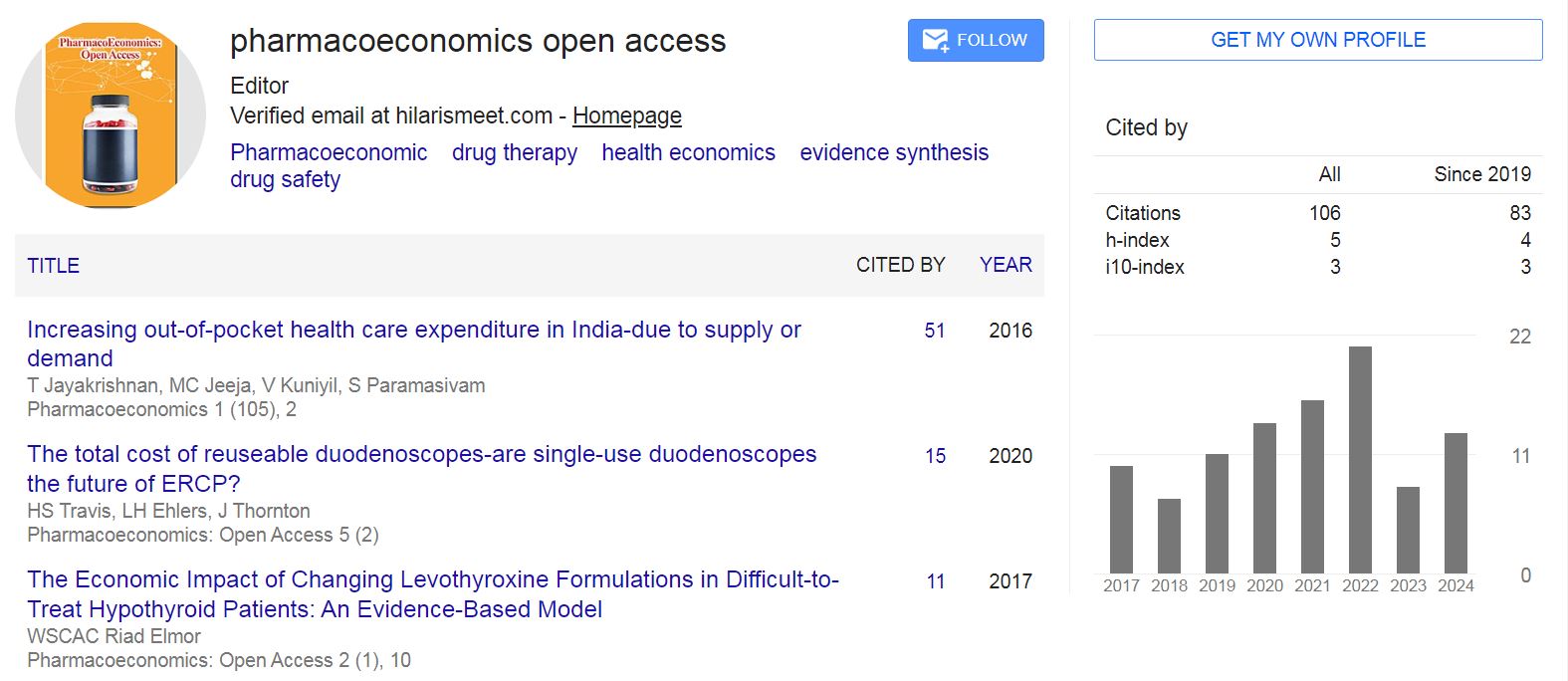
Pharmacoeconomics: Open Access received 106 citations as per Google Scholar report