Opinion - (2025) Volume 13, Issue 3
Received: 01-May-2025, Manuscript No. economics-26-186050;
Editor assigned: 05-May-2025, Pre QC No. P-186050;
Reviewed: 19-May-2025, QC No. Q-186050;
Revised: 22-May-2025, Manuscript No. R-186050;
Published:
29-May-2025
, DOI: 10.37421/2375-4389.2025.13.526
Citation: Whitmore, Hannah. ”Quantitative Easing: Benefits,
Risks, And Future Impact.” J Glob Econ 13 (2025):526.
Copyright: © 2025 Whitmore H. This is an open-access article distributed under the terms of the Creative Commons Attribution License, which permits unrestricted use,
distribution and reproduction in any medium, provided the original author and source are credited.
Quantitative easing (QE), a monetary policy tool where central banks purchase government bonds and other securities to inject liquidity into the economy, has had multifaceted economic consequences. The primary goal is to lower long-term interest rates and stimulate borrowing and investment. However, its effectiveness and side effects remain subjects of intense debate. While QE can aid in economic recovery during crises, it can also lead to asset price inflation, increased wealth inequality, and potential future inflationary pressures. The transmission mechanisms are complex, involving portfolio rebalancing, signaling effects, and reduced liquidity premia. Understanding these impacts is crucial for policymakers navigating global economic landscapes.[1] Examining the distributional effects of QE reveals a tendency to disproportionately benefit those who own financial assets, exacerbating wealth disparities. This occurs as QE-driven liquidity flows into asset markets, pushing up prices. While intended to boost aggregate demand, the wealth effect for asset holders can be more pronounced than for those without significant investments. Policymakers grapple with the challenge of ensuring broad-based economic benefits rather than concentrated gains.[2] The impact of QE on inflation is a persistent area of concern. While initial implementations aimed to combat deflation, prolonged periods of QE and subsequent economic recoveries have raised questions about potential future inflation. The mechanisms include increased money supply, which could devalue currency, and demand-pull inflation if the stimulated economy overheats. Central banks must carefully monitor these indicators and adjust their policies to maintain price stability.[3] In times of financial crisis, QE can be instrumental in stabilizing markets and preventing economic collapse. By providing ample liquidity, central banks can avert liquidity crunches and ensure the smooth functioning of credit markets. This emergency role is often seen as a necessary evil to steer the economy away from the brink, even if it introduces other potential risks that need to be managed subsequently.[4] The effectiveness of QE transmission mechanisms can vary significantly across different economic environments and national contexts. Factors such as the depth of financial markets, the structure of the banking system, and the level of investor confidence play a role. Understanding these nuances is vital for tailoring QE policies to achieve desired outcomes without unintended consequences.[5] The unwinding of QE, often termed quantitative tightening (QT), presents its own set of economic challenges. As central banks reduce their balance sheets, they withdraw liquidity from the market, which can lead to higher interest rates and potential asset price corrections. The pace and management of QT are critical to avoid market disruption and ensure a stable economic transition.[6] Sovereign debt sustainability can be indirectly influenced by QE. While lower interest rates reduce the cost of servicing government debt, the increased money supply and potential for inflation could pose long-term risks. The interplay between monetary policy and fiscal sustainability requires careful consideration to avoid creating future financial imbalances.[7] The signaling channel of QE, where central bank actions convey future policy intentions, can significantly influence market expectations. By committing to prolonged low interest rates or asset purchases, central banks aim to anchor expectations and encourage long-term investment. However, the credibility of these signals and their impact depend on the overall economic outlook and policy consistency.[8] The impact of QE on exchange rates is another area of economic consequence. Increased liquidity and lower interest rates can make a country's assets less attractive to foreign investors, potentially leading to currency depreciation. This can boost exports but also increase import costs, with varied implications for trade balances and domestic price levels.[9] The long-term implications of QE on financial market stability are still being assessed. While designed to support markets, the prolonged presence of central banks as major asset buyers could distort price discovery and create moral hazard. Future research needs to focus on the systemic risks that may emerge from sustained unconventional monetary policies.[10]
Quantitative easing (QE) is a significant monetary policy instrument employed by central banks to influence economic conditions, primarily by injecting liquidity into the financial system through the purchase of government bonds and other securities. The fundamental objective behind this strategy is to reduce long-term interest rates, thereby stimulating borrowing and encouraging investment across the economy. However, the multifaceted nature of QE means its effectiveness and associated side effects are subjects of ongoing academic and policy debate. While it has proven beneficial in facilitating economic recovery during periods of crisis, QE also carries potential risks, including asset price inflation, widening wealth inequality, and the possibility of future inflationary pressures. The intricate transmission mechanisms through which QE operates, such as portfolio rebalancing effects, signaling impacts, and the reduction of liquidity premia, necessitate a thorough understanding for effective policymaking in a globalized economic environment.[1] A critical aspect of QE's impact lies in its distributional consequences. Research indicates that QE tends to disproportionately benefit individuals and entities holding financial assets, a phenomenon that can exacerbate existing wealth disparities. The influx of liquidity generated by QE often flows into asset markets, inflating their prices. While the intention is to boost aggregate demand, the resulting wealth effect is typically more pronounced for those with substantial investment portfolios compared to individuals with limited financial holdings. This presents a significant challenge for policymakers seeking to ensure that the economic benefits of QE are broadly shared rather than concentrated among a select few.[2] Concerns regarding the inflationary implications of QE remain a prominent subject of discussion. Although initially implemented as a measure to combat deflationary pressures, extended periods of QE and subsequent economic recoveries have prompted questions about the potential for future inflation. The mechanisms through which this might occur include an expansion of the money supply, which could lead to currency devaluation, and demand-pull inflation if the stimulated economy experiences overheating. Consequently, central banks are tasked with the crucial responsibility of diligently monitoring relevant economic indicators and adjusting their policies to preserve price stability.[3] During periods of financial crisis, QE has demonstrated its utility as a tool for market stabilization and the prevention of economic collapse. By ensuring an ample supply of liquidity, central banks can effectively mitigate liquidity crunches and maintain the smooth functioning of credit markets. This crisis management role is often viewed as a necessary intervention to steer the economy away from severe downturns, even though it may introduce other potential risks that require subsequent careful management.[4] The efficacy of QE's transmission mechanisms is not uniform and can vary considerably depending on the specific economic environment and national context. A range of factors, including the depth and sophistication of financial markets, the structural characteristics of the banking system, and the prevailing level of investor confidence, all play a role in determining how effectively QE translates into desired economic outcomes. A nuanced understanding of these variables is essential for designing and implementing QE policies that achieve their intended objectives without generating unforeseen adverse consequences.[5] The process of unwinding QE, commonly referred to as quantitative tightening (QT), introduces its own set of economic challenges. As central banks begin to reduce their balance sheets, they effectively withdraw liquidity from the market. This can precipitate an increase in interest rates and potentially trigger corrections in asset prices. The management of the pace and execution of QT is therefore paramount to avert market disruption and ensure a stable transition toward a more normalized monetary policy stance.[6] QE can also indirectly influence sovereign debt sustainability. While the reduction in interest rates achieved through QE lowers the cost of servicing government debt, the concurrent increase in the money supply and the potential for inflation introduce long-term risks. A careful consideration of the interplay between monetary policy decisions and fiscal sustainability is necessary to preempt the creation of future financial imbalances.[7] The signaling channel through which QE operates, whereby central bank actions communicate future policy intentions, can exert a significant influence on market expectations. By committing to maintaining low interest rates for extended periods or continuing asset purchases, central banks aim to anchor expectations and thereby encourage long-term investment. However, the credibility of these signals and their ultimate impact are contingent upon the broader economic outlook and the consistency of policy implementation.[8] Another consequential economic impact of QE relates to exchange rate dynamics. An increase in liquidity and a reduction in interest rates can diminish the attractiveness of a country's assets to foreign investors, potentially leading to currency depreciation. While this can provide a boost to exports, it also tends to increase the cost of imports, resulting in varied implications for trade balances and domestic price levels.[9] Assessing the long-term implications of QE on financial market stability remains an evolving area of research. Although QE is designed to provide support to financial markets, the sustained presence of central banks as significant asset purchasers could distort price discovery mechanisms and foster moral hazard. Future research endeavors should prioritize the identification and analysis of systemic risks that may arise from the prolonged application of unconventional monetary policies.[10]
Quantitative easing (QE) is a monetary policy tool used by central banks to inject liquidity into the economy by purchasing assets, aiming to lower interest rates and stimulate borrowing and investment. While effective in crisis management, QE has been linked to asset price inflation, increased wealth inequality, and potential future inflation. Its transmission mechanisms are complex and can vary by economic context. The unwinding of QE, known as quantitative tightening (QT), also presents challenges, including rising interest rates and potential asset corrections. QE can indirectly affect sovereign debt sustainability and exchange rates. The long-term impact on financial market stability is still under evaluation, with concerns about price discovery distortion and moral hazard.
None
None
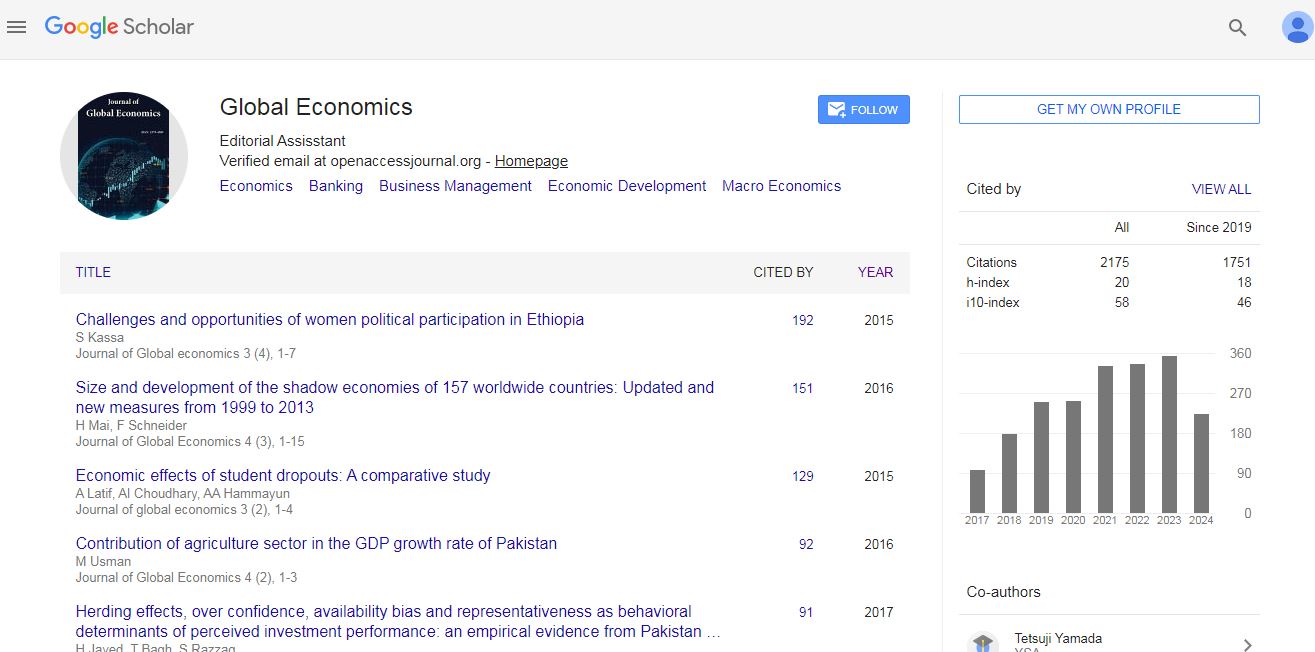
Journal of Global Economics received 2175 citations as per Google Scholar report