Perspective - (2025) Volume 14, Issue 2
Received: 01-Mar-2025, Manuscript No. jtsm-26-179510;
Editor assigned: 03-Mar-2025, Pre QC No. P-179510;
Reviewed: 17-Mar-2025, QC No. Q-179510;
Revised: 24-Mar-2025, Manuscript No. R-179510;
Published:
31-Mar-2025
, DOI: 10.37421/2167-0919.2025.14.493
Citation: Hassan, Amina. ”Quality of Service and Experience in Telecommunications.” J Telecommun Syst Manage 14 (2025):493.
Copyright: © 2025 Hassan A. This is an open-access article distributed under the terms of the Creative Commons Attribution License, which permits unrestricted use, distribution and reproduction in any medium, provided the original author and source are credited.
The realm of modern telecommunications is increasingly defined by the nuanced interplay between the objective measures of Quality of Service (QoS) and the subjective perception of Quality of Experience (QoE). Understanding this relationship is paramount for network operators seeking to enhance user satisfaction and gain a competitive edge. Research meticulously details how fundamental QoS parameters such as latency, jitter, and packet loss directly influence how users perceive the quality of the services they are utilizing. This has spurred a critical re-evaluation of traditional QoS monitoring approaches, emphasizing a proactive shift towards actively managing and optimizing QoE. The evolution towards 5G networks necessitates a unified management strategy that bridges the gap between technical performance and user satisfaction [1].
In the domain of video streaming, particularly over wireless networks, the pursuit of high QoE presents a distinct set of challenges. The variability inherent in wireless environments, including bandwidth fluctuations and signal strength variations, significantly impacts the perceived quality of video content. To address this, innovative solutions have been proposed, such as adaptive streaming mechanisms. These mechanisms dynamically adjust video encoding parameters in real-time, responding to prevailing network conditions to ensure a satisfactory user experience. This adaptive approach is crucial for maintaining user engagement and service quality in dynamic mobile settings [2].
The integration of network virtualization technologies, notably Network Functions Virtualization (NFV) and Software-Defined Networking (SDN), is revolutionizing telecommunication infrastructure. These advancements offer unprecedented flexibility and efficiency in network management, directly translating to improved service performance and, consequently, enhanced QoE. Simulation results underscore the advantages of NFV/SDN in facilitating dynamic resource allocation, a critical factor in delivering superior user experiences in next-generation telecommunication systems. The ability to dynamically reconfigure network resources in response to demand is a key enabler of better QoE [3].
Emerging applications like augmented reality (AR) impose stringent demands on network performance, making the prediction and assurance of QoE a critical concern. Studies focusing on mobile AR applications are developing sophisticated predictive models that correlate specific QoS parameters from wireless networks with user-reported experiences. The findings consistently highlight latency and jitter as particularly crucial for achieving a fluid and immersive AR experience. These models are invaluable tools for developers and network providers aiming to optimize AR service delivery and ensure a seamless user interaction [4].
Voice over IP (VoIP) services, while widely adopted, remain susceptible to network impairments that can degrade call quality. Measuring and managing QoE for VoIP under fluctuating network conditions is a significant challenge. Research in this area evaluates the efficacy of various QoS metrics in predicting perceived call quality and proposes frameworks for real-time QoE monitoring. The importance of considering factors like packet loss and delay variations is consistently emphasized for achieving optimal VoIP performance and user satisfaction [5].
A comprehensive understanding of QoE assessment methods is essential for developing effective strategies to improve user experience across diverse telecommunication services. Existing approaches for assessing QoE in multimedia services such as streaming, gaming, and conferencing are varied. A survey of these methods categorizes existing techniques, analyzes their respective strengths and limitations, and identifies critical areas for future research. The overarching trend highlights a growing imperative for user-centric QoE models that transcend the capabilities of traditional QoS metrics alone [6].
Mobile cloud gaming represents another application domain where QoE is a primary concern, especially under conditions of network congestion. The impact of such congestion, manifested as QoS degradation in terms of packet loss and delay, directly affects player experience and game responsiveness. Investigations into this area are leading to the development of QoE-aware resource allocation strategies specifically designed to mitigate congestion effects and enhance the overall gaming performance in mobile environments [7].
As telecommunications evolve towards supporting immersive services like virtual reality (VR), the associated QoS requirements become exceptionally demanding. Future wireless networks must contend with the need for ultra-low latency and exceedingly high throughput to deliver a satisfactory VR experience. Current network infrastructures often fall short of these stringent demands, necessitating advancements in technologies such as network slicing and edge computing to meet the performance expectations for these cutting-edge applications [8].
Ensuring superior QoE in the context of 5G and beyond networks requires intelligent management strategies that can adapt to dynamic conditions. Novel frameworks are being developed that integrate machine learning techniques to predict user satisfaction by analyzing real-time QoS measurements and network traffic patterns. Such frameworks enable proactive network optimization, a crucial step in guaranteeing high QoE for a wide array of services, from simple browsing to complex immersive experiences [9].
Mobile edge computing (MEC) offers a promising paradigm for enhancing QoE by bringing computation closer to the user. This research investigates the relationship between QoS provisioning and QoE satisfaction within MEC environments. By offloading computation tasks to the network edge, latency can be significantly reduced, thereby improving the perceived quality of delay-sensitive applications. These insights are instrumental in designing MEC-enabled services that deliver optimal QoE by leveraging proximity and reduced processing delays [10].
The intricate relationship between Quality of Service (QoS) and Quality of Experience (QoE) is a central theme in contemporary telecommunications research, with significant implications for service providers and end-users alike. Objective QoS metrics, such as latency, jitter, and packet loss, have been identified as direct determinants of subjective user perception of service quality. This understanding necessitates a paradigm shift for network operators, moving beyond conventional QoS monitoring to actively manage and optimize QoE for enhanced customer satisfaction and service differentiation in a highly competitive market, particularly as 5G networks mature [1].
Ensuring a high Quality of Experience (QoE) in video streaming services delivered over wireless networks presents a multifaceted challenge. The inherent variability of wireless channels, including fluctuating bandwidth and signal strength, directly impacts the perceived quality of the video stream. To counter these effects, researchers have proposed adaptive streaming mechanisms. These advanced systems dynamically adjust video encoding parameters based on real-time network conditions, thereby maintaining a satisfactory user experience by proactively adapting to the available resources and network state [2].
The advent of network virtualization technologies, such as Network Functions Virtualization (NFV) and Software-Defined Networking (SDN), is transforming the landscape of telecommunication services. These technologies empower more flexible and efficient network management, which in turn leads to improved service performance and greater user satisfaction. Simulation studies have provided empirical evidence demonstrating the significant benefits of NFV/SDN in enabling dynamic resource allocation, a key factor in elevating the Quality of Experience for users across various services [3].
For advanced applications like mobile augmented reality (AR), achieving a high Quality of Experience (QoE) is critically dependent on network performance. Predictive models are being developed to establish clear correlations between objective QoS parameters derived from wireless networks and users' subjective AR experiences. The findings from these studies consistently emphasize the pivotal roles of low latency and minimal jitter in delivering a fluid and immersive AR experience, guiding optimization efforts for both application developers and network providers [4].
In the context of Voice over IP (VoIP) services, the maintenance of high Quality of Experience (QoE) is crucial, despite the challenges posed by fluctuating network conditions. A significant area of research involves evaluating the effectiveness of various QoS metrics in accurately predicting the perceived quality of VoIP calls. Furthermore, the development of robust frameworks for real-time QoE monitoring is essential, with a particular emphasis on factors like packet loss and variations in delay to ensure optimal call quality and user satisfaction [5].
A comprehensive understanding of existing methods for assessing Quality of Experience (QoE) is vital for advancing multimedia telecommunication services. A survey of current assessment techniques for services such as streaming, gaming, and conferencing categorizes various approaches, critically evaluates their strengths and weaknesses, and outlines promising avenues for future research. This analysis underscores the increasing demand for user-centric QoE models that move beyond the limitations of traditional QoS metrics to capture the full spectrum of user perception [6].
Mobile cloud gaming is an application area where network congestion can severely degrade the Quality of Experience (QoE). Investigations into this domain analyze how varying degrees of QoS degradation, specifically in terms of packet loss and delay, influence player perception and game responsiveness. The development of QoE-aware resource allocation strategies is a key outcome, aimed at effectively mitigating the adverse effects of network congestion and thereby enhancing the gaming performance experienced by users [7].
Future wireless networks face substantial challenges in delivering high Quality of Experience (QoE) for emerging immersive services, such as virtual reality (VR). These applications demand exceptionally stringent QoS parameters, including ultra-low latency and very high throughput. The limitations of current network infrastructures in meeting these demands highlight the necessity for advancements in technologies like network slicing and edge computing, which are essential for supporting the future of immersive communication [8].
To ensure superior Quality of Experience (QoE) in advanced networks like 5G and beyond, innovative network management approaches are required. Research is focused on developing frameworks that leverage machine learning to predict user satisfaction by analyzing real-time QoS measurements and network traffic patterns. This proactive, data-driven approach to network optimization is crucial for delivering consistent and high-quality QoE across a diverse range of applications [9].
The integration of mobile edge computing (MEC) presents a promising strategy for optimizing Quality of Experience (QoE), particularly concerning QoS provisioning. By enabling computation tasks to be offloaded to the network edge, latency can be significantly reduced, leading to an improved perceived quality for delay-sensitive applications. This research provides valuable insights into the design of MEC-enabled services that prioritize and deliver optimal QoE by leveraging the benefits of edge infrastructure [10].
This collection of research explores the critical relationship between Quality of Service (QoS) and Quality of Experience (QoE) across various telecommunication services. Papers highlight how objective QoS metrics like latency, jitter, and packet loss directly impact user perception. Solutions are proposed for enhancing QoE in video streaming through adaptive mechanisms, and in mobile AR and cloud gaming by managing network congestion and predicting performance. The role of network virtualization (NFV/SDN) and mobile edge computing (MEC) in improving QoE is examined. Furthermore, research delves into predictive modeling for QoE, real-time monitoring frameworks for services like VoIP, and comprehensive surveys of QoE assessment methods. The future of immersive services, such as VR, and the demanding QoS requirements they entail are also discussed, emphasizing the need for advanced network management techniques, including machine learning, to ensure superior user experiences.
None
None
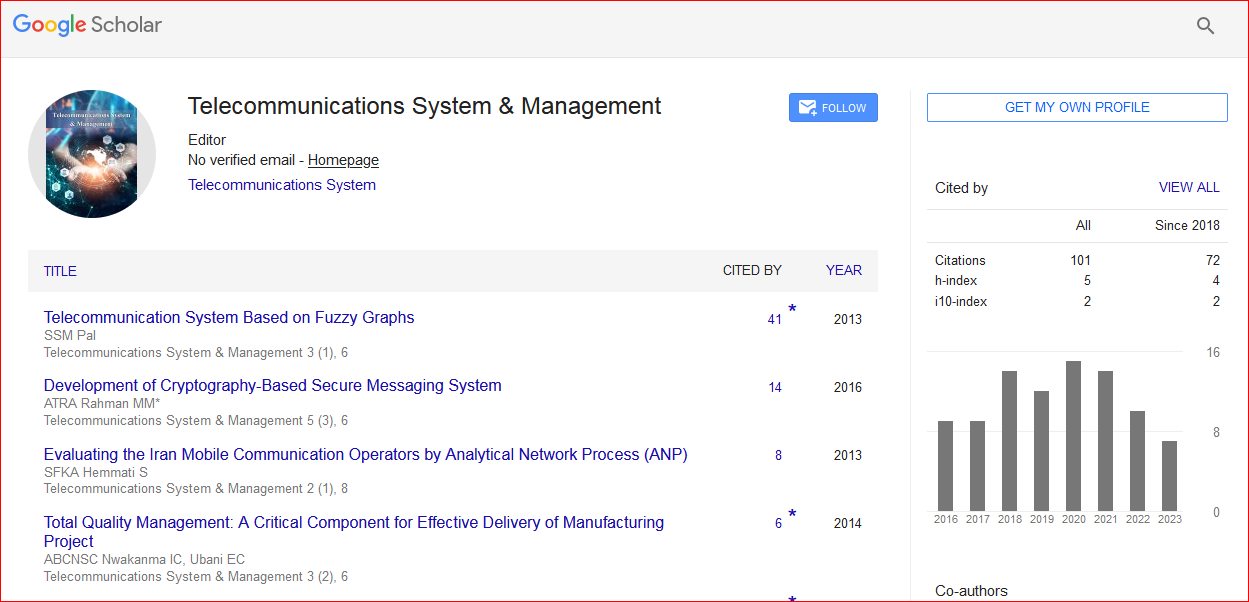
Telecommunications System & Management received 109 citations as per Google Scholar report