Commentary - (2025) Volume 14, Issue 6
Received: 02-Nov-2025, Manuscript No. iem-26-179846;
Editor assigned: 04-Nov-2025, Pre QC No. P-179846;
Reviewed: 16-Nov-2025, QC No. Q-179846;
Revised: 23-Nov-2025, Manuscript No. R-179846;
Published:
30-Nov-2025
, DOI: 10.37421/2169- 0316.2025.14.329
Citation: Adeyemi, Samuel. âProduction Quality and Efficiency: Integrated Strategies.â J Ind Eng Manag 14 (2025):329.
Copyright: © 2025 Adeyemi S. This is an open-access article distributed under the terms of the Creative Commons Attribution License, which permits unrestricted use, distribution and reproduction in any medium, provided the original author and source are credited.
The pursuit of enhanced production line efficiency and unwavering product consistency stands as a cornerstone of modern manufacturing. This endeavor is significantly bolstered by the implementation of robust quality management strategies, which aim to proactively identify and mitigate potential issues before they impact the production process or the end product. Total Quality Management (TQM) offers a comprehensive framework for achieving these goals, emphasizing continuous improvement and the involvement of all stakeholders in the quality assurance process. By integrating TQM principles, manufacturers can foster a culture of quality that permeates every level of the organization, from design and development to production and customer service. Statistical Process Control (SPC) techniques play a vital role within TQM, providing the tools necessary to monitor and control process variability. These methods allow for the early detection of deviations from desired outcomes, enabling timely corrective actions and preventing the escalation of defects. The focus shifts from inspection after the fact to real-time process management. Employee training and development are also critical components of a successful quality assurance program. A well-trained workforce is better equipped to understand quality standards, identify potential problems, and contribute to problem-solving efforts. Investing in employee competency directly translates to improved quality outcomes and a more resilient production line. Lean manufacturing principles offer another valuable approach to optimizing production lines by focusing on the elimination of waste and the reduction of variations. When integrated with quality assurance practices, lean methodologies can streamline workflows, enhance efficiency, and further improve product consistency. This holistic approach addresses both the speed and the quality of production. Industry 4.0 technologies, such as the Internet of Things (IoT) and artificial intelligence (AI), are revolutionizing quality assurance by enabling real-time data collection and advanced analytics. These technologies facilitate predictive maintenance, automated defect detection, and optimized process control, leading to significant improvements in quality and efficiency. Machine vision systems and advanced sensor technologies are also transforming quality inspection processes. Their ability to perform rapid, accurate, and objective assessments of product quality reduces human error and increases throughput, making them indispensable tools for high-volume manufacturing environments. Six Sigma methodologies provide a data-driven approach to defect reduction and process improvement. The DMAIC (Define, Measure, Analyze, Improve, Control) framework offers a structured pathway for identifying the root causes of quality issues and implementing effective, sustainable solutions. Quality Management Systems (QMS) are essential for maintaining consistency and reliability across the entire production lifecycle. Integrating QMS with supply chain operations ensures that quality is a consideration from the sourcing of raw materials to the final delivery of the product, fostering a comprehensive approach to quality assurance. Finally, the application of advanced data analytics and machine learning algorithms allows for predictive quality control. By analyzing historical data, manufacturers can anticipate potential quality issues, enabling proactive interventions and further enhancing production line efficiency and product consistency.This comprehensive approach, encompassing various methodologies and technologies, underscores the multi-faceted nature of ensuring high-quality production in contemporary manufacturing settings.
The implementation of Total Quality Management (TQM) is essential for elevating production line efficiency and ensuring consistent product quality in manufacturing environments. TQM fosters a proactive approach to defect prevention through strategies such as statistical process control, comprehensive employee training, and the adoption of continuous improvement methodologies. This focus on prevention, rather than reactive inspection, directly contributes to waste reduction and enhanced customer satisfaction. Industry 4.0 technologies, including the Internet of Things (IoT) and artificial intelligence (AI), are pivotal in modernizing quality assurance. By enabling real-time data monitoring, predictive analytics, and automated inspection, these technologies significantly boost defect detection rates and optimize production processes, ultimately yielding higher quality outputs. The synergistic integration of lean manufacturing principles with quality assurance mechanisms serves to streamline production lines effectively. This approach prioritizes the reduction of variations, the elimination of waste, and the empowerment of frontline workers in the quality control process, advocating for a holistic strategy to achieve sustainable operational excellence. The application of Six Sigma methodologies is a powerful tool for enhancing quality and minimizing defects in high-volume production. The DMAIC framework provides a systematic process for identifying the root causes of quality problems and implementing data-driven solutions, underscoring the importance of cross-functional team collaboration and rigorous data analysis. Employee training and competency development are fundamental to maintaining high-quality standards on production lines. Empowering employees with the skills and motivation to identify and rectify quality deviations is crucial, emphasizing the need for continuous skill enhancement and the cultivation of a quality-conscious organizational culture. Advanced sensor technologies and machine vision systems are instrumental in automating quality inspection. These technologies facilitate faster, more accurate, and objective defect detection, thereby reducing human error and increasing production throughput, highlighting the benefits of real-time quality monitoring. Integrating Quality Management Systems (QMS) with supply chain operations is vital for guaranteeing product quality throughout the entire value chain, from raw material procurement to final delivery. This includes robust supplier quality management, traceability, and collaborative quality initiatives, demonstrating how a strong QMS enhances production line reliability and consistency. Statistical Process Control (SPC) charting techniques are indispensable for monitoring and managing variability within production lines. Various control charts can effectively detect deviations from target parameters, enabling prompt corrective actions and ensuring process stability and product uniformity. Effective quality assurance in automated production lines presents unique challenges that require strategic solutions. These include optimizing human-machine interaction, implementing robust error-proofing mechanisms (poka-yoke), and integrating feedback loops for continuous process improvement, all contributing to consistent quality in automated settings. Furthermore, the utilization of advanced data analytics and machine learning algorithms for predictive quality control allows manufacturers to identify potential quality issues before they manifest. This proactive stance enables early interventions, minimizes defects, and optimizes overall line efficiency by leveraging historical production data to forecast and prevent problems.
This compilation of research highlights multifaceted strategies for enhancing production line quality and efficiency. Key themes include the implementation of Total Quality Management (TQM) and its emphasis on proactive defect prevention through techniques like Statistical Process Control (SPC) and employee training. The integration of Lean Manufacturing principles aims to reduce waste and variations, while Six Sigma methodologies offer a data-driven approach to defect reduction using the DMAIC framework. The transformative impact of Industry 4.0 technologies, such as IoT and AI, along with advanced sensor and machine vision systems, is explored for their role in real-time monitoring and automated inspection. Furthermore, the importance of Quality Management Systems (QMS) integrated with supply chains and the application of data analytics for predictive quality control are discussed as crucial elements for achieving consistent, high-quality manufacturing outcomes.
None
None
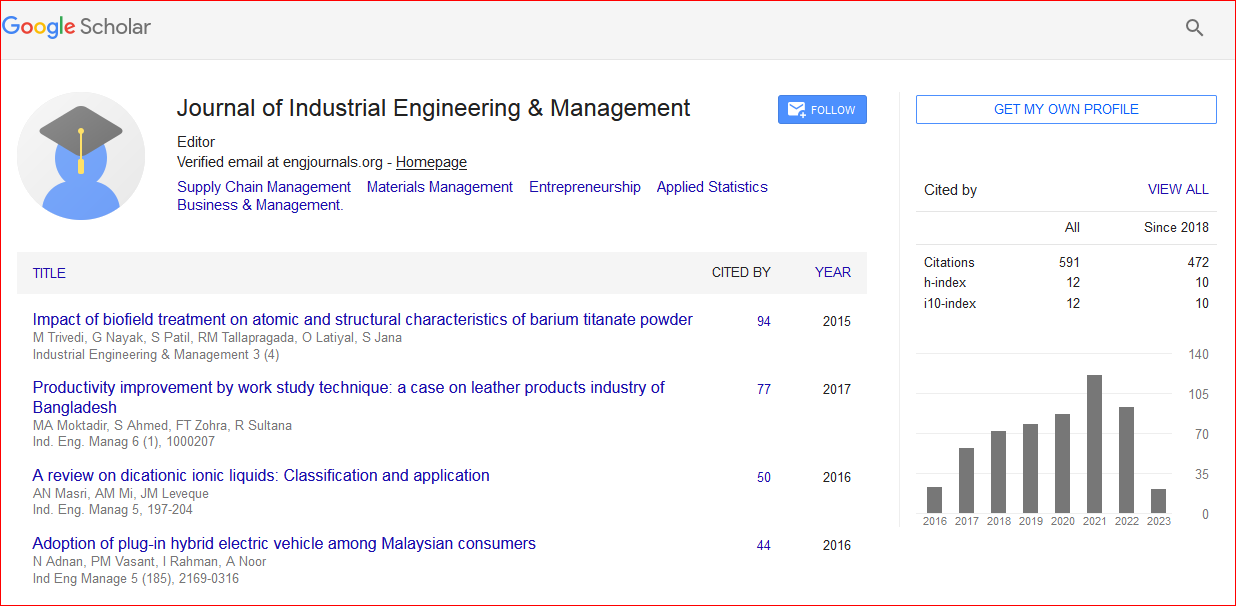
Industrial Engineering & Management received 739 citations as per Google Scholar report