Brief Report - (2025) Volume 14, Issue 4
Received: 01-Aug-2025, Manuscript No. idse-26-182826;
Editor assigned: 04-Aug-2025, Pre QC No. P-182826;
Reviewed: 18-Aug-2025, QC No. Q-182826;
Revised: 22-Aug-2025, Manuscript No. R-182826;
Published:
29-Aug-2025
, DOI: 10.37421/2168-9768.2025.14.498
Citation: Ferreira, Isabel. ”Pressurized Irrigation and
Drainage: Design, Management, and Sustainability.” Irrigat Drainage Sys Eng
14 (2025):498.
Copyright: © 2025 Ferreira I. This is an open-access article distributed under the terms of the Creative Commons Attribution License, which permits unrestricted use,
distribution and reproduction in any medium, provided the original author and source are credited.
The engineering design of pressurized irrigation and drainage networks is fundamental to modern agriculture, encompassing a wide array of considerations for efficient water management. These systems are critical for delivering water to crops and managing excess water, thereby supporting agricultural productivity and sustainability. A comprehensive overview of key design principles and challenges is provided, focusing on hydraulic characteristics and operational aspects. The intricate hydraulic principles governing fluid flow within these networks, including pressure management, friction losses, and the potential for water hammer phenomena, are thoroughly examined. The design process is meticulously crafted to ensure efficient water delivery, optimize energy consumption, and promote the longevity of the system. This involves careful integration of material selection, appropriate pipe sizing, and strategic component placement. Furthermore, the practical challenges associated with the ongoing operation and maintenance of these networks are addressed, with proposed strategies to minimize water loss through leaks, maintain water quality, and effectively adapt to fluctuating demand patterns. The insights derived from these engineering endeavors are of paramount importance for enhancing agricultural output and ensuring responsible water resource management.
The application of advanced computational fluid dynamics (CFD) modeling represents a significant leap in simulating the complex flow dynamics within pressurized irrigation systems. This sophisticated approach is vital for accurately predicting transient pressure changes, optimizing the layout of pipes, and pinpointing areas susceptible to inefficiencies or potential failures. The research clearly demonstrates how CFD can substantially refine the design process by offering granular insights into velocity profiles, turbulent behavior, and energy dissipation patterns. Such detailed understanding facilitates the creation of more robust and inherently efficient network designs, which are indispensable for curbing water wastage and boosting energy efficiency in large-scale agricultural projects. Examining the environmental impact and sustainability of pressurized irrigation networks reveals crucial trade-offs between water use efficiency and energy consumption. The research proposes design strategies that are specifically aimed at minimizing the ecological footprint of these systems. Key areas of focus include the diligent selection of energy-efficient pumping technologies, the thoughtful integration of renewable energy sources to power the networks, and the proactive reduction of water losses through the implementation of advanced leak detection and management systems. This work strongly underscores the imperative for adopting a holistic design philosophy that rigorously considers both economic viability and responsible environmental stewardship. A novel and transformative approach to the design and management of pressurized irrigation networks is presented, leveraging the power of Internet of Things (IoT) technology. This innovative method details the seamless integration of various sensors designed for real-time monitoring of critical parameters such as soil moisture levels, prevailing weather conditions, and overall system performance. This enables highly automated and precisely optimized irrigation scheduling. The core design principles are centered on constructing adaptive systems capable of dynamically responding to evolving environmental factors and specific crop requirements, thereby significantly enhancing water use efficiency and substantially reducing operational expenditures. This endeavor powerfully highlights the potential of digital technologies to revolutionize modern agricultural practices. This research offers a focused evaluation of the economic aspects and optimization strategies inherent in the design of pressurized irrigation networks. It employs sophisticated economic modeling techniques to meticulously assess the cost-effectiveness of diverse design alternatives. This assessment takes into account initial investment costs, ongoing operational expenses, and the potential economic benefits derived from improved crop yields and substantial water savings. The study places considerable emphasis on the critical importance of selecting suitable pipe materials, efficient pump technologies, and well-conceived network configurations to ensure the achievement of optimal economic returns. The conclusions drawn from this analysis provide invaluable guidance for both policymakers and project managers engaged in the critical development of essential irrigation infrastructure. Addressing the complex challenges associated with the design and management of pressurized drainage networks in agricultural regions is the central theme of this paper. It meticulously explores effective methodologies for the efficient removal of excess water from farmland, with a parallel emphasis on minimizing detrimental soil erosion and the undesirable leaching of essential nutrients. The design considerations examined include precise pipe sizing, the optimization of gradients, and the strategic integration of control structures to meticulously regulate water flow. The research further underscores the critical importance of deeply understanding groundwater dynamics and their intricate interaction with surface drainage systems to proactively prevent pervasive issues such as waterlogging and soil salinization. A comprehensive review of material selection for the diverse components within pressurized irrigation and drainage systems is presented. This review meticulously discusses the distinct properties and performance characteristics of a wide range of materials, including various plastics, metals, and advanced composites. The evaluation carefully considers critical factors such as long-term durability, inherent corrosion resistance, overall cost-effectiveness, and potential environmental impact. The review strongly emphasizes the profound importance of selecting the most appropriate materials for each specific network component, encompassing pipes, fittings, valves, and pumps, to guarantee the reliability and extended lifespan of the entire system. This consolidated information is considered indispensable for engineers tasked with the design and ongoing maintenance of vital water infrastructure. This study centers on the critical design and implementation of pressurized irrigation systems specifically tailored for optimizing water utilization in arid and semi-arid geographical regions. It thoroughly examines the practical application of advanced irrigation techniques, such as highly efficient drip and micro-sprinkler systems, and their seamless integration into comprehensive pressurized networks. The research compellingly highlights the significant role that precise water application plays in substantially enhancing crop yields, dramatically reducing overall water consumption, and measurably improving soil health, particularly under conditions of severe water scarcity. The design principles meticulously presented are absolutely crucial for fostering sustainable agricultural practices in these particularly challenging environmental contexts. The profound impacts of ongoing climate change on the design and operational strategies of pressurized irrigation and drainage networks are rigorously investigated in this paper. It undertakes a detailed analysis of how evolving precipitation patterns, shifts in temperature regimes, and the increasing frequency of extreme weather events directly influence both water availability and demand. Furthermore, it examines their effects on the hydraulic performance of these critical systems. The research proactively proposes adaptive design strategies and robust management practices meticulously engineered to enhance the resilience of irrigation infrastructure against climate variability and the broader challenges of climate change, thereby safeguarding food security and ensuring the long-term sustainability of vital water resources. The transformative potential of artificial intelligence (AI) and machine learning (ML) techniques for the optimization of both the design and operational phases of pressurized irrigation networks is explored in this article. It meticulously presents advanced methods for predictive maintenance, highly accurate leak detection, and the dynamic control of water distribution systems, all of which contribute to significant improvements in overall efficiency and a substantial reduction in water losses. The research effectively demonstrates how sophisticated AI/ML algorithms can expertly analyze vast datasets collected from numerous sensors, providing invaluable real-time insights and crucial decision support. This ultimately enhances the performance and long-term sustainability of essential irrigation infrastructure, pointing decisively towards the future of intelligent water management.The engineering design of pressurized irrigation and drainage networks forms the bedrock of effective agricultural water management, necessitating a comprehensive consideration of numerous factors for optimal performance. The intrinsic hydraulic principles that govern fluid flow within these complex systems, including the crucial aspects of pressure management, mitigation of friction losses, and the potential for water hammer, are explored in detail. The design process is meticulously oriented towards achieving efficient water delivery to agricultural lands, maximizing energy efficiency, and ensuring the extended durability of the installed infrastructure. This entails the careful selection of appropriate materials for construction, precise calculation of pipe diameters, and strategic placement of all system components. Furthermore, the inherent challenges encountered during the routine operation and subsequent maintenance of these networks are thoroughly examined. The paper proposes practical and innovative strategies aimed at minimizing water leakage, safeguarding water quality, and developing robust mechanisms for adapting to dynamic and variable water demand scenarios. The collective insights presented are indispensable for advancing agricultural productivity and promoting sustainable water resource management practices.
Advanced computational fluid dynamics (CFD) modeling is investigated as a powerful tool for simulating the intricate flow dynamics that occur within complex pressurized irrigation systems. The study underscores the critical importance of employing accurate hydraulic modeling techniques as a means to effectively predict pressure transients, optimize the spatial arrangement of pipes, and identify specific areas within the network that may be prone to inefficiencies or structural failures. The research effectively showcases how the application of CFD can significantly enhance the overall design process by furnishing detailed and precise insights into various flow characteristics, such as velocity profiles, turbulence intensities, and energy dissipation rates. This advanced understanding ultimately leads to the development of more resilient and efficient network designs, which are crucial for minimizing water wastage and improving energy efficiency, particularly in large-scale irrigation projects. This paper critically examines the multifaceted environmental implications and the paramount importance of sustainability in the context of pressurized irrigation networks. It undertakes a thorough evaluation of the inherent trade-offs that exist between achieving high water use efficiency and managing energy consumption effectively. The research proposes a range of design strategies specifically formulated to minimize the overall ecological footprint associated with these systems. The primary areas of focus include the judicious selection of energy-efficient pump technologies, the strategic integration of renewable energy sources to power network operations, and the proactive implementation of measures to reduce water losses through the deployment of sophisticated leak detection and management systems. This body of work strongly emphasizes the undeniable necessity of adopting a holistic approach to design that meticulously balances economic viability with conscientious environmental stewardship. A groundbreaking approach to the design and management of smart pressurized irrigation networks, integrating Internet of Things (IoT) technology, is presented. This innovative methodology meticulously details the integration of a network of sensors designed for the real-time monitoring of key environmental and system parameters, including soil moisture content, local weather conditions, and overall system performance metrics. This enables the implementation of highly automated and precisely optimized irrigation scheduling. The fundamental design principles are geared towards creating adaptive systems that can dynamically adjust to changing environmental factors and the specific needs of different crops, thereby significantly enhancing water use efficiency and substantially reducing ongoing operational costs. This research highlights the profoundly transformative potential of advanced digital technologies in the modernization of agricultural practices. This research meticulously concentrates on the economic evaluation and the subsequent optimization of the design process for pressurized irrigation networks. It utilizes robust economic modeling frameworks to thoroughly assess the cost-effectiveness of various design alternatives. This evaluation comprehensively considers initial capital investments, ongoing operational expenses, and the potential economic benefits that can be realized through increased crop yields and significant water savings. The study places a pronounced emphasis on the critical importance of making informed choices regarding the selection of appropriate pipe materials, efficient pump technologies, and well-structured network configurations to ensure the attainment of the most favorable economic returns. The findings derived from this investigation offer invaluable strategic guidance for policymakers and project managers who are involved in the critical development and implementation of essential irrigation infrastructure. This paper directly addresses the complex and multifaceted challenges associated with the engineering design and effective management of pressurized drainage networks, particularly within agricultural regions. It systematically explores various methods and techniques for the efficient and timely removal of surplus water from farmlands, while simultaneously prioritizing the reduction of soil erosion and the prevention of nutrient leaching into surrounding water bodies. The key design considerations that are thoroughly examined include precise pipe sizing, optimization of network gradients, and the strategic integration of specialized control structures designed to precisely regulate water flow. The research also critically highlights the profound importance of comprehensively understanding groundwater dynamics and their intricate interactions with surface drainage systems, which is essential for preventing debilitating issues such as waterlogging and soil salinization, thereby preserving agricultural land productivity and overall environmental health. A comprehensive and systematic review of the crucial aspect of material selection for various components within pressurized irrigation and drainage systems is presented. This review meticulously discusses the distinctive physical properties, chemical resistances, and performance characteristics of a broad spectrum of materials, including commonly used plastics, durable metals, and advanced composite materials. The evaluation process carefully considers pivotal factors such as long-term durability under operational stress, inherent resistance to corrosion, overall cost-effectiveness throughout the system's lifecycle, and the potential environmental impact of each material choice. The review strongly advocates for the paramount importance of selecting the most suitable materials for each individual network component, such as pipes, fittings, valves, and pumps, to unequivocally ensure the system's reliability, operational safety, and overall longevity. This compilation of essential information is deemed indispensable for engineers actively involved in the design, construction, and ongoing maintenance of vital water infrastructure projects. This study is specifically focused on the critical design and successful implementation of pressurized irrigation systems, with the primary objective of optimizing water use, particularly in regions characterized by arid and semi-arid climatic conditions. It thoroughly investigates the practical applications of advanced irrigation techniques, such as highly efficient drip irrigation and micro-sprinkler systems, and their effective integration into comprehensive pressurized network infrastructures. The research compellingly highlights the significant role that precise and controlled water application plays in substantially enhancing crop yields, dramatically reducing overall water consumption, and measurably improving soil health, especially under conditions of extreme water scarcity. The design principles meticulously outlined and presented are absolutely essential for the successful establishment and maintenance of sustainable agricultural practices in these particularly challenging environmental contexts. This article presents a rigorous investigation into the complex impacts of climate change on both the fundamental design considerations and the ongoing operational strategies of pressurized irrigation and drainage networks. It systematically analyzes how significant alterations in precipitation patterns, fluctuations in temperature, and the increasing incidence of extreme weather events directly influence the availability of water resources and consequently affect water demand. Furthermore, it examines the direct impact of these climatic shifts on the hydraulic performance characteristics of these essential systems. In response, the research proactively proposes adaptive design strategies and innovative management practices specifically engineered to enhance the resilience of existing and future irrigation infrastructure against the pervasive challenges posed by climate variability and broader climate change. This adaptive approach is vital for ensuring long-term food security and the sustainable management of precious water resources. This article delves into the application of cutting-edge artificial intelligence (AI) and machine learning (ML) techniques specifically tailored for the optimization of both the design and operational aspects of pressurized irrigation networks. It systematically presents advanced methodologies for predictive maintenance protocols, highly accurate real-time leak detection, and the dynamic control of water distribution systems. These advancements collectively contribute to significant improvements in overall system efficiency and a marked reduction in water losses. The research effectively demonstrates the capability of sophisticated AI/ML algorithms to meticulously analyze vast volumes of data collected from a distributed network of sensors, thereby providing invaluable real-time insights and crucial decision-support capabilities. This enhancement ultimately leads to improved performance and greater sustainability of vital irrigation infrastructure, clearly signaling the advent of intelligent water management systems.This collection of research focuses on the multifaceted aspects of designing and managing pressurized irrigation and drainage networks. Key themes include the fundamental engineering principles, hydraulic modeling using CFD, environmental sustainability, the integration of IoT for smart systems, economic evaluation, material selection, and the impact of climate change. Advanced techniques such as AI and machine learning are explored for optimization and predictive maintenance. The research highlights the importance of efficiency, water conservation, and resilience in these critical agricultural infrastructures, especially in arid regions and under changing climatic conditions.
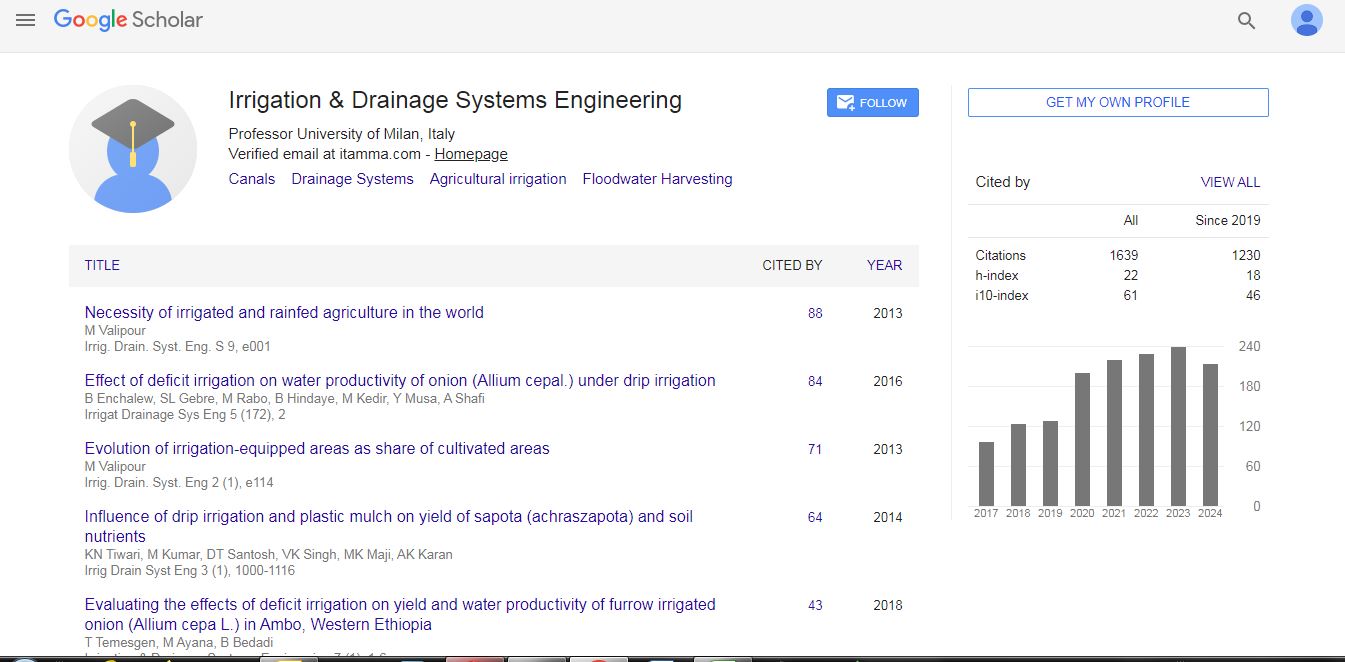
Irrigation & Drainage Systems Engineering received 835 citations as per Google Scholar report