Short Communication - (2025) Volume 10, Issue 4
Received: 01-Aug-2025, Manuscript No. jdcm-26-182210;
Editor assigned: 04-Aug-2025, Pre QC No. P-182210;
Reviewed: 18-Aug-2025, QC No. Q-182210;
Revised: 22-Aug-2025, Manuscript No. R-182210;
Published:
29-Aug-2025
, DOI: 10.37421/2475-3211.2025.10.329
Citation: Youssef, Mohamed A.. ”Precision Medicine: Tailoring Diabetes Care for Better Outcomes.” J Diabetic Complications Med 10 (2025):329.
Copyright: © 2025 Youssef A. Mohamed This is an open-access article distributed under the terms of the Creative Commons Attribution License, which permits unrestricted use, distribution and reproduction in any medium, provided the original author and source are credited.
Precision medicine represents a paradigm shift in the management of diabetic complications, moving away from a generalized approach to one that is highly individualized. This innovative strategy focuses on tailoring treatments to the unique characteristics of each patient, encompassing their genetic makeup, lifestyle factors, and the specific molecular pathways driving disease progression. The goal is to enhance therapeutic effectiveness and minimize adverse reactions in conditions such as diabetic nephropathy, retinopathy, and neuropathy, ultimately improving patient outcomes [1].
At the core of precision medicine for diabetic nephropathy lies genomic and epigenomic profiling. Identifying specific genetic variations that confer susceptibility or resistance to kidney damage is crucial for early risk assessment and the implementation of targeted preventive measures. Furthermore, epigenetic modifications, including DNA methylation and histone alterations, help elucidate the variability in disease development and progression among individuals, thereby highlighting potential targets for new therapeutic interventions aimed at reversing or mitigating these changes [2].
In the realm of diabetic retinopathy, precision approaches are increasingly leveraging sophisticated imaging technologies alongside specific biomarkers to forecast disease onset and its trajectory. Techniques like laser speckle flowgraphy and optical coherence tomography angiography can detect subtle microvascular abnormalities before they become clinically manifest. Biomarkers associated with inflammation, angiogenesis, and oxidative stress, identified through proteomic and metabolomic analyses, are instrumental in guiding the selection of targeted therapies, such as anti-VEGF treatments, to optimize visual outcomes for affected individuals [3].
Diabetic neuropathy presents a particularly intricate challenge where precision medicine can significantly elevate patient care. Investigating an individual's genetic predisposition to nerve damage and their specific response to analgesic medications, coupled with an understanding of the gut microbiome's role in systemic inflammation, opens new avenues for personalized treatment strategies. Pharmacogenomic testing is essential for identifying patients who will derive the most benefit from particular pain relievers or who are at a heightened risk for adverse drug reactions, thereby enhancing both the safety and efficacy of neuropathy management [4].
The integration of artificial intelligence (AI) and machine learning (ML) is paramount to fully realizing the potential of precision medicine in addressing diabetic complications. These advanced technologies are capable of analyzing extensive datasets derived from electronic health records, genomic sequencing, and wearable devices to discern complex patterns, predict disease progression, and recommend optimal therapeutic pathways. AI/ML algorithms can significantly aid in the early detection of complications, stratify patients for participation in clinical trials, and personalize treatment regimens based on real-time patient data [5].
Pharmacogenomics plays an indispensable role in personalizing the management of cardiovascular complications associated with diabetes. Genetic variations in enzymes responsible for drug metabolism and in drug targets can profoundly affect the efficacy and safety of medications commonly used, including statins, antihypertensives, and antiplatelet agents. By considering an individual's genetic profile, clinicians can make more informed decisions regarding drug selection and dosage, consequently reducing the risk of cardiovascular events and improving the overall prognosis for diabetic patients [6].
The influence of the gut microbiome on metabolic health and the subsequent development of diabetic complications is an emerging and critical area within precision medicine. Dysbiosis, characterized by an imbalance in gut microbial communities, has been associated with increased inflammation, insulin resistance, and the accelerated progression of nephropathy and neuropathy. Personalized interventions targeting the microbiome, such as the use of probiotics, prebiotics, or fecal microbiota transplantation, show considerable promise in modulating disease processes and improving patient outcomes [7].
Metabolomics offers a powerful and versatile tool for gaining a deeper understanding of the biochemical signatures associated with diabetic complications and for guiding personalized treatment decisions. Profiling metabolites present in blood or urine can reveal deviations from normal metabolic pathways that are indicative of early-stage complications or can predict an individual's response to specific therapies. This metabolic data, when integrated with genomic and proteomic information, provides a more comprehensive view of an individual's disease state, thereby enabling more precise and effective interventions [8].
Personalized lifestyle interventions, informed by an individual's genetic predispositions and behavioral patterns, are fundamental to both preventing and effectively managing diabetic complications. Understanding how an individual genetically responds to dietary changes and physical activity allows for the development of tailored recommendations that can significantly improve glycemic control and reduce the risk of both microvascular and macrovascular complications. The use of wearable technology and digital health platforms further supports patient adherence to these personalized lifestyle plans [9].
The development of novel therapeutic targets, grounded in a thorough understanding of disease pathogenesis, is a cornerstone of the precision medicine framework for diabetic complications. For instance, targeting specific inflammatory pathways or aberrant signaling molecules that have been identified through advanced omics studies can lead to the creation of highly effective and individualized treatments for diabetic nephropathy, retinopathy, and neuropathy, thereby advancing beyond the limitations of current broad-acting therapeutic agents [10].
Precision medicine is fundamentally transforming the approach to managing diabetic complications by shifting from a one-size-all strategy to one that is deeply personalized. This approach meticulously considers individual patient characteristics, including their unique genetic makeup, lifestyle choices, and the specific molecular mechanisms underpinning disease progression. The overarching aim is to enhance the efficacy of treatments and minimize the occurrence of adverse events across a spectrum of diabetic complications like nephropathy, retinopathy, and neuropathy, ultimately leading to improved patient health and well-being [1].
Genomic and epigenomic analyses are foundational to the precision care of diabetic nephropathy. By pinpointing specific genetic variants that predispose individuals to or protect them from kidney damage, clinicians can implement early risk stratification and deploy targeted preventive measures. Epigenetic modifications, such as changes in DNA methylation patterns and histone acetylation, further account for the significant inter-individual variations observed in disease development and progression, offering promising avenues for novel therapeutic strategies designed to reverse or alleviate these molecular alterations [2].
In the context of diabetic retinopathy, precision medicine increasingly relies on advanced imaging modalities combined with sophisticated biomarker analysis to predict the onset and progression of the disease. Techniques such as laser speckle flowgraphy and optical coherence tomography angiography are capable of detecting microvascular changes at very early stages, often before they are clinically apparent. Biomarkers related to inflammation, angiogenesis, and oxidative stress, identified through comprehensive proteomic and metabolomic studies, are critical for guiding the selection of appropriate therapies, such as anti-VEGF treatments, thereby optimizing visual outcomes for patients [3].
Diabetic neuropathy presents a complex clinical challenge where precision medicine offers significant improvements in patient management. The investigation of genetic predispositions to nerve damage and individual responses to analgesic medications, alongside monitoring the impact of the gut microbiome on systemic inflammation, provides valuable insights for personalized treatment planning. Pharmacogenomic testing plays a vital role in identifying individuals who are most likely to benefit from specific pain medications or who face a higher risk of experiencing adverse drug reactions, thereby enhancing the overall safety and effectiveness of neuropathy care [4].
The integration of artificial intelligence (AI) and machine learning (ML) is pivotal for harnessing the full potential of precision medicine in the management of diabetic complications. These powerful technologies can process and analyze vast quantities of data from electronic health records, genomic sequencing, and data from wearable devices to identify intricate patterns, predict disease trajectories with greater accuracy, and recommend optimized treatment plans. AI/ML algorithms are instrumental in facilitating early detection of complications, stratifying patients for clinical trials, and tailoring therapeutic regimens based on continuous, real-time data streams [5].
Pharmacogenomics is a critical component in the personalized management of cardiovascular complications frequently observed in patients with diabetes. Genetic variations within genes responsible for drug metabolism and drug targets can significantly impact both the efficacy and safety of commonly prescribed medications, including statins, antihypertensives, and antiplatelet agents. By incorporating an individual's genetic profile into treatment decisions, clinicians can fine-tune drug selection and dosage, thereby reducing the likelihood of cardiovascular events and improving the long-term prognosis for diabetic individuals [6].
The role of the gut microbiome in metabolic health and its contribution to the development of diabetic complications is a rapidly advancing frontier in precision medicine. An imbalance in the gut microbial community, known as dysbiosis, has been linked to heightened inflammation, impaired insulin sensitivity, and the accelerated progression of kidney and nerve damage. Personalized interventions aimed at modulating the gut microbiome, such as the administration of probiotics, prebiotics, or even fecal microbiota transplantation, hold substantial promise for altering disease processes and enhancing patient outcomes [7].
Metabolomics serves as a potent analytical tool for characterizing the biochemical fingerprints of diabetic complications and for informing personalized therapeutic strategies. The analysis of metabolites in biological samples like blood or urine can reveal subtle alterations in metabolic pathways that signal the early onset of complications or predict an individual's response to treatment. This metabolomic data, when synthesized with genomic and proteomic information, offers a more holistic understanding of an individual's disease state, paving the way for more precise and effective interventions [8].
Personalized lifestyle interventions, guided by an individual's genetic predispositions and behavioral characteristics, are essential for the prevention and effective management of diabetic complications. Understanding how an individual's genetic makeup influences their response to specific diets and exercise regimens allows for the creation of customized recommendations that can lead to better glycemic control and a reduced risk of both microvascular and macrovascular complications. Wearable technology and digital health platforms can significantly support adherence to these tailored lifestyle plans [9].
The identification and development of novel therapeutic targets, driven by an in-depth understanding of the underlying disease mechanisms, are central to the precision medicine approach for diabetic complications. For example, interventions focused on specific inflammatory pathways or aberrant signaling molecules identified through extensive omics studies can lead to the creation of highly targeted and individualized treatments for diabetic nephropathy, retinopathy, and neuropathy, representing a significant advancement beyond current broadly acting therapies [10].
Precision medicine offers a transformative approach to managing diabetic complications by tailoring treatments to individual patient characteristics, including genetic makeup, lifestyle, and specific molecular pathways. This strategy aims to improve therapeutic efficacy and reduce adverse events in conditions like diabetic nephropathy, retinopathy, and neuropathy. Genomic and epigenomic profiling are foundational for diabetic nephropathy, identifying genetic variants and epigenetic modifications for risk stratification and therapeutic targets. Advanced imaging and biomarkers are used for diabetic retinopathy to predict disease onset and guide treatment. Pharmacogenomics and microbiome analysis are crucial for personalized diabetic neuropathy management. Artificial intelligence and machine learning are pivotal for analyzing complex datasets and optimizing treatment pathways. Pharmacogenomics also plays a key role in managing cardiovascular complications in diabetes by personalizing drug selection. The gut microbiome's influence on metabolic health and diabetic complications is an emerging area for precision interventions. Metabolomics provides biochemical signatures for early diagnosis and therapy prediction. Personalized lifestyle interventions, informed by genetics and behavior, are essential for prevention and management. Targeting specific molecular pathways identified through omics studies is a cornerstone for developing novel, individualized therapies for diabetic complications.
None
None
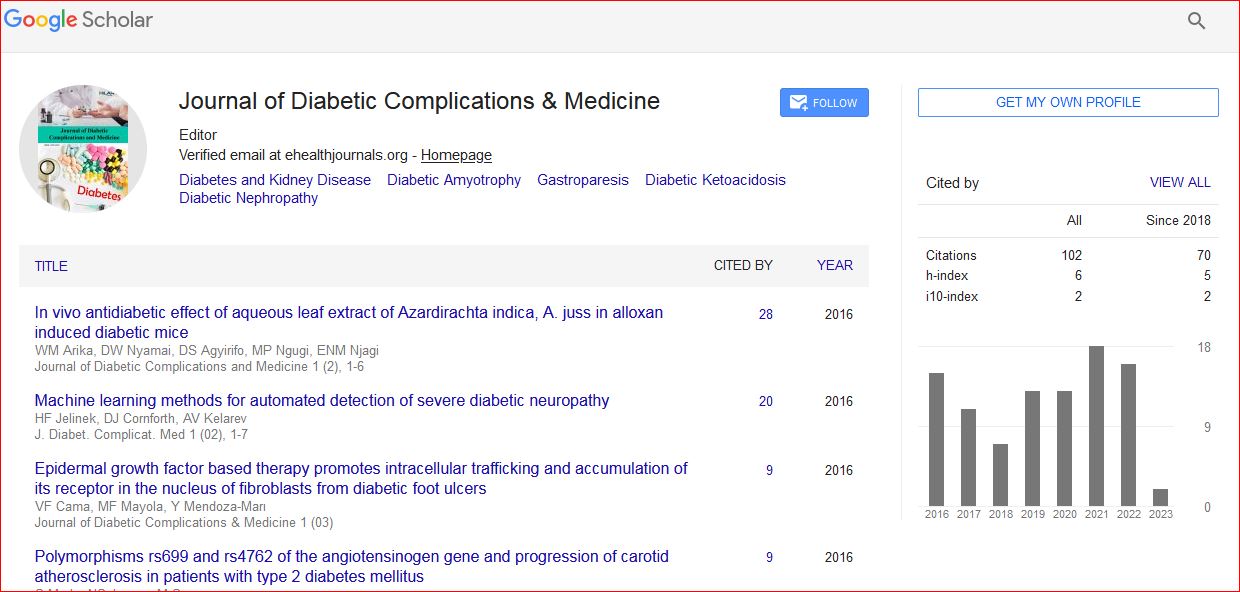
Journal of Diabetic Complications & Medicine received 102 citations as per Google Scholar report