Perspective - (2025) Volume 9, Issue 4
Received: 01-Jul-2025, Manuscript No. hps-26-184471;
Editor assigned: 03-Jul-2025, Pre QC No. P-184471;
Reviewed: 17-Jul-2025, QC No. Q-184471;
Revised: 22-Jul-2025, Manuscript No. R-184471;
Published:
29-Jul-2025
, DOI: 10.37421/2573-4563.2025.9.357
Citation: Le, Minh T.. ”Precision Medicine in Pancreatic Cancer: A Targeted Approach.” J Hepatol Pancreat Sci 09 (2025):357.
Copyright: © 2025 Le T. Minh This is an open-access article distributed under the terms of the Creative Commons Attribution License, which permits unrestricted use, distribution and reproduction in any medium, provided the original author and source are credited.
Precision medicine in pancreatic cancer has emerged as a transformative approach, shifting the paradigm from generalized treatments to highly individualized therapeutic strategies tailored to the unique molecular characteristics of each patient's tumor. This evolution is largely driven by advancements in genomic profiling technologies, which enable a deeper understanding of the genetic landscape of pancreatic ductal adenocarcinoma (PDAC) and its associated molecular alterations [1].
The core principle of precision medicine lies in matching specific molecular targets within a tumor to the most effective therapeutic agents, moving away from the limitations of traditional one-size-fits-all chemotherapy [1].
This personalized approach holds significant promise for improving patient outcomes and survival rates in a disease that has historically presented a formidable challenge with a poor prognosis [1].
The integration of next-generation sequencing (NGS) has been instrumental in facilitating comprehensive genomic profiling of PDAC. This technology allows for the identification of a wide spectrum of genetic alterations, including common driver mutations like KRAS and TP53, as well as less frequent but actionable targets such as alterations in BRCA1/2, ATM, and NTRK genes [2].
This detailed molecular characterization is crucial for guiding therapeutic decisions, enabling the selection of targeted therapies such as PARP inhibitors for tumors harboring BRCA mutations, and identifying potential responders to immunotherapy based on specific molecular subtypes [2].
Targeted therapies are increasingly playing a vital role in the management of pancreatic cancer, particularly for patients whose tumors exhibit specific genetic profiles that make them susceptible to particular agents. For example, NTRK fusion-positive pancreatic cancers, while rare, demonstrate a high sensitivity to TRK inhibitors, offering a distinct therapeutic avenue [3].
Furthermore, the identification of microsatellite instability-high (MSI-H) or mismatch repair-deficient (dMMR) tumors can serve as a strong predictor of response to immune checkpoint inhibitors, representing a significant advancement in personalized treatment for a subset of patients [3].
While traditional tissue biopsies have been the cornerstone of genomic analysis, liquid biopsies, which utilize circulating tumor DNA (ctDNA), are emerging as a less invasive yet powerful tool for genomic profiling in pancreatic cancer. This innovative technology offers the capability to detect actionable mutations, monitor treatment response in real-time, and identify the emergence of resistance mechanisms, thereby complementing and in some cases potentially replacing tissue-based assessments [4].
The continuous monitoring capacity of liquid biopsies is a key advantage in personalizing therapy and adapting treatment strategies as the disease evolves [4].
The inherent challenge of drug resistance in pancreatic cancer necessitates ongoing research into novel therapeutic targets and sophisticated combination strategies. Genomic profiling plays a critical role in elucidating the complex mechanisms underlying resistance, thereby facilitating the development of personalized treatment regimens that can effectively overcome or circumvent these barriers [5].
Advances in understanding tumor heterogeneity and the intricate tumor microenvironment are also paramount for optimizing the efficacy of personalized approaches [5].
Despite the promising advancements, the clinical implementation of precision medicine for pancreatic cancer faces several practical hurdles. These include the need for robust infrastructure to support widespread genomic testing and the establishment of multidisciplinary tumor boards to expertly interpret complex molecular data. Effectively integrating genomic information into clinical decision-making is the linchpin for translating research findings into tangible clinical benefits for patients, ensuring that personalized therapies are administered efficiently and effectively [6].
The role of immunotherapy in pancreatic cancer is continuously evolving, with genomic profiling serving as a crucial determinant in identifying patients who are most likely to benefit from these treatments. Although response rates to single-agent checkpoint inhibitors have historically been modest, combinations of immunotherapy with chemotherapy or targeted agents, especially in specific molecular subsets such as those with MSI-H/dMMR, are showing encouraging signs of efficacy [7].
Understanding the profound genetic heterogeneity that exists within pancreatic tumors is absolutely critical for the successful implementation of precision medicine. The variability in genomic profiles, both within a single tumor (intra-tumor) and across different patients (inter-patient), can significantly influence treatment response and contribute to the development of acquired resistance. Advanced sequencing technologies and sophisticated computational analyses are indispensable tools for unraveling this complexity and informing the development of truly personalized treatment strategies [8].
The development pipeline for novel therapeutic agents targeting specific molecular pathways in pancreatic cancer is active and ongoing. Integrating comprehensive genomic data derived from large patient cohorts is essential for identifying novel therapeutic targets and accurately predicting responses to emerging therapies. This includes promising agents such as antibody-drug conjugates and combination regimens specifically designed to exploit vulnerabilities that are revealed through detailed genomic profiling [9].
In conclusion, pancreatic cancer, despite its formidable nature, is gradually yielding to the paradigm shift brought about by precision medicine. This approach offers a pathway towards more effective and individualized treatment strategies. By leveraging comprehensive genomic profiling, clinicians can gain a deeper understanding of the molecular underpinnings of a patient's tumor and make more informed decisions about selecting therapies that have a higher probability of success, ultimately aiming to improve both survival and the quality of life for patients [10].
Precision medicine in pancreatic cancer fundamentally relies on comprehensive genomic profiling to pinpoint actionable molecular alterations, thereby enabling the development of personalized therapeutic strategies. This advanced approach aims to align specific molecular targets with precisely tailored treatments, moving beyond the limitations of traditional, generalized chemotherapy regimens to enhance patient outcomes and improve survival rates. A thorough understanding of the tumor's unique genetic makeup is paramount for selecting the most effective targeted therapies or immunotherapies, offering renewed hope in the context of a disease that has historically been associated with a grim prognosis [1].
The integration of next-generation sequencing (NGS) technologies has significantly enhanced the capability for broad genomic profiling of pancreatic ductal adenocarcinoma (PDAC). This allows for the precise identification of driver mutations, such as those found in KRAS, TP53, and CDKN2A, alongside less common but therapeutically relevant alterations in genes like BRCA1/2, ATM, and NTRK. This detailed molecular characterization is essential for guiding treatment decisions, including the judicious use of PARP inhibitors for tumors with BRCA mutations and predicting potential responses to immunotherapy in specific molecular subtypes [2].
Targeted therapies are becoming increasingly indispensable in the clinical management of pancreatic cancer, particularly for patients whose tumors exhibit specific genetic profiles that confer sensitivity to particular agents. For instance, NTRK fusion-positive pancreatic cancers, though infrequent, are highly responsive to TRK inhibitors, presenting a clear therapeutic opportunity [3].
Concurrently, the identification of microsatellite instability-high (MSI-H) or mismatch repair-deficient (dMMR) tumors can serve as a reliable biomarker for predicting response to immune checkpoint inhibitors, marking a significant stride in personalized treatment for a defined patient population [3].
Liquid biopsies, which analyze circulating tumor DNA (ctDNA), offer a less invasive alternative for performing genomic profiling in pancreatic cancer patients. This technology facilitates the detection of actionable mutations, enables the monitoring of treatment response, and aids in the identification of resistance mechanisms, thereby serving as a valuable complement to traditional tissue biopsies [4].
The inherent advantage of real-time monitoring offered by liquid biopsies is crucial for personalizing therapy and adapting treatment strategies dynamically as the disease progresses [4].
The persistent challenge of drug resistance in pancreatic cancer underscores the critical need for continuous research into novel therapeutic targets and innovative combination strategies. Genomic profiling provides invaluable insights into the mechanisms of resistance, thereby empowering the development of personalized treatment regimens designed to overcome or circumvent these acquired resistances [5].
Furthermore, advancements in understanding tumor heterogeneity and the complex tumor microenvironment are vital for optimizing the effectiveness of personalized treatment approaches [5].
The successful clinical implementation of precision medicine in pancreatic cancer necessitates the establishment of robust infrastructure for performing comprehensive genomic testing. Additionally, it requires the formation of multidisciplinary tumor boards comprised of experts from various specialties to interpret complex molecular data effectively. The seamless integration of genomic information into the clinical decision-making process is the key to translating groundbreaking research findings into tangible benefits for patients, ensuring that personalized therapies are administered optimally [6].
The role of immunotherapy in pancreatic cancer management is currently undergoing significant evolution, with genomic profiling playing a pivotal role in identifying patients most likely to derive benefit from these treatments. While the response rates to single-agent checkpoint inhibitors have been relatively modest, combination therapies involving immunotherapy with chemotherapy or targeted agents are demonstrating considerable promise, particularly in specific molecular subgroups such as those with MSI-H/dMMR [7].
A fundamental requirement for effective precision medicine in pancreatic cancer is a comprehensive understanding of the genetic heterogeneity present within tumors. The intra-tumor and inter-patient variability in genomic profiles can profoundly impact treatment response and contribute to the emergence of acquired resistance. State-of-the-art sequencing technologies and advanced computational analyses are indispensable tools for unraveling this intricate complexity and informing the design of truly personalized treatment strategies [8].
The ongoing development of novel therapeutic agents specifically designed to target distinct molecular pathways within pancreatic cancer is a dynamic area of research. Integrating genomic data gathered from extensive patient cohorts is crucial for identifying new therapeutic targets and accurately predicting patient responses to emerging treatments. These include promising advancements such as antibody-drug conjugates and innovative combination regimens formulated to exploit specific vulnerabilities identified through rigorous genomic profiling [9].
Pancreatic cancer continues to represent a formidable clinical challenge; however, the advent of precision medicine offers a significant paradigm shift towards more effective and individualized treatment approaches. By harnessing the power of comprehensive genomic profiling, clinicians are better equipped to comprehend the molecular underpinnings of a patient's tumor and subsequently select therapies with a higher likelihood of therapeutic success, thereby striving to improve both survival and overall quality of life [10].
Precision medicine in pancreatic cancer utilizes comprehensive genomic profiling to identify actionable targets and develop personalized therapeutic strategies. Next-generation sequencing and liquid biopsies enable detailed molecular characterization, guiding treatment decisions for specific genetic alterations like KRAS, TP53, BRCA, and NTRK fusions. This approach aims to improve outcomes by matching patients with targeted therapies, PARP inhibitors, or immunotherapies based on MSI-H/dMMR status. Addressing drug resistance through understanding tumor heterogeneity and the tumor microenvironment is crucial. Clinical implementation requires robust infrastructure and multidisciplinary expertise. While challenges remain, precision medicine offers hope for better survival and quality of life in this historically challenging disease.
None
None
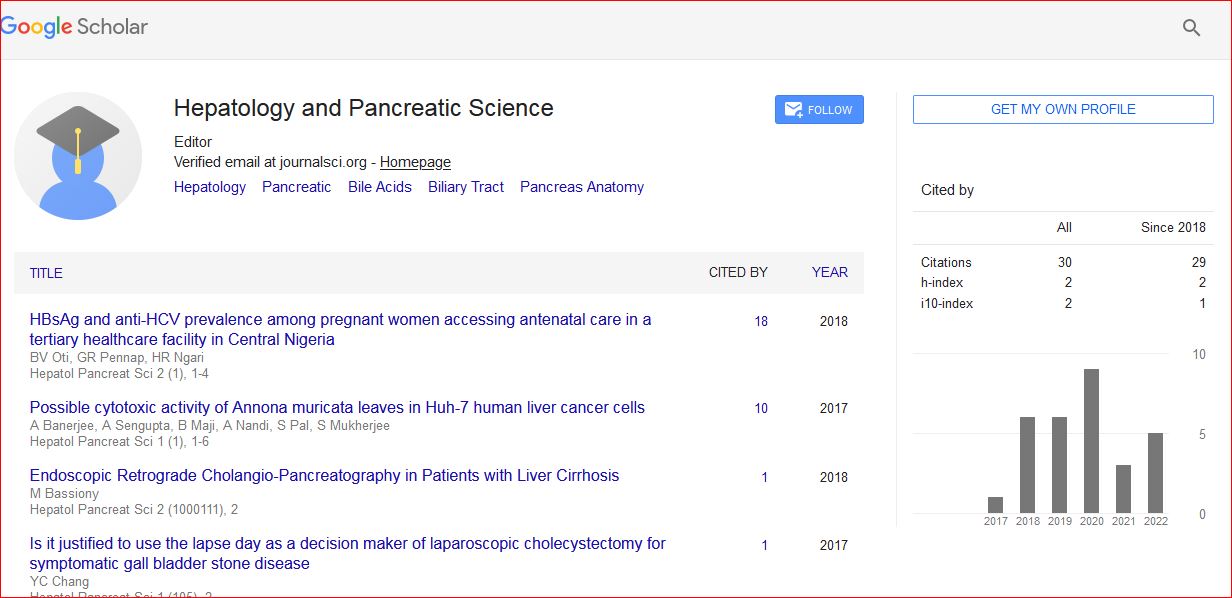
Hepatology and Pancreatic Science received 34 citations as per Google Scholar report