Commentary - (2025) Volume 19, Issue 4
Received: 01-Aug-2025, Manuscript No. jmgm-26-188363;
Editor assigned: 04-Aug-2025, Pre QC No. P-188363;
Reviewed: 18-Aug-2025, QC No. Q-188363;
Revised: 22-Aug-2025, Manuscript No. R-188363;
Published:
29-Aug-2025
, DOI: 10.37421/1747-0862.2025.19.735
Citation: Okoro, Samuel. ”Polygenic Risk Scores: Predicting Disease Susceptibility and Prevention.” J Mol Genet Med 19 (2025):735.
Copyright: © 2025 Okoro S. This is an open-access article distributed under the terms of the Creative Commons Attribution License, which permits unrestricted use, distribution and reproduction in any medium, provided the original author and source are credited.
Polygenic Risk Scores (PRS) represent a significant breakthrough in the field of complex disease prediction, offering a more holistic genetic assessment than traditional single-gene tests. By aggregating the cumulative effects of numerous common genetic variants, each with a minor individual impact, PRS provide a comprehensive evaluation of an individual's genetic predisposition. This advanced approach is proving instrumental in identifying individuals at heightened risk for conditions such as cardiovascular disease, type 2 diabetes, and various forms of cancer, thereby facilitating the development of targeted preventative measures and the advancement of personalized medicine [1].
The ongoing evolution of PRS development and application is largely propelled by the continuous expansion of genome-wide association studies (GWAS). These studies yield increasingly precise effect size estimations for a vast number of genetic variants, ranging from thousands to millions. Despite this progress, several challenges persist, including ensuring the generalizability of PRS across diverse ancestral populations, refining the methodologies for score calculation, and effectively integrating these scores into routine clinical practice. Current research endeavors are diligently focused on overcoming these obstacles to maximize the utility of PRS in healthcare settings [2].
PRS have demonstrated a tangible utility in effectively stratifying individuals according to their risk for common complex diseases. For instance, research has indicated that PRS can pinpoint individuals with substantially elevated risks for coronary artery disease. This identification can pave the way for the implementation of earlier and more aggressive lipid-lowering therapies. When integrated with established traditional risk factors, PRS offer a more detailed and nuanced understanding of an individual's susceptibility to disease [3].
The predictive accuracy of PRS is directly influenced by the quality and diversity of the GWAS data employed in their development. As GWAS continue to expand their scope to encompass larger and more diverse populations, the accuracy and applicability of PRS across various ethnic groups are anticipated to improve significantly. This expansion is a critical prerequisite for achieving equitable implementation of PRS in clinical settings [4].
The practical implementation of PRS within clinical environments necessitates rigorous validation processes and the establishment of clear, actionable guidelines. Researchers are actively engaged in investigating optimal thresholds for risk stratification, exploring the potential benefits of cascade screening protocols, and addressing the complex ethical considerations associated with genetic risk prediction. These efforts are all vital for the responsible and effective integration of PRS into healthcare delivery [5].
Beyond their predictive capabilities for disease onset, PRS also offer valuable insights into the underlying mechanisms of disease. By identifying individuals with a pronounced genetic predisposition, researchers can conduct targeted studies to elucidate the biological pathways involved in disease development. This understanding can potentially lead to the identification of novel therapeutic targets and strategies for intervention [6].
A key objective in the advancement of PRS utilization is their seamless integration into primary care settings. This objective requires the development of intuitive and user-friendly tools for clinicians, coupled with comprehensive education for patients regarding the role of genetics in disease risk. Such integration aims to shift the paradigm of healthcare from a purely reactive approach to one that emphasizes proactive disease prevention [7].
The application of PRS extends to enhancing the effectiveness of existing screening programs. For example, individuals identified as having a high PRS for breast cancer might be recommended for earlier or more frequent mammography screenings. This personalized screening approach can facilitate earlier detection of the disease and, consequently, lead to improved patient outcomes [8].
The ethical dimensions surrounding the application of PRS are of paramount importance and require careful consideration. Ensuring the privacy of genetic data, actively preventing genetic discrimination, and effectively communicating complex genetic risk information to patients are crucial aspects that must be thoroughly addressed to facilitate the responsible and ethical implementation of PRS in healthcare systems [9].
The future trajectory of PRS development is characterized by their ongoing refinement and their synergistic integration with other relevant data modalities. This includes incorporating lifestyle factors and electronic health records into risk prediction models. This multi-modal approach holds significant promise for further enhancing the accuracy of disease risk prediction and for developing highly personalized preventative strategies tailored to individual needs [10].
Polygenic Risk Scores (PRS) represent a pivotal advancement in the prediction of susceptibility to complex diseases, moving beyond the limitations of single-gene analysis. By consolidating the effects of numerous common genetic variants, each contributing a small individual effect, PRS offer a more comprehensive genetic assessment. This methodology is proving exceptionally valuable in identifying individuals at elevated risk for conditions such as cardiovascular disease, type 2 diabetes, and specific cancers, thereby enabling the implementation of tailored prevention strategies and fostering the progress of personalized medicine [1].
The field of PRS development and application is experiencing rapid innovation, largely driven by the continuous growth and improvement of genome-wide association studies (GWAS). These studies are providing increasingly accurate estimates of effect sizes for thousands, and even millions, of genetic variants. However, challenges persist in ensuring that PRS are generalizable across diverse ancestries, in refining the computational methods used for score calculation, and in effectively integrating these scores into the practicalities of clinical practice. Ongoing research is dedicated to addressing these limitations to maximize the clinical utility of PRS [2].
PRS have demonstrated significant utility in categorizing individuals based on their risk profiles for prevalent complex diseases. For instance, studies have confirmed that PRS can effectively identify individuals with markedly increased risks for coronary artery disease. This capability may facilitate the adoption of earlier and more intensive lipid-lowering therapies. The incorporation of PRS alongside traditional risk factors provides a more refined and informative picture of an individual's disease susceptibility [3].
The predictive power of PRS is intrinsically linked to the quality and diversity of the GWAS data used in their construction. As GWAS data become more inclusive of larger and more diverse populations, the accuracy and cross-ancestry applicability of PRS are expected to improve substantially. This expansion is a fundamental step towards ensuring equitable implementation of PRS in healthcare [4].
The successful integration of PRS into clinical settings hinges on robust validation studies and the establishment of clear, evidence-based guidelines. Researchers are actively exploring optimal thresholds for effective risk stratification, evaluating the potential benefits of cascade screening strategies, and deliberating on the ethical considerations inherent in genetic risk prediction. Addressing these aspects is crucial for the responsible clinical adoption of PRS [5].
The utility of PRS extends beyond mere disease prediction; they also serve as valuable tools for understanding disease mechanisms. By identifying individuals with a high genetic predisposition, researchers can gain deeper insights into the biological pathways underlying disease development. This knowledge can potentially lead to the discovery of novel therapeutic targets and treatment modalities [6].
A primary objective in the advancement of PRS is their seamless integration into primary care settings. This involves creating accessible tools for clinicians and educating patients about the role of genetic factors in disease risk, thereby shifting healthcare towards a more proactive approach focused on prevention [7].
PRS can significantly enhance the effectiveness of existing screening programs. For example, individuals identified with a high PRS for breast cancer might benefit from earlier or more frequent mammography screenings, enabling earlier detection and potentially improving patient outcomes [8].
Ethical considerations are a critical component in the application of PRS. Key aspects include ensuring the privacy of genetic data, preventing genetic discrimination, and effectively communicating genetic risk information to patients. These are essential for the responsible implementation of PRS in healthcare [9].
The future of PRS development lies in their continuous refinement and their integration with other data sources, such as lifestyle information and electronic health records. This multi-modal approach promises to further enhance the accuracy of disease risk prediction and enable highly personalized preventative strategies [10].
Polygenic Risk Scores (PRS) are a significant advancement in predicting susceptibility to complex diseases by aggregating the effects of multiple genetic variants. They help identify individuals at higher risk for conditions like cardiovascular disease, type 2 diabetes, and certain cancers, enabling targeted prevention and personalized medicine. The development of PRS is driven by large-scale genome-wide association studies (GWAS), with ongoing research focused on improving generalizability across diverse ancestries and integrating them into clinical practice. PRS have proven useful in risk stratification and can enhance screening programs. Future efforts aim to integrate PRS with other data modalities for more accurate predictions and personalized preventative strategies, while ethical considerations remain paramount for responsible implementation.
None
None
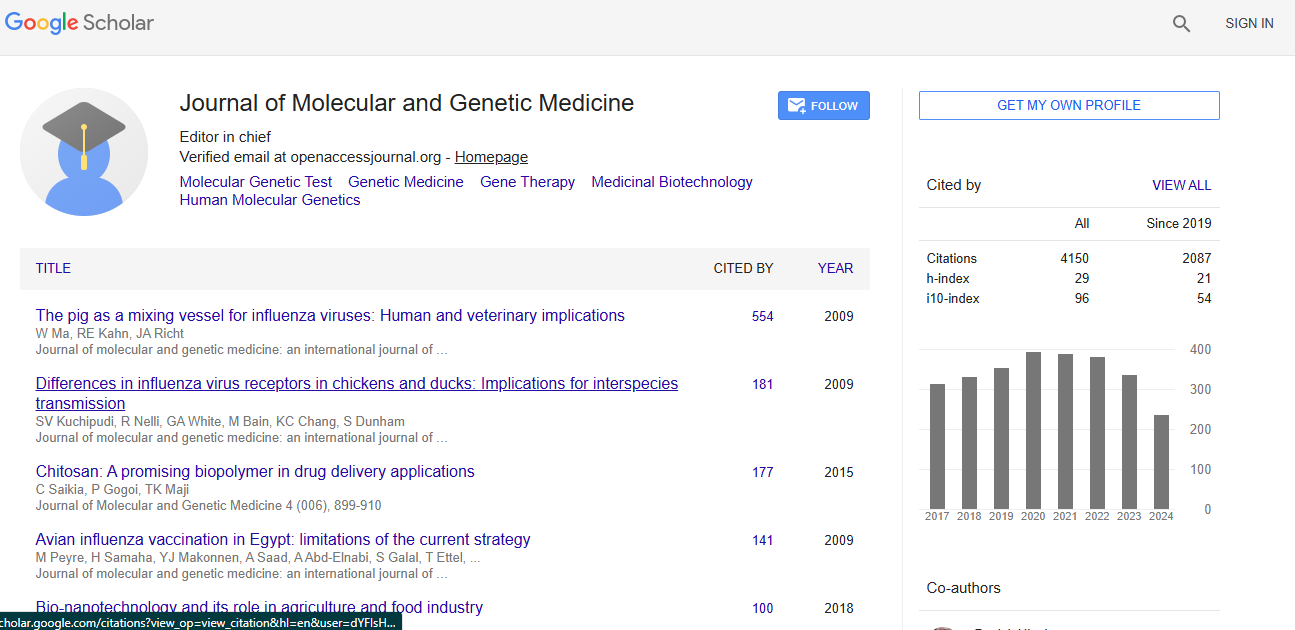
Molecular and Genetic Medicine received 3919 citations as per Google Scholar report