Commentary - (2025) Volume 10, Issue 6
Received: 01-Nov-2025, Manuscript No. PE-26-179319;
Editor assigned: 03-Nov-2025, Pre QC No. P-179319;
Reviewed: 17-Nov-2025, QC No. Q-179319;
Revised: 24-Nov-2025, Manuscript No. R-179319;
Published:
29-Nov-2025
, DOI: 10.37421/2472-1042.2025.10.315
Citation: Rasmussen, Mette. ”Pharmacotherapy: Economic Benefits for Chronic Metabolic Disorders.” Pharmacoeconomics 10 (2025):315.
Copyright: © 2025 Rasmussen M. This is an open-access article distributed under the terms of the Creative Commons Attribution License, which permits unrestricted use, distribution and reproduction in any medium, provided the original author and source are credited.
The economic value of sustained pharmacotherapy for chronic metabolic disorders is a critical area of investigation, with substantial evidence suggesting long-term benefits that outweigh initial costs. For conditions like diabetes and dyslipidemia, ongoing medication adherence can significantly reduce disease progression and the incidence of serious complications, ultimately leading to lower overall healthcare expenditures and improved quality of life. This perspective is supported by a systematic review and meta-analysis examining the economic burden and cost-effectiveness of pharmacological interventions for type 2 diabetes mellitus, highlighting long-term savings from disease management [1].
Cardiovascular disease prevention is another domain where pharmacotherapy demonstrates considerable economic advantages. The cost-effectiveness of statin therapy in both primary and secondary prevention of cardiovascular events is well-established. Consistent statin use, despite ongoing prescription costs, is shown to prevent major cardiovascular events, reducing hospitalizations, procedures, and mortality, thereby yielding a favorable cost-effectiveness ratio over time [2].
Managing type 1 diabetes also involves economic considerations related to pharmacological interventions. Research on continuous insulin therapy reveals that consistent use, coupled with regular monitoring, significantly reduces the risk of microvascular and macrovascular complications. This reduction translates into substantial savings by avoiding the long-term care and treatment of these debilitating conditions [3].
Obesity, a significant metabolic disorder, also presents a strong case for the cost-effectiveness of pharmacotherapy. Sustained use of weight-loss medications, as part of a comprehensive management plan, can prevent or delay the onset of associated comorbidities like type 2 diabetes, hypertension, and dyslipidemia, offering long-term economic benefits by averting future treatment costs [4].
The management of hypertension through long-term antihypertensive medications also yields significant economic benefits. Consistent management of hypertension substantially reduces the incidence of stroke, heart failure, and chronic kidney disease, thereby avoiding costly interventions and improving patient outcomes. This makes the ongoing cost of medication a sound investment in long-term health and economic well-being [5].
Dyslipidemia, a key risk factor for cardiovascular disease, is effectively managed through long-term pharmacotherapy. Sustained treatment with agents like statins to achieve and maintain target lipid levels is crucial in preventing atherosclerotic cardiovascular disease events. This approach proves more cost-effective than managing the consequences of untreated hyperlipidemia [6].
Metabolic syndrome, a cluster of conditions that increase the risk of heart disease, stroke, and diabetes, can also be addressed economically through pharmacological interventions. By managing key components of the syndrome, such as insulin resistance and hypertension, with sustained medication use, the incidence of associated cardiovascular events and type 2 diabetes can be significantly reduced, leading to considerable savings in healthcare costs [7].
Polycystic ovary syndrome (PCOS), a common endocrine disorder in women of reproductive age, involves long-term pharmacotherapy with economic implications. Consistent treatment with medications can manage symptoms, improve fertility, and prevent long-term metabolic sequelae like diabetes and cardiovascular disease, contributing to overall cost-effectiveness [8].
Non-alcoholic fatty liver disease (NAFLD) presents another area where pharmacotherapy holds long-term economic promise. While direct pharmacological treatment for NAFLD is evolving, managing the underlying metabolic issues with established medications can prevent progression to more severe liver disease and associated complications, demonstrating long-term economic benefits [9].
Finally, the prevention of gestational diabetes mellitus (GDM) in high-risk pregnancies through long-term pharmacotherapy, particularly with agents like metformin, has significant economic value. Such interventions can reduce the incidence of GDM and its associated complications for both mother and child, leading to improved long-term health outcomes and reduced future healthcare burdens [10].
The economic impact of sustained pharmacotherapy across a spectrum of chronic metabolic disorders is consistently demonstrated to be favorable over the long term, often stemming from the prevention of severe complications and the reduction of associated healthcare costs. For chronic metabolic disorders like diabetes and dyslipidemia, initial investments in pharmacotherapy are often substantial. However, the economic narrative shifts considerably when considering long-term medication adherence. This adherence is pivotal in slowing disease progression, mitigating the occurrence of severe complications such as cardiovascular events and renal failure, and consequently, reducing overall healthcare expenditures while simultaneously enhancing the quality of life for affected individuals. A systematic review and meta-analysis focused on type 2 diabetes mellitus substantiates this by exploring the economic burden and cost-effectiveness of pharmacological interventions, underscoring the long-term financial advantages [1].
The realm of cardiovascular disease prevention further illustrates the economic viability of pharmacotherapy. Specifically, statin therapy, whether employed in primary or secondary prevention strategies, exhibits a compelling cost-effectiveness profile. The consistent and long-term utilization of statins, despite their continuous prescription costs, plays a crucial role in averting major cardiovascular events. This prevention leads to a significant decrease in hospitalizations, the need for invasive procedures, and overall mortality, solidifying statins' favorable cost-effectiveness over extended periods [2].
In the context of type 1 diabetes management, the economic dimensions of continuous insulin therapy are also noteworthy. Adherence to insulin regimens, combined with regular self-monitoring of glucose levels, demonstrably curtails the risk of both microvascular and macrovascular complications. The avoidance of these severe sequelae translates into substantial economic savings by obviating the need for prolonged and intensive long-term care and treatment strategies for these debilitating conditions [3].
Obesity, recognized as a significant metabolic disorder, also benefits economically from pharmacotherapeutic approaches. When integrated into a comprehensive management strategy, the sustained use of weight-loss medications can effectively delay or prevent the onset of associated comorbidities, including type 2 diabetes, hypertension, and dyslipidemia. This preventive capacity yields long-term economic advantages by reducing future medical costs associated with these conditions [4].
Hypertension, a prevalent chronic condition, showcases the economic benefits derived from long-term pharmacotherapy. Consistent adherence to antihypertensive medications significantly lowers the incidence of critical health events such as stroke, heart failure, and chronic kidney disease. By preventing these costly medical emergencies and their subsequent treatments, ongoing medication costs are justified as a prudent investment in sustained patient well-being and economic stability [5].
Dyslipidemia, characterized by abnormal lipid levels, is another area where long-term pharmacotherapy proves economically advantageous. Employing lipid-lowering agents, such as statins, to achieve and maintain target lipid profiles is essential for preventing atherosclerotic cardiovascular disease events. This proactive approach is demonstrably more cost-effective than managing the downstream complications of untreated or inadequately treated hyperlipidemia [6].
Metabolic syndrome, a constellation of risk factors that elevate the likelihood of developing chronic diseases, can be managed effectively with pharmacotherapy, leading to economic benefits. By targeting key components of the syndrome, including insulin resistance and hypertension, through consistent medication use, the occurrence of associated cardiovascular events and type 2 diabetes can be substantially reduced. This reduction directly translates into considerable savings in overall healthcare expenditures [7].
Polycystic ovary syndrome (PCOS), a complex endocrine disorder, also presents a scenario where long-term pharmacotherapy has favorable economic implications. Sustained treatment with medications can effectively manage symptoms, enhance fertility, and crucially, prevent the development of long-term metabolic sequelae like diabetes and cardiovascular disease. This preventative aspect is a key driver of its cost-effectiveness [8].
Non-alcoholic fatty liver disease (NAFLD), particularly in individuals with underlying metabolic risk factors, is being increasingly evaluated for its pharmacoeconomic aspects. While specific pharmacological treatments for NAFLD are still developing, the management of its associated metabolic derangements with established medications can halt disease progression and avert costly complications, thereby offering long-term economic advantages [9].
Lastly, the role of pharmacotherapy in preventing gestational diabetes mellitus (GDM) in high-risk pregnancies is recognized for its long-term economic value. Interventions, notably with agents like metformin, have shown efficacy in reducing GDM incidence and its associated complications for both mothers and offspring. This leads to improved long-term health outcomes and a significant reduction in future healthcare burdens [10].
Sustained pharmacotherapy for chronic metabolic disorders offers significant long-term economic benefits by reducing disease progression and preventing serious complications. Studies on diabetes, cardiovascular disease, obesity, hypertension, dyslipidemia, metabolic syndrome, PCOS, NAFLD, and gestational diabetes all highlight how consistent medication use leads to lower overall healthcare expenditures and improved patient quality of life. While initial costs can be substantial, the avoidance of costly interventions and the prevention of debilitating conditions make pharmacotherapy a cost-effective strategy for managing chronic metabolic health.
None
None
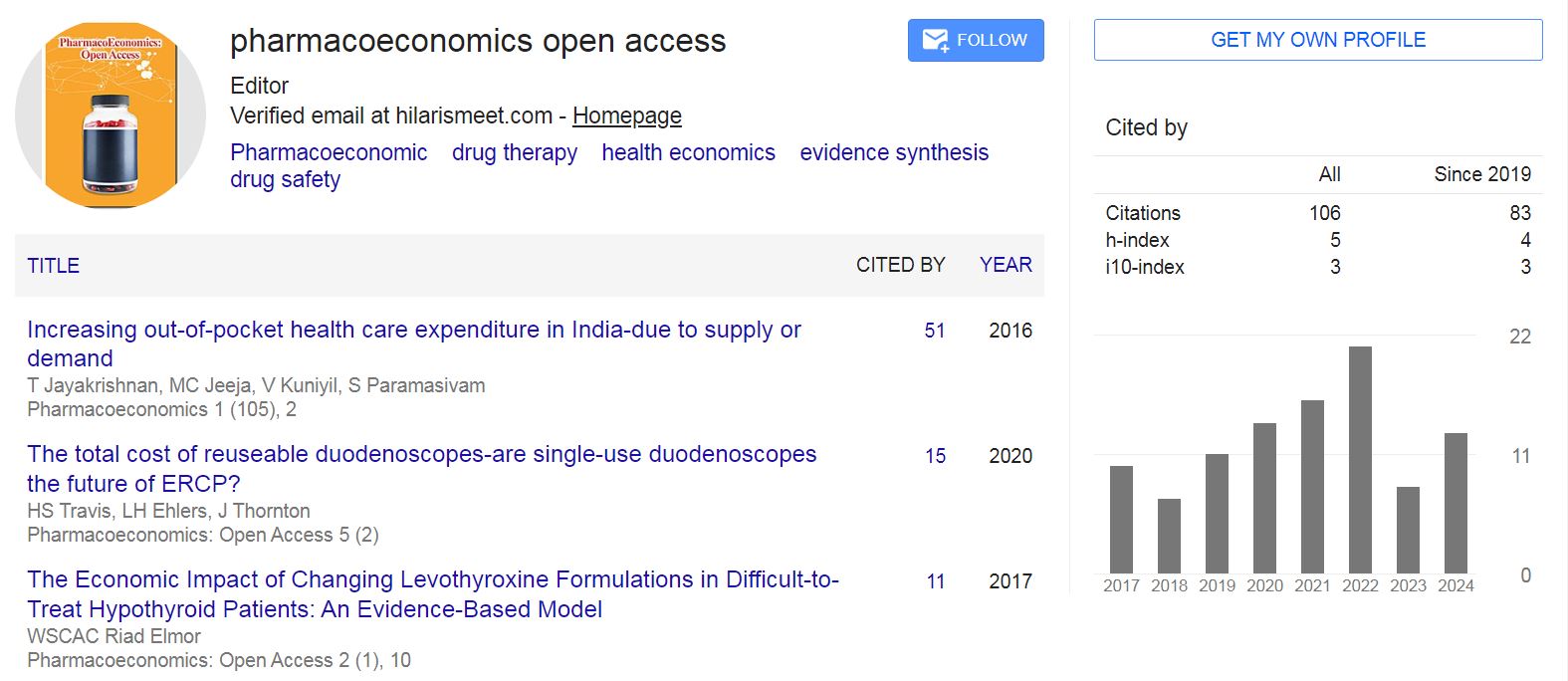
Pharmacoeconomics: Open Access received 106 citations as per Google Scholar report