Short Communication - (2025) Volume 10, Issue 4
Received: 01-Jul-2025, Manuscript No. PE-26-179298;
Editor assigned: 03-Jul-2025, Pre QC No. P-179298;
Reviewed: 17-Jul-2025, QC No. Q-179298;
Revised: 22-Jul-2025, Manuscript No. R-179298;
Published:
29-Jul-2025
, DOI: 10.37421/2472-1042.2025.10.299
Citation: Alvarez, Victor M.. ”Pharmacogenomics: Economic Advantages for Healthcare.” Pharmacoeconomics 10 (2025):299.
Copyright: © 2025 Alvarez M. Victor This is an open-access article distributed under the terms of the Creative Commons Attribution License, which permits unrestricted use, distribution and reproduction in any medium, provided the original author and source are credited.
Pharmacogenomics-guided therapy is poised to revolutionize healthcare by enhancing drug efficacy and safety, ultimately improving patient outcomes and reducing financial burdens. This personalized approach leverages an individual's unique genetic makeup to tailor drug selection and dosage, thereby minimizing the risk of adverse drug reactions and optimizing therapeutic responses. Economic evaluations highlight that despite initial implementation costs, the long-term savings realized from avoiding ineffective treatments and managing adverse events can significantly outweigh these upfront investments, particularly for high-cost medications and complex medical conditions [1].
The economic value of pharmacogenomic testing is multifaceted, necessitating a thorough evaluation of test expenses, clinical utility, and downstream effects on healthcare utilization. Studies frequently underscore the cost-effectiveness of targeted pharmacogenomic panels for specific drug classes, such as clopidogrel or warfarin, where genetic variations profoundly influence patient response and risk profiles. The economic benefits manifest through a reduction in hospitalizations, fewer emergency room visits, and a decrease in overall medication expenditures [2].
In oncology, the implementation of pharmacogenomics serves as a compelling illustration of its economic impact. By identifying patients who are likely to respond to specific targeted therapies or those at increased risk of severe toxicity from chemotherapy, genetic testing can prevent the administration of ineffective or harmful treatments. This not only leads to improved patient outcomes and enhanced quality of life but also generates substantial cost savings by avoiding wasted drug expenses and facilitating more effective management of treatment-related toxicities [3].
Pharmacoeconomic models play a critical role in assessing the long-term value proposition of pharmacogenomics. These sophisticated models integrate variables such as diagnostic accuracy, the time required for test results, seamless integration into clinical workflows, and subsequent shifts in prescribing patterns. Demonstrating a positive return on investment often hinges on the ability of pharmacogenomics to reduce trial-and-error prescribing practices and prevent adverse drug events, especially for medications with a narrow therapeutic index or significant genetic variability in their metabolism [4].
The economic advantages of pharmacogenomics are also evident in the realm of psychiatric medications, where considerable inter-individual variability in drug response and the occurrence of side effects are well-documented. Genetic testing can aid in predicting which patients are more likely to benefit from specific antidepressants or antipsychotics, or conversely, which patients are at a higher risk of experiencing severe side effects, thereby optimizing treatment selection and reducing the financial implications of ineffective treatment trials and the subsequent management of adverse events [5].
Integrating pharmacogenomic testing into routine clinical practice, however, presents several challenges, including the need for extensive physician education, robust laboratory infrastructure, and clear reimbursement policies. Nevertheless, as the body of evidence supporting its clinical utility and cost-effectiveness continues to grow, payers and healthcare systems are increasingly recognizing its inherent value. Economic analyses robustly indicate that proactive genetic screening can lead to more efficient allocation of healthcare resources and contribute to improved population health outcomes [6].
The economic evaluation of pharmacogenomics extends to the management of infectious diseases, particularly in the context of optimizing antibiotic therapy. Genetic profiling can help identify individuals who may be susceptible to adverse effects from certain antimicrobial agents or those who might require adjusted dosages due to altered drug metabolism. This approach enhances treatment efficacy and alleviates the economic burden associated with treatment failures and adverse drug reactions [7].
The cost-effectiveness of pharmacogenomic testing is often contingent upon the prevalence of specific genetic variants within a given population and the availability of actionable genetic information. When pharmacogenomic guidance leads to improved patient adherence, a reduction in hospital admissions, and fewer interventions required for adverse drug reactions, the economic benefits become considerably substantial, thereby justifying the initial investment in genetic testing and associated education [8].
The economic argument for pharmacogenomics is further bolstered by its capacity to personalize drug therapy for conditions such as chronic pain. By identifying individuals who are poor metabolizers of certain drugs or are at a higher risk of opioid-induced respiratory depression, genetic testing can facilitate the implementation of safer and more effective pain management strategies. This ultimately reduces the economic burden associated with ineffective treatments and the occurrence of adverse events [9].
A pivotal aspect of the economic evaluation of pharmacogenomics lies in its potential to curtail healthcare resource utilization. Through enhanced drug efficacy and a significant reduction in adverse drug reactions, pharmacogenomic-guided therapy can lead to fewer physician visits, a decrease in hospitalizations, and a diminished need for ancillary treatments, all of which contribute to lowering overall healthcare expenditures [10].
Pharmacogenomics-guided therapy offers a significant opportunity to enhance drug efficacy and safety, leading to improved patient outcomes and reduced healthcare costs. This approach involves tailoring drug selection and dosing to an individual's genetic profile, thereby minimizing adverse drug reactions and optimizing treatment effectiveness. Economic analyses indicate that while initial implementation costs are present, the long-term savings from avoiding ineffective treatments and managing adverse events can outweigh these expenses, particularly for high-cost medications and complex conditions [1].
The economic value of pharmacogenomic testing necessitates a careful consideration of various factors, including test costs, clinical utility, and the impact on downstream healthcare utilization. Studies frequently highlight the cost-effectiveness of targeted pharmacogenomic panels for specific drug classes, such as clopidogrel or warfarin, where genetic variations significantly influence response and risk. The economic benefit is realized through reduced hospitalizations, fewer emergency room visits, and decreased overall medication expenditure [2].
The implementation of pharmacogenomics in oncology serves as a prime example of its economic impact. By identifying patients likely to respond to specific targeted therapies or those at higher risk of severe toxicity from chemotherapy, genetic testing can prevent the use of ineffective or harmful treatments. This leads to better patient outcomes, improved quality of life, and significant cost savings by avoiding wasted drug costs and managing treatment-related toxicities more effectively [3].
Pharmacoeconomic models are crucial for assessing the long-term value of pharmacogenomics. These models incorporate factors such as diagnostic accuracy, test turnaround time, clinical workflow integration, and changes in prescribing patterns. Demonstrating a positive return on investment often relies on the ability to reduce trial-and-error prescribing and prevent adverse drug events, particularly for drugs with a narrow therapeutic index or significant genetic variability in metabolism [4].
The economic benefits of pharmacogenomics extend to psychiatric medications, where substantial inter-individual variability in drug response and side effects is observed. Genetic testing can help predict which patients are more likely to respond to certain antidepressants or antipsychotics, or experience severe side effects, thereby optimizing treatment selection and reducing the costs associated with ineffective trials and managing adverse events [5].
Integrating pharmacogenomic testing into routine clinical practice presents challenges, including physician education, laboratory infrastructure, and reimbursement policies. However, as evidence of clinical utility and cost-effectiveness grows, payers and healthcare systems are increasingly recognizing its value. Economic analyses underscore that proactive genetic screening can lead to more efficient resource allocation and improved population health [6].
The economic evaluation of pharmacogenomics also encompasses infectious diseases, particularly in optimizing antibiotic therapy. Genetic profiling can help predict individuals who may experience adverse effects from certain antimicrobial agents or those who might require dose adjustments due to altered drug metabolism, thereby enhancing treatment efficacy and reducing the economic burden of treatment failures and side effects [7].
The cost-effectiveness of pharmacogenomic testing is often dependent on the prevalence of specific genetic variants within a population and the availability of actionable genetic information. When guided therapy leads to improved patient adherence, reduced hospital admissions, and fewer interventions for adverse drug reactions, the economic benefits become substantial, justifying the upfront investment in genetic testing and education [8].
The economic argument for pharmacogenomics is strengthened by its potential to personalize drug therapy for conditions like chronic pain. By identifying individuals who are poor metabolizers or at higher risk of opioid-induced respiratory depression, genetic testing can guide safer and more effective pain management strategies, thereby reducing the economic burden associated with ineffective treatments and adverse events [9].
A key aspect of the economic evaluation of pharmacogenomics is its role in reducing healthcare resource utilization. By improving drug efficacy and minimizing adverse drug reactions, pharmacogenomic-guided therapy can lead to fewer doctor visits, fewer hospitalizations, and a reduced need for ancillary treatments, ultimately lowering overall healthcare expenditures [10].
Pharmacogenomics offers significant economic advantages by personalizing drug therapy to improve efficacy and safety, leading to better patient outcomes and reduced healthcare costs. Initial implementation costs are often offset by long-term savings from avoiding ineffective treatments and managing adverse events, particularly for expensive medications and complex conditions. The cost-effectiveness of pharmacogenomic testing is influenced by factors like test costs, clinical utility, and impact on healthcare utilization. Studies show benefits in areas like cardiovascular medicine, oncology, psychiatry, infectious diseases, and chronic pain management through reduced hospitalizations, fewer emergency visits, and optimized medication use. Pharmacoeconomic models are essential for demonstrating value by incorporating diagnostic accuracy, workflow integration, and changes in prescribing. Challenges in implementation, such as physician education and reimbursement, are being addressed as evidence of clinical and economic benefits grows. Ultimately, pharmacogenomics can lead to more efficient resource allocation and improved population health by minimizing trial-and-error prescribing and adverse drug reactions.
None
None
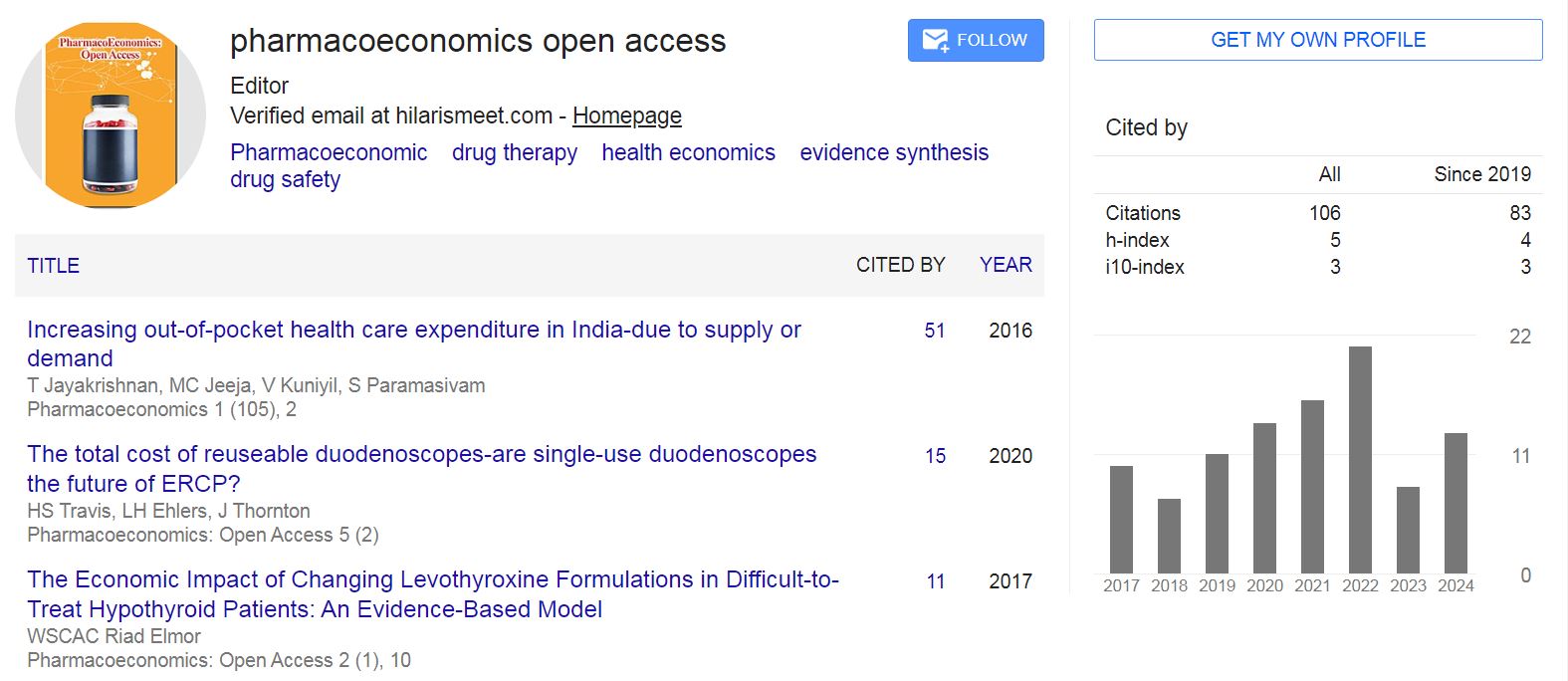
Pharmacoeconomics: Open Access received 106 citations as per Google Scholar report