Brief Report - (2025) Volume 10, Issue 5
Received: 01-Sep-2025, Manuscript No. PE-26-179300;
Editor assigned: 03-Sep-2025, Pre QC No. P-179300;
Reviewed: 17-Sep-2025, QC No. Q-179300;
Revised: 22-Sep-2025, Manuscript No. R-179300;
Published:
29-Sep-2025
, DOI: 10.37421/2472-1042.2025.10.301
Citation: Fonseca, Ricardo M.. ”Pharmacogenomics: A Cost- Effective Path to Better Care.” Pharmacoeconomics 10 (2025):301.
Copyright: © 2025 Fonseca M. Ricardo This is an open-access article distributed under the terms of the Creative Commons Attribution License, which permits unrestricted use, distribution and reproduction in any medium, provided the original author and source are credited.
The growing body of evidence underscores the significant economic advantages associated with the implementation of pharmacogenomics in guiding drug therapy. This approach, which leverages an individual's genetic makeup to personalize medication, promises to optimize treatment efficacy and minimize adverse drug reactions, ultimately leading to reduced healthcare expenditures. The cost-effectiveness of integrating these genomic tests into routine clinical practice is a central theme, advocating for their wider adoption across various medical disciplines [1].
One crucial area where pharmacogenomics demonstrates substantial economic benefit is in the treatment of major depressive disorder. Research investigating the cost-effectiveness of pharmacogenomic testing for antidepressant selection reveals that while initial testing incurs higher costs, the long-term savings derived from fewer medication changes, reduced side effects, and improved patient outcomes render it a more economical strategy compared to conventional treatment algorithms [2].
A comprehensive systematic review and meta-analysis has further solidified the economic impact of pharmacogenomic-guided therapy. This synthesis of evidence from numerous studies consistently concludes that pharmacogenomics proves cost-effective, especially in clinical scenarios characterized by high inter-individual variability in drug response and a significant burden of adverse events [3].
The economic benefits extend to the management of anticoagulation therapy, particularly with warfarin. Studies focusing on the economic evaluation of pharmacogenomic testing for warfarin dosing highlight its ability to predict individual response, thereby decreasing the necessity for frequent INR monitoring and dose adjustments. This leads to a reduction in bleeding and thrombotic events, translating into considerable cost savings for healthcare systems [4].
The practical integration of pharmacogenomic services into everyday clinical care presents both challenges and economic considerations. An examination of the return on investment for healthcare providers and payers suggests that strategic implementation can concurrently enhance patient care and curtail overall expenditure, making it a worthwhile endeavor from a financial standpoint [5].
In the realm of oncology, pharmacogenomic testing offers a pathway to optimize chemotherapy regimens. By predicting a patient's response to treatment and potential toxicity, pharmacogenomic profiling can prevent the administration of ineffective drugs and mitigate adverse events. This, in turn, reduces the costs associated with supportive care and hospitalizations, thereby improving the economic landscape of cancer treatment [6].
The application of pharmacogenomics in pain management has also shown promising economic advantages. Studies evaluating the cost-effectiveness of pharmacogenomic-guided pain management indicate that understanding an individual's genetic profile can lead to more effective pain relief, a decrease in opioid-related side effects, and a reduction in healthcare resource utilization, all contributing to a favorable economic profile [7].
The economic implications of pharmacogenomics in the management of cardiovascular diseases are also noteworthy. Tailoring antiplatelet and anticoagulant therapies based on an individual's genetic factors has the potential to significantly lower the incidence of adverse cardiovascular events and the associated healthcare costs, presenting a compelling economic case for its use in this field [8].
A review of the economic evidence supporting pharmacogenomic use in psychiatric care synthesizes findings on the cost-effectiveness of genetic testing for optimizing psychotropic medication selection. The emphasis is placed on the dual benefits of improved patient outcomes and reduced healthcare resource utilization, highlighting the economic viability of this approach [9].
Finally, the economic perspective of pharmacogenomic testing for drug metabolism in diverse populations reveals the potential for substantial cost savings. By averting adverse drug events and enhancing treatment efficacy, particularly in conditions with significant genetic variability, pharmacogenomic-guided therapy emerges as an economically prudent choice [10].
Pharmacogenomics offers a compelling economic advantage by tailoring drug therapy to an individual's genetic profile, aiming to enhance treatment efficacy and reduce adverse reactions. This personalized approach contributes to lowering overall healthcare costs by minimizing ineffective treatments and lengthy hospital stays, making a strong case for its widespread adoption in clinical practice [1].
The cost-effectiveness of pharmacogenomic testing in guiding antidepressant selection for major depressive disorder has been thoroughly investigated. Despite higher initial testing expenses, the long-term economic benefits, including fewer medication adjustments and improved patient outcomes, outweigh the costs when compared to standard treatment protocols [2].
A systematic review and meta-analysis has provided robust evidence for the economic benefits of pharmacogenomic-guided therapy across various clinical domains. The findings consistently demonstrate cost-effectiveness, especially in patient populations where drug response varies significantly and adverse events are common [3].
The economic advantages of pharmacogenomic testing are particularly evident in warfarin therapy. By predicting individual responses, genetic testing reduces the need for frequent monitoring and adjustments, thereby preventing costly bleeding and thrombotic events, leading to substantial healthcare savings [4].
Integrating pharmacogenomic services into routine clinical practice involves careful consideration of implementation challenges and economic factors. A focus on return on investment for both providers and payers suggests that strategic deployment can simultaneously improve patient care and decrease overall healthcare expenditures [5].
In oncology, pharmacogenomic testing plays a vital role in optimizing chemotherapy. By predicting treatment response and toxicity, it helps avoid ineffective drugs and reduces adverse events, consequently lowering the costs associated with supportive care and hospitalizations [6].
Pharmacogenomic-guided pain management has demonstrated positive economic outcomes. Understanding a patient's genetic predisposition can lead to more effective pain relief, a reduction in opioid-related side effects, and a decrease in the utilization of healthcare resources, contributing to overall cost savings [7].
The economic impact of pharmacogenomic testing in cardiovascular disease management is significant. Customizing antiplatelet and anticoagulant therapies based on genetic factors can markedly reduce the incidence of adverse cardiovascular events and associated healthcare expenditures [8].
Economic evidence supporting the use of pharmacogenomics in psychiatric care highlights its cost-effectiveness in optimizing psychotropic medication. Genetic testing leads to improved patient outcomes and a reduction in healthcare resource utilization, making it a financially sound approach [9].
Pharmacogenomic testing for drug metabolism in diverse populations offers economic benefits by preventing adverse drug events and enhancing treatment efficacy. This approach is particularly valuable for conditions with substantial genetic variability, leading to cost savings through optimized therapy [10].
Pharmacogenomics is economically advantageous by personalizing drug therapy based on genetic profiles, leading to improved treatment efficacy and reduced adverse reactions. This approach minimizes ineffective therapies and hospitalizations, lowering overall healthcare costs. Studies in major depressive disorder, warfarin therapy, oncology, pain management, cardiovascular diseases, and psychiatric care consistently demonstrate the cost-effectiveness of pharmacogenomic testing. Integrating these services strategically can enhance patient care and reduce expenditures. The technology also helps in optimizing drug metabolism and managing diverse populations, further contributing to economic benefits by preventing adverse drug events and enhancing treatment outcomes.
None
None
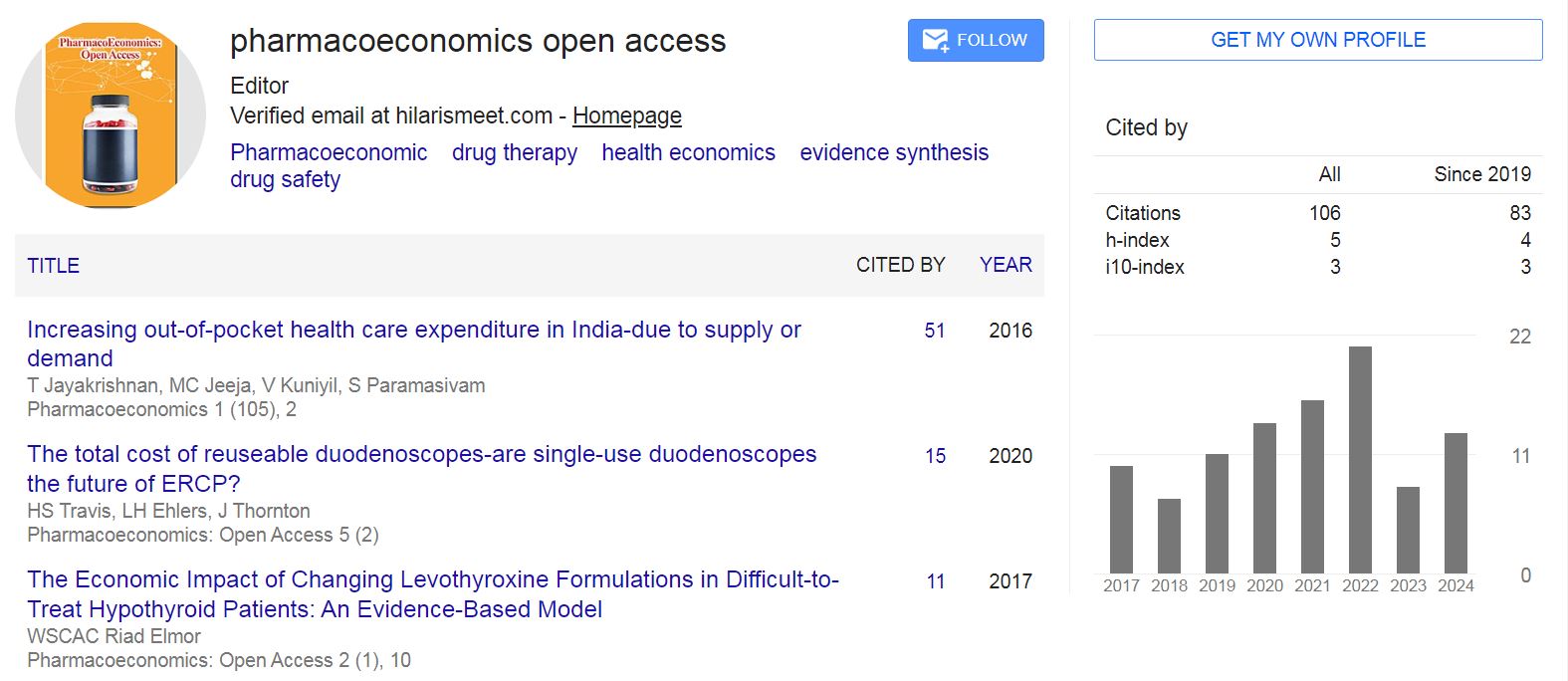
Pharmacoeconomics: Open Access received 106 citations as per Google Scholar report