Commentary - (2025) Volume 10, Issue 6
Received: 01-Nov-2025, Manuscript No. PE-26-179320;
Editor assigned: 03-Nov-2025, Pre QC No. P-179320;
Reviewed: 17-Nov-2025, QC No. Q-179320;
Revised: 24-Nov-2025, Manuscript No. R-179320;
Published:
29-Nov-2025
, DOI: 10.37421/2472-1042.2025.10.316
Citation: Fuentes, José Ignacio. ”Pharmacoeconomics: Valuing Precision Medicine’s Complex Future.” Pharmacoeconomics 10 (2025):316.
Copyright: © 2025 Fuentes I. José This is an open-access article distributed under the terms of the Creative Commons Attribution License, which permits unrestricted use, distribution and reproduction in any medium, provided the original author and source are credited.
Pharmacoeconomics is foundational to the effective evaluation of precision and personalized medicine, a rapidly evolving field that promises to revolutionize healthcare by tailoring treatments to individual patient characteristics [1].
This discipline is crucial for understanding the economic value proposition of these advanced therapies, which often involve significant upfront investments in diagnostics and targeted treatments [1].
Assessing this value extends beyond direct costs to encompass downstream effects such as improved patient outcomes, enhanced quality of life, and reduced societal burden [1].
However, the implementation of precision medicine faces several significant hurdles, including the inherent heterogeneity of health data and the specialized economic considerations for rare diseases [1].
Furthermore, ensuring equitable access to these potentially life-altering interventions remains a paramount challenge that requires careful consideration [1].
Innovative modeling techniques are therefore indispensable for accurately capturing the long-term benefits and inherent uncertainties associated with these sophisticated medical approaches [1].
As treatments become increasingly personalized, particularly in oncology, robust pharmacoeconomic evaluations are necessitated by the smaller, more defined patient populations that result [2].
This stratification impacts traditional clinical trial designs and demands advanced analytical methodologies to convincingly demonstrate cost-effectiveness [2].
The integration of real-world evidence is increasingly vital for articulating the full value of these therapies beyond the confines of randomized controlled trials [2].
The upfront costs associated with genomic sequencing and biomarker identification represent a substantial investment in the precision medicine paradigm [3].
Pharmacoeconomic models must meticulously account for these initial expenditures alongside the pricing of highly targeted therapeutic agents [3].
The core challenge lies in justifying these substantial investments by substantiating significant improvements in clinical outcomes and a demonstrable reduction in the use of ineffective treatments [3].
This strategic shift aims to reorient healthcare spending towards interventions that offer greater value and a more efficient allocation of resources [3].
The cost-effectiveness assessment of gene therapies, which are central to the advancement of personalized medicine, presents particularly complex methodological challenges [4].
These therapies often involve a singular treatment event with the potential for lifelong benefits, necessitating sophisticated long-term modeling and a comprehensive consideration of broader societal impacts [4].
The exceptionally high per-patient cost of gene therapies mandates a rigorous analysis of survival gains, quality-adjusted life years, and the potential for indirect economic advantages [4].
The widespread implementation of precision medicine inevitably raises critical questions concerning equity and access to these novel treatments [5].
Pharmacoeconomic analyses are instrumental in informing crucial policy decisions, guiding the most efficient allocation of healthcare resources to ensure that these advanced therapies benefit a diverse and broad population [5].
Effectively addressing issues of affordability and reimbursement is therefore essential for maximizing the overall societal impact of personalized therapeutic strategies [5].
Pharmacoeconomics is pivotal in navigating the complex landscape of treatments for rare diseases, many of which are developed as personalized or precision therapies [6].
These evaluations are inherently challenging due to the small patient numbers involved, the often-limited availability of natural history data, and the typically catastrophic nature of these conditions [6].
Consequently, innovative approaches to value assessment are urgently needed to adequately reflect the profound unmet medical needs and the potential for transformative patient benefit [6].
The integration of artificial intelligence (AI) and machine learning (ML) into pharmacoeconomic methodologies offers novel avenues for evaluating personalized medicine interventions [7].
These advanced technologies possess the capability to analyze intricate datasets to predict patient responses to treatment, identify optimal patient subgroups, and dynamically inform cost-effectiveness models [7].
This technological advancement paves the way for more adaptive and data-driven decision-making processes within healthcare systems [7].
The development of robust pharmacoeconomic models for companion diagnostics is an essential component of precision medicine implementation [8].
These diagnostics are critical for identifying patients who are most likely to derive significant benefit from specific targeted therapies [8].
Crucially, the economic value of the diagnostic itself must be meticulously quantified, considering its role in preventing ineffective treatments and enhancing overall patient outcomes, in conjunction with the economic profile of the associated therapy [8].
Pharmacoeconomics must evolve to accommodate the growing trend towards outcome-based payment models, which are especially pertinent for high-cost precision medicines [9].
These innovative models establish a direct link between reimbursement and demonstrated patient outcomes, thereby aligning financial incentives with the delivery of true value [9].
This approach necessitates comprehensive data collection and rigorous evaluation of both long-term clinical and economic benefits [9].
The ethical dimensions inherent in applying pharmacoeconomics to precision medicine are substantial and warrant careful consideration [10].
Ensuring fair pricing structures, responsible resource allocation strategies, and equitable access for all populations are paramount ethical imperatives [10].
Pharmacoeconomic research plays a vital role in providing the evidence base necessary to support ethical decision-making and to promote social justice in the deployment of these advanced medical interventions [10].
The economic evaluation of precision and personalized medicine relies heavily on the principles of pharmacoeconomics, a field dedicated to assessing the value of healthcare interventions [1].
This assessment encompasses not only the direct costs associated with diagnostics and targeted therapies but also the broader impact on patient health outcomes, quality of life, and the overall burden on society [1].
Several significant challenges impede the widespread adoption and effective implementation of precision medicine, including the inherent variability in health data and the specialized economic considerations required for rare diseases [1].
A fundamental challenge is ensuring that these advanced treatments are accessible to all populations, necessitating a strong focus on equity in economic evaluations [1].
To effectively capture the long-term advantages and inherent uncertainties of these cutting-edge treatments, the development and application of innovative modeling techniques are critical [1].
In the realm of oncology, personalized treatment strategies demand rigorous pharmacoeconomic scrutiny, particularly as therapies are increasingly tailored to specific genetic markers, leading to smaller and more precisely defined patient cohorts [2].
This segmentation presents unique challenges for traditional clinical trial designs, requiring the adoption of advanced analytical methods to substantiate cost-effectiveness claims [2].
The integration of real-world evidence is becoming indispensable for a comprehensive understanding of the value proposition of these therapies, extending beyond the findings of randomized controlled trials [2].
A significant barrier to precision medicine is the substantial upfront financial investment required for genomic sequencing and the identification of predictive biomarkers [3].
Pharmacoeconomic models must incorporate these initial costs alongside the pricing of highly specialized targeted therapies [3].
The central objective is to justify these expenditures by demonstrating substantial improvements in clinical outcomes and a reduction in the prescription of ineffective treatments, thereby redirecting healthcare expenditures towards more value-driven interventions [3].
The assessment of cost-effectiveness for gene therapies, a cornerstone of personalized medicine, is exceptionally complex due to their unique characteristics [4].
These therapies often involve a single administration with the potential for lifelong benefits, necessitating long-term economic modeling and a thorough consideration of their societal implications [4].
The high per-patient cost of gene therapies necessitates a meticulous analysis of factors such as survival gains, quality-adjusted life years, and potential indirect economic benefits [4].
The widespread integration of precision medicine into clinical practice brings to the forefront critical concerns regarding health equity and access to care [5].
Pharmacoeconomic analyses are vital tools for informing policy decisions, specifically in identifying the most efficient strategies for allocating resources to ensure that these advanced treatments benefit a broad spectrum of the population [5].
Addressing the complexities of affordability and reimbursement is therefore paramount to maximizing the societal value derived from personalized therapies [5].
Pharmacoeconomics plays an indispensable role in navigating the complex economic landscape of treatments for rare diseases, a significant proportion of which are precision or personalized therapies [6].
The evaluation of these therapies is complicated by small patient numbers, limited natural history data, and the often-devastating nature of these conditions [6].
This underscores the need for innovative approaches to value assessment that accurately reflect the substantial unmet medical needs and the potential for profound therapeutic benefits [6].
The incorporation of artificial intelligence (AI) and machine learning (ML) into pharmacoeconomic research opens up new possibilities for evaluating personalized medicine [7].
These advanced computational tools can analyze complex datasets to predict treatment responses, identify optimal patient subgroups, and develop more dynamic cost-effectiveness models [7].
This synergy between AI/ML and pharmacoeconomics facilitates more adaptive and data-driven decision-making in healthcare [7].
Developing comprehensive pharmacoeconomic models for companion diagnostics is an essential step in the implementation of precision medicine [8].
These diagnostics are designed to identify patients who are most likely to respond favorably to specific targeted therapies [8].
It is imperative to quantify the economic value of the diagnostic itself, focusing on its contribution to avoiding ineffective treatments and improving patient outcomes, in addition to assessing the economic profile of the associated therapy [8].
Pharmacoeconomics must adapt to the emerging trend of outcome-based payment models, which are particularly relevant for the high-cost precision medicines currently being developed [9].
These innovative payment structures link reimbursement directly to demonstrated patient outcomes, thereby aligning economic incentives with the delivery of genuine value [9].
Successful implementation requires robust data collection mechanisms and rigorous evaluation of both long-term clinical and economic benefits [9].
The ethical considerations surrounding the application of pharmacoeconomics in the context of precision medicine are profound and require careful deliberation [10].
Ensuring fair pricing strategies, promoting responsible resource allocation, and guaranteeing equitable access to these advanced medical interventions are fundamental ethical principles [10].
Pharmacoeconomic research provides the essential evidence needed to support ethical decision-making processes and to foster social justice in the deployment of precision medicine [10].
Precision and personalized medicine offer revolutionary treatment approaches, but their economic evaluation is complex. Pharmacoeconomics is crucial for assessing their value, considering costs beyond direct treatment and diagnostics to include patient outcomes, quality of life, and societal impact. Challenges include data heterogeneity, rare disease economics, and ensuring equitable access. Innovative modeling is needed to capture long-term benefits. Targeted therapies in oncology, gene therapies, and companion diagnostics require specialized pharmacoeconomic assessments due to small patient populations, high costs, and unique benefit profiles. The integration of real-world evidence and advanced technologies like AI/ML is becoming vital. Ethical considerations, including fair pricing, resource allocation, and access, are paramount. Outcome-based payment models are emerging to align reimbursement with demonstrated patient benefits, necessitating robust data collection and evaluation.
None
None
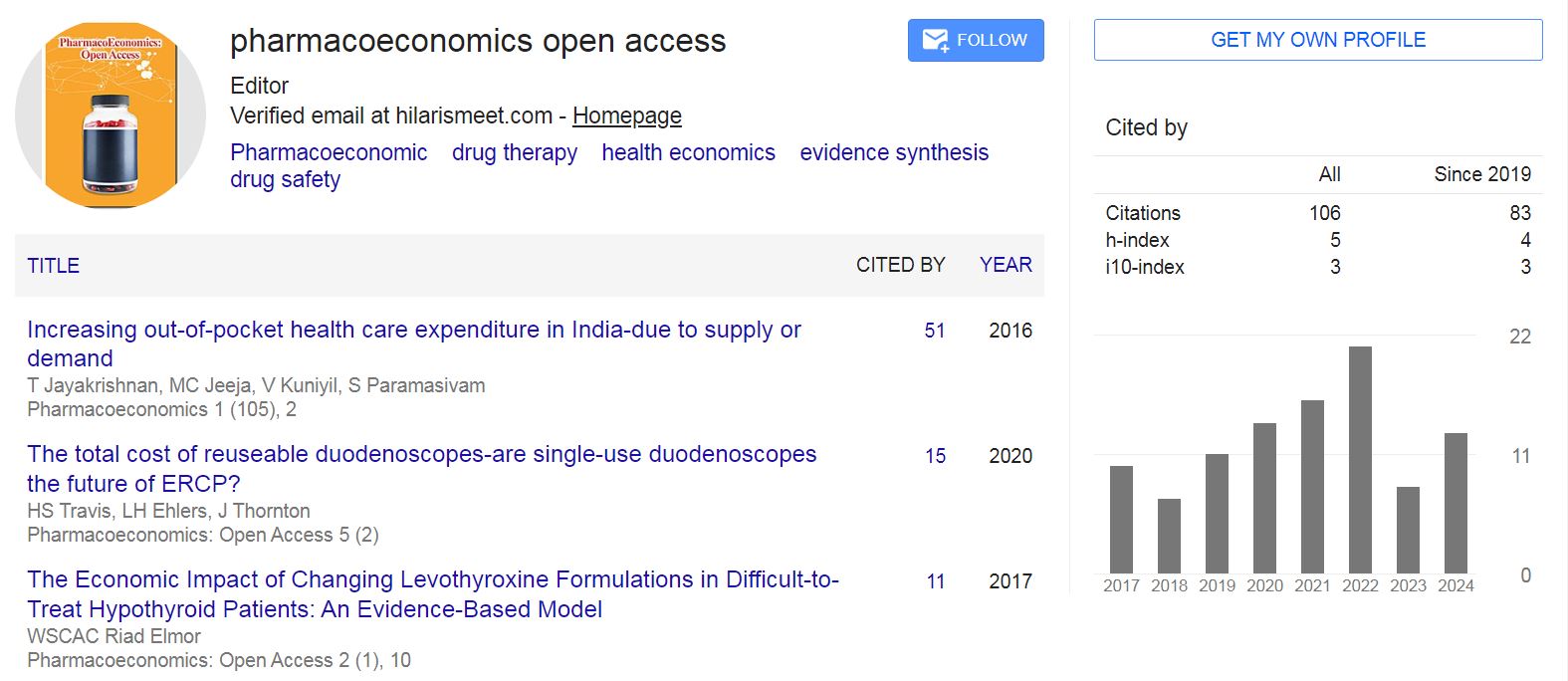
Pharmacoeconomics: Open Access received 106 citations as per Google Scholar report